

Fix or Replace Oven? The 2026 Cost Breakdown & Decision Guide
 Jun, 4 2026
Oven Repair vs. Replace Calculator
Enter Your Details
Ready to Calculate
Enter your numbers to see if you should fix or replace your oven based on the 2026 financial guidelines.
It happens at the worst possible time. You’re trying to roast a chicken for dinner, and your oven just refuses to heat up. Or maybe it’s running hot enough to burn your food to a crisp. Standing there in your kitchen, you face the classic dilemma: do I call a technician to fix an oven, or is it time to drag the old beast out and buy a brand-new one?
The answer isn’t as simple as “repair is always cheaper.” It depends on the age of your machine, the specific part that failed, and whether you’re looking at a quick fix or a major overhaul. In 2026, with energy efficiency standards tightening and smart features becoming standard, the math has shifted slightly compared to five years ago.
Here is the straight talk on how to calculate the real cost of keeping your current oven versus upgrading, so you can stop guessing and start cooking again.
The Golden Rule: The 50% Threshold
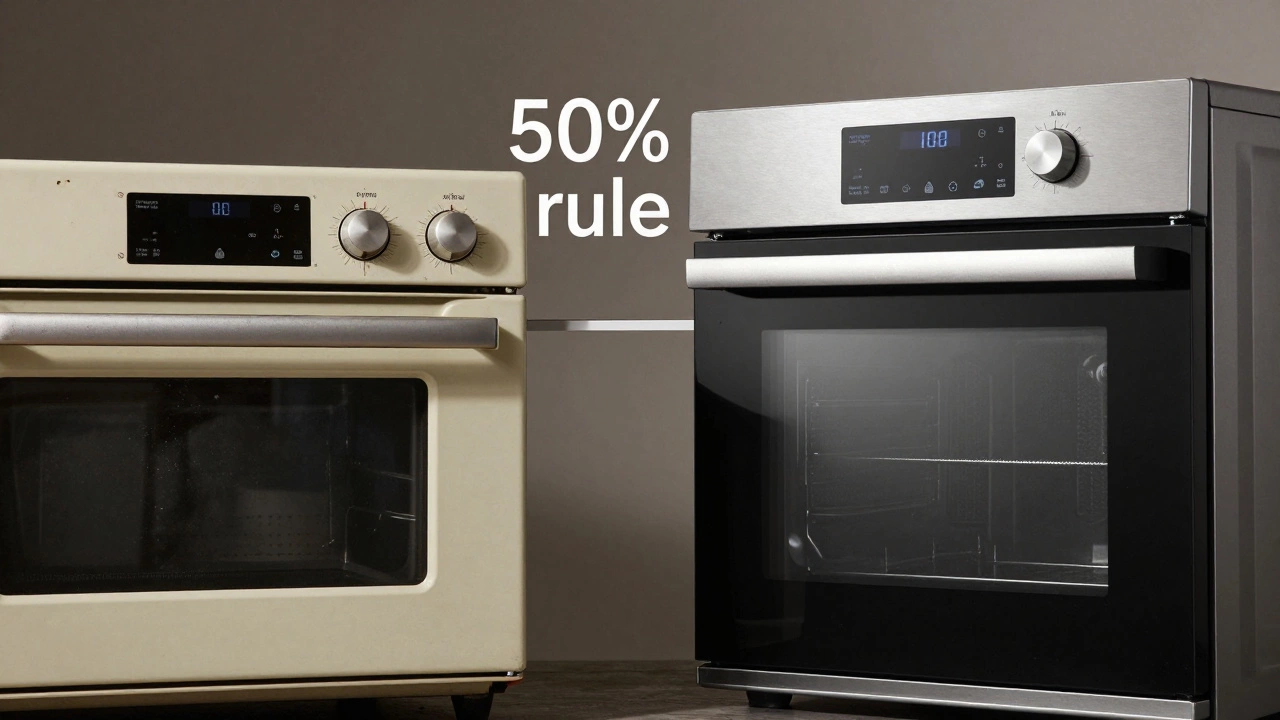
Before we dive into specific parts, let’s look at the general rule of thumb used by most appliance technicians. If the cost of the repair exceeds 50% of the price of a comparable new unit, replacement is usually the smarter financial move.
Why? Because if you spend $300 fixing a $600 oven, you’ve now invested half the value of a new machine into an old one. That old oven is likely prone to other failures soon. By replacing it, you get a modern unit with a warranty, better energy efficiency, and often improved safety features.
However, this rule has exceptions. If your oven is a high-end model costing $2,000 or more, spending $800 on a repair might still make sense because the replacement cost is so high. Conversely, if you have a basic $400 oven, any repair over $200 is likely a waste of money.
When Repairing Makes Financial Sense
There are specific scenarios where calling a pro is the clear winner. These usually involve minor components that wear out but don’t indicate total system failure.
- Thermal Fuse or Heating Element: A broken heating element or tripped thermal fuse is common and relatively cheap to fix. Parts often cost between $20 and $80, and labor is minimal since these are accessible components.
- Oven Door Gasket: If your door seal is cracked or brittle, heat escapes, making the oven work harder. Replacing the gasket costs under $100 including labor and restores efficiency immediately.
- Control Board Glitch: Sometimes the issue is software-related or a loose connection rather than a fried board. A technician can often reset or reseat connections for a diagnostic fee, saving you hundreds.
- Age Under 7 Years: If your oven is less than seven years old, it’s likely built to last longer. Fixing it extends its life significantly without risking immediate subsequent failures.
In these cases, the repair cost is low, and the remaining lifespan of the appliance is high. You’re getting good value for your dollar.
When Buying New Is the Better Choice
On the flip side, some problems signal that your oven is nearing the end of its road. Ignoring these signs can lead to higher energy bills and potential safety hazards.
- Main Control Board Failure: The control board is the brain of the oven. When it fails, repairs can run $400-$600 plus labor. Since boards are complex and prone to moisture damage, another failure is likely down the line.
- Gas Valve Assembly Issues: For gas ovens, valve problems are serious. They involve gas lines and require certified technicians. The risk of leaks makes replacement safer and often more economical than repeated risky repairs.
- Repeated Repairs: If you’ve already spent money on fixes in the last two years, the underlying structure or wiring may be degrading. One more repair could push you past the 50% threshold.
- Age Over 10-12 Years: Most residential ovens have a lifespan of 10 to 15 years. If yours is older, parts may be harder to find, and efficiency losses will hurt your electricity or gas bill.
If your oven falls into these categories, buying new isn’t just about convenience; it’s about long-term savings and safety.
Hidden Costs: Energy Efficiency and Technology
We often forget that an old oven is a silent money drain. Ovens manufactured before 2020 generally lack the insulation and precise temperature controls of modern units.
A new convection oven circulates air more efficiently, cooking food faster and using less energy. According to recent energy data, upgrading from an old conventional oven to a new ENERGY STAR-rated model can save homeowners anywhere from $10 to $30 per year on utility bills. While that doesn’t sound like much, over ten years, that adds up to $100-$300 in savings-money that helps offset the initial purchase price.
Plus, consider the technology gap. Modern ovens offer self-cleaning cycles that actually work (without burning off paint), precise digital controls, and connectivity options. If you value ease of use and consistent results, a new oven pays dividends in daily satisfaction, not just dollars.
Toronto-Specific Considerations for 2026
Living in Toronto, you have unique factors to weigh. First, labor rates. Appliance repair technicians in the Greater Toronto Area charge between $90 and $120 per hour for service calls. Diagnostic fees alone can range from $75 to $100. This means even a simple part replacement has a significant labor overhead.
Second, availability. If you have a niche European brand or an older model, finding a technician who specializes in it might take weeks. Meanwhile, local big-box retailers and specialty appliance stores in Toronto often have floor models on sale, especially during seasonal changes like spring cleaning month. Waiting for a repair part could mean weeks of no oven, whereas buying new gets you cooking again within days.
Finally, disposal. In Toronto, disposing of large appliances requires coordination with waste management services or paid pickup services. Factor in a potential $50-$100 fee for hauling away your old oven if you choose to replace it.
| Scenario | Estimated Cost | Verdict |
|---|---|---|
| Heating Element Replacement | $150 - $250 | Repair (if oven is <7 yrs old) |
| Control Board Replacement | $400 - $600 | Replace (unless high-end model) |
| Door Seal/Gasket | $80 - $120 | Repair (Always worth it) |
| New Mid-Range Electric Oven | $600 - $900 | Compare against repair quote |
| New High-End Smart Oven | $1,200+ | Investment for tech lovers |
How to Make the Final Decision
Don’t guess. Get data. Here is your step-by-step plan:
- Get a Quote: Call a reputable local technician. Ask for a flat-rate estimate for the repair, including diagnostics. Avoid hourly billing if possible, as it can spiral.
- Check the Age: Look up your model number online to see when it was manufactured. If it’s over 10 years old, lean towards replacement.
- Price New Models: Visit local stores or check online prices for a similar-sized, similarly-featured new oven. Don’t just look at the cheapest option; look for reliability ratings.
- Apply the Math: Is the repair cost more than half the price of the new oven? If yes, buy new. If no, and the oven is young, repair it.
- Consider Your Lifestyle: Do you cook daily? A reliable oven is crucial. Do you rarely bake? A cheap repair might suffice until you’re ready to upgrade.
Remember, peace of mind is part of the equation. Knowing your oven won’t fail during a holiday dinner is worth paying extra for, whether that’s through a solid repair or a new warranty-backed purchase.
Is it worth repairing a 15-year-old oven?
Generally, no. A 15-year-old oven is at the end of its expected lifespan. Even if you fix one issue, another component is likely to fail soon. The energy inefficiency of such an old unit also adds to your monthly bills. Unless it is a very high-end professional model, replacing it is usually more cost-effective and safer.
What is the average cost to repair an oven in Toronto?
In Toronto, simple repairs like replacing a heating element or door switch typically cost between $150 and $300. More complex issues involving control boards or gas valves can range from $400 to $600 or more, depending on the brand and part availability. Diagnostic fees usually add $75-$100 if the repair isn't performed.
Can I fix my oven myself to save money?
You can attempt simple fixes like cleaning vents or checking circuit breakers. However, internal repairs involving electrical components or gas lines should be left to professionals. DIY attempts can void warranties, cause further damage, or create serious safety hazards like fires or gas leaks.
How long does a typical oven last?
Most residential electric ovens last between 10 and 15 years. Gas ovens may last slightly longer, around 15 to 20 years, due to simpler mechanical components. Regular maintenance, like cleaning spills promptly and ensuring proper ventilation, can help extend their lifespan.
Are new ovens significantly more energy efficient?
Yes. Modern ovens, especially those with convection fans and better insulation, use less energy to maintain temperature. An ENERGY STAR-certified oven can save you $10-$30 annually on energy costs compared to an older model. Over several years, these savings contribute to the overall value of purchasing a new unit.