

What Parts Fail in a Washing Machine? Common Breakdowns and Fixes
 Jun, 29 2026
Washing Machine Troubleshooter
Select the symptom you are experiencing:
Diagnosis Result
DifficultyLikely Culprit:
Why it happens:
Est. Repair Cost
Includes parts & labor estimate
There is nothing quite as frustrating as opening your laundry room to find a puddle on the floor or hearing a sound like a cement mixer coming from your washer. You just want clean clothes, not a plumbing emergency or a noise complaint from the neighbors. Before you call a technician or consider buying a new unit, it helps to know exactly what is going wrong inside that metal box. Most washing machine problems boil down to a handful of specific components wearing out over time.
Understanding which parts fail most often can save you hundreds of dollars in unnecessary service calls. Some issues are simple fixes you can handle with a wrench and some patience. Others require professional expertise due to safety risks or complex disassembly. This guide breaks down the most common points of failure in modern washing machines, explaining why they break, how to spot the symptoms, and whether you should attempt a DIY repair or hire a pro.
The Door Seal: The First Line of Defense
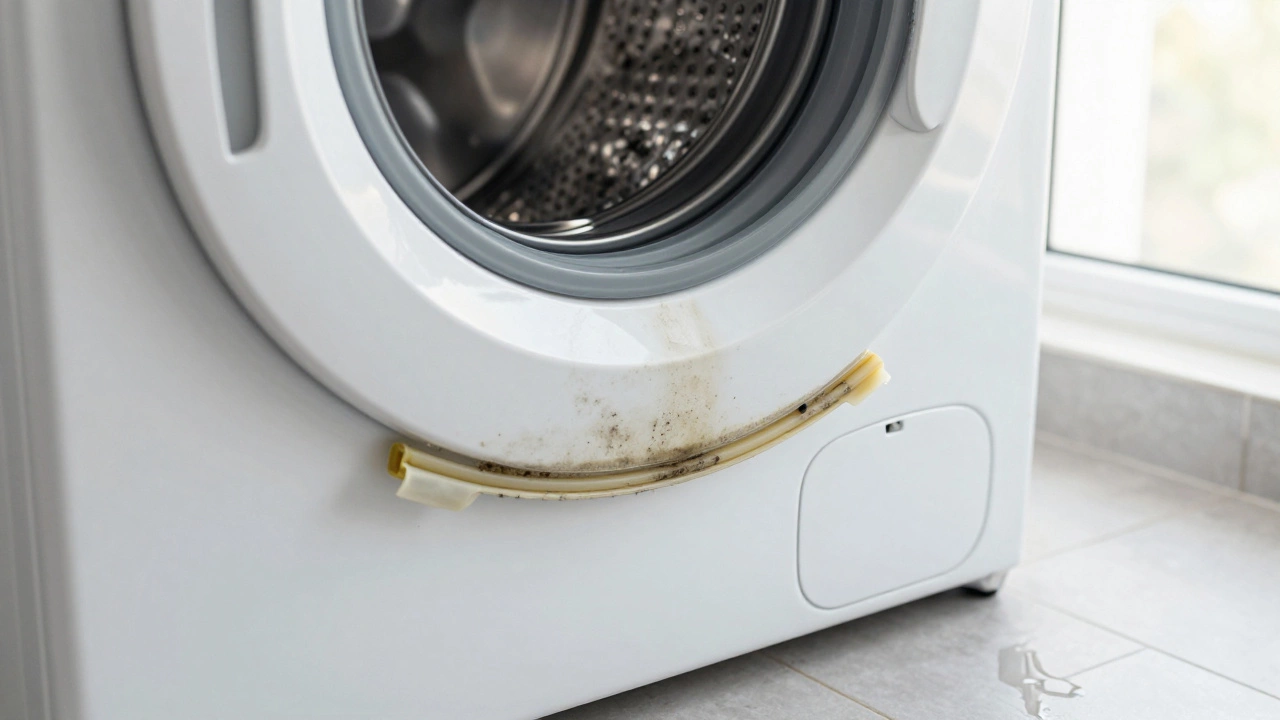
If you own a front-loading washing machine, the rubber gasket around the door-often called the door boot seal-is one of the most vulnerable parts. It creates an airtight and watertight barrier between the outside world and the wet interior. Over time, this constant exposure to water, detergent residue, and temperature changes takes its toll.
| Symptom | Cause | Fix Difficulty |
|---|---|---|
| Water leaking onto the floor during wash cycles | Tears, holes, or cracks in the rubber | Moderate (DIY possible) |
| Foul, mildew-like smell coming from the machine | Trapped debris and mold growth in folds | Easy (Cleaning required) |
| Visible black spots or green slime on the rubber | Bacterial and fungal buildup | Easy (Deep cleaning needed) |
The problem isn't always immediate leakage. Often, small pieces of lint, coins, or even socks get trapped in the folds of the seal. This trapped moisture becomes a breeding ground for mold and bacteria, leading to that distinct "wet dog" smell that clings to your freshly washed clothes. If you notice dark streaks on the rubber, don't ignore them. A quick deep clean with vinegar and baking soda might suffice, but if the rubber feels brittle or has visible tears, replacement is the only long-term solution. Replacing a door seal is a manageable DIY project for most people, provided you have basic tools and follow a video tutorial specific to your model.
Drum Bearings: The Silent Grinders
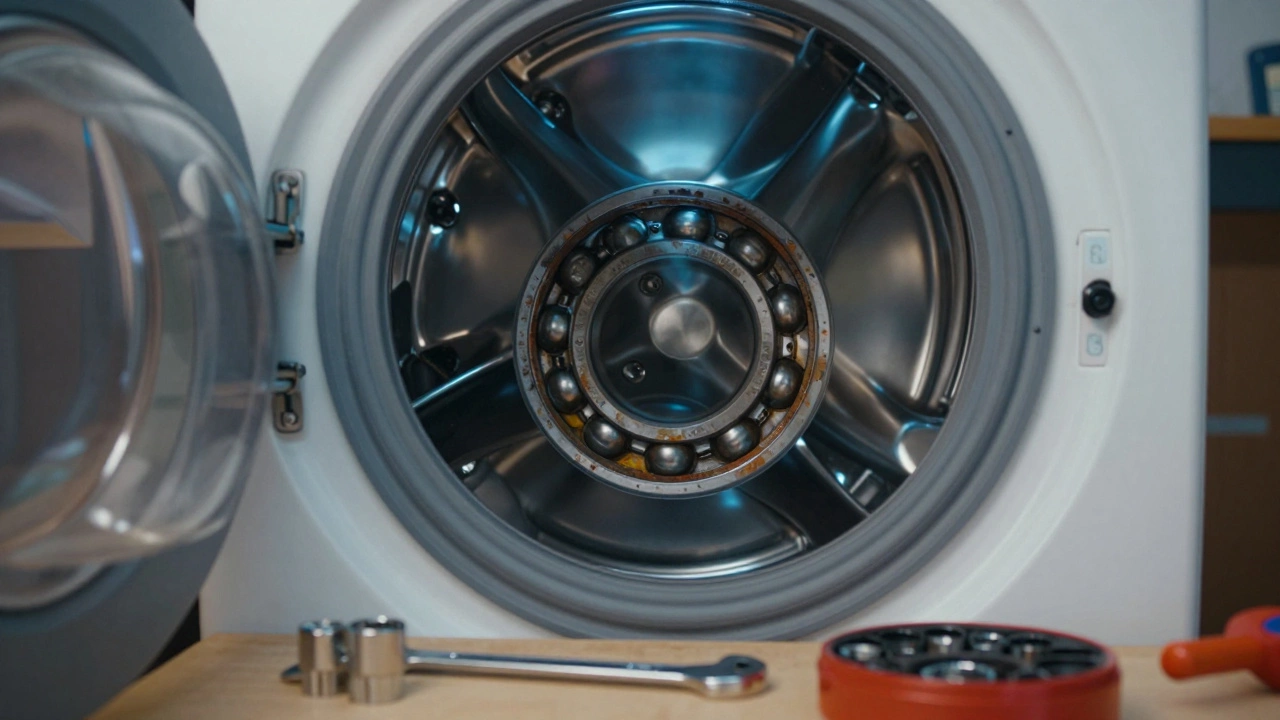
When your washing machine starts sounding like a jet engine taking off during the spin cycle, your heart sinks. This loud roaring or grinding noise is almost always caused by failing drum bearings. These small steel balls sit inside a raceway at the back of the drum, allowing it to spin smoothly at high speeds. Without them, the drum would grind directly against the outer tub, causing catastrophic damage.
Why do bearings fail? Usually, it's because water has leaked past the rear shaft seal. Once water gets into the bearing assembly, rust sets in quickly. Rust destroys the smooth surface of the steel balls and the raceway, creating friction and heat. As the wear progresses, the noise gets louder. Eventually, the drum may wobble excessively or stop spinning altogether.
Here is the hard truth about bearing failure: it is rarely a cheap fix. To replace the bearings, you typically have to split the entire cabinet of the washing machine in half. In many cases, especially with cheaper models, the cost of labor and parts approaches the price of a new machine. However, if you have a high-end appliance with a long lifespan ahead, replacing the bearings (and the associated shaft seals) can extend the life of the machine by another decade. If you hear that roar, act fast. Continuing to run the machine can destroy the motor and the outer tub, making repair impossible.
The Drain Pump: Clogs and Whirring Noises
Does your washing machine refuse to drain water, leaving your clothes soaking wet at the end of the cycle? Or does it make a loud humming or whirring noise when it tries to pump water out? The culprit is likely the drain pump. This small electric motor pushes water out of the machine through the drain hose. It is located at the bottom of the machine, usually behind a small access panel.
The drain pump is surprisingly resilient, but it is also the first line of defense against foreign objects. People drop everything into washing machines: coins, buttons, bra wires, hair ties, and small children's toys. These items can slip past the drum holes and get sucked into the pump impeller. When a coin jams the impeller, the pump motor strains to turn, producing a loud noise or burning out completely.
Before assuming the pump motor itself is broken, check the filter. Most modern washing machines have a self-cleaning filter accessible via a small door at the bottom front. Pulling this filter out often reveals a shocking amount of debris. Clean the filter, remove any visible obstructions from the pump housing, and try running a drain cycle. If the pump still doesn't work, you may need to test the motor with a multimeter for continuity. If there is no continuity, the pump needs replacement. Swapping a drain pump is generally straightforward and inexpensive, making it one of the best DIY repairs for a non-draining washer.
Inlet Valves: Leaks and Temperature Issues
If your washing machine leaks from the back or fails to fill with water, the issue likely lies with the water inlet valves. These solenoid-operated valves control the flow of hot and cold water into the machine. They are connected directly to your home's water supply lines.
Over time, sediment and mineral deposits from your water supply can clog the screens inside the inlet valves. This restricts water flow, causing the machine to take much longer than usual to fill, or to fill incorrectly. In harder water areas, this buildup can prevent the valve from closing completely, leading to slow leaks even when the machine is turned off. Imagine waking up to a flooded laundry room because a tiny valve didn't shut tight. It happens more often than you think.
Another sign of inlet valve failure is incorrect water temperature. If you select a hot wash but the water comes in cold, one of the solenoids may have failed. Conversely, if cold water mixes with hot unexpectedly, the internal diaphragm separating the two chambers may be damaged. Testing these valves requires disconnecting the water lines and checking for electrical continuity with a multimeter. Replacement is relatively easy, but remember to turn off the water supply before starting any work. Always inspect the water inlet hoses for bulges or cracks while you're at it, as burst hoses are a common cause of major water damage.
The Drive Belt: Slipping and Stopping
In many top-loading and some older front-loading models, the motor transfers power to the drum via a rubber drive belt. This belt wraps around the motor pulley and the transmission pulley. Unlike direct-drive motors, which connect directly to the drum, belt-driven systems rely on tension and friction to operate.
Rubber degrades over time. Heat, moisture, and age cause the belt to crack, stretch, or become glazed. A stretched belt loses tension, causing it to slip on the pulleys. You'll hear a squealing noise, similar to a car brake, especially during the agitation or spin phases. If the belt snaps completely, the drum will not move at all, though the motor may still hum.
Checking the belt is usually easy. Unplug the machine, tilt it back (with help), and look underneath. If the belt is visibly cracked, frayed, or loose, it needs replacement. Tightening the motor mount bracket can sometimes restore proper tension, but if the rubber is deteriorated, a new belt is essential. This is a very low-cost part and a simple swap, often taking less than 30 minutes. Regular inspection of the belt can prevent unexpected breakdowns mid-cycle.
Electronic Control Boards: The Brain Freeze
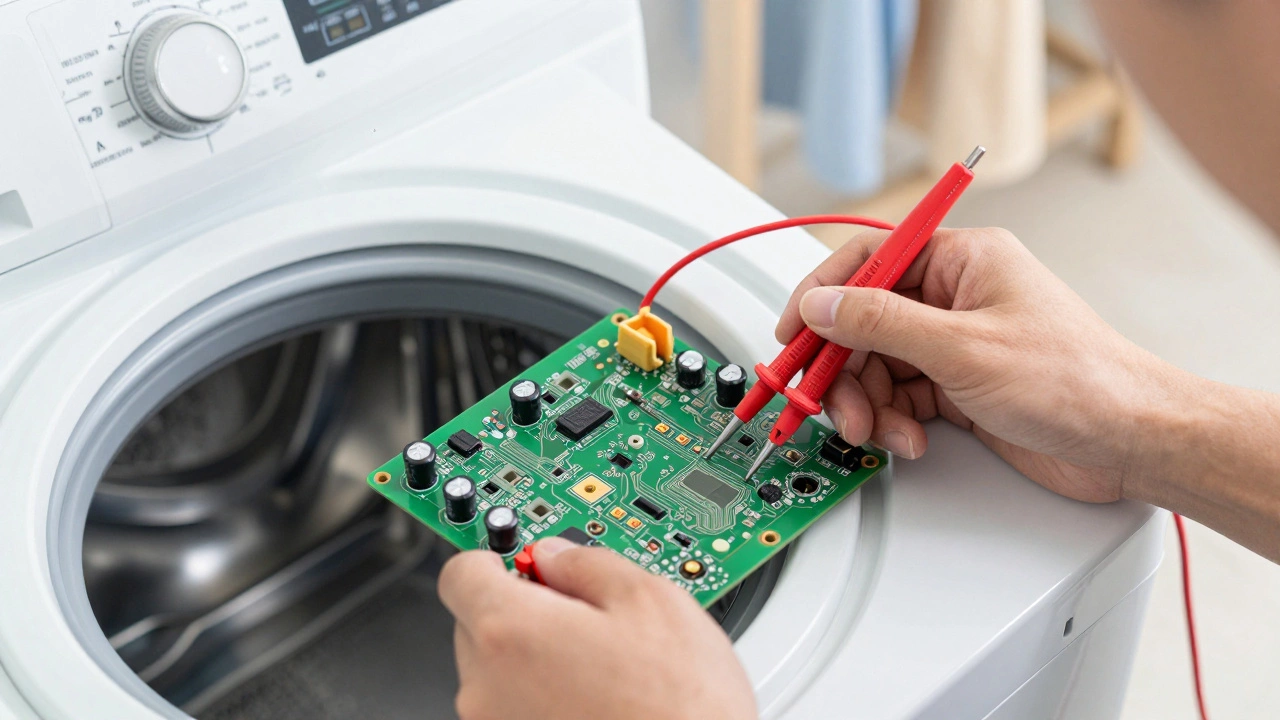
Modern washing machines are essentially computers with drums. The main control board manages everything: water levels, temperatures, spin speeds, and error codes. While these boards are generally reliable, they are sensitive to moisture and power surges. If a leak occurs near the board, corrosion can set in, causing erratic behavior. Buttons might stop responding, displays could flicker, or the machine might randomly shut off mid-cycle.
Power surges from storms or grid fluctuations can also fry the delicate electronic components on the board. If your washer suddenly stops working without any mechanical noise or leak, and resetting the breaker doesn't help, the control board might be dead. Diagnosing a bad board can be tricky because other sensors or switches can mimic board failure. For example, a faulty lid switch can prevent the machine from starting, looking exactly like a board issue.
Replacing a control board is expensive compared to mechanical parts. Before spending money on a new board, ensure you've checked simpler components like fuses, wiring connections, and user interface panels. If the board is indeed corrupted, replacement involves removing the back panel, disconnecting numerous wire harnesses, and installing the new unit. It's a job for someone comfortable with electronics and following detailed wiring diagrams.
Knowing When to Call a Professional
While many washing machine repairs are within reach of a handy homeowner, some situations demand professional intervention. Gas-powered dryers (if combined units) involve gas lines and combustion risks. High-voltage components in the motor or heater assemblies pose shock hazards. If you are unsure about disconnecting power or water safely, do not proceed.
Additionally, if your machine is under warranty, attempting DIY repairs can void that coverage. Check your warranty terms before unscrewing anything. For complex issues like transmission failure or severe drum imbalance requiring structural realignment, a certified technician has the tools and experience to diagnose the root cause accurately. They can also identify secondary damage that a novice might miss, preventing future breakdowns.
Regular maintenance goes a long way in preventing these failures. Leave the door open after use to let the interior dry. Run a monthly cleaning cycle with specialized cleaner or vinegar. Check the filters regularly. By treating your washing machine with care, you can extend its life significantly and avoid the stress of sudden, costly repairs.
How much does it cost to replace washing machine bearings?
The cost varies widely depending on your location and the brand of the machine. Parts alone can range from $50 to $150. However, labor is intensive, often costing between $200 and $400. In total, expect to pay $300 to $600 for a professional bearing replacement. Due to the high cost, many technicians recommend replacing the entire machine if it is older than 7-10 years.
Can I fix a leaking washing machine myself?
Yes, many leaks are DIY-friendly. Start by checking the door seal for tears and the drain hose for kinks or holes. Inspect the water inlet hoses for bulges. If the leak originates from the bottom, check the drain pump seal. Replace worn seals or hoses using parts specific to your model number. Always turn off the water supply before testing for leaks.
Why is my washing machine making a loud grinding noise?
A loud grinding or roaring noise during the spin cycle is a classic sign of failing drum bearings. Other causes include a foreign object stuck between the inner and outer drum, or a worn-out drive belt slipping on the pulleys. Stop using the machine immediately to prevent further damage to the motor or tub.
How often should I clean the washing machine filter?
It is recommended to clean the drain pump filter every 1-3 months, depending on usage frequency. Homes with pets or young children may need more frequent cleaning due to increased lint and debris. A clogged filter can cause drainage issues, overflow, and unpleasant odors.
Is it worth repairing an old washing machine?
If the repair cost exceeds 50% of the price of a new, energy-efficient model, replacement is usually the better financial choice. Additionally, consider the age of the machine. If it is over 10 years old, multiple parts may fail soon, leading to repeated repair bills. Newer models also offer better water and energy efficiency, saving money on utility bills.