

Is It Worth Repairing a Boiler? Cost, Age & Efficiency Guide
 Aug, 2 2026
Your boiler gurgles, clicks, or just stops working entirely. The house gets cold, the water goes lukewarm, and your phone lights up with quotes from local technicians. The big question isn't just "can it be fixed?" It's whether you should spend money fixing an old machine or cut your losses and buy a new one.
This is a classic home maintenance dilemma. You don't want to throw good money after bad, but you also don't want to be shivering in January because you waited too long. Making the right call depends on three things: the age of your unit, the specific part that broke, and the energy efficiency gap between your current system and modern standards.
The Golden Rule: The Half-Life Calculation
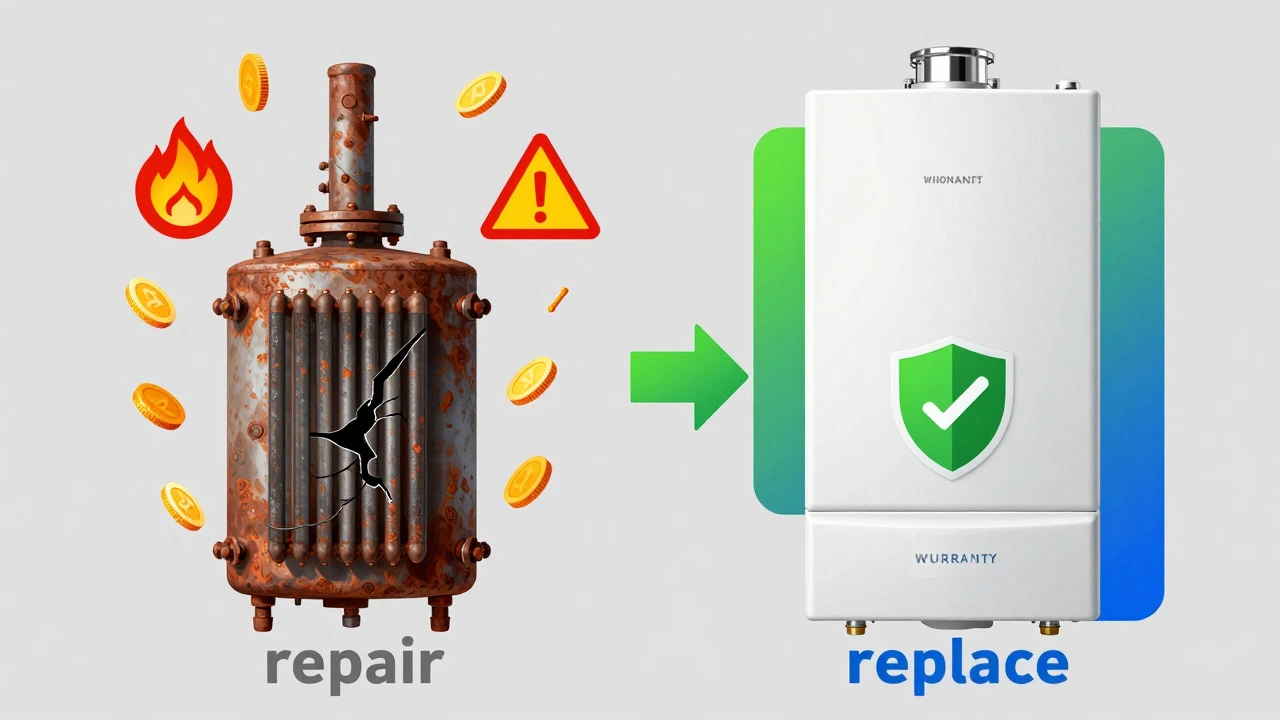
When deciding if it is worth repairing a boiler, start with the most practical metric: the half-life rule. Most residential boilers have a functional lifespan of 10 to 15 years. If your unit is past the halfway point of its expected life (around 7-8 years), every major repair becomes a riskier investment.
If your boiler is brand new, under warranty, and has a minor issue, repair it immediately. If it is 14 years old and needs a new heat exchanger, skip the repair. The math rarely works in your favor when the core component fails late in the cycle. You are essentially buying a few more months of service for a price that could cover a significant portion of a new, efficient unit.
Repair vs. Replace: A Side-by-Side Look
To make this decision easier, we need to look at the financials and performance metrics directly. Here is how a typical repair scenario stacks up against a replacement in the current market.
| Factor | Repair Scenario | Replacement Scenario |
|---|---|---|
| Upfront Cost | $150 - $600 (parts + labor) | $2,500 - $4,500 (unit + installation) |
| Energy Efficiency | Same as before (often 70-80% for older units) | 90-95%+ (modern condensing models) |
| Lifespan Remaining | Uncertain; potential for further failures | 10-15 years guaranteed |
| Warranty Coverage | Usually 1 year on parts/labor only | 5-10 years on parts and labor |
| Environmental Impact | Higher carbon footprint per kWh | Lower emissions due to better combustion |
Notice the efficiency column. Older non-condensing boilers waste a significant amount of heat through the flue. Modern condensing boilers capture that wasted heat to pre-warm the incoming water, boosting efficiency dramatically. Even if a repair is cheap, you might pay back the cost of a new boiler in energy savings within two to four years.
Signs Your Boiler Is Done For
Sometimes the decision is made for you by the physical condition of the appliance. Pay attention to these red flags during your next inspection or breakdown:
- Frequent Call-Outs: If you have called a technician more than once in the last 12 months, the underlying system is degrading. One fix often leads to another.
- Noisy Operation: Kettling (a boiling sound) indicates limescale buildup in the heat exchanger. While power flushing can help, persistent noise suggests internal corrosion.
- Yellow Flame: A healthy gas flame should be blue. A yellow or orange flame indicates incomplete combustion, which can produce carbon monoxide. This is a safety hazard, not just a performance issue.
- Rising Energy Bills: If your usage habits haven't changed but your bills have spiked, your boiler is working harder to produce less heat. This is a clear sign of declining efficiency.
When Repair Actually Makes Sense
It’s not always "replace." There are scenarios where repairing is the smart, economical choice. If your boiler is less than five years old, it likely has many productive years left. In this case, replacing a single faulty component like a thermostat, pressure valve, or ignition module is cost-effective.
Also consider the type of failure. Minor issues like airlocks, low pressure, or a stuck valve are often DIY fixes or quick, inexpensive professional jobs. These do not indicate systemic failure. However, if the heat exchanger cracks, that is the heart of the boiler. Replacing it costs nearly as much as a new unit and requires draining the entire system, making it a poor value proposition for older models.
The Hidden Costs of Waiting
Many homeowners delay replacement hoping to stretch the budget, but waiting has hidden costs. An aging boiler loses efficiency gradually. Over five years, that 10% drop in efficiency adds up to hundreds of dollars in wasted fuel. Additionally, older units are less reliable. A breakdown in the middle of winter often incurs emergency call-out fees, which can double the standard labor rate.
There is also the resale value factor. Homebuyers increasingly look for updated mechanical systems. A boiler installed in 2010 is a liability on a listing in 2026. Updating to a high-efficiency model can be a selling point, whereas an ancient, unreliable unit may lead to renegotiations during the sale process.
Financial Incentives and Rebates
In many regions, including parts of Canada and the US, there are incentives for upgrading to high-efficiency heating systems. Check for local utility rebates or government tax credits for installing ENERGY STAR-rated condensing boilers. These incentives can offset 10-20% of the installation cost, tipping the scales firmly toward replacement.
If you are considering a switch to electric heat pumps instead of gas, the incentives are often even larger. However, this requires a broader renovation of your hydronic system. Stick to gas-to-gas replacements unless you are ready for a full home energy audit.
Making the Final Decision
Ask yourself these three questions:
- Is the boiler over 10 years old?
- Will the repair cost more than $400?
- Has the efficiency dropped noticeably (higher bills)?
If you answered yes to any two of these, replace the boiler. If you answered no to all three, repair it. This simple heuristic removes the emotional stress from the decision and focuses on long-term value.
Don't let fear of upfront costs trap you in a cycle of expensive repairs and high energy bills. A new boiler provides peace of mind, lower monthly expenses, and consistent comfort. When in doubt, get two quotes: one for the repair and one for a full replacement with installation. Compare the total cost of ownership over five years, not just the check you write today.
How much does it typically cost to repair a boiler?
Minor repairs, such as fixing a thermostat or replacing a pressure valve, usually cost between $150 and $300. Major repairs involving the heat exchanger or pump can range from $400 to $800 or more, depending on labor rates and parts availability.
What is the average lifespan of a gas boiler?
With regular annual maintenance, a gas boiler typically lasts between 10 and 15 years. Without maintenance, this lifespan can drop to 8 years or less due to premature wear and corrosion.
Are condensing boilers worth the extra cost?
Yes. Condensing boilers are significantly more efficient (90-95%) than older non-condensing models (70-80%). The higher upfront cost is often recouped within 3-5 years through lower natural gas bills.
Can I repair my boiler myself?
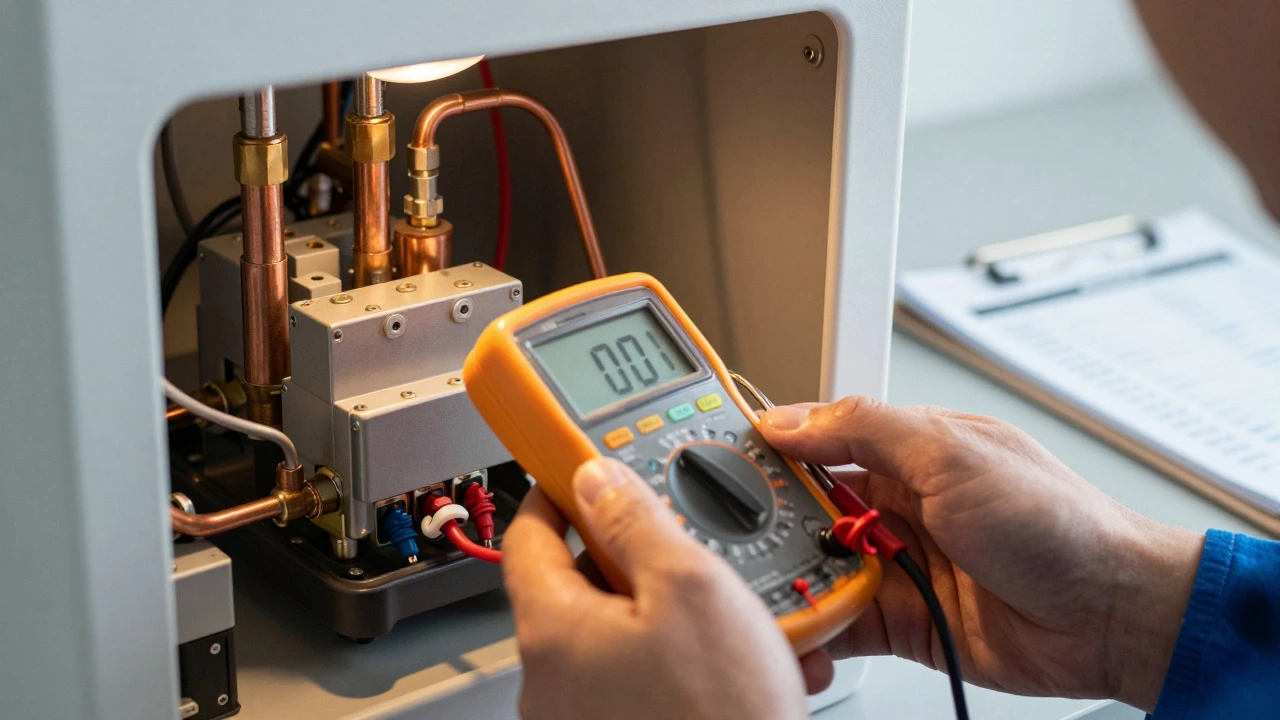
Only very minor issues like bleeding radiators or checking the pressure gauge are safe for DIY. Gas appliances involve combustion and potential carbon monoxide leaks. Always hire a licensed technician for internal repairs to ensure safety and maintain warranty validity.
What are the signs of a failing heat exchanger?
Signs include water leaking from the base of the boiler, rust-colored stains around the unit, a sudden drop in pressure despite topping it up, and a hissing sound during operation. A cracked heat exchanger is a serious safety risk requiring immediate professional attention.