

How to Tell If Your Electric Oven Is Broken: 7 Clear Signs
 Dec, 29 2025
Oven Problem Diagnosis Tool
Oven Problem Diagnosis
Select symptoms you're experiencing to identify the issue and get repair guidance.
Your electric oven used to heat up fast and bake cookies evenly. Now, it takes forever to preheat, or worse - it doesn’t heat at all. Before you call a repair tech or start shopping for a new one, stop. There are clear signs that tell you whether your oven is truly broken or just needs a simple fix.
The oven won’t turn on at all
If you flip the switch and nothing happens - no light, no fan, no display - the issue might not be the oven itself. First, check the circuit breaker. Electric ovens draw a lot of power and often trip a 240-volt breaker. Go to your electrical panel and look for a double-pole breaker labeled "Oven" or "Range." If it’s in the middle or off position, flip it fully off, then back on. If it trips again right away, there’s a short in the wiring or a failed component inside the oven.
Also, make sure the oven isn’t on a timer or locked mode. Some models have a child lock or delayed start that can make it seem broken. Check the display for "LOC," "LOCK," or a clock icon with a lock symbol. Hold the cancel button for 3 seconds to reset it.
The heating element isn’t glowing
The heating element is the metal coil at the top and bottom of your oven. When working, it glows bright orange-red when heated. If you turn the oven to 350°F and see no glow - especially from the bottom element - it’s likely burned out.
Don’t assume it’s broken just because it looks dark. Sometimes the element still works but is failing. Open the oven door, turn the oven on, and watch closely. If you see any flickering, bubbling, or black spots on the coil, that’s a sign of internal damage. A broken element won’t heat, but the oven might still turn on and make noise. Replacing it costs under $50 and takes 20 minutes with basic tools.
The oven heats unevenly
If your cookies burn on one side and stay raw on the other, or your roast is charred on top but raw inside, the oven isn’t distributing heat properly. This isn’t always a sign of a broken oven - it could be a faulty thermostat or a blocked fan.
Test it with an oven thermometer. Place it on the center rack and set the oven to 350°F. Wait 20 minutes. If the thermometer reads 320°F or lower, the thermostat is inaccurate. If it reads 400°F or higher, the oven is overheating. Most thermostats can be recalibrated or replaced. A faulty thermostat is one of the most common reasons people think their oven is broken when it’s just misbehaving.
The oven takes too long to preheat
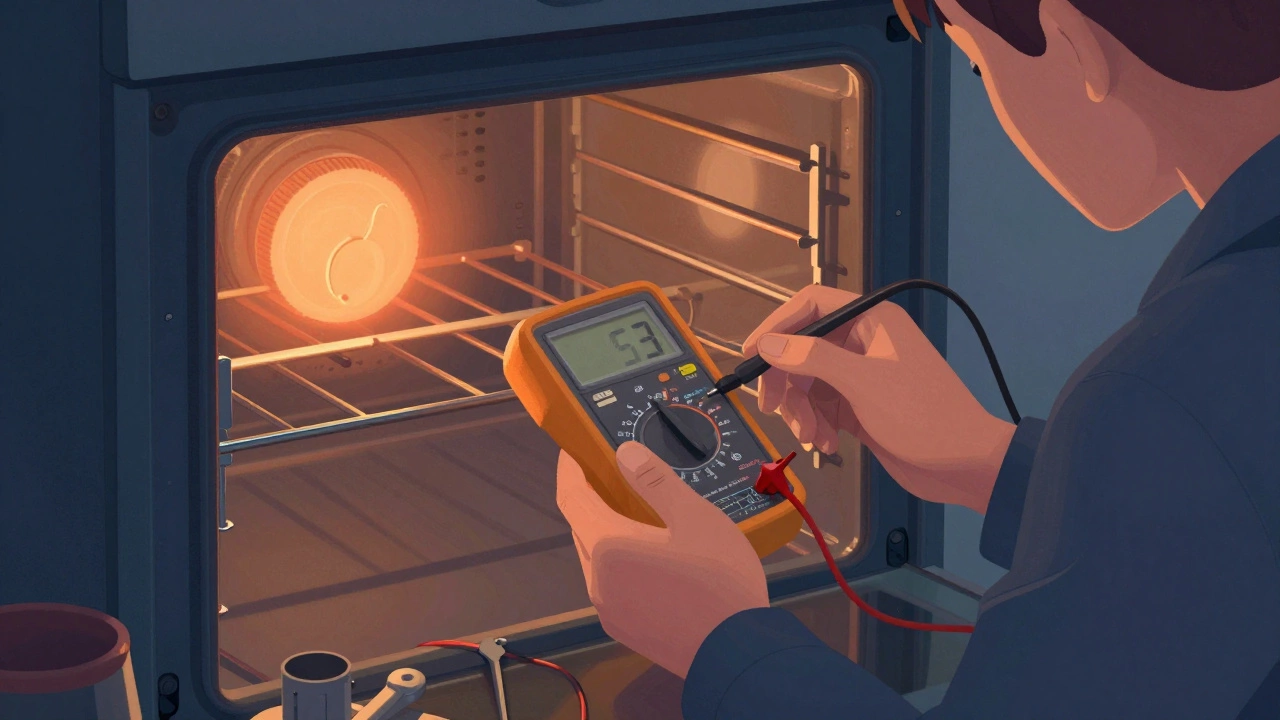
A healthy electric oven should reach 350°F in 10 to 15 minutes. If it’s taking 30 minutes or more, something’s wrong. The most likely culprit is a weak or failing heating element. But it could also be a damaged oven sensor or a dirty oven cavity.
Buildup of grease and food residue acts like insulation, trapping heat and slowing down the preheat cycle. Clean the inside with a non-abrasive oven cleaner. If cleaning doesn’t help, test the oven sensor. It’s a thin metal rod near the back wall. Use a multimeter to check its resistance. At room temperature, it should read around 1,000 to 1,100 ohms. If it’s over 1,500 or below 800, the sensor is bad and needs replacing.
The oven light works but the oven doesn’t heat
This is a classic sign that the control board or power relay is failing. The light runs on 120 volts, but the heating elements need 240 volts. If the light turns on but the oven doesn’t heat, the control board isn’t sending power to the elements. This is harder to diagnose without a multimeter, but it’s a common failure in ovens over 8 years old.
Check the wiring connections behind the control panel. Loose or corroded wires can interrupt the power flow. If you’re not comfortable working with live wiring, don’t risk it. A faulty control board costs $150-$300 to replace, and many repair techs will recommend replacing the whole oven if it’s older than 10 years.
The oven shuts off unexpectedly
If your oven turns off mid-bake, it’s usually a safety feature kicking in. The most common cause is an overheating thermostat or a failed thermal fuse. The thermal fuse is a small safety device that cuts power if the oven gets too hot. Once blown, it can’t be reset - it must be replaced.
Look for signs of overheating: burnt smells, scorch marks near the back panel, or a tripped breaker after the oven shuts off. If the oven restarts after cooling down for an hour, the thermal fuse is likely the issue. Replacing it costs $20-$40 and takes less than 30 minutes. But if the fuse keeps blowing, there’s a deeper problem - maybe a stuck relay or a failing element that’s drawing too much current.
The display shows error codes
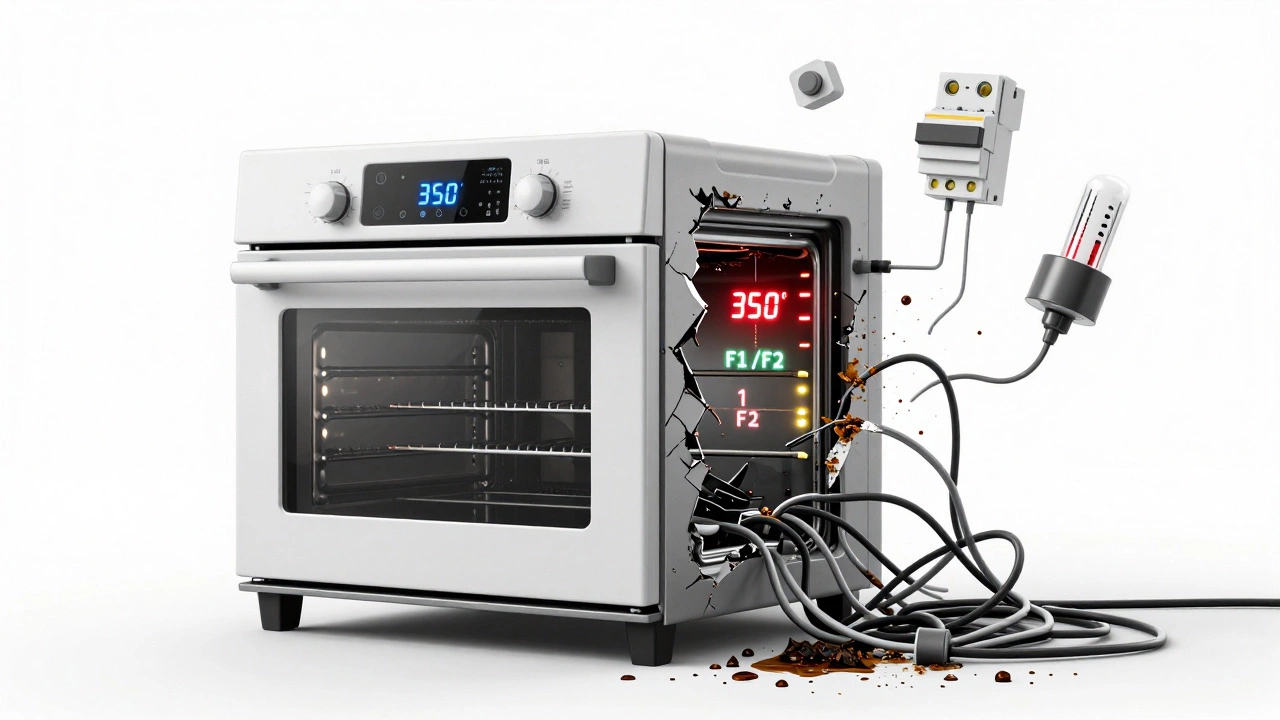
Modern electric ovens display error codes when something’s wrong. Common ones include:
- F1 - Control board failure
- F2 - Oven too hot (thermostat or sensor issue)
- F3 - Open temperature sensor
- F5 - Door lock malfunction
- E0 - Communication error between boards
Check your owner’s manual for the exact meaning of the code. Many manufacturers list them online. Don’t ignore these codes - they’re not random. They point directly to the failing part. If you see F2 or F3, start with the oven sensor. If it’s F1 or E0, the control board is likely the problem.
When to repair vs. replace
Most electric ovens last 13 to 15 years. If yours is older than that and you’re facing multiple issues - a bad element, a failing sensor, and a glitchy display - it’s probably not worth fixing. A new mid-range oven costs $600-$900, and professional repairs can run $150-$400 per visit.
Repair makes sense if:
- The oven is under 10 years old
- Only one part is broken (like the element or sensor)
- The repair costs less than half the price of a new oven
Replace it if:
- Multiple components are failing
- Repair quotes exceed $300
- You’re tired of dealing with inconsistent heat
Energy-efficient models today use 15-20% less power than those from 10 years ago. If your oven is old and inefficient, replacing it might save you money on your electric bill over time.
Can a broken oven element cause a fire?
Yes, but it’s rare. A cracked or damaged heating element can arc or spark if it’s touching the oven wall or metal parts. This can cause smoke or even ignite grease buildup. If you see sparks, smoke, or a burning smell, turn off the oven at the breaker immediately. Don’t use it until it’s inspected.
Why does my oven smell like burning plastic?
New ovens sometimes emit a plastic-like smell during the first few uses - that’s normal. It’s from manufacturing oils burning off. But if your oven is older and suddenly smells like burning plastic, it could be a wire insulation melting or a plastic component near the heating element overheating. Turn off the oven and unplug it. Check for loose wires or melted plastic parts inside. If you see damage, don’t use it until repaired.
Can I replace the oven element myself?
Yes, if you’re comfortable with basic tools. First, turn off the power at the breaker. Remove the screws holding the element in place, disconnect the wires (take a photo before unplugging), and install the new one. Match the wattage and shape exactly. Most elements are universal, but double-check your model number. If you’re unsure, buy the part from the manufacturer’s site using your oven’s serial number.
Is it safe to use an oven that doesn’t heat evenly?
It’s not unsafe, but it’s unreliable. Uneven heating means your food won’t cook properly - you might undercook meat or overburn baked goods. Over time, this can lead to food safety issues. It also wastes energy because you’re running the oven longer to compensate. Fixing the thermostat or cleaning the oven usually solves this.
How often should I clean my oven to prevent problems?
Clean spills right away to prevent buildup. Do a deep clean every 3 to 6 months, depending on how often you use it. Grease and food residue can block airflow, interfere with sensors, and cause overheating. Avoid harsh chemical cleaners on self-cleaning ovens - they can damage the coating. Use baking soda and vinegar, or a cleaner labeled safe for your oven type.
Next steps if your oven is broken
Start with the simplest fixes: check the breaker, clean the oven, test with a thermometer. If those don’t help, identify the part that’s failing - element, sensor, or control board. Buy the part from a trusted supplier using your oven’s model number. If you’re not confident doing the repair yourself, call a certified appliance technician. Most offer free diagnostics.
Keep your receipt and warranty info handy. Some manufacturers still honor warranties on parts for up to 5 years. Even if your oven is out of warranty, a good repair tech can often find used or refurbished parts at a fraction of the cost of new ones.
Don’t assume your oven is beyond repair just because it’s acting up. Most electric ovens fail because of one or two replaceable parts - not because the whole unit is dead. Fixing it yourself saves money, reduces waste, and keeps your kitchen running.