

How Long Do Boilers Last? Lifespan by Type & Maintenance Tips
 Nov, 23 2026
Boiler Lifespan Estimator & Health Check
1. Boiler Profile
2. Your Assessment
Fill out the form to see your estimated lifespan and recommendations.
Estimated Remaining Life
Recommendation:
3. Extend Your Boiler's Life
Check off these tasks to improve your score in the calculator above (conceptual). These are proven methods to add years to your system.
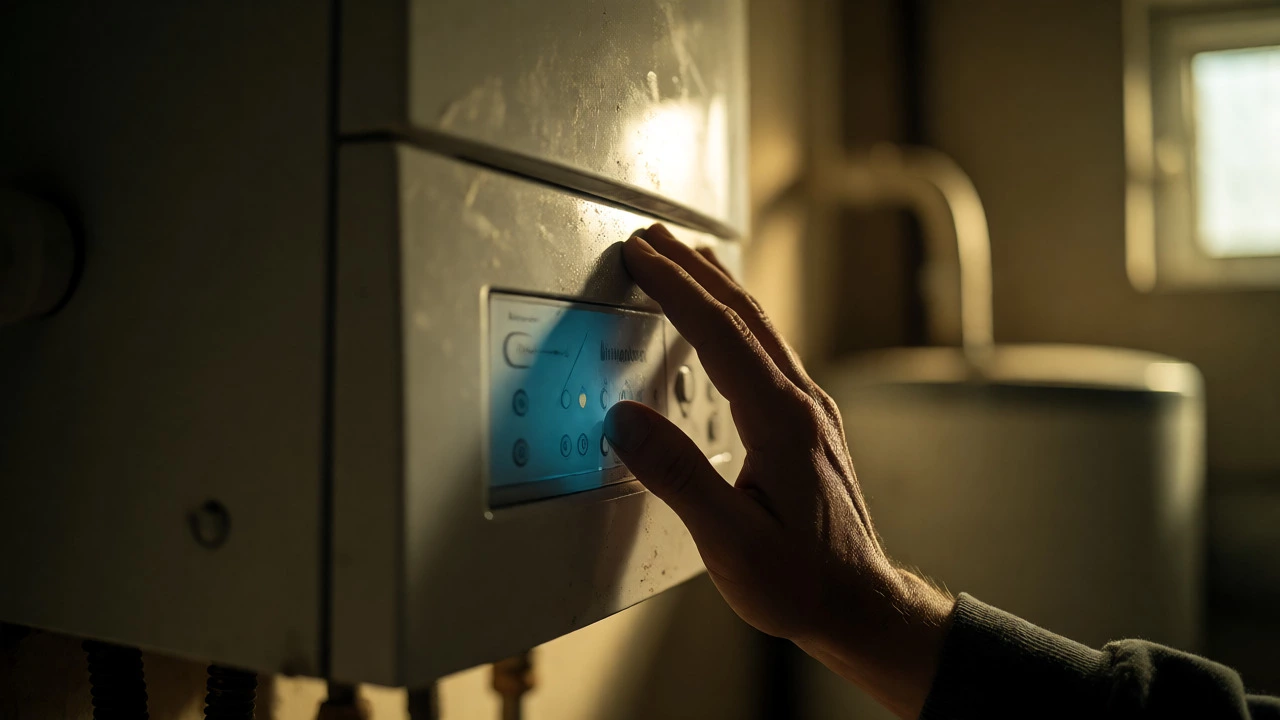
You’re standing in your utility room, staring at that humming metal box on the wall. It’s been keeping you warm for years, but lately, it’s making a weird clanking noise or taking forever to heat up your shower. The big question hits you: how long do boilers last? Is this thing about to quit on you during the next cold snap, or is it just acting up?
Here’s the blunt truth: most modern boilers are built to survive between 10 and 15 years. But that number is just an average. Some cheap units die at year eight; others run like champs for twenty-five. Why the gap? It comes down to three things: what kind of boiler you have, how well you maintain it, and where you live. In Toronto, for example, hard water and frequent freeze-thaw cycles can shorten that timeline if you aren’t careful.
The Real Numbers: Lifespan by Boiler Type
Not all boilers are created equal. The technology inside determines how long the machine can physically withstand the stress of heating water day after day. If you want to know what to expect from your specific unit, look at its type first.
| Boiler Type | Average Lifespan | Key Factor Affecting Life |
|---|---|---|
| Combi Boiler | 10-15 Years | High demand on internal parts due to instant hot water needs. |
| System Boiler | 15-20 Years | Balanced workload; uses a separate hot water cylinder which reduces strain. |
| Regular (Conventional) Boiler | 15-25 Years | Simple mechanics with fewer moving parts than combis. |
| Cast Iron Boiler | 20-30+ Years | Durable material resists corrosion better than steel or aluminum. |
| Condensing Boiler | 10-15 Years | Complex heat exchangers can clog if not flushed regularly. |
Notice the trend? Simpler is often longer-lasting. A cast iron boiler, a heavy-duty unit common in older homes, relies on thick walls that resist rust and pressure damage. These beasts can easily hit 30 years if the water chemistry is managed correctly. On the flip side, a combi boiler, popular in apartments and smaller houses because it saves space, works harder. It heats water on demand, meaning its components cycle on and off constantly. That constant starting and stopping wears out valves and pumps faster.
Why Your Boiler Might Die Early
If your boiler is only ten years old and already leaking, don’t blame bad luck. Blame neglect or environment. Here are the killers that shave years off your equipment.
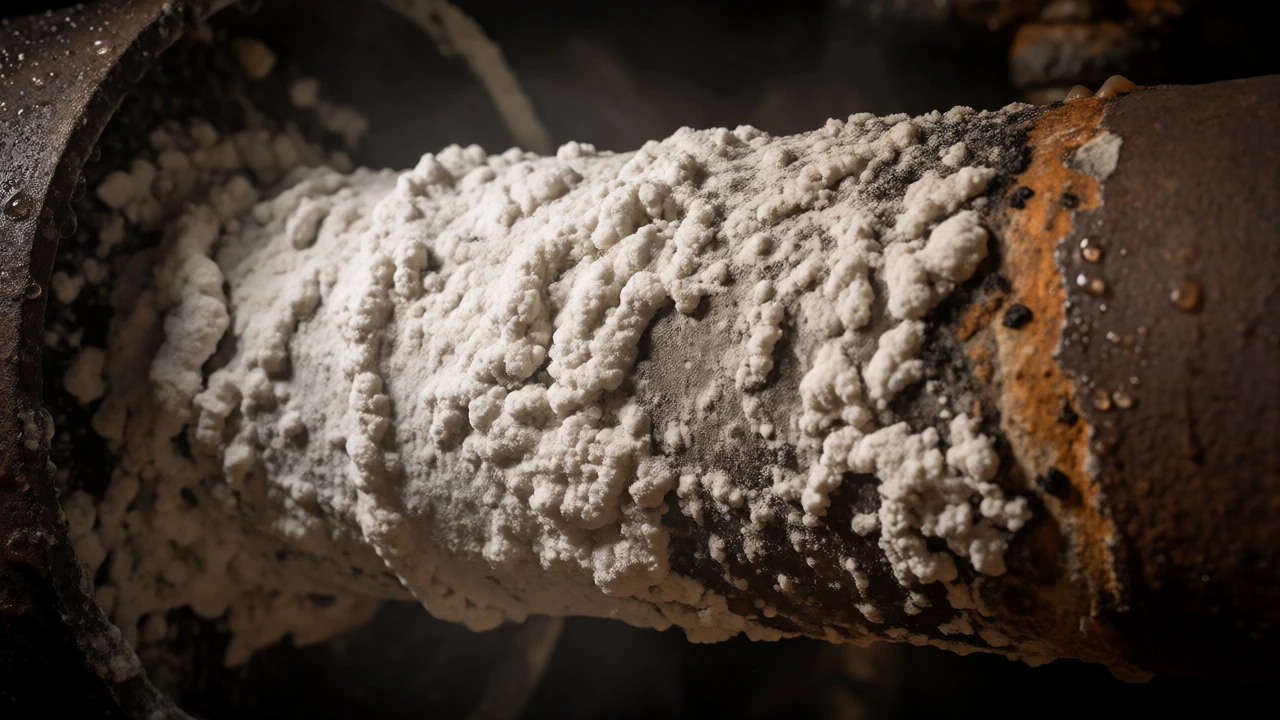
Limescale buildup is the silent assassin. In areas with hard water, calcium deposits coat the heat exchanger. This acts like insulation, preventing heat from transferring to the water. The boiler has to work twice as hard to get the same temperature, overheating itself in the process. Eventually, the metal cracks. If you live in a region with high mineral content, installing a scale reducer isn’t optional-it’s essential for survival.
Lack of annual servicing is another major culprit. Think of it like changing your car’s oil. You might skip it for two years and still drive, but eventually, the engine seizes. A boiler service cleans out debris, checks gas pressure, and tests safety devices. Without it, minor issues become catastrophic failures. A technician can spot a corroding heat exchanger before it springs a leak, saving you thousands.
Incorrect sizing also plays a role. Did you install a massive boiler in a tiny condo? It will short-cycle-turning on and off rapidly because it reaches the target temperature instantly. This rapid cycling stresses the ignition system and fan motor. Conversely, an undersized boiler runs continuously at full power, burning out components through sheer exhaustion.
Signs It’s Time to Replace vs. Repair
So, your boiler is acting up. Should you fix it or junk it? There’s no magic switch, but there is a financial rule of thumb called the "50% Rule." If the cost of repair exceeds 50% of the price of a new, efficient model, replace it. But beyond money, look for these physical symptoms.
- Frequent Breakdowns: If you’ve called a technician more than twice in one winter, the system is failing. Parts are wearing out across the board, not just in one spot.
- Rising Energy Bills: Older boilers lose efficiency. A new condensing model can be 90%+ efficient, while a 15-year-old unit might hover around 70%. That difference adds up fast on your monthly bill.
- Noisy Operation: Banging, whistling, or gurgling sounds usually indicate kettling (limescale), air in the system, or a failing pump. While some noises are fixable, persistent loud banging often means the heat exchanger is compromised.
- Leaks: Water around the base is bad news. Small leaks might be a loose joint, but if the casing is wet, the internal seals are likely gone. Replacing a sealed unit is rarely worth it.
- Yellow Flame: Check the pilot light or viewing window. A healthy flame is blue. Yellow indicates incomplete combustion, which produces carbon monoxide. This is a safety hazard and a sign the burner assembly is worn.
Extending the Life of Your Boiler
You can’t change the age of your boiler, but you can definitely change how gracefully it ages. Proactive maintenance extends lifespan significantly. Here is what actually works, based on field experience.
Annual Professional Service: Book it every autumn before heating season starts. Ask specifically for a heat exchanger flush if you have hard water. This removes sludge that kills efficiency.
Install a Magnetic Filter: For system boilers with radiators, a magnetic filter catches iron oxide sludge before it enters the boiler. This prevents blockages in the pump and heat exchanger. It’s a cheap upgrade that pays for itself in avoided repairs.
Use Smart Thermostats: Running a boiler at full blast 24/7 wears it out. Smart thermostats optimize run times, reducing the total operating hours. Less running time equals less wear.
Check Pressure Regularly: Most residential boilers operate between 1 and 2 bar. If pressure drops below 1, air gets into the system, causing noise and corrosion. If it spikes above 2.5, relief valves open unnecessarily. Keep it stable.
The Cost of Waiting Too Long
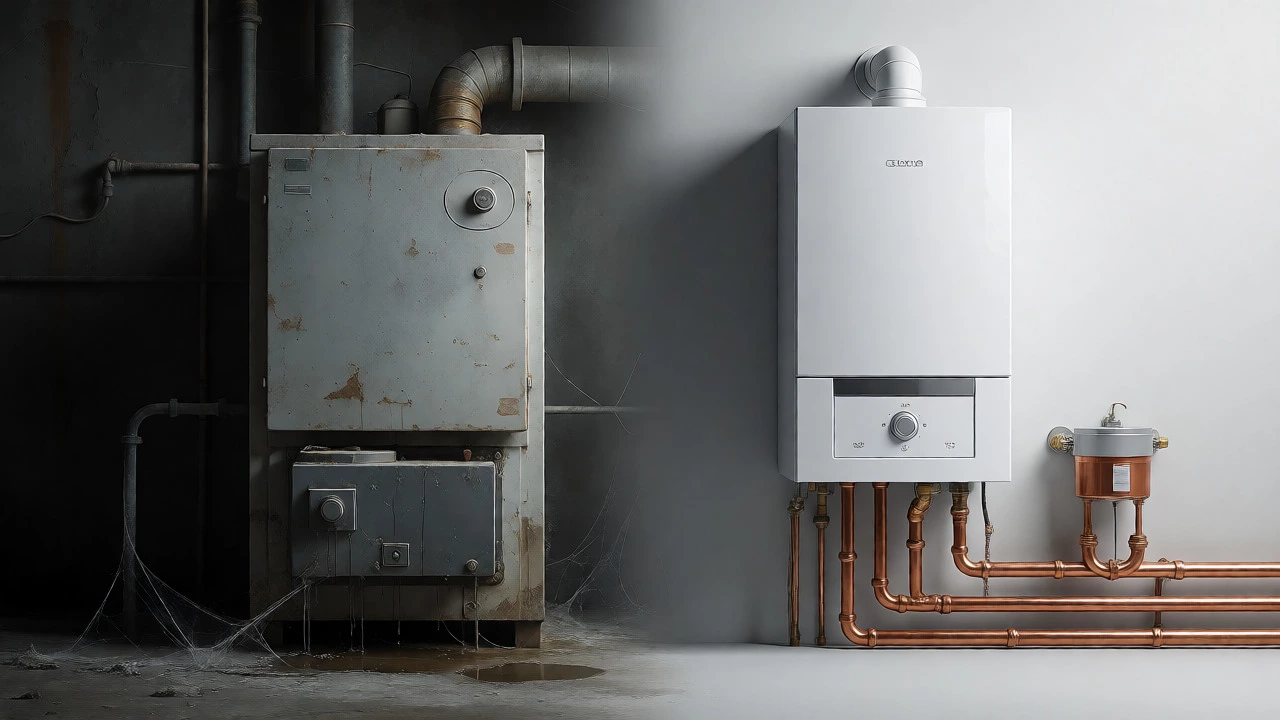
Ignoring an aging boiler feels like saving money until it doesn’t. When a boiler fails in January in Toronto, you’re paying emergency rates. Emergency call-out fees can double or triple standard labor costs. Plus, you risk being without heat for days if replacement parts aren’t available for obsolete models.
Consider the energy waste. An inefficient boiler wastes fuel every single day. Over five years, the wasted energy could literally pay for half of a new high-efficiency unit. Modern condensing boilers recover heat from exhaust gases that older models vent straight outside. That recovered heat translates directly into lower bills.
Also, think about home value. Buyers inspect mechanical systems. A 20-year-old boiler is a red flag. They’ll negotiate a discount or ask for a credit toward replacement. Selling with a recently installed, warrantied boiler makes your home more attractive and easier to sell.
What About Repairs on Older Units?
Spare parts availability changes dramatically after 10-15 years. Manufacturers stop producing components for older models to focus on new lines. Finding a circuit board for a 1998 boiler might require searching used markets or paying premium prices for New Old Stock (NOS). Sometimes, you simply can’t find the part. That’s when replacement becomes the only option, regardless of the boiler’s condition.
Warranty status matters too. Many manufacturers offer 5-10 year warranties on new units. If your boiler is out of warranty, every repair is out-of-pocket. Compare the cumulative cost of recent repairs against the financing options for a new unit. Often, a new boiler payment is similar to the cost of fixing an old one, but you get reliability and efficiency included.
Can I make my boiler last longer than 15 years?
Yes, absolutely. Cast iron boilers frequently exceed 20-25 years. Even modern steel or copper units can reach 15-20 years with rigorous annual servicing, water treatment (like using inhibitors or filters), and avoiding overloading the system. Consistent maintenance is the primary factor in extending lifespan beyond the manufacturer's average estimate.
Is it cheaper to repair or replace a 15-year-old boiler?
It depends on the specific fault. Minor fixes like replacing a diverter valve or thermistor might be worth it. However, major component failures like a cracked heat exchanger or failed control board often cost 50% or more of a new unit's price. At 15 years, efficiency losses also mean higher running costs. Generally, if repair costs exceed $500-$800 CAD, replacement is often the smarter long-term investment due to improved efficiency and warranty coverage.
Does hard water really shorten boiler life?
Yes, significantly. Hard water contains high levels of calcium and magnesium. These minerals deposit as limescale on the heat exchanger. This buildup insulates the metal, causing it to overheat and crack. It also restricts water flow, increasing pressure and strain on the pump. In hard water areas, boilers without scale protection often fail 3-5 years earlier than those in soft water regions.
What is the average life of a gas boiler?
The industry standard average for a gas-fired boiler is 10 to 15 years. High-quality brands with proper installation and regular maintenance can push this to 20 years. Lower-end models or those subjected to harsh conditions (hard water, poor ventilation, lack of service) may fail closer to 8-10 years.
Should I replace my boiler if it's 12 years old and working fine?
If it is working fine, you generally do not need to replace it immediately. However, start budgeting for replacement within the next 2-3 years. Efficiency gains from newer models can offset the cost over time. Also, consider proactive replacement if you plan to stay in the home long-term, as it provides peace of mind and potentially increases property value. If you are selling soon, leave it alone unless it breaks.