

Can an Electrician Fix an Extractor Fan? Pros, Cons, and When to Call a Specialist
 Jun, 8 2026
Extractor Fan Repair Decision Tool
It’s 6 PM. You’re cooking dinner, the smell of garlic and onions is filling the kitchen, and you flip the switch on your range hood. Nothing happens. Or worse, it makes a grinding noise that sounds like a blender crushing rocks. Your first instinct? Grab the phone and call the local electrician who fixed your outlets last month. It makes sense, right? It’s plugged into the wall; it uses electricity.
But here is the catch: calling an electrician for a broken extractor fan is a common mistake that can lead to higher bills, misdiagnosed problems, and voided warranties. While an electrician handles the power supply, they often lack the specific mechanical knowledge required for these appliances. An extractor fan is not just a motor in a box; it is a complex assembly of airflow dynamics, grease filtration, and mechanical bearings.
The Difference Between Electrical and Mechanical Failure
To understand why an electrician might not be the right call, we need to look at what actually breaks. Most people assume "no power" means "electrical issue." In reality, about 70% of extractor fan failures are mechanical or maintenance-related, not electrical.
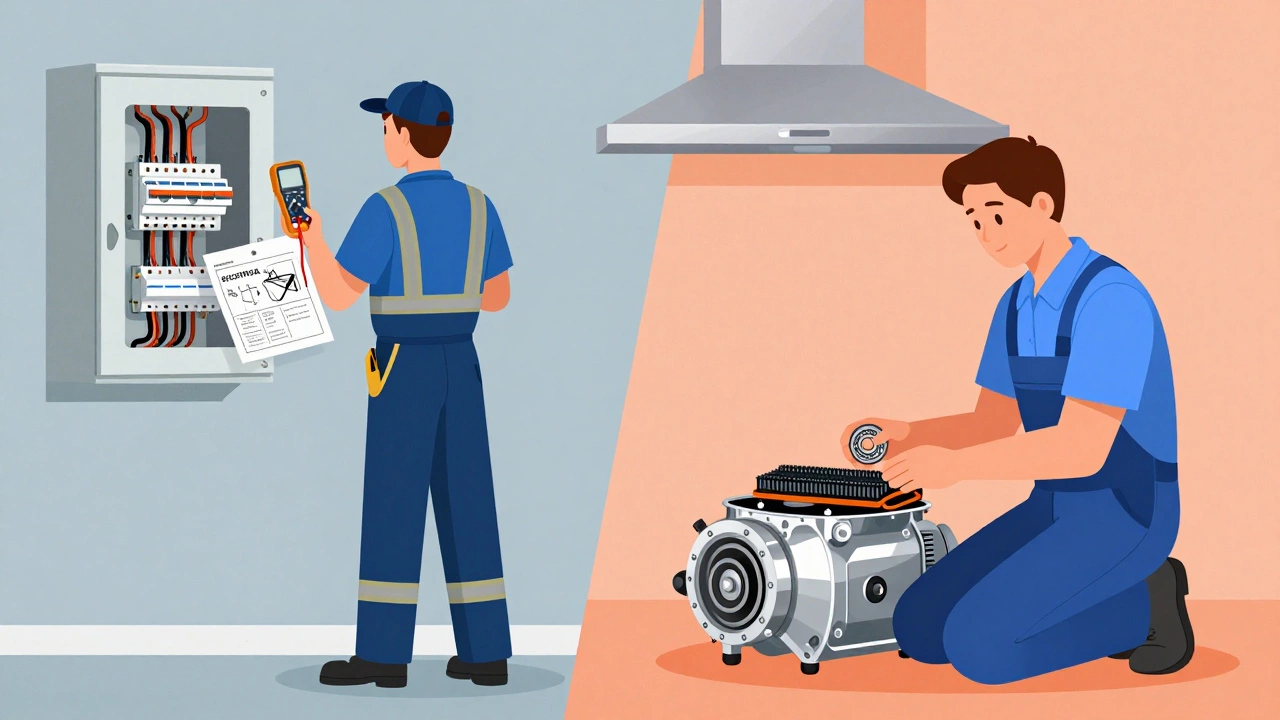
An electrician is a licensed professional trained to install, maintain, and repair electrical wiring, circuits, and systems in buildings. Their expertise lies in voltage, amperage, circuit breakers, and code compliance. If your breaker trips every time you turn on the fan, or if the outlet itself is dead, an electrician is exactly who you need. They will check the wiring behind the wall, test the continuity of the cord, and ensure the connection to your home’s panel is safe.
However, consider this scenario: The light on the hood works, but the fan doesn’t spin. The power is getting to the unit. This suggests the issue is internal. It could be a seized bearing, a worn-out capacitor, or a belt that has snapped (in some commercial-style models). An electrician can tell you there is 120 volts reaching the motor, but they likely cannot disassemble the housing to replace a $5 bearing without charging you their high hourly rate for labor they aren't specialized in.
When You Should Definitely Call an Electrician
There are specific scenarios where an electrician is the only correct choice. Ignoring these signs can lead to fire hazards or shock risks. You need an electrician if:
- The outlet is dead: Plug another device, like a lamp, into the same outlet. If it doesn’t work, the problem is in your home’s wiring, not the fan.
- Frequent tripping: If turning on the fan causes your circuit breaker to trip repeatedly, there is a short circuit or ground fault. This is a serious safety issue requiring immediate professional attention.
- Burnt smells or scorch marks: If you see blackening around the plug or the outlet, or smell burning insulation, stop using the fan immediately. This indicates overheating wires.
- Hardwired installations: Many built-in range hoods are hardwired directly into the house circuitry, bypassing the standard plug. If the connection inside the junction box is loose or corroded, an electrician must re-terminate it safely.
In Toronto, for example, electrical work on fixed wiring requires a license from the Technical Standards and Safety Authority (TSSA). If you hire an unlicensed handyman to fix the wiring behind your drywall, you risk failing home inspections when you sell your property later.
When to Call an Appliance Technician Instead
If the power is confirmed to be working (the light turns on, or a multimeter shows voltage at the socket), the problem is almost certainly with the fan unit itself. This is where an appliance technician is a specialist who diagnoses and repairs household machines like refrigerators, washers, and range hoods.
Appliance technicians carry the specific tools and replacement parts for brands like Bosch, Zephyr, or Viking. They know how to remove the grease filters, access the motor housing, and test components like capacitors and switches. Here is why they are usually the better choice for the fan itself:
- Part Availability: Technicians have direct lines to manufacturers. If your motor needs replacing, they can order the exact OEM part. An electrician would have to source it themselves, often at a markup.
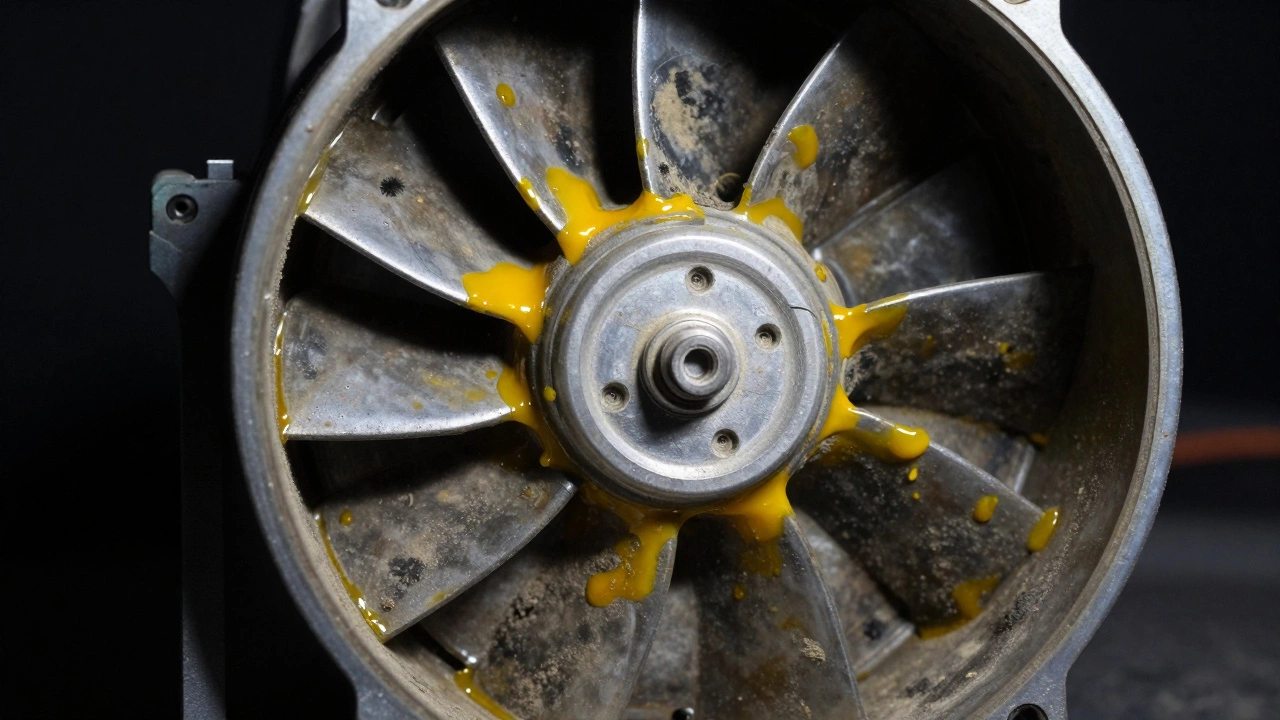
- Mechanical Expertise: Fans fail due to grease buildup seizing the rotor. A technician knows how to clean the impeller blades properly without damaging the balance. An electrician might strip screws or crack the plastic housing because they don’t deal with these materials daily.
- Diagnostic Speed: A technician can listen to the hum of the motor and identify a bad capacitor in seconds. An electrician might spend an hour testing wires before realizing the power is fine, then referring you to someone else anyway.
DIY Checks Before Calling Anyone
Before you pay anyone $100-$150 for a service call, try these simple checks. Many "broken" fans are just dirty or switched off incorrectly.
| Symptom | Likely Cause | Action |
|---|---|---|
| No power, no light | Tripped breaker or dead outlet | Check breaker panel; test outlet with lamp |
| Light works, fan silent | Blown fuse (if applicable) or faulty switch | Check inline fuse; inspect wall switch |
| Humming but not spinning | Seized motor or bad capacitor | Do not force it; call technician |
| Loud rattling/grinding | Loose screw or debris in impeller | Turn off, remove filter, check for objects |
| Poor suction | Clogged filters or ductwork | Clean metal filters; check external vent flap |
One common oversight is the external vent flap. If you live in a condo in Toronto, the exhaust pipe goes through the exterior wall. During winter, ice can seal this flap shut, causing backdrafts and making the fan sound like it’s struggling. Check the outside of your building. If the flap is stuck open or closed, that’s a mechanical fix, not an electrical one.
Cost Comparison: Electrician vs. Appliance Tech
Money talks. Let’s look at the typical costs in the Greater Toronto Area for 2026. Prices vary by company, but these are realistic averages.
- Electrician Service Call: $85-$120 diagnostic fee. Hourly rate: $90-$130/hour. If they determine it’s a mechanical issue, you still pay the diagnostic fee, and they may charge extra to refer you out.
- Appliance Technician Service Call: $75-$100 diagnostic fee. Parts + Labor: Often bundled. For a capacitor replacement, expect $150-$250 total. For a full motor replacement, $300-$500.
If the issue is a simple wire loose at the terminal, an electrician fixes it in 15 minutes. But if the motor is burnt out, the electrician’s bill becomes a sunk cost. An appliance technician covers both bases: they can fix the wiring *and* the machine. However, many appliance techs will refuse to touch the house wiring for liability reasons, so verifying the outlet first is key.
Risks of Using the Wrong Professional
Why does it matter who you call? Beyond cost, there are safety and warranty implications.
Warranty Voidance: Most modern range hoods come with a 1-2 year manufacturer warranty. Opening the unit or attempting repairs by an unauthorized person (like a general electrician who isn’t certified for that brand) can void this warranty. Appliance technicians are often authorized dealers or certified repair partners.
Fire Hazard: Grease is flammable. If an electrician tries to clean a greasy motor without proper degreasing agents, they might leave residue that heats up over time. Conversely, if an appliance tech touches the house wiring incorrectly, they could create a shock hazard. This is why defining the boundary-house wiring vs. appliance internals-is critical.
How to Decide: A Simple Flowchart
Still unsure? Follow this logic path:
- Step 1: Does the light on the hood work?
- No: Check the breaker. If breaker is fine, call an Electrician.
- Yes: Go to Step 2.
- Step 2: Is the fan making noise but not moving air?
- Yes: Clean the filters. If problem persists, call an Appliance Technician.
- No: Go to Step 3.
- Step 3: Is the fan completely silent and unresponsive?
- Yes: Unplug and replug. Try a different outlet if portable. If still dead, call an Appliance Technician to check the internal switch/motor.
Remember, an extractor fan is a hybrid device. It sits at the intersection of plumbing (ventilation), mechanics (motors/bearings), and electricity. While an electrician can handle the power side, the majority of failures are mechanical. Don’t let the "electric" part of the name trick you into hiring the wrong expert. Save your money and get the job done right by matching the problem to the specialist.
Can a general handyman fix an extractor fan?
A handyman can perform basic tasks like cleaning filters, tightening screws, or replacing a visible bulb. However, they should not work on internal motors or house wiring unless they are also licensed as an electrician or appliance technician. Working on high-voltage components without certification is dangerous and illegal in many jurisdictions, including Ontario.
How much does it cost to replace an extractor fan motor?
In 2026, replacing a range hood motor typically costs between $300 and $600, including parts and labor. The price depends on the brand (e.g., Bosch vs. generic) and whether the unit is easily accessible. Older models may have discontinued parts, pushing the cost toward the higher end or necessitating a full unit replacement.
Is it worth repairing an old extractor fan?
If the fan is less than 10 years old and the repair cost is under $400, it is usually worth fixing. If the unit is older, very noisy, or inefficient, replacing it with a new, energy-efficient model may save more money in the long run through lower electricity usage and better ventilation performance.
Why is my extractor fan humming but not spinning?
This is a classic sign of a failed start capacitor or a seized motor bearing. The capacitor gives the motor the initial push to start rotating. If it fails, the motor hums but lacks torque. Grease buildup can also physically lock the blades. This requires an appliance technician to diagnose and replace the component.
Do I need a permit to replace an extractor fan in Toronto?
Generally, no. Replacing an existing extractor fan with a similar model does not require a building permit. However, if you are installing a new hardwired unit, changing the location of the vent, or altering the electrical circuit, you may need to comply with local electrical codes. Always check with the City of Toronto Building department if you are unsure.