

Why Is There No Heat Coming Out of My Oven? Troubleshooting Guide
 Oct, 12 2026
Oven No-Heat Troubleshooter
Follow the steps below to diagnose why your oven lights up but doesn't produce heat. Click on the option that best describes your situation.
Check Power & Settings
Before opening the oven, let's rule out simple errors. Did you check the circuit breaker and ensure the oven is set to 'Bake'?
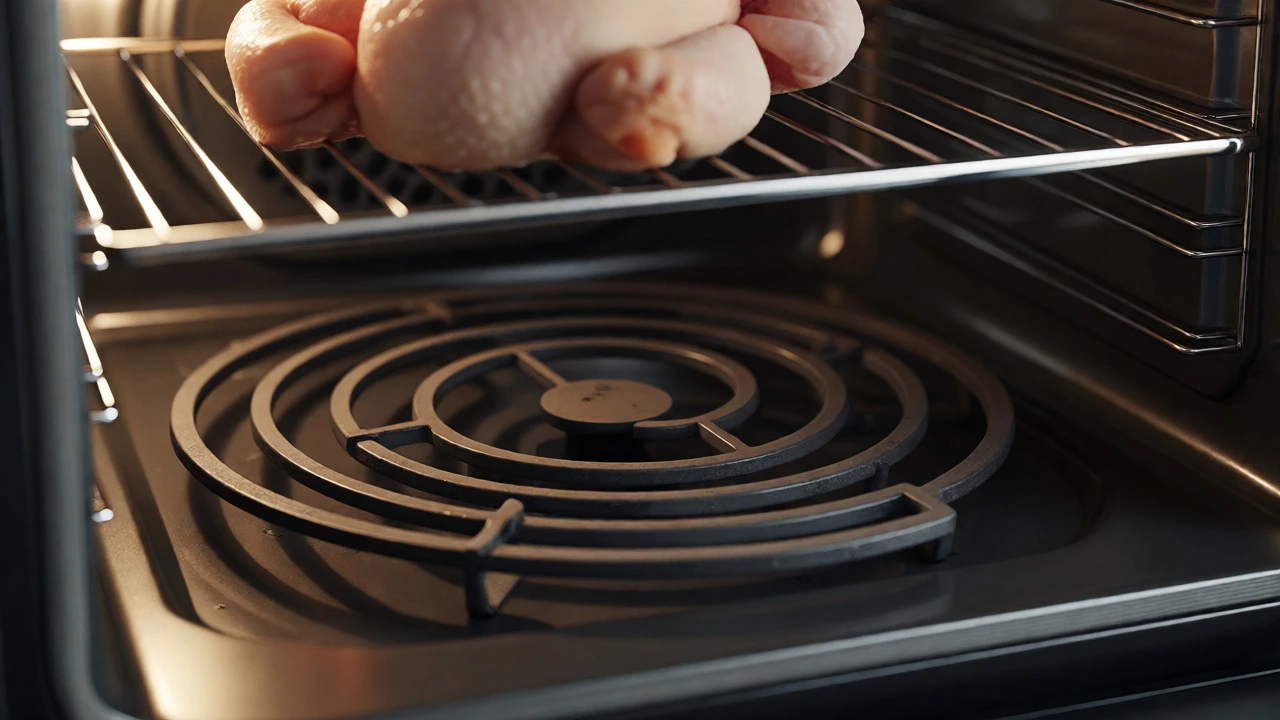
You turn the knob to 350°F, wait twenty minutes, and put your chicken in. An hour later, it’s still raw on the inside and cold to the touch. This is one of the most frustrating kitchen failures because an oven that doesn’t heat feels useless, yet the lights might still work, the fan might still spin, and the timer might still tick. If you’re asking why is there no heat coming out of my oven, you’re likely dealing with a specific electrical failure rather than a catastrophic mechanical breakdown.
The good news is that most causes are straightforward for a DIYer with a multimeter to diagnose, or at least easy to explain to a technician so you don’t get overcharged. The bad news is that some components, like control boards, can be pricey. Before you call a pro, let’s walk through the most common culprits, starting with the simplest checks and moving toward the parts that actually stop the heating process.
Check the Basics First: Settings and Power
It sounds obvious, but we’ve seen this happen more times than we can count. Modern ovens have multiple modes. If you accidentally set your oven to "Broil" or "Warm," it won’t reach baking temperatures. Double-check that the mode selector is firmly clicked into "Bake" or "Convection Bake." Sometimes the knob feels like it’s in position, but the internal switch hasn’t engaged.
Next, look at your circuit breaker. Ovens draw a massive amount of power, usually between 3,000 and 5,000 watts. A tripped breaker is often subtle; the switch might not look fully "off," just slightly nudged from its neutral position. Go to your main panel and flip the oven’s breaker completely off, then back on. If it trips immediately again, you have a short circuit, likely in the wiring or the element itself. Don’t keep resetting it if it sparks or smells like burning plastic.
The Heating Element: Burnt Out or Broken?
If your oven uses traditional radiant coils (the visible metal loops at the top or bottom), inspect them visually. A working element glows bright orange-red when heating. If one section remains dark while the rest glows, or if none of it glows, the element is likely dead. You can see physical damage too-look for blistering, cracks, or holes in the metal sheath.
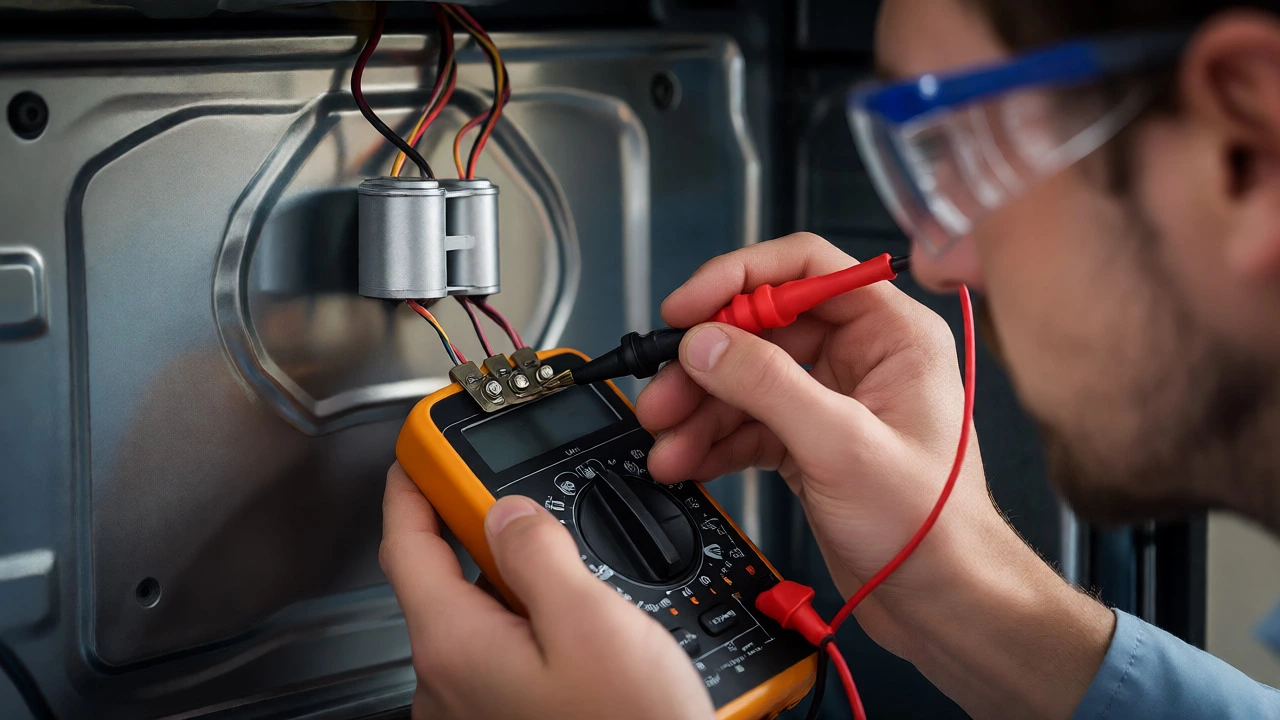
To confirm a broken element without taking it apart, use a multimeter. Unplug the oven or kill the breaker first. Pull the element out slightly to access its terminals. Touch your multimeter probes to the two terminals. You should read continuity (close to 0 ohms) and a resistance value usually between 10 and 50 ohms, depending on the wattage. If the meter reads "OL" (open loop) or infinity, the wire inside is snapped. Replacement elements cost $20-$80 and take ten minutes to swap.
The Thermal Fuse: The Safety Switch That Trips
This is the hidden killer of oven heat. Every electric oven has a Thermal Fuse which is a safety device designed to cut power to the heating elements if the oven overheats. It’s a small, silver cylinder, about the size of a finger, usually located near the blower motor or behind the back panel.
Unlike a regular fuse, a thermal fuse does not reset. Once it blows due to excessive heat (often caused by blocked vents or a faulty thermostat), it must be replaced. Here’s the tricky part: a blown thermal fuse cuts power to the heater, but the clock, light, and fan often still work because they’re on a different circuit branch. This leads many people to think the oven is "on" when it’s actually dead.
- Location: Check behind the rear access panel or near the cooling fan housing.
- Test: Set your multimeter to continuity. Disconnect one wire lead. If there’s no beep, the fuse is blown.
- Fix: Replace it with an identical model (match the amperage and temperature rating exactly). Never bypass it with tape or wire; it’s a fire safety component.
Oven Temperature Sensor: Misreading the Room
Your oven thinks it’s already hot. How? The Oven Temperature Sensor is a thermistor that changes electrical resistance based on the internal air temperature. The control board monitors this resistance to decide when to turn the heater on or off.
If the sensor fails, it might send a signal saying the oven is 500°F when it’s actually 70°F. The board sees "target reached" and never activates the heating element. These sensors are cheap ($10-$20) and easy to test. At room temperature (approx. 70°F/21°C), a standard sensor should read around 1,080 ohms. As it heats up, resistance drops. If your multimeter shows open circuit or wildly fluctuating numbers, replace the sensor.
Control Board: The Brain Has Gone Silent
If the element is good, the fuse is intact, and the sensor is accurate, you’re likely looking at the Electronic Control Board which acts as the central processing unit managing power distribution to all oven components. The board sends voltage to the relay that powers the heater. If the relay sticks open or the board’s logic fails, no power reaches the element.
Symptoms include erratic behavior alongside no heat-like the display flickering, buttons not responding, or error codes appearing (e.g., F1, E-1). Testing a control board requires checking for 120V or 240V output at the relay terminals during a bake cycle. If the board commands heat but sends no voltage, it’s dead. Boards are expensive ($150-$400), so ensure every other component is verified before replacing this part.
Comparison of Common Causes
| Component | Primary Symptom | DIY Difficulty | Avg. Part Cost (CAD) |
|---|---|---|---|
| Heating Element | Visible break, no glow, open circuit | Easy | $20 - $80 |
| Thermal Fuse | No heat, but light/fan works; no continuity | Moderate | $10 - $25 |
| Temp Sensor | Oven runs cold/hot inconsistently; wrong resistance | Easy | $10 - $20 |
| Control Board | Error codes, no voltage output to heater | Hard | $150 - $400 |
| Wiring/Harness | Burnt smell, loose connections | Moderate | $5 - $15 |
When to Call a Professional
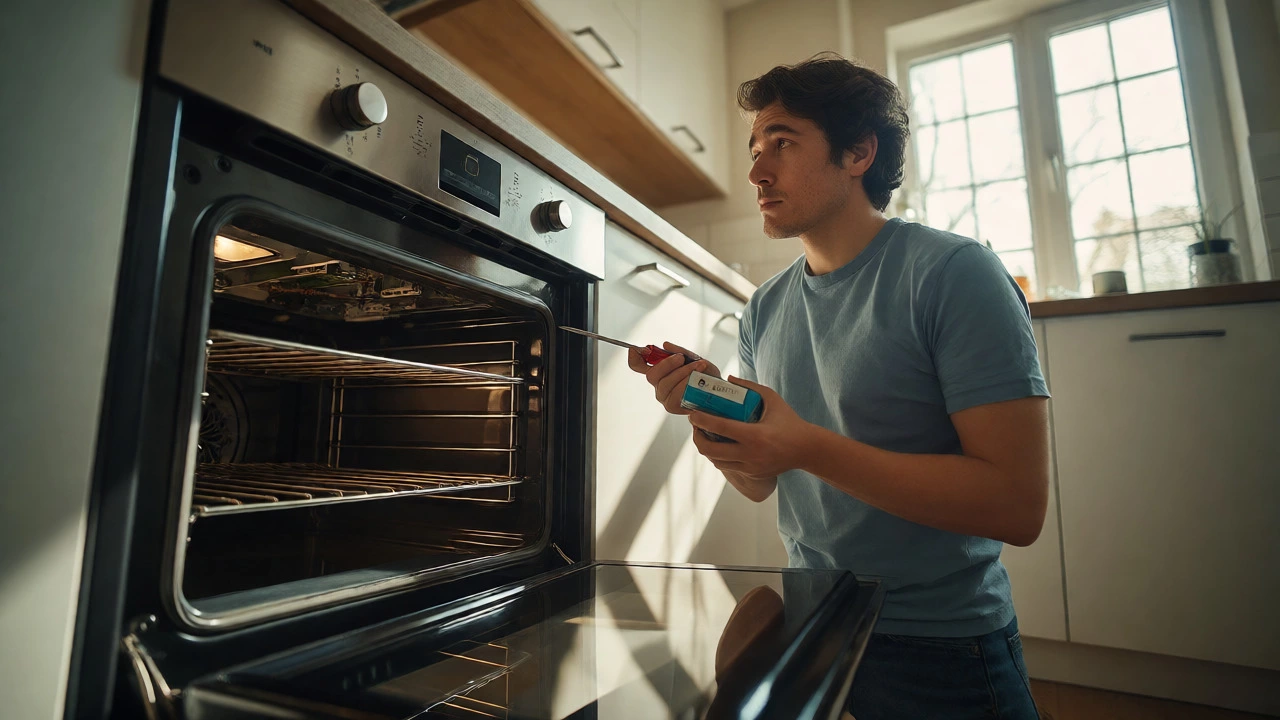
You can save money by handling the element, fuse, or sensor yourself. But if you suspect the control board, or if the oven has burnt wiring smells, call a technician. Working with 240V circuits carries real risk. Also, if your oven is under warranty, opening it up might void coverage. In Toronto, appliance repair costs average $150-$250 plus parts, so weigh the age of your oven against the repair bill. If your oven is over 15 years old and needs a board, replacement might be smarter.
Can I fix a no-heat oven myself?
Yes, if you are comfortable using a multimeter and disconnecting power. Replacing heating elements, thermal fuses, and temperature sensors are common DIY tasks that require only basic screwdrivers and a multimeter. Always unplug the oven or trip the breaker before touching any wires.
How much does it cost to fix an oven that won't heat?
In Canada, parts range from $10 for a sensor to $400 for a control board. Labor adds another $100-$200. A simple element or fuse repair might total $150-$250 including labor. If you do it yourself, you could spend under $50 for parts.
Why does my oven light work but not heat?
This usually points to a blown thermal fuse or a failed heating element. The lighting circuit is separate from the high-voltage heating circuit. The thermal fuse protects the heater specifically, so when it blows, the heater dies while low-power accessories like lights and clocks remain functional.
How long do oven heating elements last?
With normal use, heating elements typically last 5 to 10 years. Heavy daily use, frequent self-cleaning cycles, or poor ventilation can shorten their lifespan. Visible wear, blistering, or uneven heating are early signs they are nearing the end of their life.
Is it worth repairing an old oven?
If the repair costs less than 50% of a new oven's price and the appliance is under 10-12 years old, it’s usually worth fixing. For older units requiring expensive control boards, investing in a new energy-efficient model might offer better long-term value and reliability.