

Why Is My Tumble Dryer Not Spinning? Troubleshooting Guide & Fixes
 Aug, 13 2026
Tumble Dryer Diagnostic Tool
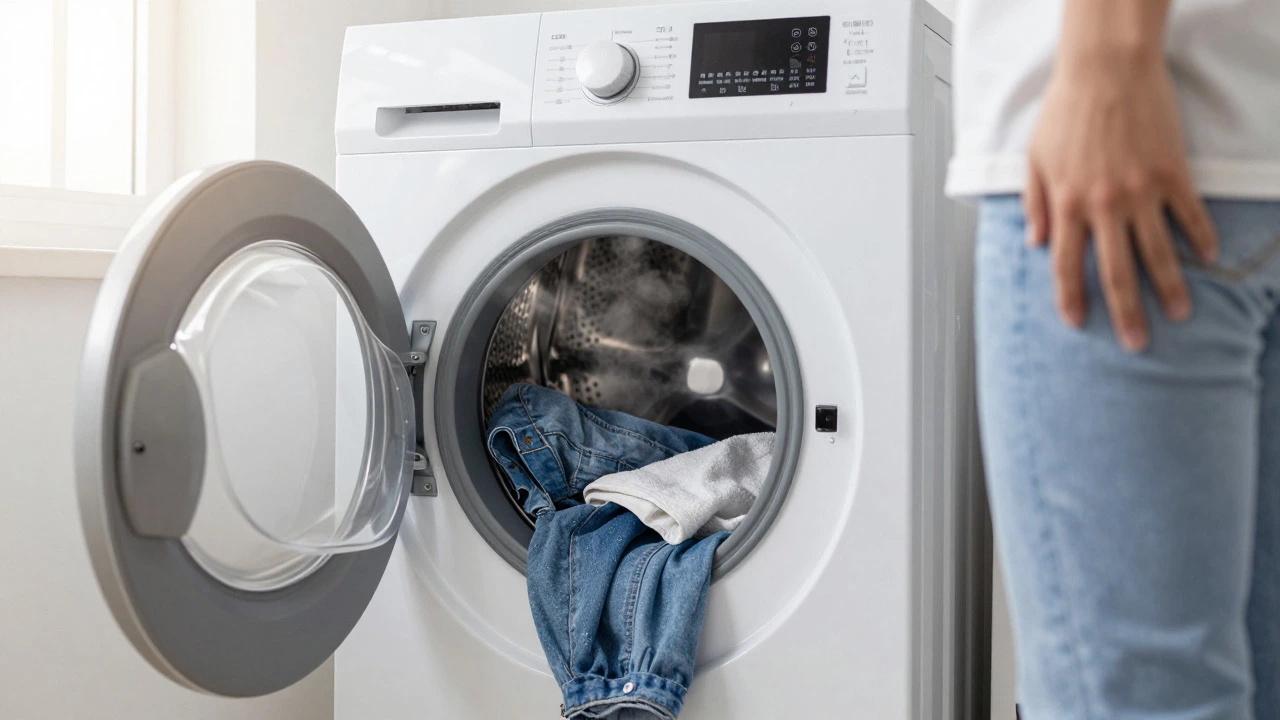
There is nothing more frustrating than loading your favorite jeans into the tumble dryer is a household appliance designed to dry clothes using heated air and mechanical rotation., hitting start, and hearing a loud hum without the drum moving. You stand there waiting for your laundry to finish, only to realize the machine is doing absolutely nothing but blowing hot air at a pile of wet fabric. It feels like a waste of time, energy, and money. But before you call a technician or consider buying a new unit, take a breath. In most cases, a dryer that won't spin is suffering from a fixable issue rather than a catastrophic failure.
The good news? You don’t need an engineering degree to figure this out. Most spinning problems stem from simple blockages, worn-out belts, or tripped safety switches. By following a logical troubleshooting path, you can often resolve the issue yourself in under an hour. Let’s walk through exactly why your dryer has stopped turning and how to get it back on track.
Quick Summary / Key Takeaways
- Check the basics first: Ensure the door is fully closed and the load isn’t unbalanced or overloaded.
- Inspect the drive belt: A snapped or slipped belt is the most common cause of a non-spinning drum.
- Clean the lint trap and vent: Restricted airflow can trigger thermal cut-offs that halt operation.
- Listen to the motor: If you hear humming but no movement, the motor might be running but disconnected from the drum.
- Know when to call a pro: Electrical faults, burnt motors, or complex sensor issues require professional repair.
Is It Actually Broken? Ruling Out User Error
Before tearing apart any panels, let’s eliminate the obvious. Sometimes, the problem isn’t mechanical-it’s operational. Modern dryers are packed with safety sensors that prevent the drum from spinning if conditions aren’t right.
First, check the door switch is a safety mechanism that ensures the dryer only operates when the door is securely shut.. If the door latch is broken or the switch is faulty, the control board thinks the door is open. Try pressing firmly on the door while starting the cycle. If it spins, your latch needs adjustment or replacement. This is a cheap part and an easy fix.
Next, look at your load. Did you throw in a single heavy comforter? Or maybe a dozen wet towels all tangled together? An unbalanced load can confuse the dryer’s suspension system. The drum might try to spin, hit resistance, and stop to protect itself. Open the door, redistribute the items evenly, and try again. Conversely, an empty dryer sometimes struggles to gain momentum if the belt is slightly loose-add a few socks to test this theory.
The Drive Belt: The Most Likely Culprit
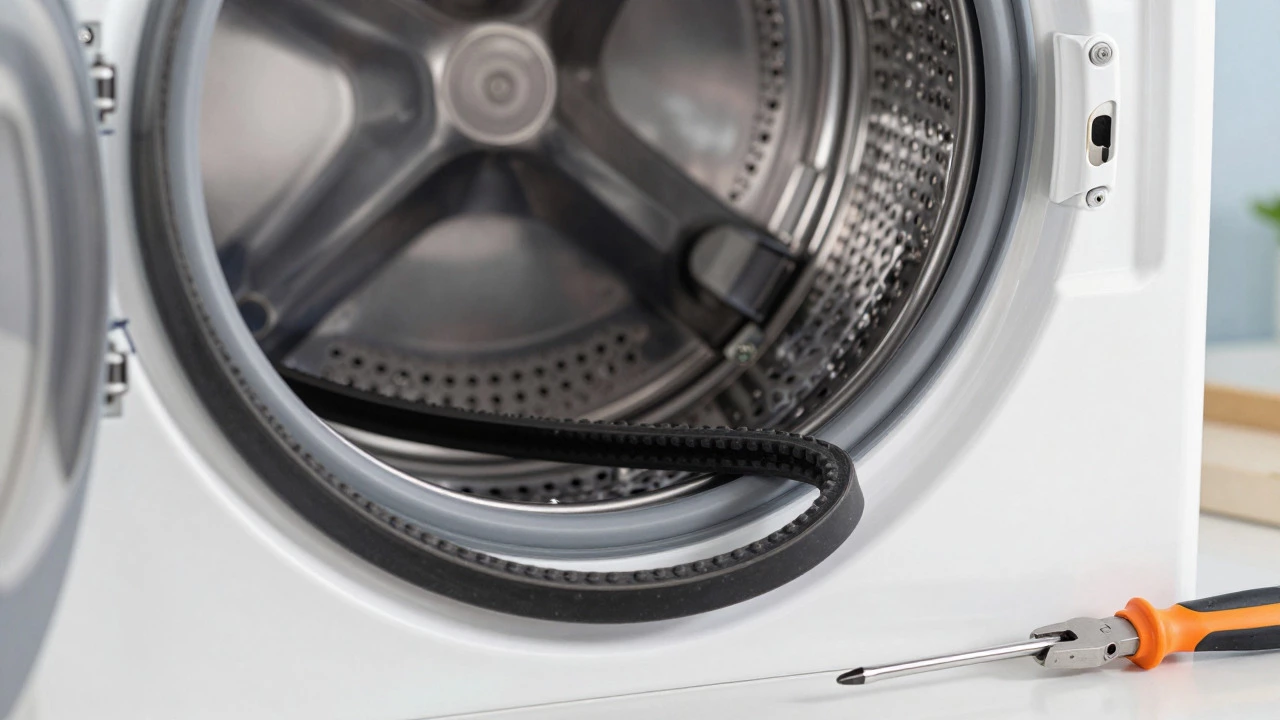
If the basics check out, the next suspect is the drive belt is a rubber loop that connects the motor to the drum, enabling rotation.. Think of the belt as the muscle of your dryer. Without it, the motor runs, but the drum stays still. Over time, heat and friction cause these belts to stretch, crack, or snap entirely.
How do you know if the belt is broken? Listen closely. When you press start, do you hear the motor humming or whirring? If yes, but the drum doesn’t move, the belt has likely slipped off the pulley or snapped. If the motor is silent too, the issue might be electrical-but we’ll get to that later.
To inspect the belt, you’ll need to remove the front or rear panel (depending on your model). For most front-loading dryers, this involves unscrewing two screws at the top edge of the door opening and lifting the front panel away. Once inside, locate the large rubber belt wrapped around the drum and the small motor pulley. If it’s snapped, you’ll see it lying loose. If it’s intact but loose, it may have jumped off the groove. Re-routing it is straightforward: follow the diagram usually found on the inside of the panel or online via your model number.
Replacing a belt costs between $15 and $40 and takes about 30 minutes. It’s one of the most cost-effective repairs you can make. Just ensure you buy the exact part number for your dryer-generic belts often fail quickly due to incorrect tension.
Motor Issues: Humming vs. Silence
Let’s talk about the dryer motor is the electric component that powers the drum rotation and fan operation.. The motor does two jobs: it turns the drum and pulls air through the vents. If it fails, the consequences vary.
Scenario 1: Motor hums, drum doesn’t spin. This usually means the motor is receiving power but can’t turn the load. Causes include a seized idler pulley, a jammed drum roller, or a broken belt (as discussed above). Check the idler pulley is a wheel that maintains tension on the drive belt.. Spin it by hand. If it’s gritty, noisy, or hard to turn, replace it. A seized pulley puts immense strain on the motor and belt.
Scenario 2: No sound at all. If you press start and hear nothing-not even a click-the motor isn’t getting power. This could be a blown fuse, a faulty thermal fuse, or a bad motor start capacitor. The thermal fuse is a one-time safety device that cuts power if the dryer overheats. is a common failure point. It blows when lint buildup restricts airflow, causing excessive heat. Test it with a multimeter for continuity. If it’s open (no continuity), replace it. But remember: replacing the fuse without fixing the airflow issue will just blow another one.
Airflow Blockages: The Silent Killer
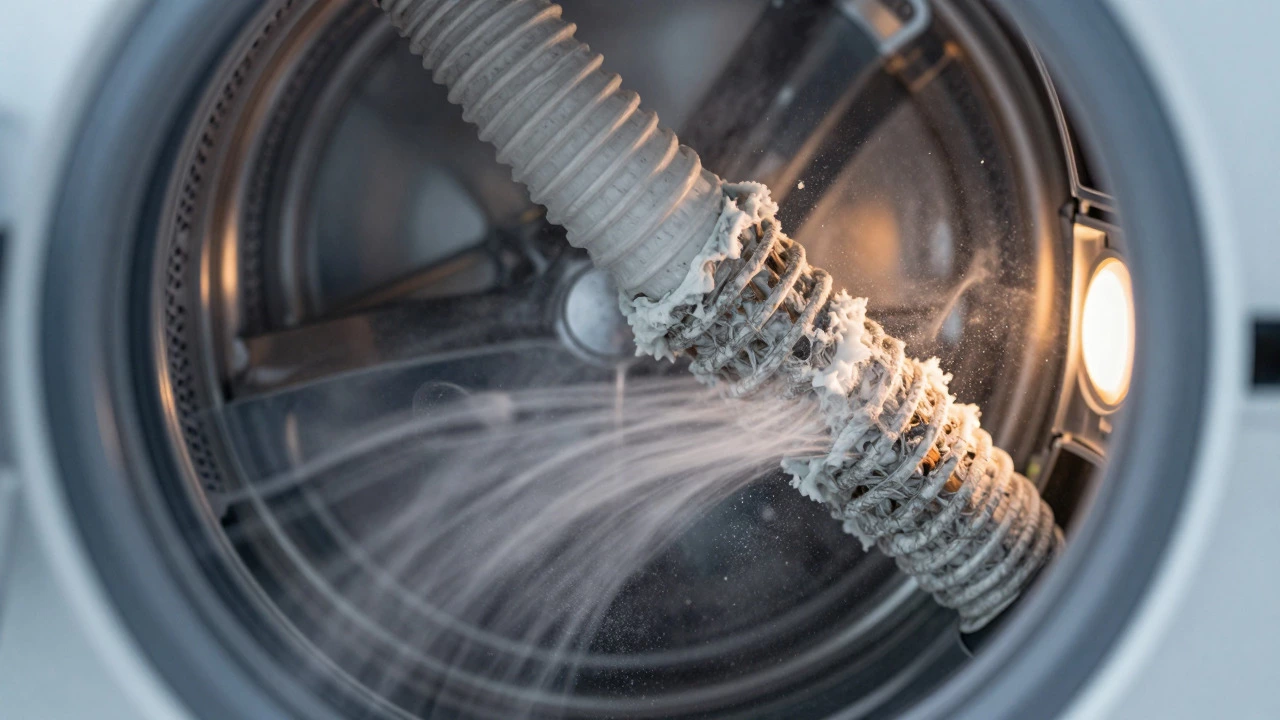
You might wonder, "How does clogged lint stop the drum from spinning?" It doesn’t directly-but it triggers safety mechanisms that do. When lint accumulates in the lint filter is a mesh screen that catches fibers during drying cycles. or exhaust vent, the dryer overheats. To prevent fire hazards, modern dryers install high-limit thermostats and thermal fuses. When these trip, they cut power to the motor or heating element, halting the cycle.
Here’s what to do:
- Clean the lint filter every load. Yes, really. Even if it looks clean, run water over it to remove fine residue.
- Inspect the exhaust hose. Detach it from the back of the dryer and vacuum out any lint clumps. A kinked or crushed hose also restricts flow.
- Check the exterior vent flap. Go outside and ensure the vent cover opens freely when the dryer runs. If it’s stuck shut, you have a major blockage.
Poor airflow doesn’t just stop spinning-it ruins drying efficiency, increases energy bills, and poses a fire risk. Make this a monthly habit.
Control Board and Sensor Failures
If the belt, motor, and airflow are all good, the issue might lie in the electronics. The control board is the computer that manages dryer functions, timing, and safety protocols. sends signals to the motor based on input from various sensors. If a moisture sensor is dirty or a temperature sensor fails, the board might think the cycle is complete-or unsafe-and cut power to the motor.
Symptoms of electronic issues include:
- Error codes flashing on the display (e.g., "E1," "F05").
- The dryer starts, then stops after 10-20 seconds.
- Buttons feel unresponsive or lights flicker.
For error codes, consult your user manual or search online for your specific model. Often, resetting the dryer (unplugging it for 5 minutes) clears temporary glitches. If the problem persists, the control board or a sensor may need replacement. These parts are more expensive ($50-$150) and require careful installation. If you’re not comfortable with electronics, this is where calling a pro makes sense.
When to Call a Professional Technician
DIY repairs save money, but some issues demand expertise. Call a technician if:
- You smell burning insulation or see smoke.
- The motor is visibly damaged or making grinding noises.
- You’ve replaced the belt and pulley, but the drum still won’t spin.
- Error codes persist after resets and sensor cleaning.
- Your dryer is under warranty-opening it voids coverage.
In Toronto, average tumble dryer repair costs range from $100 to $300, depending on parts and labor. Compare this to the $800-$1,200 price of a new mid-range dryer. Unless your unit is over 10 years old, repair is usually worth it.
| Symptom | Likely Cause | Difficulty Level | Estimated Cost |
|---|---|---|---|
| Motor hums, drum still | Broken/slip drive belt | Easy | $15-$40 |
| No sound, no spin | Blown thermal fuse or door switch | Moderate | $20-$60 |
| Grinding noise, no spin | Seized idler pulley or drum rollers | Moderate | $30-$80 |
| Error code displayed | Faulty sensor or control board | Hard | $50-$150+ |
| Spins intermittently | Unbalanced load or weak motor | Easy | $0-$100 |
Preventive Maintenance Tips
Fixing a problem is great; preventing it is better. Here’s how to keep your dryer spinning smoothly for years:
- Clean the lint filter after every use. This is non-negotiable.
- Vacuum the exhaust duct annually. Use a shop vac or hire a pro if you’re unsure.
- Don’t overload the drum. Leave room for air to circulate.
- Inspect the belt visually once a year. Look for cracks or fraying.
- Keep the area around the dryer clear. Dust and debris can enter vents and cause overheating.
A little upkeep goes a long way. Most premature failures happen because owners ignore minor signs until something breaks completely.
How much does it cost to fix a tumble dryer that won't spin?
Costs vary widely. Replacing a drive belt costs $15-$40 plus labor if you hire someone. Thermal fuse replacements run $20-$60. Motor repairs or control board fixes can exceed $150. Always get a diagnostic quote before approving major work.
Can I run my dryer if the drum isn't spinning?
Not recommended. If the drum isn't rotating, clothes won't dry evenly and may overheat in one spot. Plus, continued operation can damage the motor or belt further. Turn it off and diagnose the issue first.
Why does my dryer spin slowly?
Slow spinning often indicates a stretched belt, worn drum rollers, or a failing motor. It could also mean the load is too heavy. Replace worn parts promptly to avoid complete failure.
Is it safe to open the dryer panel myself?
Yes, as long as you unplug the dryer first. Always disconnect power before touching internal components. If you're uncomfortable with tools or electricity, hire a certified technician.
How long should a tumble dryer last?
With proper maintenance, most tumble dryers last 10-13 years. Regular cleaning and timely part replacements extend lifespan significantly. If yours is older than 10 years and breaking down frequently, consider upgrading to a newer, more efficient model.