

Why Does It Cost So Much to Replace a Boiler?
 Mar, 16 2026
Boiler Replacement Cost Calculator
Get an estimate of your boiler replacement costs based on the factors discussed in the article. Enter your details to see how different options impact your total cost.
Note: Rebates are for the equipment only, not labor. Requires TSSA-licensed contractor and approved boiler model.
Estimated Total Cost
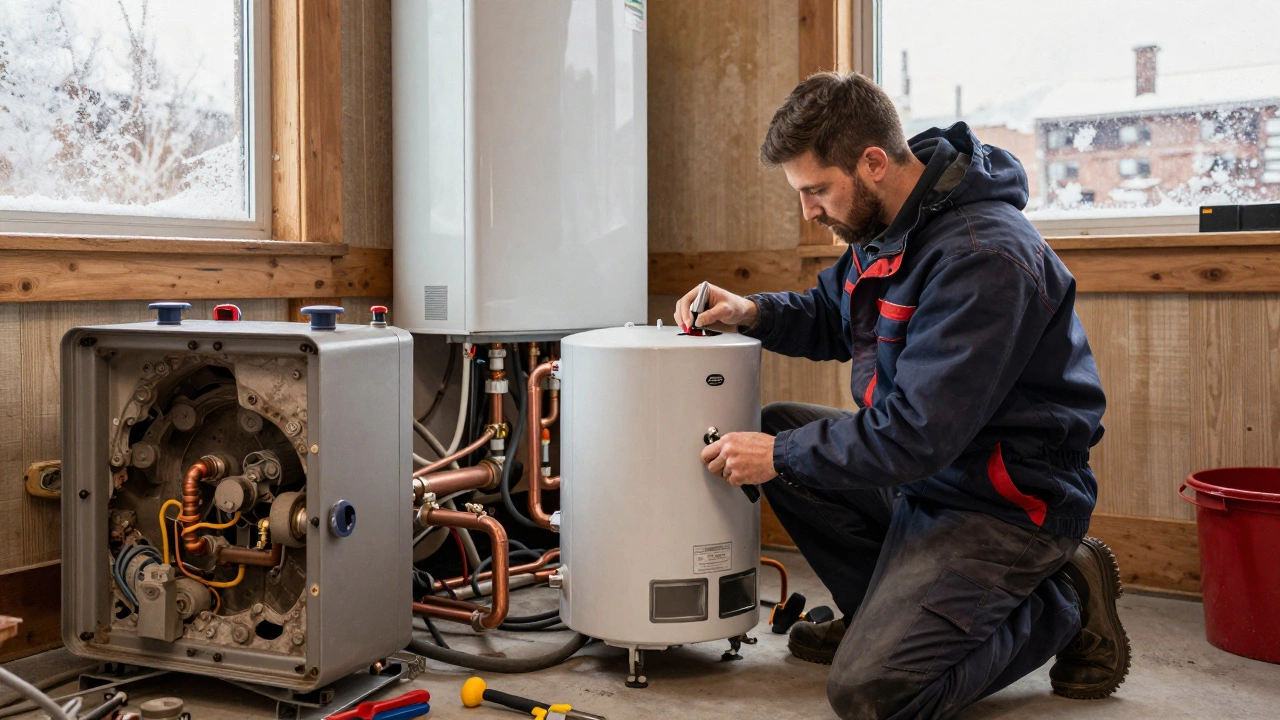
Replacing a boiler isn’t like swapping out a light bulb. If you’ve gotten a quote for a new boiler and felt shocked by the price, you’re not alone. In Toronto, a full boiler replacement can easily run between $5,000 and $12,000. That’s more than a used car. So why does it cost so much? It’s not just the machine itself-it’s everything that comes with it.
The Boiler Isn’t Just a Box With a Flame
A boiler isn’t a simple appliance you plug in. It’s the heart of your home’s heating system. Unlike a water heater that just makes hot water, a boiler heats water to circulate through radiators or underfloor pipes to warm your whole house. That means it’s tied into ductwork, pipes, thermostats, vents, gas lines, and electrical systems. When you replace it, you’re not just installing a new unit-you’re reconnecting an entire system.
Modern boilers are far more complex than the ones from 20 years ago. They have electronic controls, condensing technology, safety sensors, and smart thermostats built in. A high-efficiency condensing boiler, for example, recovers heat from exhaust gases to save energy. That’s why they’re more expensive upfront-but they cut your gas bill by 20-30% over time. The technology isn’t cheap, and neither is the labor to install it right.
Labor Is the Big Chunk of the Cost
Most people think the price is mostly for the boiler. But labor often makes up 40-60% of the total bill. Replacing a boiler isn’t a two-hour job. It’s usually a full day-or even two-for a skilled technician.
Here’s what that labor includes:
- Shutting off gas, water, and electricity safely
- Removing the old boiler, which may be rusted, stuck, or bolted to a wall
- Clearing out old pipes, valves, and flues that may be outdated or corroded
- Installing new pipework if the old system doesn’t match the new boiler’s requirements
- Connecting to the gas line-this requires a licensed gas fitter in Ontario
- Testing for leaks, pressure, and proper venting
- Setting up the thermostat and programming the system
In Ontario, only technicians with a TSSA (Technical Standards and Safety Authority) license can work on gas boilers. That licensing costs money, and it means fewer qualified people are available. Skilled labor is in short supply, and demand is high-especially in winter.
Permits, Inspections, and Compliance
Replacing a boiler isn’t a DIY project. In Toronto and across Ontario, you need a permit. The TSSA requires inspections before and after installation. The installer must submit paperwork, pay fees, and schedule inspections. These aren’t optional. Skip them, and you risk fines, insurance denial, or even being forced to remove the new boiler.
Permit fees alone can add $200-$500 to the cost. Inspections take time and resources. The installer has to factor this into their pricing. You’re not just paying for the hardware-you’re paying for compliance with safety codes that keep your home from exploding.
It’s Not Just One Part-It’s a Whole System
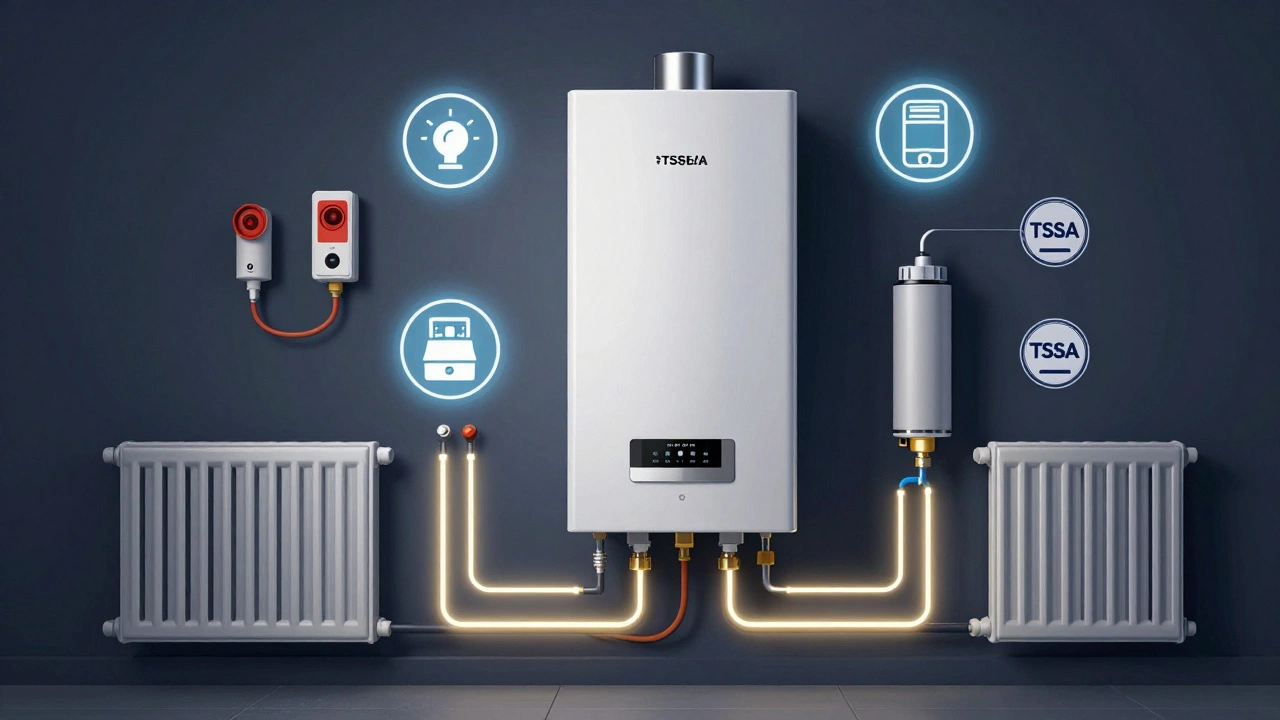
When you replace a boiler, you often need to upgrade other parts too. Older homes were built with cast iron radiators, copper pipes, and manual controls. Modern boilers need:
- Low-water-pressure systems
- Corrosion inhibitors
- Expansion tanks
- Smart thermostats
- Power flushing of the entire heating loop
If your pipes are old, sludgy, or made of galvanized steel, a new boiler can get damaged quickly if you don’t clean the system first. Many installers will refuse to warranty a new boiler if the system isn’t flushed. That’s an extra $500-$1,000 you didn’t expect.
Even your thermostat might need replacing. A basic dial thermostat won’t communicate with a modern boiler. You need a Wi-Fi-enabled one to get the full efficiency boost. That’s another $200-$400.
Boiler Types Make a Huge Difference
Not all boilers are created equal. The price jumps depending on what kind you choose:
| Boiler Type | Typical Cost (CAD) | Efficiency | Best For |
|---|---|---|---|
| Combi Boiler | $4,500-$7,500 | 90-95% | Small homes, no hot water tank |
| System Boiler | $5,500-$9,000 | 90-94% | Medium homes, multiple bathrooms |
| Regular Boiler | $5,000-$8,500 | 85-90% | Homes with existing hot water tanks |
| High-Efficiency Condensing | $7,000-$12,000 | 95%+ | Large homes, cold climates |
Condensing boilers are the most expensive, but they’re also the most efficient. They’re required in new builds in Ontario since 2018. If you’re replacing an old non-condensing boiler, upgrading to a condensing model is often the only way to qualify for rebates.
Rebates and Incentives Can Help
You’re not stuck paying full price. Ontario’s Home Energy Savings Program offers rebates up to $7,000 for replacing old boilers with high-efficiency models. Toronto Hydro and Enbridge Gas also run separate programs. Some offer $1,000-$3,000 just for switching from oil or electric heat to gas.
But there’s a catch: you must use a licensed contractor, and the boiler must be on the approved list. The rebate doesn’t cover labor, only the equipment. Still, that can cut your cost by 20-30%. You’ll need to apply before installation, so plan ahead.

What Happens If You Don’t Replace It?
Some people delay replacing an old boiler, hoping to stretch it out. But that’s risky. A failing boiler can:
- Leak carbon monoxide (deadly)
- Break down in the middle of winter
- Cost more in repairs than a replacement
- Void your home insurance
Insurance companies in Ontario are getting stricter. If your boiler is over 20 years old and fails, they may deny a claim-even if the damage isn’t directly caused by the boiler. Replacing it isn’t just about comfort. It’s about safety and protection.
How to Avoid Being Overcharged
Not all quotes are equal. Here’s how to protect yourself:
- Get at least three written quotes
- Ask what’s included: labor, permits, disposal, flushing, thermostat, warranty
- Check if the installer is TSSA-licensed and insured
- Ask about the brand’s warranty-25 years on the heat exchanger is common for premium models
- Don’t pick the cheapest. Pick the most transparent
Some companies lowball the initial quote, then add $2,000 in "unexpected" fees. A good contractor will give you a detailed line-item breakdown. If they don’t, walk away.
Is a Furnace Cheaper?
Some people ask: why not just switch to a furnace? Furnaces are cheaper to install-usually $3,000-$6,000. But they don’t heat water for showers or sinks. They only heat air. If you have radiators, switching to a furnace means ripping out your entire heating system. That’s not cheaper-it’s way more expensive.
Also, furnaces use more energy in cold climates like Toronto. Boilers are more efficient at maintaining steady heat. If you already have radiators or underfloor heating, replacing the boiler is the only sensible choice.
Why is boiler replacement so expensive in Toronto compared to other cities?
Toronto has higher labor costs, stricter building codes, and colder winters that demand more powerful, high-efficiency systems. The cost of permits, gas line upgrades, and TSSA licensing is also higher here than in smaller cities. Plus, demand spikes in winter, and skilled technicians are in short supply.
Can I finance a boiler replacement?
Yes. Most reputable installers offer financing through third-party lenders with 0% interest for 12-24 months. Enbridge Gas also offers a Home Energy Loan Program with up to $10,000 at 0% interest for qualifying upgrades. You’ll need good credit, but it’s a common way to manage the upfront cost.
How long does a boiler last before needing replacement?
Most boilers last 15-20 years. After that, efficiency drops, repair frequency increases, and parts become hard to find. If your boiler is over 15 years old and you’re spending more than $500 a year on repairs, replacement is usually the better investment.
Do I need to replace my radiators too?
Not always, but you should have them inspected. If they’re rusted, leaking, or not heating evenly, they can reduce the new boiler’s efficiency. Power flushing the system is often recommended. New radiators are only needed if they’re incompatible with modern low-temperature systems.
Is a combi boiler right for my home?
Combi boilers are ideal for homes with one or two bathrooms and limited space. They don’t need a hot water tank, which saves room. But if you have a large family or multiple showers running at once, a system or regular boiler with a tank will give you better hot water flow.
If you’re replacing your boiler, think of it as an investment-not an expense. A new system can cut your energy bill by hundreds a year, increase your home’s value, and keep your family safe. The upfront cost is high, but the long-term savings are real.