

What is the Lifespan of a Microwave? Average Years & Signs to Replace
 Sep, 3 2026
Microwave Lifespan & Replacement Estimator
Enter your microwave details below to get a personalized recommendation on whether to keep, repair, or replace your unit.
Fill out the form and click "Analyze" to see recommendations.
You stare at the spinning plate inside your microwave, watching the digital clock flicker. It’s not working quite like it used to. The door feels loose, the turntable wobbles, and that hum sounds louder than it did five years ago. You’re wondering: is this thing dying, or just tired?
Here is the blunt truth most manufacturers won’t shout from the rooftops: the average microwave lasts between seven and ten years. That’s it. If yours is hitting the eight-year mark and starting to act up, you aren’t dealing with a rare defect. You are dealing with normal wear and tear on a high-voltage machine that works harder than almost any other countertop appliance.
The Real Numbers Behind Microwave Longevity
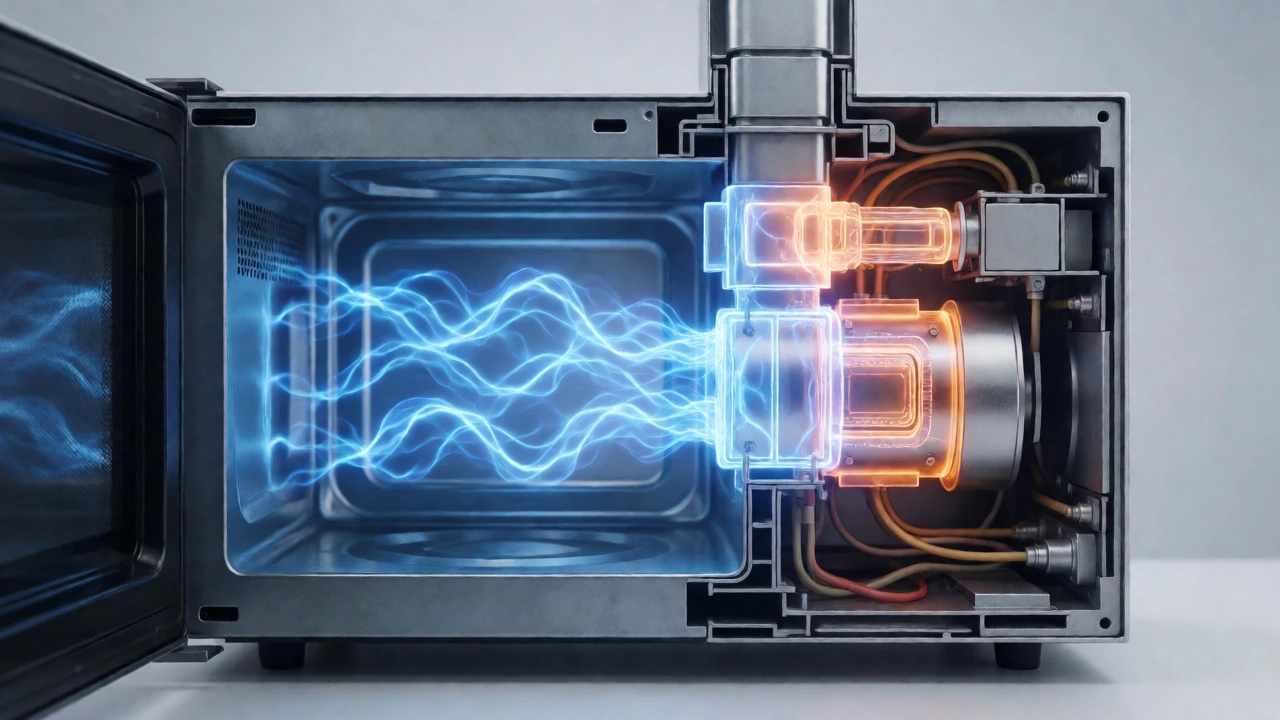
Why do some microwaves die in three years while others chug along for fifteen? It comes down to usage intensity and component quality. A single person reheating coffee once a day puts far less stress on the magnetron-the part that actually creates the heat-than a family of four blasting frozen dinners every night.
According to data from the National Association of Home Builders, major kitchen appliances have specific expected lifespans. Microwaves sit firmly in the middle of the pack. They don’t last as long as a gas range (15+ years) but outlive many smaller electronics. However, because they rely on high-voltage electricity to generate radiation, their internal components degrade faster than simple heating elements found in ovens.
| Appliance Type | Average Lifespan (Years) | Primary Failure Cause |
|---|---|---|
| Microwave Oven | 7-10 | Magnetron failure / Control board issues |
| Toaster Oven | 5-6 | Heating element burnout |
| Refrigerator | 13-15 | Compressor failure / Seal degradation |
| Dishwasher | 9-10 | Pump motor / Drainage clogs |
| Range/Oven | 13-15 | Igniter / Heating element |
Signs Your Microwave Is Near the End
Don’t wait until smoke pours out of the vents. There are clear warning signs that your unit is approaching its expiration date. Recognizing these early can save you from burning food-or worse, causing a fire hazard.
- The Door Won’t Seal Properly: This is critical. If the door doesn’t click shut firmly, radiation leaks out, and the safety interlock switches may fail. A loose hinge means the microwave is structurally compromised.
- Loud Noises During Operation: A slight hum is normal. Grinding, buzzing, or rattling that wasn’t there before usually indicates a failing fan motor or a damaged waveguide cover.
- Inconsistent Heating: If your soup is boiling hot on one side and ice-cold on the other, the stirrer motor or the magnetron itself is losing efficiency.
- Burning Smell: This often points to food debris stuck under the waveguide cover or an overheating transformer. Clean it first; if the smell persists, the electrical components are cooking themselves.
- Control Panel Glitches: Buttons that require multiple presses or a display that fades in and out suggest the control board is failing. Replacing a control board often costs nearly as much as a new unit.
Repair vs. Replace: Doing the Math
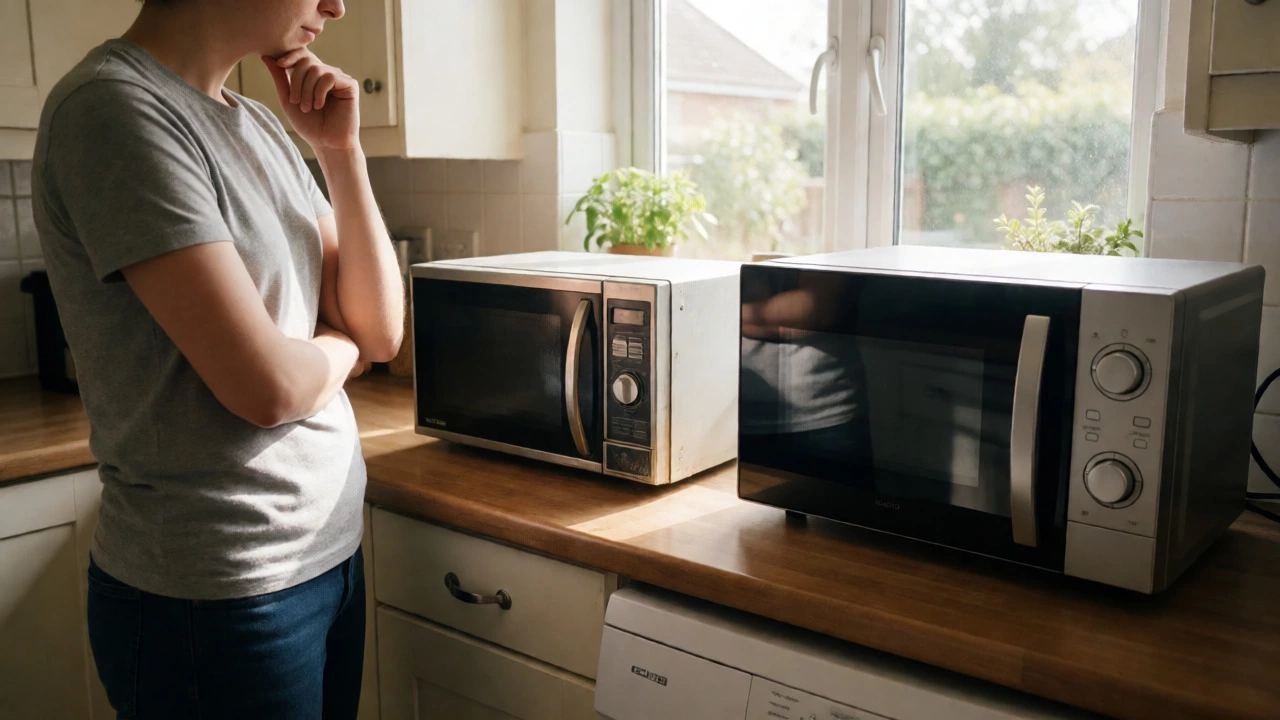
This is where people get stuck. Should you call a technician or just buy a new one? Here is a simple rule of thumb I use when advising friends in Toronto: if the repair cost exceeds 50% of the price of a new comparable model, replace it.
Let’s look at the economics. A basic new countertop microwave costs between $80 and $150 CAD. A specialized over-the-range model might run $300 to $600. Now, consider repair labor. In most cities, diagnostic fees plus parts easily hit $100 to $150. If your microwave is already six years old, pouring $120 into a repair leaves you with a seven-year-old machine that might fail again in twelve months due to other aging components.
Exceptions exist, though. If you own a high-end built-in microwave that matches your custom cabinetry, replacing it might involve expensive carpentry and electrical work. In that scenario, spending $200 on a repair to extend its life by two more years makes financial sense.
How to Make Your Microwave Last Longer
You can’t stop time, but you can slow down the decay. Most premature failures happen because of neglect, not bad luck. Here is how to squeeze those extra years out of your current unit.
- Clean the Interior Weekly: Grease and sugar buildup absorb microwave energy instead of reflecting it back into the food. This forces the magnetron to work harder, generating excess heat. Wipe it down after heavy use.
- Never Run It Empty: Running a microwave with nothing inside causes the waves to bounce around without absorption, potentially damaging the magnetron. Always put a cup of water inside if you need to test it.
- Ventilate Properly: Ensure there is at least two inches of clearance around the vents. Blocking airflow causes the cooling fans to struggle, leading to overheating and thermal shutdowns.
- Use Microwave-Safe Containers: Metal sparks damage the interior enamel and can arc against the waveguide. Plastic containers that melt leave sticky residues that are hard to clean and attract more dirt.
When Radiation Leaks Become a Concern
People worry about radiation leaking from old microwaves. It’s a valid concern, but often misunderstood. Microwaves use non-ionizing radiation, which doesn’t make food radioactive. However, if the door seal is broken, microwaves can escape into the kitchen.
The U.S. Food and Drug Administration sets strict limits on leakage. Modern units are designed to cut power instantly if the door opens. But if the latch mechanism is worn, the switch might not trigger fast enough. If you feel warmth on your face when standing near a running microwave, or if the light turns off but the fan keeps running indefinitely, get it checked. Safety should always trump saving fifty bucks on a repair bill.
The Environmental Angle
Before you toss that old unit in the trash, think about disposal. Microwaves contain capacitors that hold electrical charge even when unplugged. They also have metal casings and plastic shells that take centuries to decompose. Many municipalities offer e-waste recycling programs specifically for large appliances. Don’t let a landfill be the final destination for a device that served you well for a decade.
Ultimately, knowing what is the lifespan of a microwave helps you budget better. Expect to replace it every 7 to 10 years. Keep it clean, listen to its noises, and don’t ignore the small glitches. Your kitchen convenience depends on it.
How long do microwaves typically last?
The average lifespan of a microwave oven is between seven and ten years. Heavy daily use by a large family can shorten this to five or six years, while light use by a single person might extend it beyond ten years.
Is it worth repairing a 10-year-old microwave?
Generally, no. If the repair cost is more than half the price of a new unit, replacement is smarter. At ten years old, other components like the control board or fan are likely nearing failure too, making further repairs a waste of money.
Can a microwave explode?
True explosions are rare. However, sealed containers can burst due to pressure buildup, and arcing (sparks) from metal can cause fires. These are usually contained within the oven cavity and rarely result in catastrophic external explosions.
What causes a microwave to stop working suddenly?
Sudden failure is often due to a blown fuse, a failed door interlock switch, or a burnt-out diode. These are common electrical faults that occur as components age and endure thermal cycling.
Do expensive microwaves last longer?
Not necessarily. Expensive models often have more complex features (like convection modes or smart sensors) which introduce more potential points of failure. Basic, durable mechanical dials often outlast complex digital interfaces.