

What Is the Life Expectancy of a Range Oven? Average Lifespan and When to Replace It
 Mar, 8 2026
Range Oven Repair vs Replacement Calculator
Oven Evaluation Tool
Most people don’t think about how long their range oven will last until it stops working. You buy it, use it every day, and assume it’ll keep going forever. But here’s the truth: range ovens don’t last forever. On average, a well-maintained range oven lasts between 13 and 15 years. That’s the number most repair technicians in Toronto see in the field. If your oven is older than 15 years and starting to act up, it’s not just broken-it’s overdue.
What Affects a Range Oven’s Lifespan?
Not all ovens are created equal. A cheap model bought on sale might only last 8 years. A high-end built-in range from a trusted brand like Wolf, Viking, or GE can push 20 years. But even the best oven won’t last if it’s treated poorly. The biggest killers of oven life are:
- Heat stress - Constant high temperatures (especially when broiling) wear out heating elements and insulation over time.
- Moisture and spills - Food residue, grease, and steam that aren’t cleaned out slowly corrode control panels, wiring, and door seals.
- Overuse - Running the oven for 3+ hours daily, like a home bakery or catering setup, cuts life expectancy by 30%.
- Power surges - A single lightning strike or faulty circuit can fry the electronic control board. No repair can bring that back.
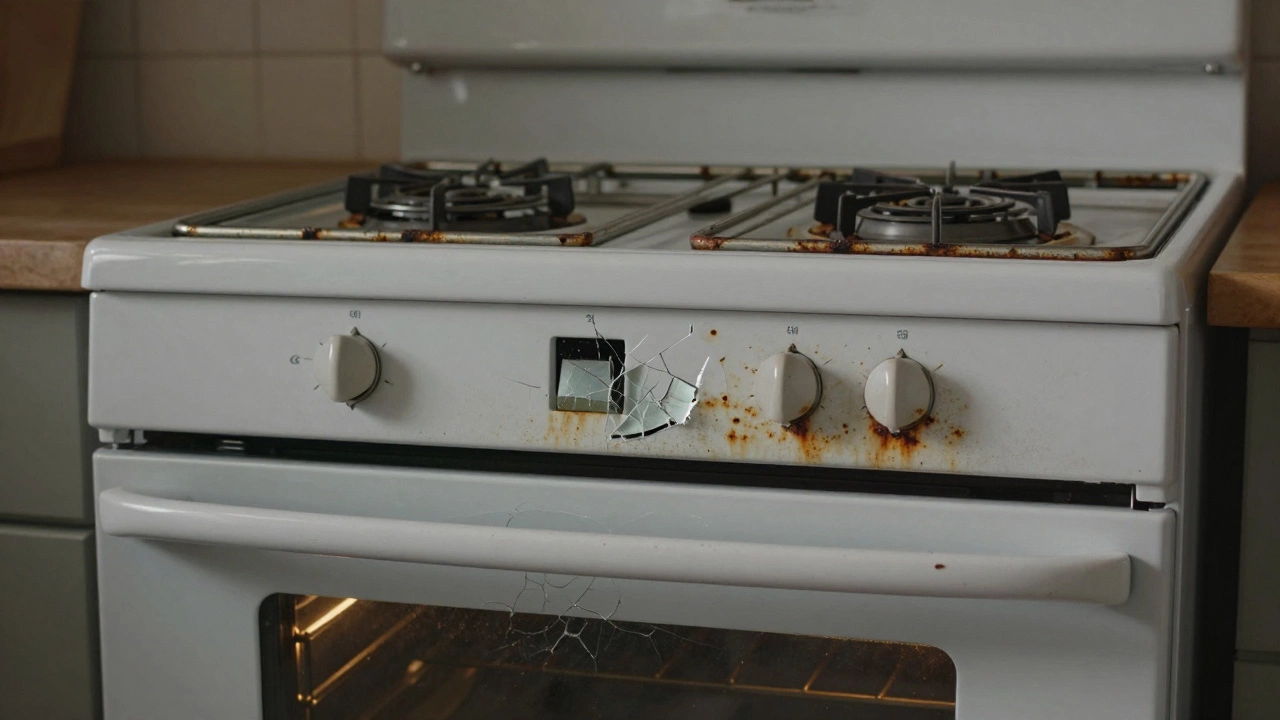
One technician in Mississauga told me he sees 12-year-old ovens with cracked glass doors because owners never cleaned the seals. Grease builds up, traps moisture, and the glass literally cracks under heat pressure. That’s not a manufacturing defect-it’s neglect.
Signs Your Range Oven Is Reaching Its End
You don’t need to wait for it to die completely. Here are the five red flags that mean your oven is on its last legs:
- Inconsistent heating - Food cooks unevenly. One side burns, the other’s raw. This usually means the heating element is failing or the thermostat is inaccurate.
- Longer preheat times - Used to take 10 minutes? Now it’s 20 or more. The element is losing power or the insulation is worn out.
- Flickering or unresponsive controls - Digital displays glitch, buttons don’t respond, or settings reset on their own. That’s the control board failing. Replacing it costs $250-$400. Often more than half the price of a new oven.
- Excessive noise - Loud buzzing, clicking, or grinding sounds from the fan or motor. Bearings wear out. Motors burn up. Neither is worth fixing.
- Visible damage - Cracked enamel, warped racks, rusted burners, or a door that doesn’t seal. These aren’t just cosmetic. They mean heat is escaping, energy is wasted, and safety is at risk.
One homeowner in Scarborough replaced her oven’s control board twice in three years. Each repair cost $300. She finally bought a new one. The total spent on repairs? $900. The new oven? $1,100. She got five more years out of it. That’s not a repair-it’s throwing money away.
How to Make Your Range Oven Last Longer
You can stretch your oven’s life by a few years with simple habits:
- Clean the interior every 3 months - Use baking soda and water. Avoid harsh chemicals that eat away at coatings.
- Check the door seal yearly - Run a dollar bill around the edge. If it pulls out easily, the seal is worn. Replacements cost under $50.
- Don’t overload the oven - Blocking airflow forces the fan and heating elements to work harder.
- Use surge protectors - Plug your oven into a heavy-duty surge protector. It’s cheap insurance against power spikes.
- Don’t use the self-cleaning cycle too often - It heats the oven to over 900°F. That’s brutal on wiring and insulation. Clean manually instead.
These steps won’t make your oven last 30 years. But they can easily add 2-4 extra years of reliable use. That’s $1,000+ saved.
When Should You Replace It?
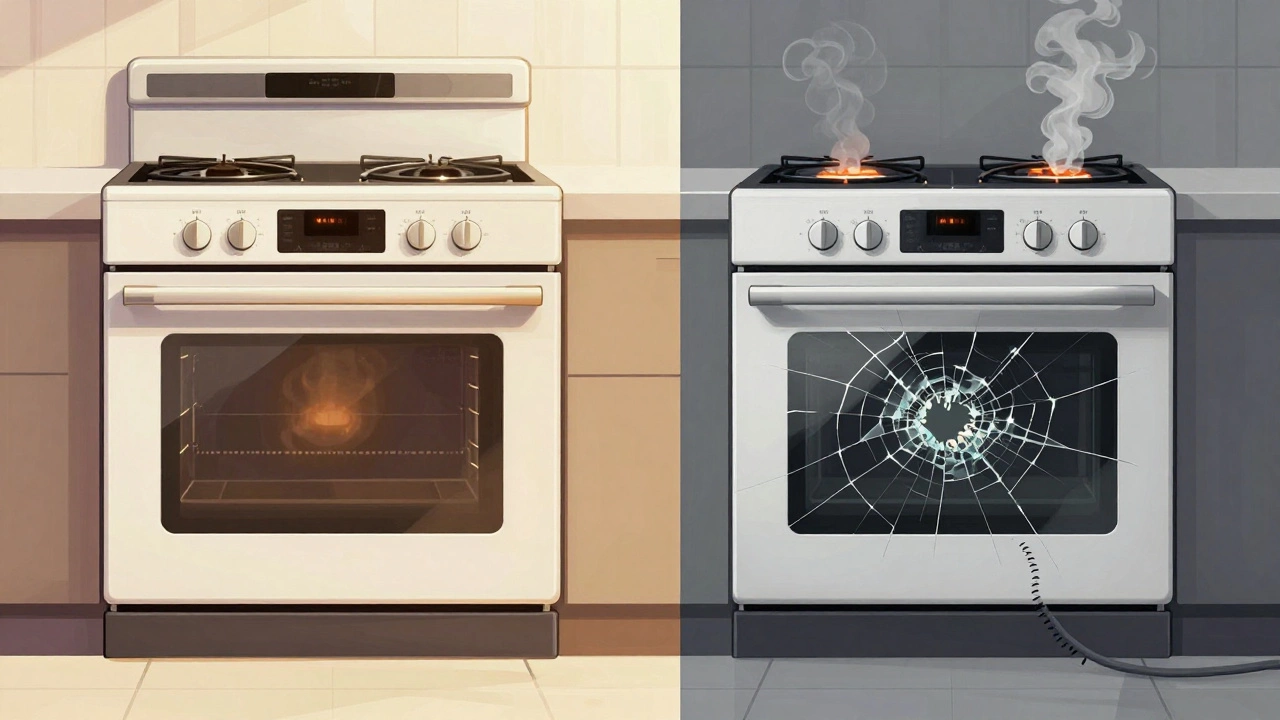
Here’s the hard truth: if your oven is over 15 years old and needs a major repair, it’s time to replace it. Not repair. Replace.
Why? Because:
- Parts for older models are hard to find. Some brands stop making them after 10 years.
- New ovens use 20-30% less energy. That saves $75-$150 a year on your electric bill.
- Modern ovens have better safety features - auto shut-off, child locks, precise temp control.
- A new oven increases home value. Buyers notice appliances.
There’s one exception: if you have a high-end range (think $2,500+) and it’s only 10 years old, a $400 repair might make sense. But for a standard $800-$1,200 oven? If it’s 13+ years old and needs a new element or control board, just buy new.
What’s the Cost Difference: Repair vs. Replace?
Let’s break it down with real numbers from Toronto repair shops in 2026:
| Scenario | Repair Cost | New Oven Cost | Long-Term Value |
|---|---|---|---|
| 10-year-old oven, faulty heating element | $220 | $1,000-$1,800 | Repair wins (if oven still works well) |
| 14-year-old oven, glitchy control board | $380 | $1,000-$1,800 | Replace. Control boards rarely last past 15 years. |
| 16-year-old oven, multiple issues | $500+ (multiple repairs) | $1,000-$1,800 | Replace. You’re spending more than half the price of a new one. |
| 12-year-old oven, energy inefficient | $180 (just fix one part) | $1,000-$1,800 | Replace. You’ll save $100+/year on electricity. |
See the pattern? If the repair cost is more than 50% of a new oven’s price, and the oven is over 12 years old, replace it. It’s not just about money-it’s about reliability, safety, and efficiency.
What to Look for in a New Range Oven
If you’re replacing, here’s what actually matters:
- Energy Star rating - Look for models with this label. They use less power and often qualify for rebates in Ontario.
- Self-cleaning options - Steam clean is gentler than high-heat cycles. Better for longevity.
- Warranty length - 5-year full coverage is standard. Look for 10-year parts warranties on heating elements.
- Brand reputation - Whirlpool, GE, Samsung, and LG have the best track record for reliability in Canada.
- Size and layout - Make sure it fits your space. Measure the cutout, depth, and vent clearance.
Don’t get tricked by fancy features. A convection oven with Bluetooth connectivity won’t make your cookies taste better. But a solid heating element and a good door seal? That’s what lasts.
Final Thought: It’s Not About Bravery. It’s About Smart Choices.
I’ve seen people cling to ovens for 20 years because they’re ‘attached’ to them. I get it. But an old oven isn’t a family heirloom. It’s a machine. And machines wear out. When it starts struggling, it’s not being stubborn-it’s telling you it’s done.
Replacing a range oven isn’t a loss. It’s an upgrade. You get better performance, lower bills, fewer surprises, and peace of mind. That’s worth more than holding onto something that’s already lived its best life.
How long should a range oven last on average?
A standard range oven lasts between 13 and 15 years with normal use. High-end models can last up to 20 years if well-maintained. Cheaper models may only last 8-10 years.
Is it worth repairing a 15-year-old oven?
Generally, no. If your oven is 15 years old and needs a major repair like a new control board or heating element, the cost is often close to half the price of a new unit. New ovens are more energy-efficient, safer, and come with warranties. Replacing it is usually the smarter financial choice.
What causes a range oven to fail early?
The top causes are poor maintenance (grease buildup, unclean seals), frequent use of the self-cleaning cycle, power surges without protection, and moisture damage from spills. Overloading the oven and ignoring warning signs like uneven heating or long preheat times also shorten its life.
Can I extend the life of my oven with regular cleaning?
Yes. Cleaning the interior every 3 months, checking the door seal annually, and avoiding harsh chemicals can add 2-4 years to your oven’s life. Simple habits like not using the self-clean cycle more than twice a year also help.
Do new ovens save money on electricity?
Yes. Modern Energy Star-rated ovens use 20-30% less electricity than models from 10+ years ago. That can save you $75-$150 per year on your electric bill, paying for the new oven in just a few years.