

What is a Good Lifespan for a Dishwasher? (Average Life & Replacement Guide)
 Aug, 10 2026
Dishwasher Repair vs. Replace Calculator
Enter your dishwasher details below to get an instant recommendation based on industry standards.
There is nothing quite as frustrating as standing in front of a sink full of dirty dishes, staring at a machine that just stopped working. You might be wondering if it’s time to toss the old unit or if a quick fix will save you hundreds of dollars. The short answer? A good lifespan for a standard dishwasher is between 10 and 15 years. However, getting that number right depends heavily on the brand, how hard your water is, and whether you’ve been keeping up with basic maintenance.
If your unit is sitting right around that ten-year mark and starts acting up, you are entering a gray zone where repair costs often outweigh the value of the machine. Let’s break down exactly what determines how long these appliances last, how to spot the warning signs before they become disasters, and when it makes financial sense to hit the buy button instead of calling a technician.
Understanding Average Dishwasher Lifespans
Not all dishwashers are built to survive the same amount of time. When we talk about lifespan, we aren’t just guessing; we are looking at data from major consumer reports and appliance manufacturers. Generally, you can expect three distinct tiers of longevity based on quality and price point.
| Quality Tier | Estimated Lifespan | Typical Price Range | Best For |
|---|---|---|---|
| Budget / Entry-Level | 7-9 Years | $300 - $600 | Renters, low usage households |
| Mid-Range / Standard | 10-12 Years | $600 - $900 | Average families, daily use |
| Premium / High-End | 12-15+ Years | $900 - $1,500+ | Heavy users, those seeking quiet operation |
Cheaper models often use plastic components for internal racks and spray arms, which degrade faster under heat and pressure. Premium brands like Bosch is a German manufacturer known for high-efficiency dishwashers with stainless steel tubs and advanced filtration systems or Miele is a luxury appliance maker offering robust construction designed for decades of reliable service tend to use stainless steel interiors and more durable motors. These materials resist corrosion and wear, pushing the lifespan well beyond the average. If you bought a budget model five years ago, don’t expect it to outlive its mid-range counterpart significantly unless you treat it like glass.
Key Factors That Shorten or Extend Life
Why does one dishwasher die at eight years while another chugs along for fifteen? It usually comes down to three main culprits: water quality, installation, and user habits.
Hard Water is the Silent Killer
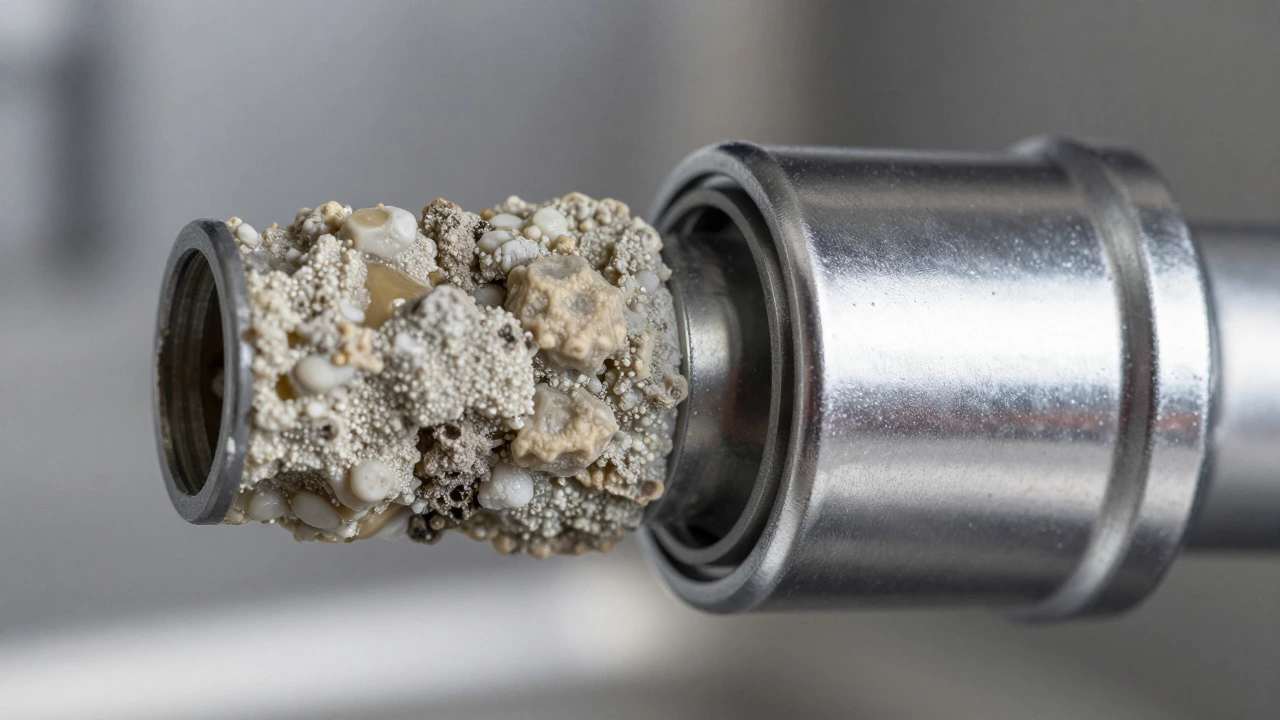
If you live in an area with hard water-common in parts of Canada like Toronto-you are dealing with high levels of calcium and magnesium. Over time, these minerals build up inside the heating element and spray arms. This scale buildup forces the motor to work harder and can clog filters, leading to premature failure. Installing a whole-house water softener or using rinse aid consistently can add several years to your machine's life.
Installation Mistakes
A dishwasher needs proper drainage and water supply connections. If the drain hose isn't installed with a high loop or air gap, dirty water from your sink can backflow into the dishwasher. This causes foul odors and rusts internal components quickly. Similarly, if the water inlet valve is subjected to excessive pressure without a regulator, seals can burst, leading to leaks that damage both the appliance and your cabinetry.
User Habits
We’ve all been guilty of scraping food lazily before loading. Large chunks of bone or corn husks can jam the impeller or clog the filter. While modern machines have better filtration, forcing them to grind through heavy debris wears out the motor bearings faster. Pre-rinsing isn't always necessary for cleaning, but removing large solids is crucial for longevity.
Signs Your Dishwasher Is Dying
You don’t need to be an engineer to know when your appliance is on its last legs. Here are the specific red flags that suggest replacement is imminent:
- Persistent Leaks: If you find water pooling under the kitchen cabinet despite tightening connections and checking hoses, the tub itself may have cracked. Plastic tubs are prone to hairline fractures over time due to thermal expansion and contraction. Once the tub cracks, the unit is trash.
- Loud Grinding Noises: A slight hum is normal. A loud grinding or rattling sound usually means the pump impeller is broken or something foreign is stuck in the drain system. If the noise persists after clearing the filter, the motor assembly likely needs replacing, which is often half the cost of a new unit.
- Dishes Aren’t Getting Clean: If you’ve cleaned the filter, checked the spray arms for clogs, and used fresh detergent, but dishes still come out with food residue, the circulation pump may be losing power. This is a common issue in units older than ten years.
- Error Codes That Won’t Clear: Modern dishwashers have electronic control boards. Frequent error codes related to drainage or temperature sensors indicate failing electronics. Repairing circuit boards is tricky because parts are often discontinued for older models.
- Frequent Breakdowns: If you’ve called for repair twice in the last year, stop. The reliability curve drops sharply after the first major component fails. One broken part often stresses others, leading to a cascade of failures.
Repair vs. Replace: Making the Financial Decision
This is the most critical calculation you’ll make. There is a simple rule of thumb used by many appliance technicians: the 50% Rule. If the cost of the repair is more than 50% of the price of a new dishwasher, you should generally replace it.
Let’s look at some real-world scenarios. A new mid-range dishwasher costs around $800 to $1,000 installed. A repair call-out fee plus parts for a new door latch might be $150. That’s a clear repair. But if the control board fails, the repair could run $400 to $600. At that point, you’re spending half the price of a new machine on an old one that still has other aging parts.
Consider also the age of the unit. If your dishwasher is 12 years old and needs a new motor ($300-$500), replace it. The remaining useful life is uncertain, and newer models are significantly more energy and water efficient. According to Energy Star standards, newer dishwashers use about 3 gallons less water per cycle than models from ten years ago. Over two years, those savings can offset the initial purchase price difference.
How to Maximize Your Dishwasher’s Lifespan
If you want to squeeze every possible year out of your current machine, follow these maintenance steps. They take minutes but prevent costly repairs.
- Clean the Filter Monthly: Most modern dishwashers have a mesh filter at the bottom. Remove it, rinse it under hot water, and scrub off any grease or food particles. A clogged filter reduces water flow and strains the pump.
- Inspect Spray Arms: Check the holes in the upper and lower spray arms for debris. Use a toothpick or small brush to clear any blockages. Ensure the arms spin freely when you turn them by hand.
- Use the Right Detergent: Avoid cheap powders that leave residue. Gel pods or high-quality tablets dissolve better and reduce mineral buildup. Never use regular dish soap-it creates suds that can overflow and damage the motor.
- Run Hot Water Before Starting: Turn on your kitchen sink’s hot water for 30 seconds before starting the dishwasher. This ensures the machine starts with hot water immediately, improving cleaning efficiency and reducing strain on the heating element.
- Leave the Door Ajar After Cycles: Moisture trapped inside promotes mold and mildew, which can corrode seals and racks. Cracking the door open allows air circulation and keeps rubber gaskets flexible.
Choosing a Replacement: What to Look For
When you finally decide to upgrade, focus on features that impact durability and performance rather than just aesthetics. Look for models with stainless steel tubs-they resist heat and odor better than plastic. Consider noise levels measured in decibels (dB); quieter units (under 45 dB) often have better insulation and build quality.
Also, check the warranty terms. Brands that offer longer warranties on parts and labor, such as a 2-year full coverage and 5-year parts warranty, typically stand behind their engineering. Read reviews specifically mentioning "reliability" and "long-term use" rather than just initial impressions.
Is it worth repairing a 10-year-old dishwasher?
It depends on the repair cost. If the fix is under $200, it might be worth trying. However, since 10 years is the average lifespan, major repairs like motor or control board replacements are rarely worth it. You are likely close to needing another repair soon, so replacing the unit is usually the smarter financial move.
Does running a dishwasher every day shorten its life?
No, dishwashers are designed for daily use. In fact, letting food sit and dry in the machine can cause odors and bacterial growth. Regular use helps keep the seals lubricated and the plumbing clear. The key is proper loading and maintenance, not frequency of use.
Which dishwasher brands last the longest?
Brands like Bosch, Miele, and Whirlpool consistently rank high for reliability and longevity. Bosch is particularly noted for its quiet operation and durable pumps. Miele offers premium build quality with longer expected lifespans, though at a higher price point. Always check specific model reviews as quality can vary within brands.
How do I know if my dishwasher pump is bad?
A bad pump usually presents as water remaining at the bottom of the tub after a cycle finishes. You might also hear a humming sound without water draining, or complete silence when the drain cycle should start. First, check the filter and drain hose for clogs. If those are clear, the pump motor or impeller is likely faulty.
Can hard water ruin a dishwasher?
Yes, hard water is one of the biggest threats to dishwasher longevity. Mineral deposits build up on the heating element, reducing efficiency and causing overheating. It also clogs spray arm nozzles and leaves spots on dishes. Using a water softener or adding rinse aid can mitigate these effects significantly.