

What Happens When Your Freezer Stops Freezing? Causes and Fixes
 Nov, 2 2026
Freezer Emergency & Diagnostic Tool
Determine if your frozen food is still safe to eat based on USDA guidelines.
Select the symptoms you are experiencing to identify the likely cause.
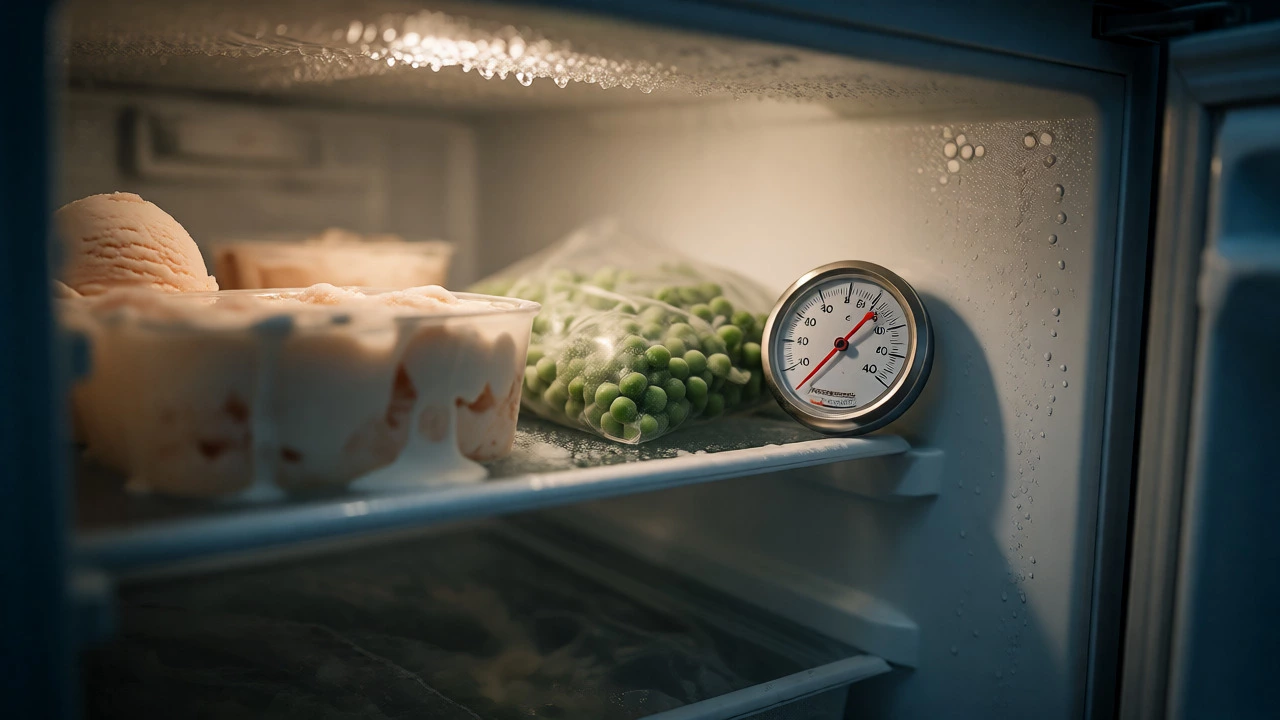
You open the freezer door expecting a blast of arctic air, but instead, you’re hit with lukewarm humidity. The ice cream is soft. The frozen peas are clumped together in a single green brick. This isn’t just an inconvenience; it’s a ticking clock on your food safety and your wallet. When your freezer stops freezing effectively, it rarely happens overnight without warning signs. Understanding what’s actually going wrong inside that box can save you from throwing out hundreds of dollars worth of groceries or paying for a service call that could have been a $20 fix.
The Immediate Impact: Food Safety and Spoilage
Before you even pick up a screwdriver, look at your inventory. The United States Department of Agriculture (USDA) states that food remains safe if it still contains ice crystals or is at 40°F (4°C) or below. If your freezer has been off for more than two hours, you need to act fast. Perishable items like raw meat, poultry, and seafood are the first casualties. They enter the "danger zone"-between 40°F and 140°F-where bacteria multiply rapidly. You might not smell the spoilage yet, but that doesn't mean it's safe. Check the temperature with a dedicated appliance thermometer, not just by touch. If it’s above 40°F, discard high-risk items. For baked goods or solid vegetables, you might get away with cooking them immediately, but texture often suffers.
Common Culprit #1: Dirty Condenser Coils
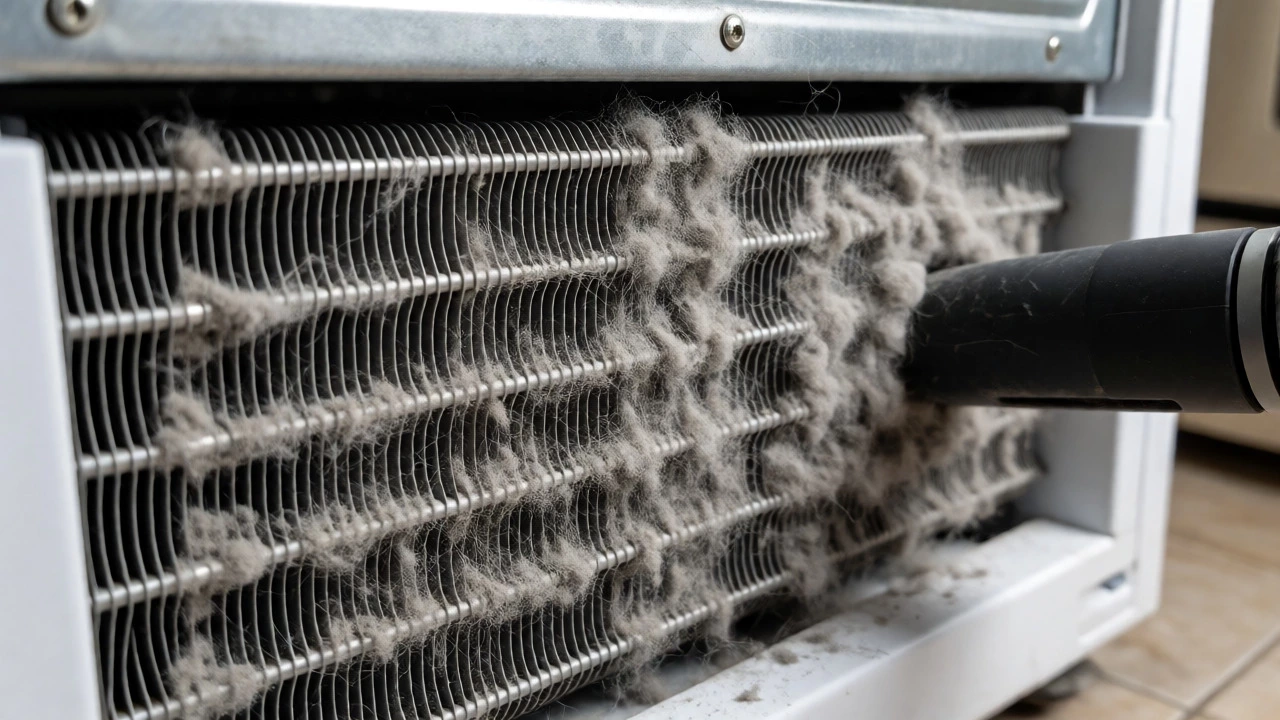
Here is the most common reason a freezer struggles, especially in older units or homes with pets. Your freezer works by moving heat from the inside to the outside. It dumps this heat through coils located either at the back or under the front kick plate. Over time, dust, pet hair, and lint coat these coils like a wool sweater. This insulation prevents the unit from releasing heat efficiently. The compressor then runs harder and longer, trying to compensate, but fails to drop the internal temperature.
Condenser coils are metal grids that release heat absorbed from the freezer interior. Cleaning them is straightforward. Unplug the unit, pull it away from the wall, and use a coil brush or vacuum attachment to remove the debris. If you haven’t cleaned yours in six months, this is likely your issue. A clean set of coils can restore cooling performance almost instantly.
Common Culprit #2: Blocked Air Vents
If your freezer has an automatic defrost cycle, it relies on fans to circulate cold air. Sometimes, users pack the freezer too tightly, blocking the vents where cold air enters. Or, worse, ice buildup blocks these vents from the inside. If you hear the fan running but feel no airflow coming from the vents, check for ice obstruction. In many modern freezers, the evaporator fan is located behind an interior panel. If ice has formed around the fan blades, they won’t spin. This usually points to a defrost system failure, which we’ll cover next.
Common Culprit #3: Defrost System Failure
This is the technical heart of the problem for many modern frost-free freezers. These units are designed to melt ice automatically using a defrost heater element that melts ice on the evaporator coils during a timed cycle. If this system fails, ice builds up on the evaporator coils until they become insulated by their own frost. The freezer cools poorly because the cold air can’t pass through the icy coils to reach the food.
| Component | Function | Sign of Failure |
|---|---|---|
| Defrost Timer/Control Board | Initiates the defrost cycle | No heating element activation; ice continues to build |
| Defrost Thermostat | Cuts power to heater when ice is gone | Heater stays on too long or never turns on |
| Defrost Heater | Melts ice off evaporator coils | Visible burn marks; no continuity on multimeter test |
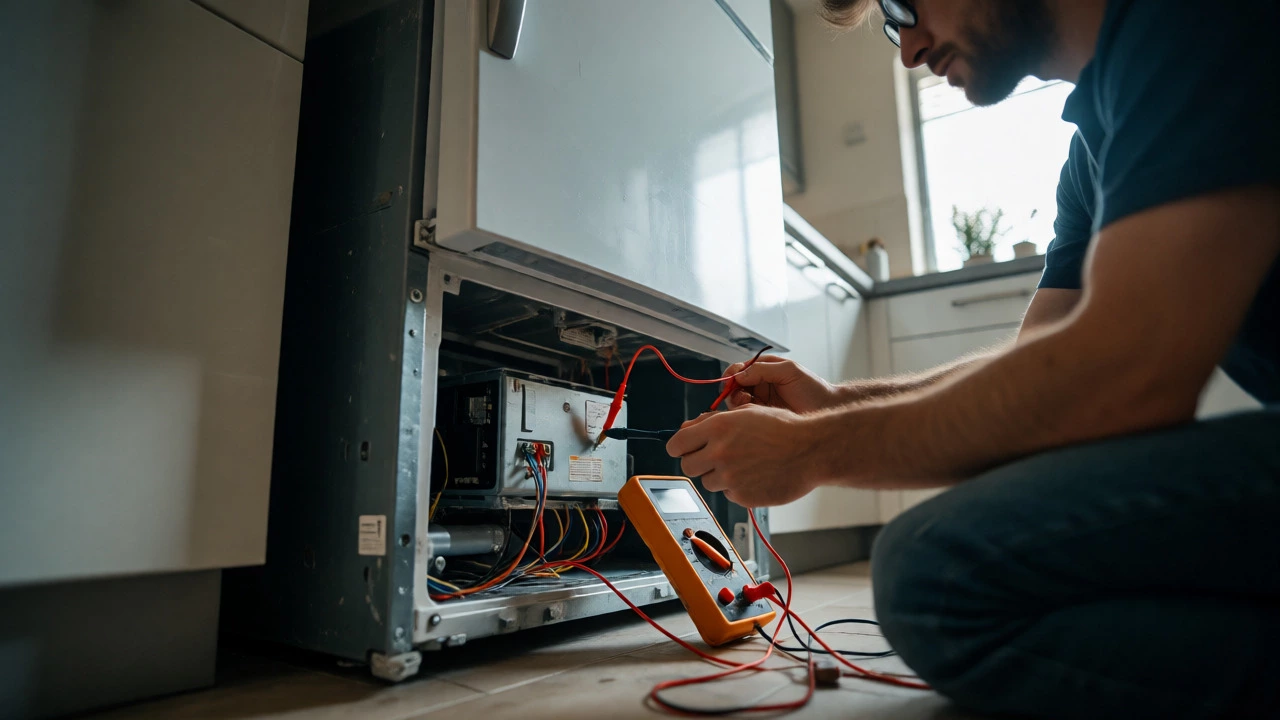
Testing these parts requires a multimeter. If you aren’t comfortable working with electricity, this is a job for a professional. However, knowing which part failed helps you avoid being upsold on a new compressor when you only needed a $15 thermostat.
Common Culprit #4: Compressor Issues
The compressor is the motor-driven pump that circulates refrigerant through the freezer’s cooling system. It’s the engine of your appliance. If the compressor hums but doesn’t start, or clicks repeatedly and shuts off, it might be overheating or failing. Listen closely. A healthy compressor makes a steady, low hum. A dying one might buzz loudly, click, or run hot to the touch. If the compressor runs continuously but the freezer doesn’t cool, you might have a refrigerant leak. Refrigerant leaks are difficult to detect without specialized tools and require a certified technician to repair, as handling refrigerants involves environmental regulations.
Common Culprit #5: Faulty Door Gasket
Sometimes the problem isn’t mechanical; it’s structural. The rubber seal around the door keeps cold air in and warm room air out. If this gasket is cracked, torn, or dirty, warm air seeps in constantly. This forces the compressor to work overtime, leading to higher energy bills and inconsistent temperatures. Perform the "dollar bill test." Close the door on a dollar bill. If you can pull it out easily without resistance, the seal is compromised. Clean the gasket with warm soapy water to remove sticky residue. If cleaning doesn’t help, replacement gaskets are relatively cheap and easy to install for most models.
When to Call a Professional vs. DIY
Deciding whether to tackle this yourself depends on your comfort level with tools and electricity. Here is a quick decision guide:
- DIY Friendly: Cleaning condenser coils, checking door seals, clearing blocked air vents, resetting the control board (unplugging for 5 minutes).
- Intermediate DIY: Replacing a light bulb, replacing a fan motor (if accessible), testing continuity on simple components with a multimeter.
- Call a Pro: Suspected refrigerant leaks, compressor replacement, sealed system repairs, complex electronic control board diagnostics.
In Toronto, labor costs for appliance repair typically range from $80 to $150 per hour, plus parts. If the repair quote exceeds 50% of the cost of a new freezer, consider replacement. Newer models are significantly more energy-efficient, potentially offsetting the upfront cost over time.
Preventing Future Freezer Failures
Once you’ve fixed the issue, keep it from happening again. Regular maintenance is key. Vacuum the condenser coils every six months. Avoid overloading the freezer; air needs space to circulate. Don’t put hot food directly into the freezer; let it cool to room temperature first. This reduces the workload on the compressor. Also, ensure the freezer is level. If it tilts forward, the door might not seal properly, letting cold air escape unnoticed.
How long does it take for a freezer to refreeze after fixing the issue?
It typically takes 24 hours for a freezer to reach its optimal temperature of 0°F (-18°C) after a repair. During this time, keep the door closed as much as possible to retain cold air. Use a thermometer to monitor progress rather than guessing.
Can I reset my freezer to fix freezing problems?
Yes, a hard reset can sometimes clear minor electronic glitches. Unplug the freezer for five minutes, then plug it back in. This resets the control board and may restart the cooling cycle. It’s a good first step before diving into mechanical repairs.
Why is my freezer running but not cold?
If the compressor runs but the freezer isn’t cold, common causes include dirty condenser coils, a failed evaporator fan, or a refrigerant leak. Start by cleaning the coils. If that doesn’t help, listen for the fan. If the fan isn’t spinning, replace it. If both are working, suspect a sealed system issue requiring a pro.
Is it cheaper to repair or replace a freezer?
For freezers less than 5 years old, repair is usually cost-effective. For units over 10-15 years old, replacement is often better due to improved energy efficiency in newer models. Always compare the repair quote against the price of a comparable new unit.
What should I do with food while waiting for repairs?
Keep the freezer door closed. A full freezer holds temperature for about 48 hours; a half-full one for 24 hours. If the outage will last longer, transfer perishables to a cooler with ice packs or borrow freezer space from a neighbor. Discard any food that has thawed completely and been above 40°F for more than two hours.