

What Happens If You Never Flush Your Water Heater? Risks & Costs
 Jul, 9 2026
Water Heater Maintenance Cost Calculator
Input Parameters
Impact Analysis
Total Financial Risk: By not flushing annually, you risk wasting $2,850 in energy waste and potential catastrophic failure repairs over 5 years.
You probably installed your water heater is a home appliance that heats and stores water for domestic use years ago and forgot about it. It’s quiet, it works, so why bother? The problem isn’t that the machine breaks down immediately. The problem is what happens inside the tank when you ignore the one simple task that keeps it running: flushing out the sediment.
If you never flush your water heater, you aren't just risking a sudden breakdown on a cold morning. You are slowly cooking your own equipment from the bottom up. Sediment builds up like a layer of rock between the burner (or heating element) and the water. This causes overheating, skyrocketing energy bills, and eventually, a catastrophic leak that can ruin your floor and belongings. In Toronto, where we deal with hard water and freezing winters, neglecting this maintenance is even more costly.
The Silent Killer: How Sediment Builds Up
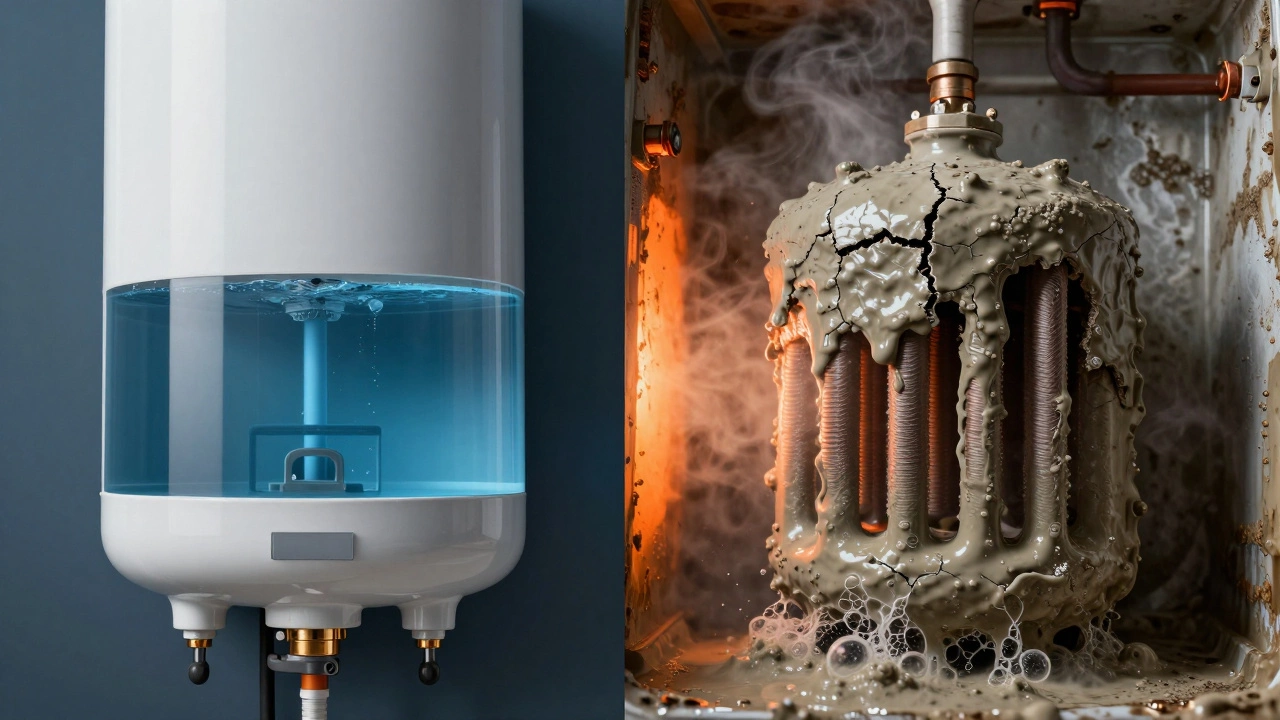
To understand why flushing matters, you have to look at what’s happening inside the tank. Tap water isn’t pure H2O. It contains dissolved minerals like calcium and magnesium. When water is heated, these minerals precipitate out of the solution and settle at the bottom of the tank. This process is called sedimentation.
In areas with soft water, this might take five or ten years to become a major issue. But in regions with hard water-like much of Ontario-the process accelerates. Over time, this mineral sludge forms a thick, concrete-like layer. This layer acts as an insulator. Think of it like putting a pot on a stove but placing a brick under it first. The heat has to travel through the brick before it warms the food. In your water heater, the heat has to burn through the sediment to warm the water.
This creates a dangerous feedback loop. The thermostat senses the water isn’t hot enough because the sediment is blocking the heat transfer. So, the burner stays on longer. Or the electric elements cycle more frequently. Meanwhile, the metal of the tank itself, trapped against the fire or the hot element by that layer of rock, begins to overheat. Steel tanks are designed to handle water temperatures, not direct, unmitigated flame contact. This thermal stress is what leads to cracks.
Immediate Consequences: Noise and Efficiency Loss
Before the tank bursts, it will tell you something is wrong. The first sign is usually noise. Have you ever heard your water heater popping, rumbling, or banging? That’s boiling water trapped beneath the sediment layer. As the water below the crust boils, it turns to steam and tries to escape through the solid mineral cake. When it finally breaks through, it creates a small explosion. These pops are harmless individually, but they indicate severe buildup.
The second sign is money leaving your wallet. A water heater covered in two inches of sediment can lose up to 30% of its heating efficiency. You are paying to boil rocks instead of water. For an average household, this translates to hundreds of dollars extra per year on gas or electricity bills. You’re essentially throwing cash into the furnace every time you take a shower.
The Catastrophic Failure: Leaks and Tank Rupture
If the noise and high bills don’t convince you, the structural failure will. The constant overheating weakens the steel walls of the tank. Corrosion also plays a role. The anode rod, which sacrifices itself to protect the tank from rust, gets buried in sediment. Once it’s consumed or blocked, the tank starts to corrode from the inside out. Combined with thermal stress, pinhole leaks appear near the bottom of the tank.
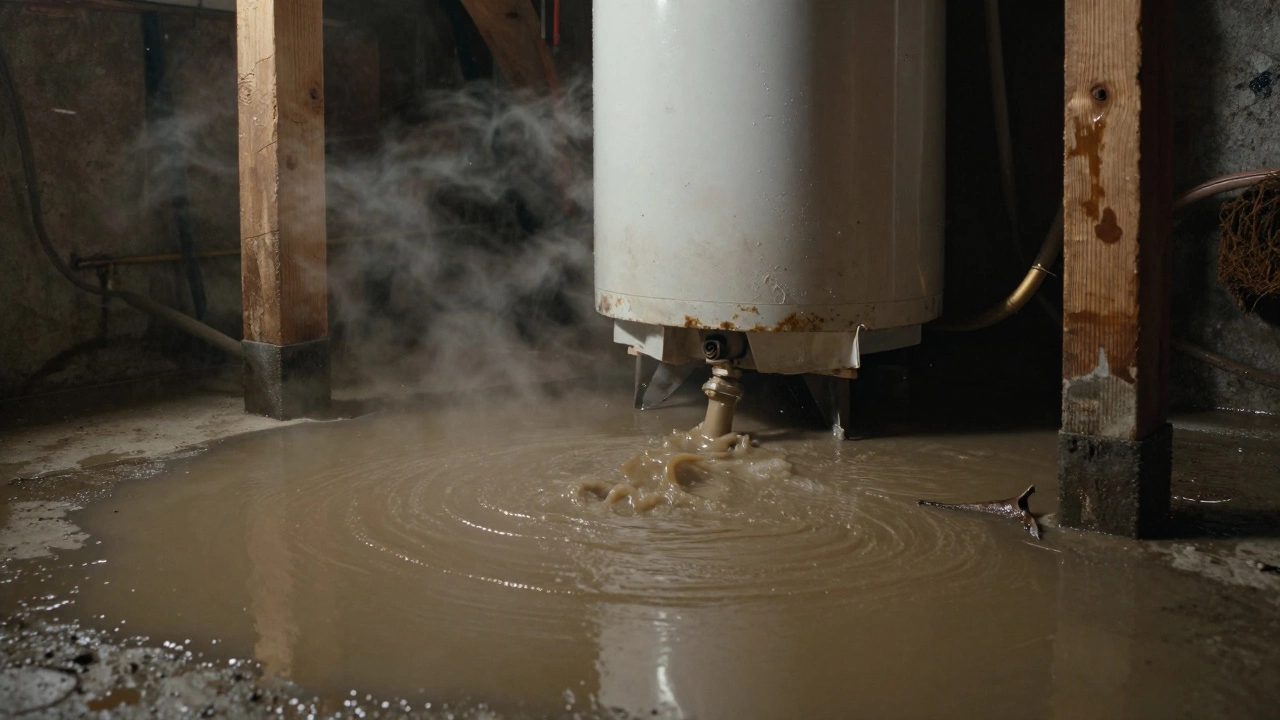
A leak at the bottom is bad news. Unlike a valve leak you can patch, a tank rupture means the entire unit is compromised. When a 50-gallon tank bursts, it doesn’t drip; it floods. Fifty gallons of hot water dump onto your floor instantly. If this happens in a basement, you’re looking at thousands of dollars in water damage, mold remediation, and potential structural repairs to your home’s foundation. Insurance may cover the water damage, but it won’t pay for the new water heater or the inconvenience of having no hot water for weeks.
Health Risks: Bacteria and Poor Water Quality
We often forget that our water heater is also a storage vessel for drinking and bathing water. Stagnant sediment isn’t just dirty; it’s a breeding ground. Anaerobic bacteria, such as Sulfate-Reducing Bacteria, thrive in the oxygen-deprived environment under the sediment layer. These bacteria produce hydrogen sulfide gas, which smells like rotten eggs.
While the smell is unpleasant, the real concern is water quality. Sediment can harbor rust particles and other debris that flow out of your taps. This affects everything from the taste of your coffee to the cleanliness of your clothes. In extreme cases, neglected tanks can contribute to the growth of Legionella, though this is more common in large commercial systems. For homeowners, the main health impact is respiratory irritation from the sulfur smell and skin issues from bathing in mineral-rich, contaminated water.
How to Flush Your Water Heater Safely
The good news is that prevention is cheap and easy. Flushing your water heater takes about 30 minutes and requires minimal tools. Here is how to do it correctly:
- Turn off the power. For electric heaters, switch off the breaker. For gas heaters, turn the dial to 'Pilot' or 'Off'. Safety first-you don’t want dry elements burning out or gas igniting without water.
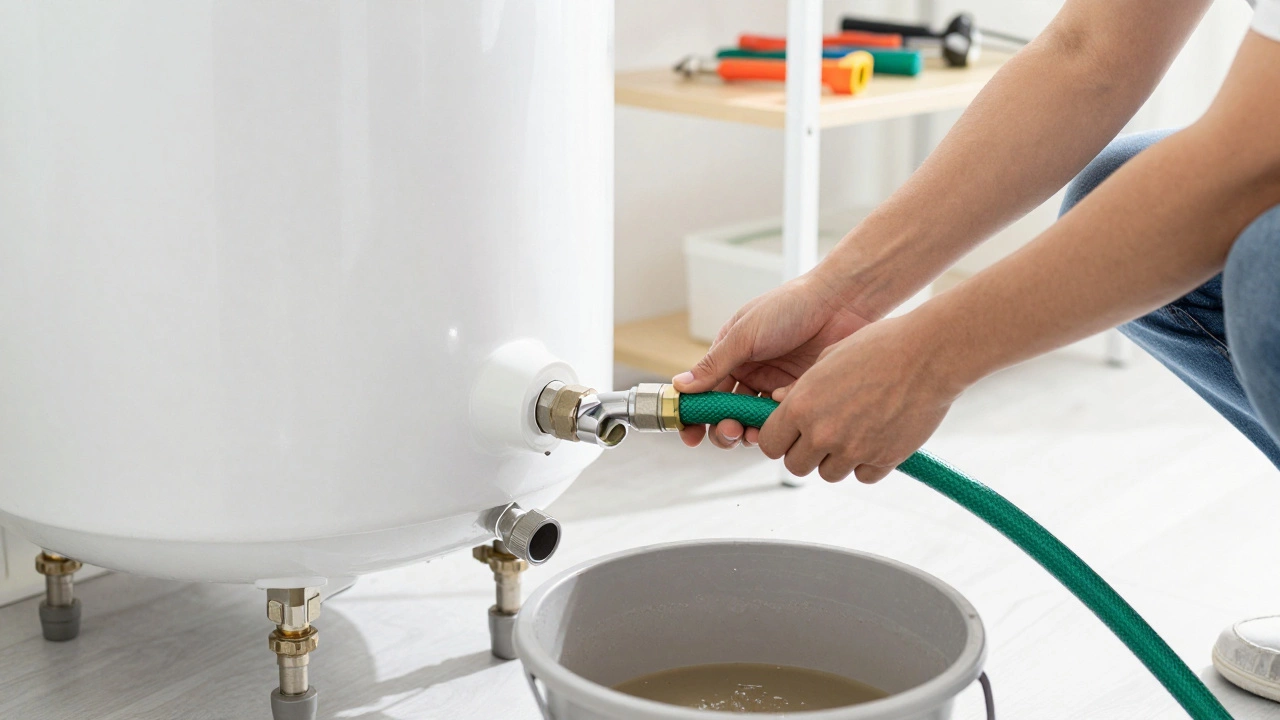
- Connect a garden hose. Attach one end to the drain valve at the bottom of the tank and the other end to a floor drain or outside.
- Open a hot water faucet. Go upstairs and open a hot water tap. This prevents a vacuum from forming in the pipes and allows air to enter the system, helping the water flow out faster.
- Open the drain valve. Let the water run until it flows clear. Initially, it will look like muddy brown water. Keep going until it runs transparent.
- Close the valve and refill. Close the drain valve, remove the hose, and turn the cold water supply back on. Wait for the tank to fill completely (you’ll hear water stop flowing from the open hot faucet).
- Restore power. Turn the breaker back on or relight the pilot light.
If the sediment is heavily compacted, you might need to agitate the tank slightly by turning the cold water on and off while the drain is open to loosen the sludge. Just be gentle.
Comparison: Maintained vs. Neglected Water Heater
| Attribute | Flushed Annually | Never Flushed |
|---|---|---|
| Lifespan | 10-15 years | 4-6 years |
| Energy Efficiency | Optimal (100%) | Reduced by 20-30% |
| Noise Level | Silent | Popping, rumbling, banging |
| Risk of Leak | Low | High (catastrophic failure) |
| Maintenance Cost | $0 (DIY) | $1,500+ (replacement + damage) |
When to Call a Professional
While flushing is a DIY task, there are times when you should call a pro. If your water heater is older than 10 years, the internal components may be fragile. Opening the drain valve could cause it to break, leading to an immediate flood. In Toronto, licensed plumbers can perform a professional flush using specialized pumps that clean the tank more thoroughly than gravity alone.
Also, if you notice rust-colored water coming out during the flush, or if the tank shows signs of external corrosion, skip the DIY approach. These are signs that the tank is nearing the end of its life, and replacing it might be more cost-effective than maintaining it.
Frequently Asked Questions
How often should I flush my water heater?
You should flush your water heater once a year. If you live in an area with very hard water, consider doing it twice a year. Annual flushing removes accumulated sediment before it hardens into a problematic layer.
Can I flush my water heater myself?
Yes, most homeowners can flush their water heater themselves. It requires a garden hose, a bucket, and basic safety precautions like turning off the power and letting the water cool. However, if the unit is old or you are uncomfortable with plumbing tasks, hire a professional.
What are the signs my water heater needs flushing?
Common signs include popping or rumbling noises, inconsistent water temperature, longer heating times, rusty or discolored water, and higher-than-usual energy bills. Any of these indicate significant sediment buildup.
Does flushing void the warranty?
No, flushing does not void the warranty. In fact, many manufacturers require annual maintenance to keep the warranty valid. Check your specific manufacturer’s guidelines, but routine flushing is generally encouraged.
Why does my water heater smell like rotten eggs?
A rotten egg smell is caused by sulfate-reducing bacteria reacting with the magnesium anode rod. Flushing the tank helps remove the sediment where these bacteria thrive. If the smell persists after flushing, you may need to replace the anode rod with an aluminum-zinc alloy rod.