

Should I Repair a 15-Year-Old Oven? A Practical Guide
 Oct, 22 2026
Oven Repair vs. Replace Decision Tool
Use the 50% rule and hidden cost analysis to make the smartest financial choice for your 15-year-old oven.
You’re standing in your kitchen, staring at that stubborn electric oven that’s been baking your Sunday roasts for over a decade and a half. The door won’t seal right, or maybe the temperature swings wildly between preheat and bake time. It’s not broken yet, but it’s definitely on its last legs. The big question keeps looping in your head: is this thing worth saving, or are you just throwing money into a black hole?
Here’s the hard truth most contractors won’t tell you upfront: age alone isn’t the dealbreaker. A 15-year-old oven can still have five good years left if it’s a high-quality brand and the issue is minor. But if you’re dealing with a cracked glass panel on a budget model from a defunct manufacturer, you might be better off shopping for a new unit today rather than next month. Let’s break down exactly how to decide.
The 50% Rule: When Repair Beats Replacement
Appliance technicians use a simple heuristic called the 50% rule. If the cost of parts and labor exceeds 50% of the price of a comparable new oven, replace it. If it’s under 50%, repair it. Sounds straightforward, right? In practice, it gets messy because "comparable" is subjective.
Let’s say your current oven was a premium Bosch model costing $1,800 when new. A direct replacement today costs $2,200 due to inflation and feature upgrades. If the repair quote is $900, that’s about 41% of the replacement cost. Technically, you should repair. But wait-does that $900 fix address a single faulty heating element, or does it involve replacing the main control board? Control boards on older units often fail again within two years because other components (capacitors, relays) are also aging out. You might pay $900 now, then another $600 in 18 months. Suddenly, you’ve spent $1,500 on repairs for an oven that could have been replaced for $2,200 with a fresh warranty.
Context matters more than the math. Here’s how to weigh it:
- Minor fixes (<$300): Door seals, light bulbs, racks, or a single heating element. Always repair these, even on older units.
- Moderate fixes ($300-$700): Thermostat, fan motor, or igniter. Repair only if the rest of the oven is in good shape.
- Major fixes (>$700): Main control board, wiring harness, or multiple simultaneous failures. Usually signals end-of-life.
Brand Longevity and Parts Availability
Not all ovens age equally. Brands like Bosch, Miele, and Wolf are engineered for durability, often using metal gears instead of plastic and thicker insulation. These units frequently run for 20+ years. Conversely, mass-market brands like GE Profile or Whirlpool often hit reliability cliffs around year 12-15 as proprietary electronics degrade.
Parts availability is the silent killer of older appliances. Manufacturers typically support models for 10-15 years after production ends. After that, finding a specific part becomes a scavenger hunt. You’ll rely on third-party suppliers who charge markups for obsolete stock. Worse, some parts become incompatible due to subtle revisions. A thermostat from 2011 might look identical to the 2013 version but lack the updated voltage regulator, causing intermittent errors.
| Brand Tier | Typical Lifespan | Parts Availability (Year 15) | Recommended Action |
|---|---|---|---|
| Premium (Bosch, Miele, Sub-Zero) | 18-25 years | Good (specialist suppliers) | Repair unless multiple systems fail |
| Mid-Range (GE, Whirlpool, Samsung) | 10-15 years | Fair (online only, higher cost) | Replace if repair >$500 |
| Budget (Frigidaire, Basic Models) | 8-12 years | Poor (discontinued) | Replace immediately |
Hidden Costs of Keeping an Old Oven
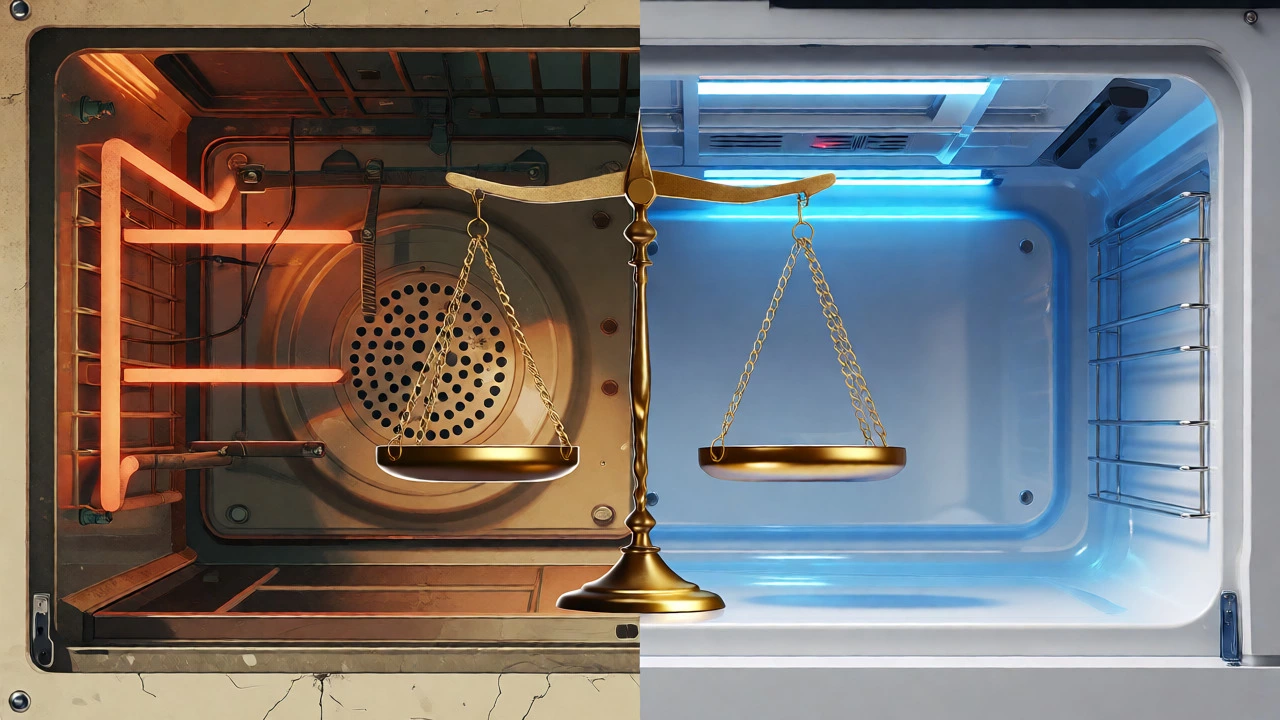
An aging oven doesn’t just risk breaking; it quietly drains your wallet through inefficiency. Older electric ovens lose heat faster due to degraded insulation and worn door gaskets. This forces the heating elements to cycle on and off more frequently, spiking your electricity bill. In Toronto, where hydro rates average 14-16 cents per kWh, a leaky oven can add $50-$100 annually to your utility costs compared to a modern Energy Star-rated model.
There’s also the safety factor. Wiring insulation degrades over time, becoming brittle and prone to short circuits. While rare, electrical faults in old appliances are a leading cause of kitchen fires. If your oven has original wiring from 2011, inspect the back panel for discoloration or melted connectors. Any sign of overheating near the terminal block is a red flag that no amount of component swapping will make this unit safe long-term.
Consider the hassle factor too. Waiting three weeks for a backordered part while relying on a toaster oven for family dinners adds stress. New ovens come with installation included and immediate usability. Sometimes, paying extra for peace of mind is the smartest financial move.
When Replacement Is Obviously Better
Skip the repair debate entirely if any of these apply to your situation:
- The oven is discontinued: Check the serial number plate inside the door frame. If the model ended production before 2015, parts are likely scarce or exorbitant.
- Cabinet mismatch: Kitchen trends shift. A 2011 stainless steel oven might clash with your current matte black hardware. Replacing allows you to upgrade aesthetics without a full remodel.
- Multiple recent failures: If you’ve fixed the fan motor last year and the thermostat this year, the system is unraveling. One more failure will likely cascade into others.
- Lack of features: Modern convection fans cook 25% faster and more evenly. If you’re used to rotating pans twice per roast, upgrading saves time and energy.
In Toronto’s real estate market, a dated appliance can subtly lower perceived home value during inspections. Buyers notice old ovens. If you plan to sell within three years, replacing a failing unit now boosts appeal more than a patchwork repair history ever could.
How to Vet Your Repair Quote
Don’t just accept the first estimate. Call two other certified technicians for second opinions. Ask specifically: "Is this a common failure mode for this model?" Experienced techs know which parts fail repeatedly on specific lines. If they hesitate, ask them to check online forums for your model number. Reddit’s r/appliances and specialized Facebook groups often reveal whether a repair is a band-aid or a cure.
Also, clarify labor rates. Some companies charge flat fees for diagnostics ($100-$150), which may be waived if you proceed with the repair. Others bill hourly ($150/hour). For a 15-year-old oven, complex diagnostics can eat up half the repair budget before a part is even ordered. Ensure the quote includes both parts and labor, and ask for a warranty on the repair itself (typically 90 days).
Final Verdict: Listen to the Oven
Your oven talks to you. Strange noises, uneven heating, smoke, or error codes are messages. Minor glitches? Fix them. Systemic breakdowns? Retire it. There’s no shame in letting go of a loyal appliance after 15 years. It served you well, but technology has moved on. Modern ovens offer precision cooking, self-cleaning efficiency, and smarter energy use. Sometimes, the best repair is a replacement.
Is it cheaper to repair or replace a 15-year-old oven?
It depends on the repair cost relative to the replacement price. If the repair costs less than 50% of a new comparable oven, repairing is usually cheaper. However, consider future repair risks. If the oven has had multiple issues recently, replacement often saves money long-term by avoiding repeated service calls and improving energy efficiency.
What is the average lifespan of an electric oven?
The average lifespan of an electric oven is 13 to 15 years. High-end brands like Bosch or Miele can last 20 years or more with proper maintenance. Budget models often fail earlier, around 10-12 years, due to lower-quality internal components and electronics.
Are parts available for 15-year-old ovens?
Parts availability varies by brand. Major manufacturers typically support models for 10-15 years after discontinuation. For a 15-year-old oven, you may need to source parts from third-party suppliers, which can increase costs and lead times. Discontinued models may have very limited stock, making repairs impractical.
Does a new oven save money on electricity?
Yes, modern ovens are significantly more energy-efficient than those from 15 years ago. Improved insulation and efficient convection fans reduce heat loss and cooking time. This can lower annual electricity bills by $50-$100, partially offsetting the cost of a new unit over several years.
Should I repair my oven if I’m selling my house?
If the repair is minor and inexpensive, fixing it ensures the home inspection passes. However, if the oven is outdated or requires costly repairs, buyers may prefer a new appliance. Replacing a visibly aged oven can improve curb appeal and perceived home value, potentially yielding a better return on investment than a temporary fix.