

Is It Worth Repairing a 20-Year-Old Boiler?
 Mar, 19 2026
Boiler Replacement Cost Calculator
Is It Time to Replace Your Boiler?
Calculate the financial impact of repairing versus replacing your 20-year-old boiler. This tool accounts for energy savings, repair costs, and government rebates.
Important Safety Consideration
A 20-year-old boiler lacks modern safety features. In Ontario, over 60% of carbon monoxide incidents from heating systems involve boilers over 15 years old. A new boiler provides:
- Automatic shut-offs
- Carbon monoxide sensors
- Low-water cutoffs
You’ve got a boiler that’s been running for 20 years. It still heats your home, but lately, it’s making strange noises, leaking a little, and your energy bills have been climbing. You’re wondering: should you fix it again-or just replace it? This isn’t just about money. It’s about safety, comfort, and whether you’re throwing good cash after bad.
Boilers Don’t Last Forever
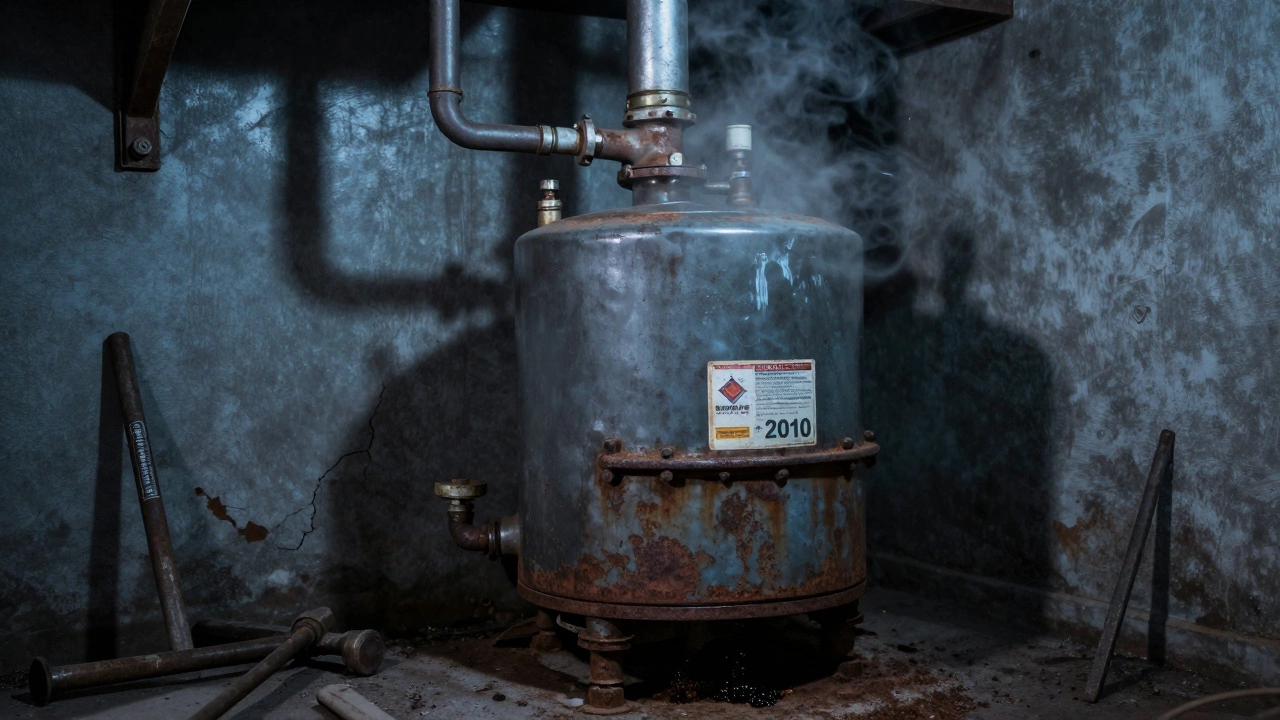
Most modern boilers are designed to last 10 to 15 years. A 20-year-old boiler is already 5 to 10 years past its expected life. That doesn’t mean it’s broken. But it does mean it’s operating on borrowed time. Parts wear out. Seals dry up. Heat exchangers crack. These aren’t simple fixes. They’re signs the system is breaking down from the inside out.In Toronto, winters are harsh. A boiler failure in January isn’t just inconvenient-it’s dangerous. Older boilers lack modern safety features like automatic shut-offs, low-water cutoffs, or carbon monoxide sensors. If your boiler is that old, it might still be working, but it’s not working safely.
Energy Bills Are Rising for a Reason
A 20-year-old boiler is likely 60% to 70% efficient. New condensing boilers today hit 90% to 98% efficiency. That difference isn’t theoretical. If your annual heating bill is $1,800, a new boiler could cut that by $500 to $700 a year. That’s $5,000 to $7,000 in savings over 10 years.Old boilers burn more gas to produce less heat. They cycle on and off more often. They lose heat through outdated flues and poorly insulated pipes. You’re paying for wasted energy. And that cost keeps growing as gas prices rise. In Ontario, natural gas prices have climbed 40% since 2020. An inefficient boiler means you’re paying more just to stay warm.
Repair Costs Add Up Fast
Let’s say your boiler’s pressure relief valve is leaking. You call a technician. They replace it-$350. A week later, the pump starts making noise. Replacement: $600. Then the heat exchanger starts corroding. That’s a $2,000 repair. And that’s not even guaranteed to fix everything.Here’s the truth: once a boiler hits 15+ years, repairs become more frequent and more expensive. Parts are harder to find. Manufacturers stop making them. Technicians have to scavenge used parts or retrofit new ones. Each repair costs more than the last. And there’s no guarantee the next one won’t be the final one.
In 2025, a typical boiler repair in Toronto averaged $720. But for units over 18 years old, the average repair cost jumped to $1,100. Why? Because those repairs aren’t just replacing a part-they’re jury-rigging a system that was never meant to last this long.
Modern Boilers Are Better in Every Way
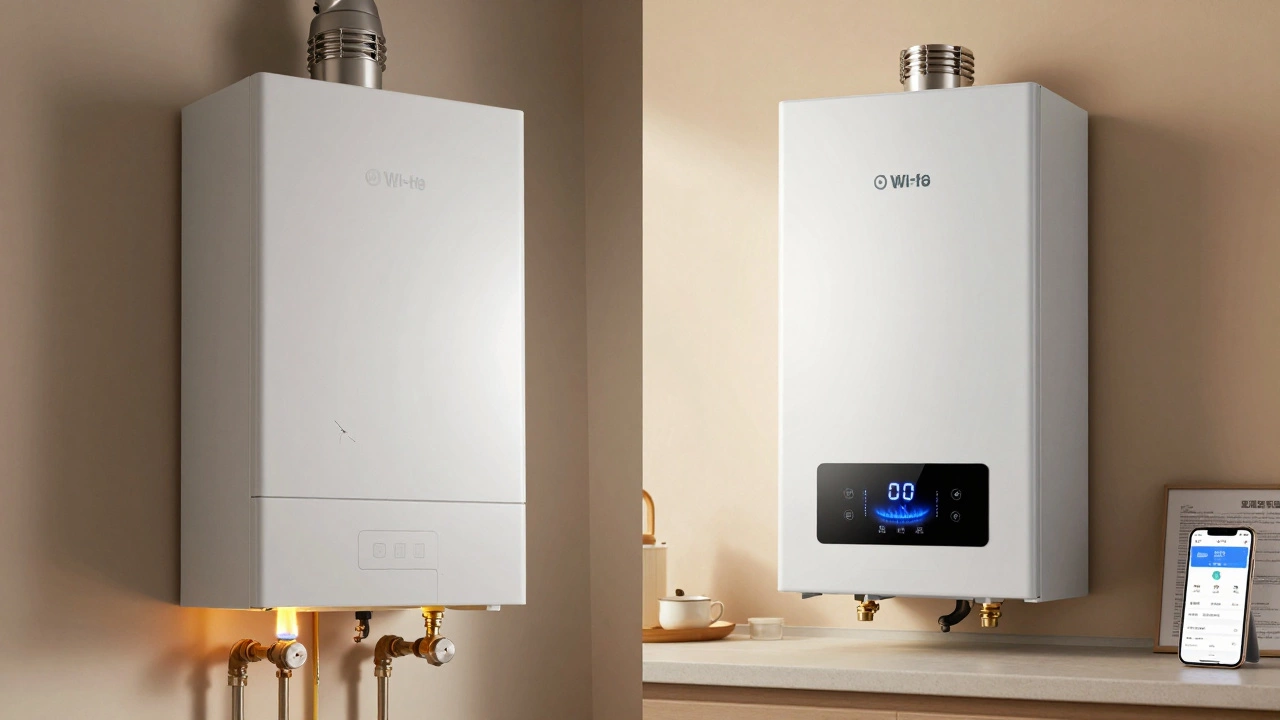
A new boiler isn’t just more efficient. It’s smarter. It’s quieter. It’s safer. Modern models come with:- Wi-Fi control so you can adjust temperature from your phone
- Predictive maintenance alerts that warn you before something breaks
- Modulating burners that adjust heat output based on demand
- Compact designs that save space
- Integrated frost protection for extreme cold
Many new boilers in Canada qualify for government rebates. Ontario’s Home Energy Retrofit Program offers up to $7,000 in rebates for replacing old gas boilers with high-efficiency models. That can cut the upfront cost by nearly half.
When Repair Makes Sense
There are exceptions. If your boiler is still running quietly, has no leaks, and your energy bills haven’t spiked, a minor repair might buy you a year or two. For example:- Replacing a faulty thermostat: $150
- Fixing a small leak from a valve: $200
- Bleeding air from the system: $100
But only if:
- You’ve had the boiler serviced annually
- You’re planning to move in the next 2 years
- You can’t afford a replacement right now
Even then, treat it like a temporary fix. Set a deadline. If it’s still running by next fall, start budgeting for replacement.
The Hidden Cost of Waiting
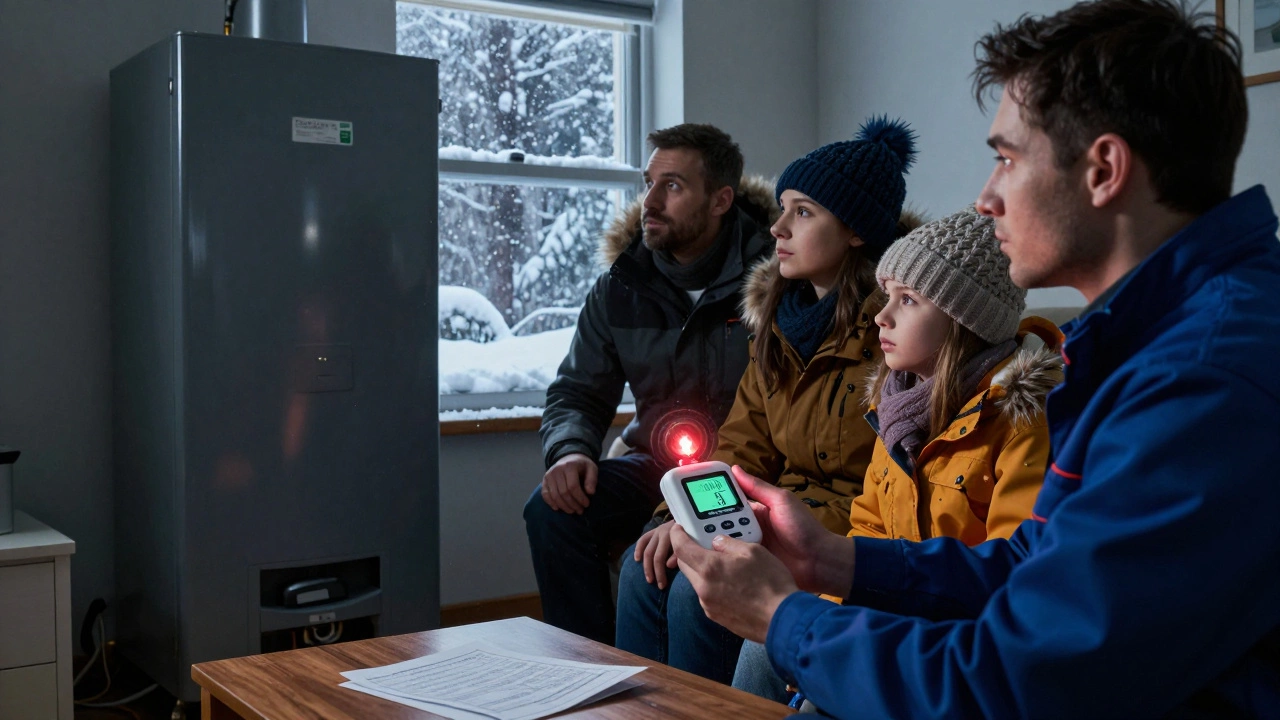
Waiting too long to replace an old boiler can cost you more than money. A sudden failure in winter means:- No heat during freezing temperatures
- Potential pipe bursts from frozen water
- Water damage to floors, walls, and ceilings
- Emergency repair fees-often 50% higher than regular service
- Being without heat for days while you scramble to find a replacement
One homeowner in Scarborough had their 22-year-old boiler fail on January 12. The repair quote was $2,800. They chose replacement instead. With the provincial rebate, their out-of-pocket cost was $3,100. They got a new boiler, a 10-year warranty, and lower bills. The alternative? Paying $2,800 for a repair, then dealing with another failure in 6 months.
What to Do Next
If your boiler is 20 years old, here’s what to do:- Check your energy bills from the last 3 years. If they’ve gone up more than 15%, your boiler is losing efficiency.
- Look for signs: strange noises, yellow flames (instead of blue), water leaks, or frequent resets.
- Get a professional inspection. A certified technician can test efficiency, check for carbon monoxide, and inspect the heat exchanger.
- Ask for a replacement quote. Most HVAC companies offer free estimates.
- Check for rebates. Ontario’s Home Energy Retrofit Program and federal Canada Greener Homes Grant can cover up to $7,000.
Don’t wait for a breakdown. A 20-year-old boiler isn’t a relic-it’s a ticking time bomb. Repairing it might feel like a bargain now. But in reality, you’re just delaying the inevitable-and paying more for less.
Is it safe to keep using a 20-year-old boiler?
It’s risky. Older boilers lack modern safety features like automatic shut-offs and carbon monoxide detectors. A cracked heat exchanger can leak deadly gases without warning. In Ontario, over 60% of carbon monoxide incidents from heating systems involve boilers over 15 years old. If your boiler is 20 years old, treat it as a potential hazard, not a reliable system.
How much does a new boiler cost in Toronto?
A standard high-efficiency gas boiler in Toronto costs between $4,500 and $7,500 installed. That includes removal of the old unit, new piping, and a 10-year warranty. With provincial and federal rebates, you can reduce that cost by $2,000 to $7,000, depending on your income and the efficiency rating of the new unit.
Can I get a rebate for replacing my old boiler?
Yes. Ontario’s Home Energy Retrofit Program offers up to $7,000 for replacing gas boilers with high-efficiency models (90%+ AFUE). The federal Canada Greener Homes Grant can add another $5,000. You must use a licensed contractor and get pre-approval. Rebates are still available in 2026, but funding is limited and allocated on a first-come, first-served basis.
What’s the average lifespan of a boiler in Canada?
The average lifespan of a boiler in Canada is 12 to 15 years. With annual maintenance, some last up to 18. Beyond that, performance drops sharply. A 20-year-old boiler is operating well past its intended life. Even if it still works, it’s no longer cost-effective or safe to rely on.
Should I switch to a heat pump instead of a new boiler?
It depends. Heat pumps are more efficient and can cut heating costs by 50% in mild climates. But in Toronto’s harsh winters, they often need a backup heat source. A hybrid system-heat pump with a high-efficiency boiler as backup-is a smart choice. If you’re replacing your boiler anyway, a heat pump might be worth considering. Rebates for heat pumps are even higher-up to $10,000 in some cases.