

Is It Worth Fixing a 7-Year-Old Refrigerator? A Repair vs. Replace Guide
 Sep, 6 2026
Refrigerator Repair vs. Replace Calculator
Use this calculator to apply the "50% Rule" and factor in energy costs to make an informed decision about your aging fridge.
Enter Your Details
Fill out the form to see if you should fix it or buy new.
You’re standing in your kitchen, staring at a puddle of water on the floor or listening to that new, rattling hum coming from the back of your refrigerator. It’s seven years old. The warranty is long gone, and the repair quote just hit your inbox: $350 for a compressor fix. Do you pay it, or do you start browsing Best Buy?
This isn’t just about money; it’s about risk tolerance. A seven-year-old fridge is in the awkward middle age of appliances. It’s not ancient enough to be a guaranteed failure, but it’s too old to trust blindly. Here is how to decide if saving this machine makes sense or if you should cut your losses.
The 50% Rule and the Age Factor
Appliance technicians often use a simple heuristic called the 50% rule. If the cost of the repair exceeds 50% of the price of a brand-new equivalent model, you should replace it. But with refrigerators, age adds a hidden variable: reliability decay.
Most modern refrigerators have an expected lifespan of 10 to 15 years. At year seven, you are roughly halfway through its life. However, wear and tear aren't linear. Seals degrade, fans accumulate dust, and electronic control boards become brittle. If you spend $400 now to fix a cooling issue, you might face a different breakdown-like a failed defrost timer or a cracked door gasket-six months later. Suddenly, that "cheap" repair becomes a recurring expense.
| Repair Cost | New Fridge Price (Est.) | Verdict | Reasoning |
|---|---|---|---|
| $100 - $150 | $800 - $1,200 | Fix It | Cheap labor/parts (gaskets, filters). Low risk. |
| $200 - $300 | $1,000+ | Gray Area | Depends on other symptoms. Check seals first. |
| $400+ | $1,000+ | Replace | High risk of secondary failures soon. |
Check the Energy Bill Before You Decide
A seven-year-old fridge is likely less efficient than one manufactured today. This isn't just marketing fluff; it's physics. Older compressors run longer cycles, and insulation technology has improved significantly since 2019. In Toronto, where electricity rates fluctuate, this difference matters.
Find out what your current fridge uses. Look for the yellow EnergyGuide label inside the door or on the back panel. Compare its estimated annual kWh usage to a modern Energy Star certified model. A typical older top-freezer might use 600-700 kWh per year. A new high-efficiency model might use 400-450 kWh. That’s a savings of roughly 200 kWh annually. At average Ontario residential rates, that could save you $30-$50 a year. Over five years, that’s $150-$250 back in your pocket. If your repair quote is $300, you’re essentially paying for the privilege of keeping an inefficient machine for another few years.
Diagnose the Problem: Is It Cosmetic or Catastrophic?
Not all repairs are created equal. Some fixes extend the life of the unit; others are band-aids on a bullet wound. You need to categorize the fault before writing the check.
- The "Easy Wins" (Fix These): Dirty condenser coils, clogged drain lines causing leaks, worn-out door gaskets, or a faulty ice maker assembly. These parts are cheap ($20-$80) and easy to replace. If the technician charges mostly for labor, it’s usually worth it because these issues don’t signal systemic failure.
- The "Major Repairs" (Think Twice): Compressor replacement, sealed system leaks (freon/refrigerant), or main control board failure. These components are the heart and brain of the fridge. Replacing a compressor can cost $500-$800 including labor. On a 7-year-old unit, this is rarely worth it unless the fridge was a premium brand (like Sub-Zero or Viking) with a robust build quality.
- The "Symptom Cluster": If your fridge is making noise, *and* leaking water, *and* struggling to keep temperature stable, you have multiple failing systems. Fixing one won’t stop the next. This is a classic sign the end is near.
Evaluate Your Current Model’s Reputation
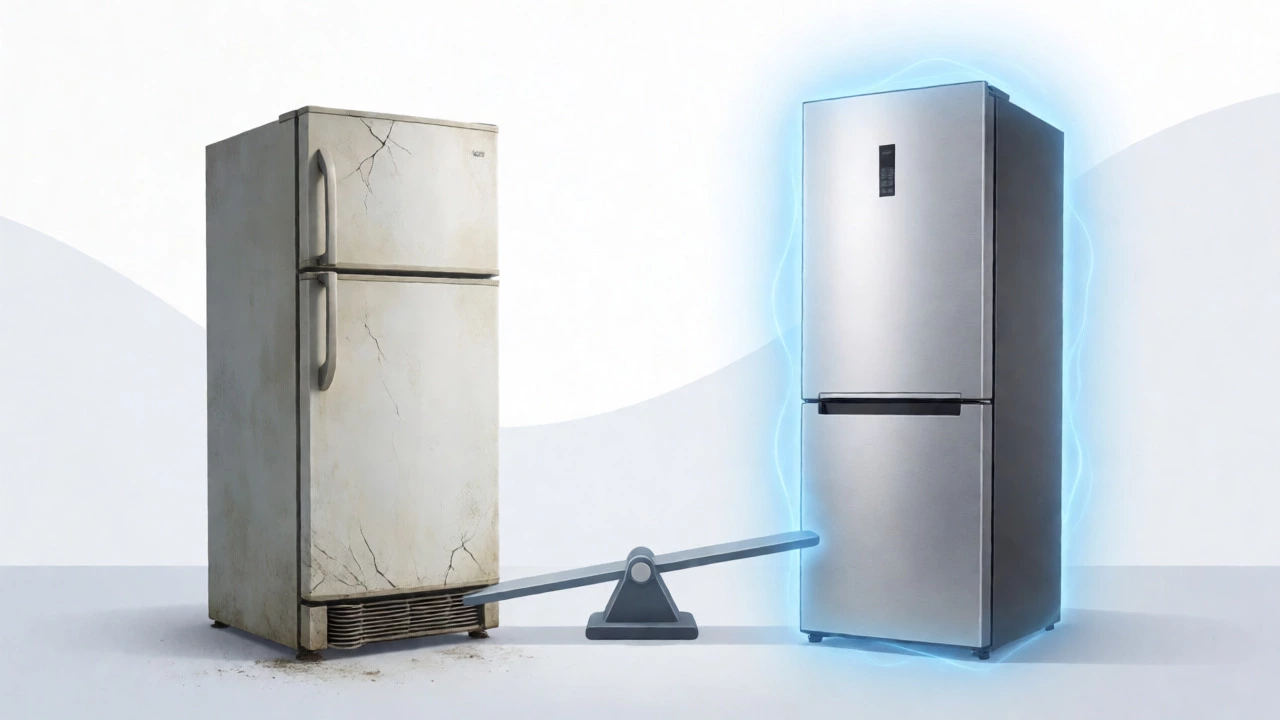
Not all fridges age equally. If you own a basic Whirlpool or GE model, they are designed for affordability, not longevity. They often use plastic components in critical areas that become brittle after 5-7 years. Conversely, if you bought a mid-to-high-end model like a Bosch, Samsung Family Hub, or LG InstaView, the chassis and insulation are built better. Even if the electronics fail, the core structure might last another decade.
Do a quick search for your specific model number plus the word "recall" or "common problems." For example, many Samsung French-door models from 2017-2019 had notorious issues with ice makers and compressor overheating. If your model has a known defect that wasn't covered by a recall, repairing it might just mean waiting for the next inevitable part to fail.
The Hidden Costs of Replacement
Buying a new fridge isn't just the sticker price. You need to budget for delivery, haul-away fees (often $50-$100), and potential plumbing adjustments if you have a water line connected. Also, consider the disruption. Installation days are annoying. You’ll be without food storage for several hours.
However, there’s a counter-argument: peace of mind. New fridges come with a standard one-year warranty on parts and labor, and often a 5-10 year warranty on the compressor. When you repair a 7-year-old unit, you typically get a 90-day warranty on the repair only. If the compressor dies two weeks after the repair, you’re out of luck. That risk premium is hard to quantify but very real when you’re dealing with perishable groceries.
When to Definitely Keep It
Despite the push to upgrade, there are scenarios where fixing is the smarter move:
- You recently paid for a major overhaul: If you replaced the compressor or main board three years ago, the expensive parts are still under their long-term warranties. Don’t throw away a rebuilt engine.
- It’s a custom or built-in unit: Custom cabinetry around a fridge makes replacement a nightmare. If changing the size requires carpentry work costing $500+, keep the old one running as long as possible.
- Budget constraints are tight: If spending $1,200 on a new fridge means missing rent or other bills, a $200 repair buys you time. Use that time to save for the eventual replacement.
Final Verdict: The Three-Question Test
Still stuck? Ask yourself these three questions honestly:
1. Is the repair cost more than half the price of a comparable new model? If yes, lean towards replacing.
2. Does the fridge have multiple active faults? If yes, replace it.
3. Are you willing to deal with another breakdown in the next 12-18 months? If no, replace it.
If you answered "No," "No," and "Yes" to those respectively, call the repairman. Otherwise, start measuring your space and checking sales. A 7-year-old fridge is a gamble. Sometimes you win, but the house usually wins eventually.
How much does it cost to replace a refrigerator compressor?
Replacing a compressor is one of the most expensive repairs, typically ranging from $500 to $800 depending on the model and labor rates in your area. Because this cost approaches the price of a new entry-level refrigerator, it is rarely worth fixing on a 7-year-old unit unless it is a high-end luxury brand.
Do new refrigerators save significant money on electricity?
Newer Energy Star-rated models are generally 10-15% more efficient than models from seven years ago. While this saves money, the annual savings (roughly $30-$50) take several years to offset the higher purchase price of a new fridge compared to a minor repair.
What are the most common signs a refrigerator needs to be replaced?
Key signs include excessive frost buildup, loud unusual noises (grinding or knocking), food spoiling faster than usual, exterior condensation indicating poor sealing, and frequent error codes on digital displays. If multiple issues occur simultaneously, replacement is usually more cost-effective than repeated repairs.
Is it cheaper to repair or buy a new fridge?
For units under 5 years old, repair is almost always cheaper. For units over 10 years, replacement is usually better. At 7 years, it depends on the specific repair: minor fixes like gaskets or fans favor repair, while major component failures like compressors or control boards favor replacement.
How long do refrigerators last on average?
The average lifespan of a modern refrigerator is between 10 and 15 years. High-quality brands may last up to 20 years with proper maintenance, while budget models may begin experiencing significant issues after 7-8 years.