

Is It Cheaper to Repair or Replace an Oven? Here’s the Real Cost Breakdown
 Feb, 19 2026
Oven Repair vs Replacement Calculator
Your Oven Details
Results
Let’s cut through the noise: you turn on your oven, and it doesn’t heat up. Or worse-it heats unevenly, smells like burning plastic, or throws error codes you don’t understand. Now you’re stuck deciding: repair or replace? Most people panic and buy a new one right away. But that’s often the most expensive choice. The truth? Repairing your oven is often cheaper… if you know what to look for.
How much does oven repair actually cost?
In Toronto, the average oven repair runs between $150 and $400. That includes diagnostic fees, parts, and labor. Simple fixes-like replacing a faulty heating element or thermostat-usually cost under $250. A broken door seal? Around $80. A faulty control board? Closer to $350.
Here’s what you’re paying for:
- Diagnostic fee: $50-$80 (often waived if you go ahead with the repair)
- Parts: $30-$200 (heating elements are cheap; control boards are not)
- Labor: $75-$120/hour (most repairs take 1-2 hours)
Compare that to a new oven. Even a basic mid-range model starts at $800. High-end models? $2,000+. And that’s before delivery, installation, or hauling away the old one. Some retailers charge $150 just to remove your old appliance.
When repair is the clear winner
Not all ovens are worth fixing. But many are. If your oven is less than 10 years old and the issue is one of these, repair is almost always the smarter move:
- Heating element: This is the most common failure. It costs $30-$70 to replace and takes under an hour. Your oven might not heat, or only one rack cooks.
- Thermostat: If your oven runs too hot or too cold, the thermostat is likely off. Replacement: $100-$150. You’ll notice temperature swings-like baking cookies at 400°F when you set it to 350°F.
- Door seal: A damaged seal lets heat escape. That means longer cook times and higher energy bills. New seals cost $40-$70. You’ll feel drafts around the door or see soot buildup on the glass.
- Igniter (gas ovens): If the oven doesn’t light but the broiler works, the igniter is worn out. Replacement: $80-$150. Gas ovens are more expensive to replace, so this fix pays for itself fast.
These fixes don’t just save money-they extend your oven’s life. A 12-year-old oven with a new heating element can easily last another 5-7 years. That’s $1,000+ in avoided costs.
When replacement makes sense
There are times when repair is a waste of cash. If your oven has any of these problems, skip the repair and start shopping:
- Control board failure: Modern ovens use digital control boards. When they die, they often take other components with them. Replacement cost: $250-$400. At that point, you’re paying 30-50% of a new oven’s price just to fix one part.
- Multiple broken parts: If you’ve had two or more repairs in the last two years, the oven is breaking down too often. Each repair chips away at its reliability. It’s not a coincidence-it’s a pattern.
- Age over 15 years: Ovens older than 15 years are inefficient. New models use 15-30% less energy. If your electricity bill keeps climbing, the savings on your next bill will pay for a new oven in 3-5 years.
- Outdated features: No convection? No self-cleaning? No smart connectivity? You’re missing out. Modern ovens cook faster, use less energy, and even alert you when food is done.
Also, if your oven is built into cabinetry and you’re planning a kitchen remodel, replacing it now makes sense. You’ll get a better fit, better style, and better resale value.
The hidden cost of waiting
Many people delay repairs because they think, “It still works.” But that’s a trap. A broken thermostat doesn’t just cook food wrong-it makes your oven work harder. That means:
- Higher energy bills (up to 20% more)
- More stress on other components (which fail faster)
- Increased risk of fire (especially with gas ovens or frayed wires)
I’ve seen too many cases where a $120 thermostat fix turned into a $1,200 replacement because the owner waited too long. The oven overheated, melted internal wiring, and damaged the cabinet underneath. Now you’re not just replacing the oven-you’re replacing part of your kitchen.
What to check before calling a technician
Before you panic and book a repair, do this quick checklist:
- Is the oven plugged in? (Yes, people unplug them by accident.)
- Did you reset the circuit breaker? Ovens draw a lot of power.
- Check the owner’s manual for error codes. Many modern ovens display simple fixes (like “clean filter” or “check door”).
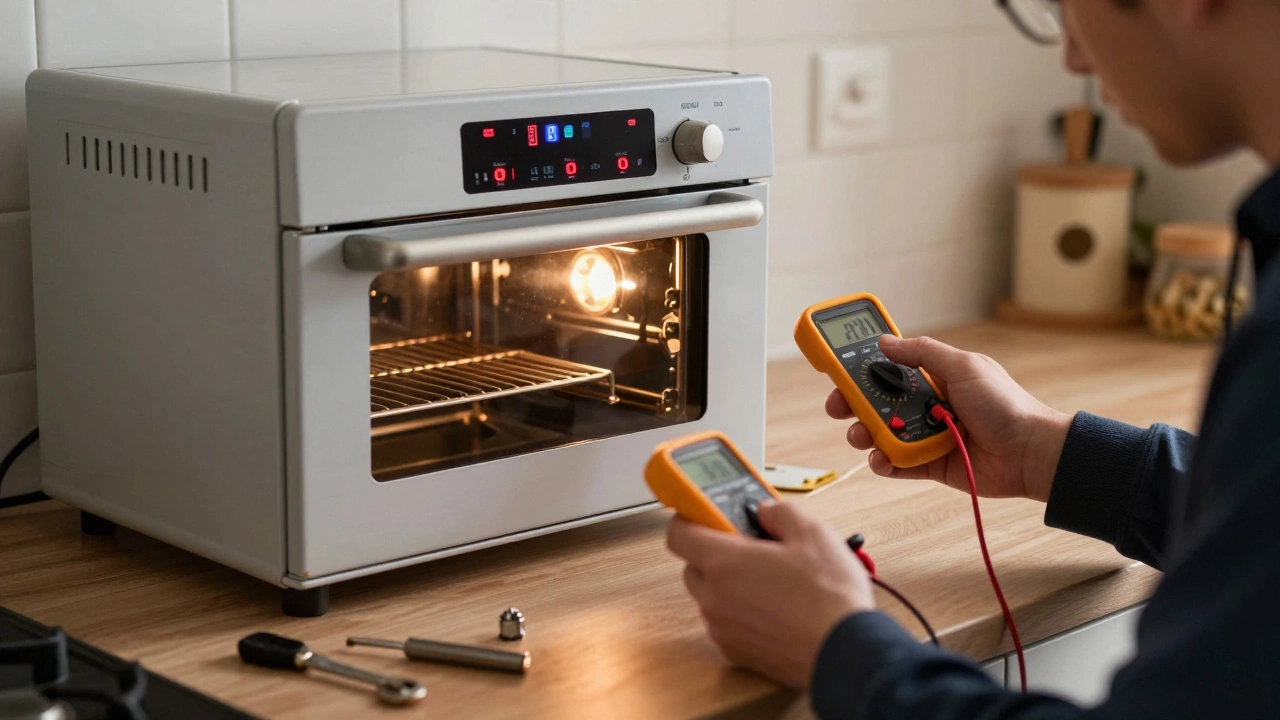
- Test the heating element. Turn the oven on and watch the element glow. If it’s dark or only glows in spots, it’s dead.
- Smell anything burning? That’s a red flag. Turn it off and unplug it.
If you’re comfortable with basic tools, you can replace heating elements and door seals yourself. Parts are available online. YouTube tutorials walk you through it in under 15 minutes. That cuts your cost to just the part-$50 instead of $250.
Real-world example: Toronto homeowner’s choice
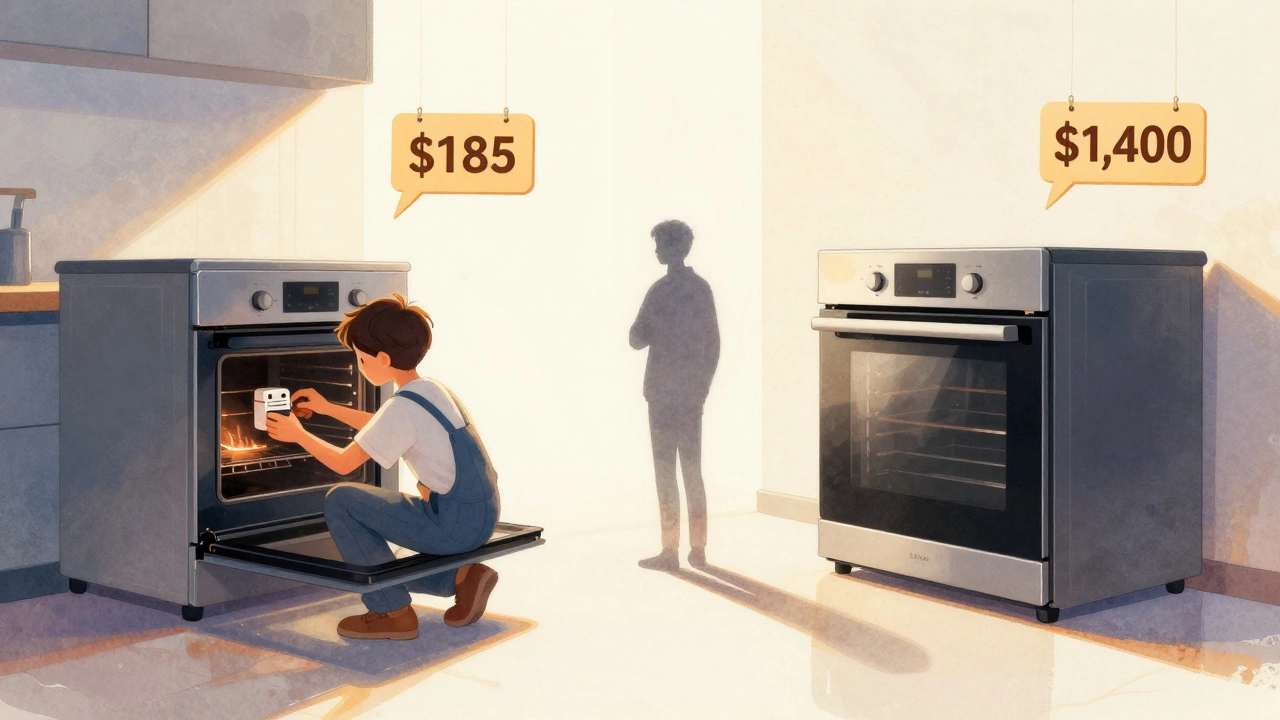
A client in Scarborough had a 12-year-old Whirlpool oven. It wouldn’t heat past 250°F. The technician diagnosed a faulty thermostat. The repair: $185. They kept the oven. Two years later, it’s still working fine. Their energy bills stayed flat.
A neighbor replaced theirs at the same time-bought a $1,400 Samsung. Two years later, the display glitched, and the self-clean function stopped working. They’re now looking at another $300 repair-or a second replacement.
The lesson? Don’t assume new means better. Sometimes, old means reliable.
Final decision guide
Here’s a simple rule to follow:
- If your oven is under 10 years old and the repair cost is less than 50% of a new oven → Repair
- If your oven is over 15 years old or the repair cost is more than 50% of a new oven → Replace
- If you’re planning a kitchen renovation → Replace
- If you’re trying to cut energy use → Replace (new models are 20-30% more efficient)
And remember: if you’re unsure, get a second quote. Reputable repair shops will tell you if it’s worth fixing. If they push you to replace it right away, walk away. They’re not looking out for your wallet.
Is it worth repairing a 15-year-old oven?
Generally, no. Ovens older than 15 years are inefficient, use more energy, and are more likely to have multiple failing parts. Even if a single repair is cheap, the next one is just around the corner. Replacing it with a modern model will save you money on your electricity bill and give you better performance.
Can I replace an oven myself?
If you’re replacing a built-in oven with a similar model, yes-but only if you’re comfortable with electrical or gas connections. Electric ovens need a dedicated 240V circuit. Gas ovens require a gas line connection and leak testing. Most homeowners hire a pro for safety and code compliance. DIY replacement can void warranties or cause safety hazards if done wrong.
How long does an oven repair usually take?
Most repairs take 1 to 2 hours. Simple fixes like replacing a heating element or thermostat can be done in under an hour. Complex repairs involving control boards or internal wiring may take longer, especially if parts need to be ordered. Same-day service is common in Toronto for common repairs.
Do oven repairs come with a warranty?
Yes, most reputable repair services offer a 90-day to 1-year warranty on parts and labor. This covers the same part failing again. If the same issue returns within that time, they’ll fix it for free. Always ask about warranty terms before paying.
What’s the average lifespan of an oven?
A well-maintained oven lasts 15 to 20 years. Gas ovens often last longer than electric ones. Regular cleaning, avoiding harsh chemicals, and not overloading the oven help extend its life. If yours is hitting 15 years and you’re already fixing it often, replacement is a smarter long-term investment.