

How to Tell If Your Hot Water Heater Thermostat Is Bad: Signs & Fixes
 Oct, 18 2026
Water Heater Thermostat Diagnostic Tool
Select the symptom you are experiencing or the result of your multimeter test to get a recommended next step.
Diagnosis & Next Steps
Please select a symptom above to see recommendations.
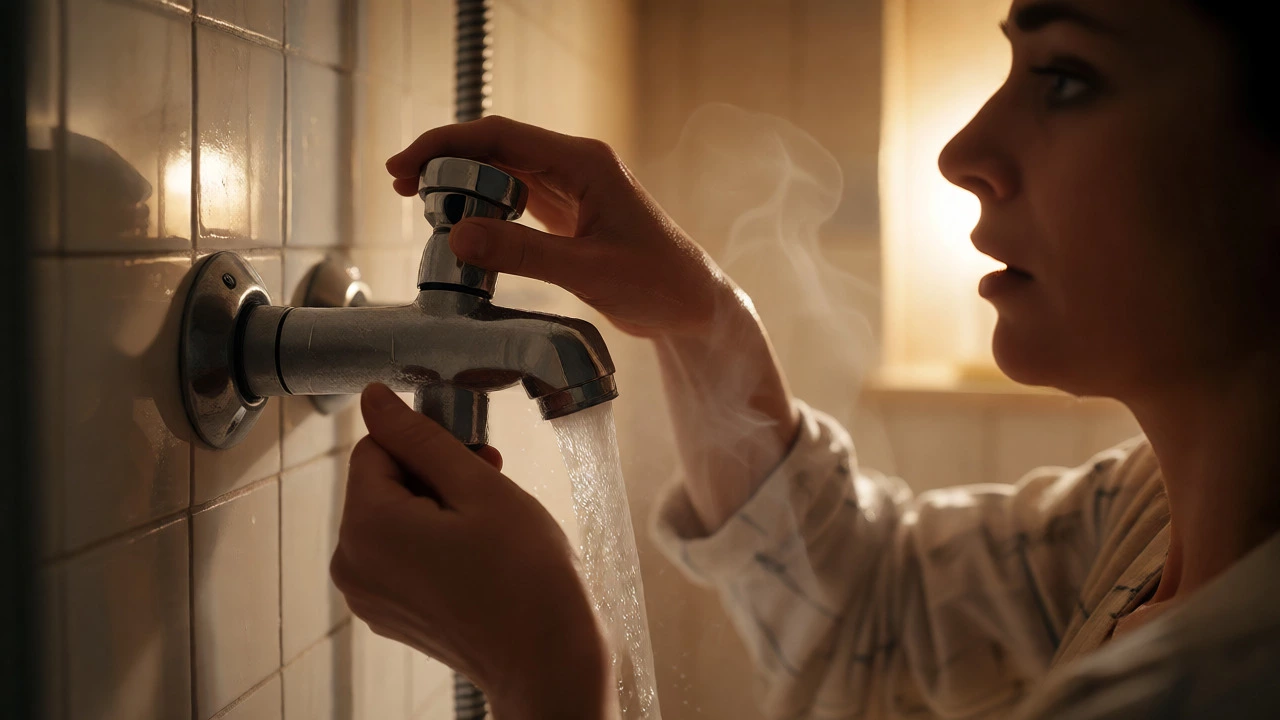
You turn on the shower, and instead of a warm embrace, you get an icy shock. Or maybe your hot water runs out way too fast, leaving you shivering while scrubbing shampoo from your hair. Before you panic about a broken tank or call for an expensive replacement, there’s a good chance the culprit is smaller, cheaper, and easier to fix: the thermostat. This small component controls when your heating elements kick in, but when it fails, your comfort goes down with it.
Figuring out if the thermostat is actually the problem saves you from buying parts you don’t need. In Toronto, where winters can dip below -10°C, a faulty thermostat isn't just an inconvenience; it can lead to burst pipes if the water gets too cold or scalding burns if it gets too hot. Let’s walk through exactly how to spot a bad thermostat, test it yourself, and decide whether to tweak it or replace it.
The Most Common Symptoms of a Failing Thermostat
Thermostats rarely die quietly. They usually send out distress signals long before they stop working entirely. The most obvious sign is inconsistent water temperature. You might notice that one day the water is perfect, and the next it’s lukewarm at best. This happens because the thermostat isn’t reading the tank’s temperature accurately, so it doesn’t tell the heating elements to fire up when needed.
Another red flag is water that’s dangerously hot. If you’re turning the tap all the way to cold just to avoid getting burned, your thermostat might be stuck in the "on" position. It keeps heating the water until it boils, which wastes energy and stresses the tank. Conversely, if the water never gets hot enough to wash dishes effectively, the thermostat might be cutting off power to the elements prematurely.
Listen to your heater. A healthy electric water heater hums softly as it works. A bad thermostat can cause the elements to cycle on and off rapidly-a phenomenon known as short-cycling. You’ll hear clicking sounds coming from the access panels. This rapid switching wears out the heating elements faster than normal and spikes your electricity bill without delivering hot water.
How to Test the Thermostat Yourself
You don’t need to be an electrician to check this, but you do need to be careful. Electricity and water are a dangerous mix. First, cut the power to the water heater at the circuit breaker. Never open the access panels while the unit is live.
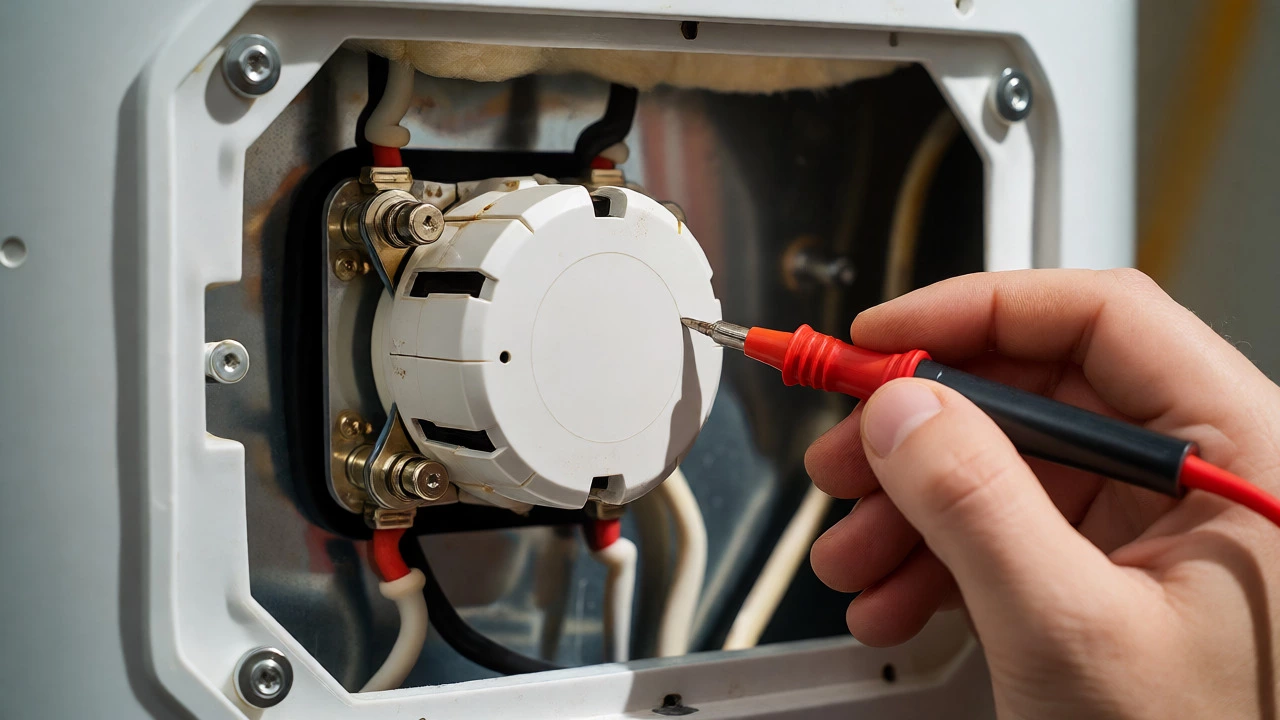
Once the power is off, remove the insulation covers on the side of the tank. Inside, you’ll see two thermostats (for dual-element heaters) or one (for single-element). These look like small round dials with wires attached. Here’s what to look for:
- Visual Damage: Look for burn marks, melted plastic, or corrosion around the wire connections. If the casing looks warped or blackened, the thermostat is likely fried.
- Loose Wires: Sometimes the issue isn’t the part itself but a loose connection. Gently tug on the wires. If they pull out easily, tighten the screws.
- Temperature Setting: Check if the dial has slipped. Over time, vibrations can knock the setting lower. Reset it to the recommended 120°F (49°C) and see if performance improves after a few hours.
If visual checks don’t reveal anything, you’ll need a multimeter. With the power still off, disconnect the wires from the thermostat terminals. Set your multimeter to continuity mode. Touch the probes to the terminals. If the dial is set to a temperature higher than the current water temp, the meter should beep (showing continuity). If it doesn’t beep, the internal switch is broken, and the thermostat needs replacing.
Distinguishing Between Thermostat and Heating Element Issues
This is where many homeowners get tripped up. A bad heating element mimics a bad thermostat perfectly. Both result in no hot water. How do you tell them apart? The key lies in testing both components separately.
| Symptom | Likely Thermostat Issue | Likely Heating Element Issue |
|---|---|---|
| Water is lukewarm everywhere | Possible upper thermostat failure | Possible lower element failure |
| No hot water at all | Upper thermostat not sending power | Both elements burnt out |
| Short cycling (clicking) | High probability | Low probability |
| Multimeter shows continuity | Good thermostat | Bad element (if resistance is infinite) |
To confirm, use your multimeter to check the resistance of the heating elements. Disconnect the wires from the element terminals. Place the probes on the terminals. A healthy element typically reads between 10 and 30 ohms. If it reads infinity (OL), the element is broken. If the element tests fine but the water is still cold, the thermostat is almost certainly the guilty party.
When to Adjust vs. When to Replace
Not every thermostat problem requires a new part. Sometimes, simple calibration fixes the issue. If your water is slightly too cool, try adjusting the thermostat dial upward by a few degrees. Wait 24 hours to let the tank stabilize. If the temperature rises appropriately, you’ve solved the problem for free.
However, replacement becomes necessary when the thermostat fails the continuity test or shows physical damage. Thermostats are inexpensive-usually costing between $15 and $30 CAD for the part itself. Labor costs, however, can range from $80 to $150 depending on who you hire. If you’re handy with tools, DIY replacement takes about 30-45 minutes per thermostat. Just remember to drain a few gallons of water first to prevent leakage when removing the old unit.
Consider replacing both thermostats if you have a dual-element heater and one has failed. Since they experience similar wear and tear, the second one is likely nearing the end of its life too. Doing both at once saves you from paying for labor twice or repeating the messy job next month.
Why Thermostats Fail: Causes and Prevention
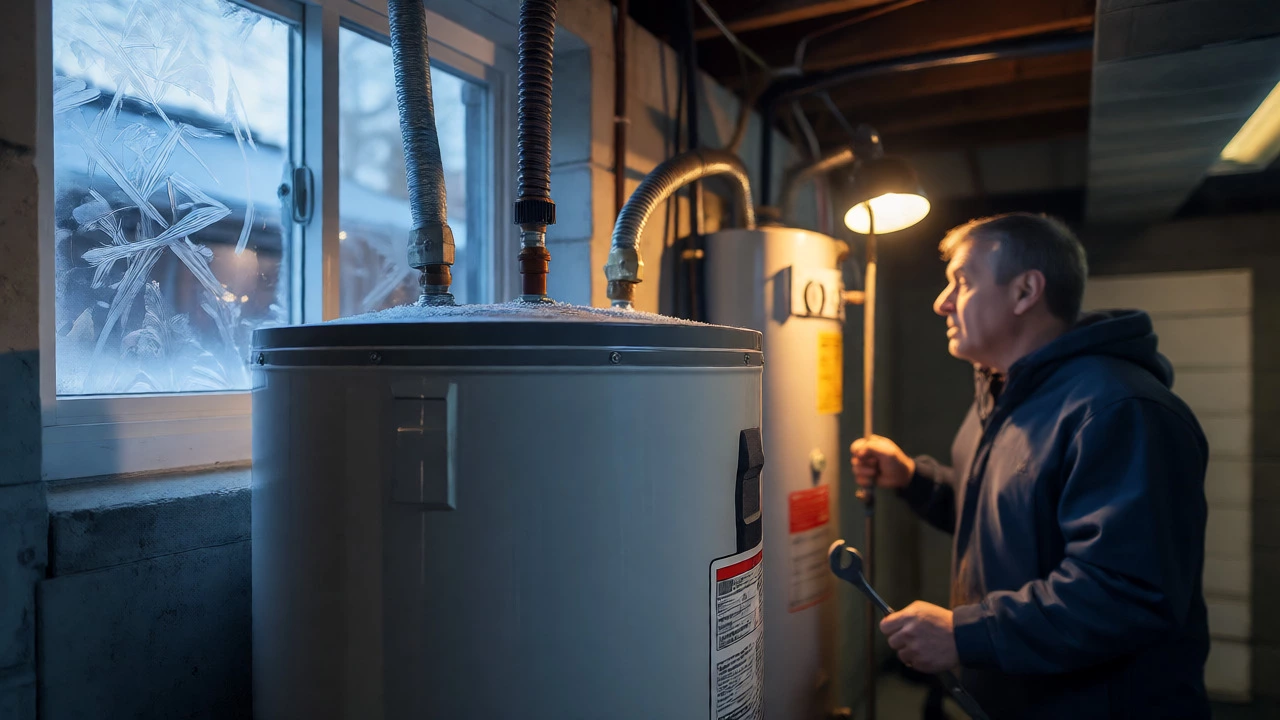
Understanding why these parts break helps you prevent future headaches. The primary enemy of water heater thermostats is sediment buildup. Hard water in Toronto leaves mineral deposits at the bottom of the tank. These deposits insulate the lower heating element, causing it to overheat. The nearby thermostat senses this excessive heat and trips, eventually burning out its internal contacts.
Electrical surges are another common killer. Lightning strikes or grid fluctuations can spike voltage, damaging the sensitive electronics inside the thermostat. Using a surge protector for your water heater’s circuit can mitigate this risk, though it’s not always practical for high-draw appliances.
Age plays a role too. Most residential water heaters last 8-12 years. If your unit is approaching that age, thermostat failures are often a precursor to tank failure. At this stage, investing in a new heater might be smarter than repeatedly fixing old components.
Next Steps After Diagnosis
If you’ve confirmed a bad thermostat, here’s your action plan:
- Turn off power: Always prioritize safety. Verify with a non-contact voltage tester.
- Drain pressure: Open a hot water faucet elsewhere in the house to relieve tank pressure.
- Remove old thermostat: Unscrew the mounting bracket and carefully note the wiring configuration (take a photo!).
- Install new thermostat: Match the wire colors exactly. Secure the new unit tightly against the tank wall to ensure accurate temperature sensing.
- Restore power: Turn the breaker back on and wait for the tank to heat up.
- Test: Run hot water for 10 minutes and check the temperature at the tap.
If you’re uncomfortable working with electricity or if the problem persists after replacement, call a professional. Sometimes, the issue lies deeper in the control board or wiring harness, requiring specialized diagnostic tools.
Can I reset my water heater thermostat?
Yes, many thermostats have a small red reset button. If the water overheated, this button may have popped out. Press it firmly to reset the thermostat. However, if it pops out again immediately, you have a deeper electrical issue or a failing thermostat.
How much does it cost to replace a water heater thermostat?
The part itself costs $15-$30 CAD. Professional installation typically ranges from $80 to $150 CAD. DIY replacement is nearly free aside from the part cost and basic tool usage.
Should I replace the thermostat or the whole water heater?
If your heater is under 8 years old, replace the thermostat. If it’s older than 10 years and showing other signs of wear (rust, leaks), consider replacing the entire unit. Thermostat repairs on old tanks are often temporary fixes.
What temperature should I set my water heater thermostat to?
The standard recommendation is 120°F (49°C). This balances safety against scalding with energy efficiency. Higher settings increase bacterial growth risks (like Legionella) and energy costs.
Why is my water heater making popping noises?
Popping or cracking noises usually indicate sediment buildup at the bottom of the tank. While not directly a thermostat issue, this sediment causes overheating, which can trip or damage the lower thermostat. Flushing the tank annually prevents this.