

How to Check if an Extractor Fan Is Working Properly
 Dec, 28 2025
Extractor Fan CFM Calculator
Room Dimensions
Results
Based on your room size and type:
Why This Matters
A fan that's too small won't remove moisture and odors effectively. The article explains that proper sizing is critical for good ventilation. Your current fan should have a CFM rating matching these calculations.
If your extractor fan is making noise but not pulling air, or if you can still smell cooking odors after turning it on, it’s not working right. Many people assume the fan is broken and replace it-only to find out later that a simple fix could’ve solved it. You don’t need a technician to check if your extractor fan is working properly. With a few easy steps, you can diagnose the issue yourself in under 10 minutes.
Start with the basics: Is the fan getting power?
The most common reason an extractor fan seems dead is that it’s not getting electricity. First, check the switch. Is it turned on? Sounds obvious, but people often flip the wrong switch or forget it’s on a timer. If the fan has a pull cord, make sure it’s fully pulled out and clicked into place.
Next, check the circuit breaker. Go to your electrical panel and look for a tripped switch labeled "kitchen," "bathroom," or "vent." If it’s in the middle position, flip it all the way off, then back on. If it trips again right away, stop. There’s a short circuit or overload-you’ll need an electrician.
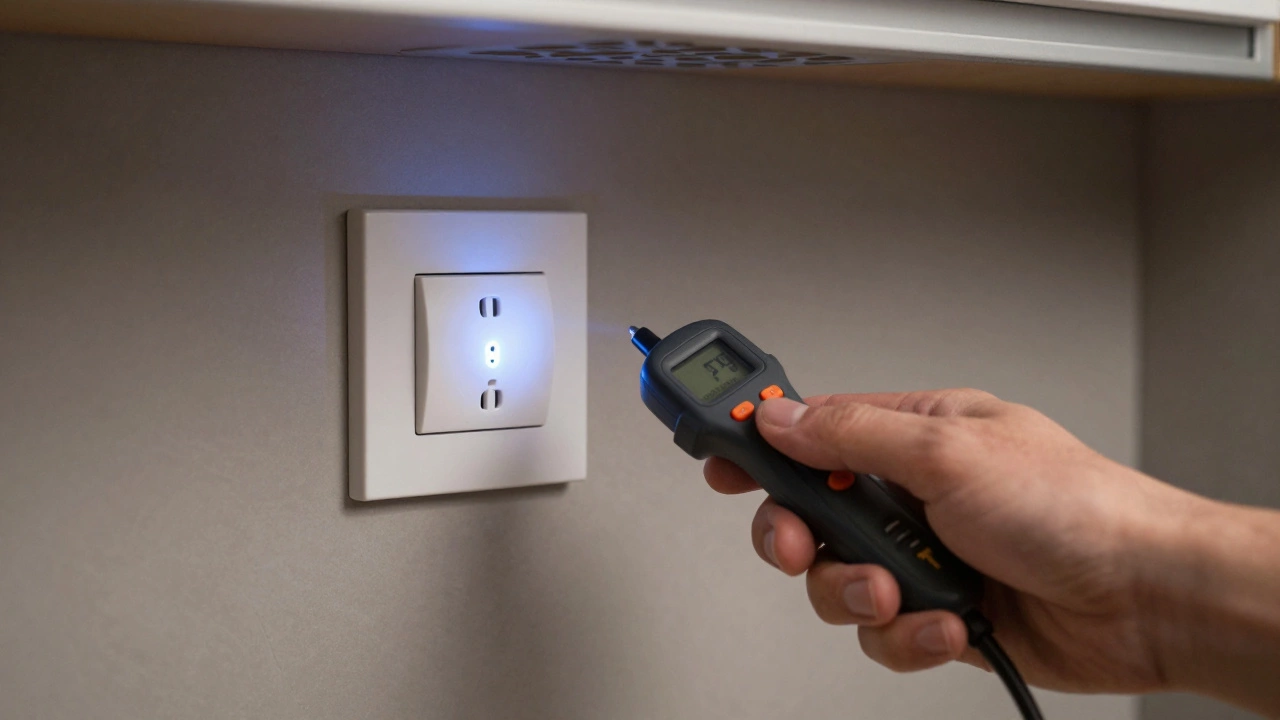
Test the outlet or wiring with a non-contact voltage tester. These cost under $20 at any hardware store. Hold it near the fan’s power cable or switch plate. If it doesn’t light up, the power isn’t reaching the fan. That could mean a broken wire, a faulty switch, or a disconnected junction box behind the wall.
Listen and feel: Is the motor running?
If the fan hums but doesn’t spin, the motor is getting power but the blades are stuck. This usually happens when grease and dust build up over time. In kitchens, this is normal after 2-3 years without cleaning. In bathrooms, moisture and hair can clog the mechanism.
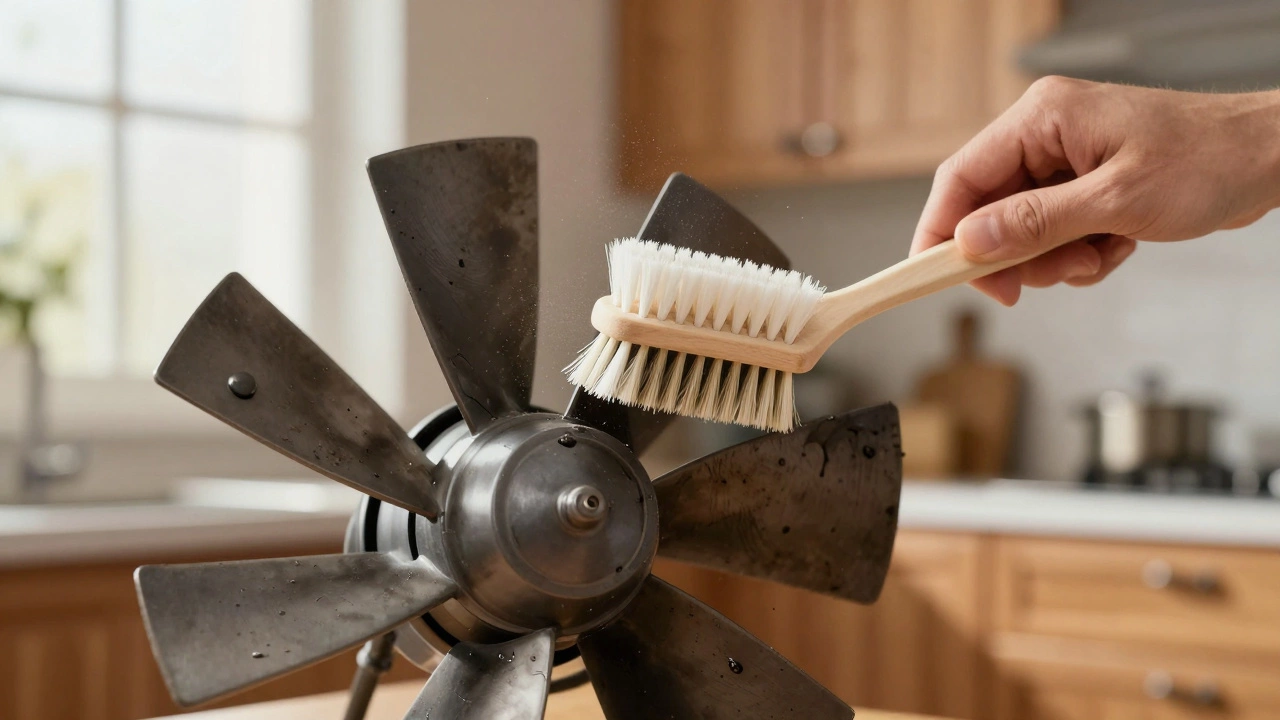
Turn off the power. Remove the fan cover. You’ll see the blades and motor housing. Try spinning the blades by hand. If they don’t turn easily, they’re clogged. Use a soft brush or cloth to wipe away grease, dust, and debris. Don’t use water on the motor. A dry toothbrush works well for tight spots.
If the blades spin freely but the fan still doesn’t run after resetting the power, the motor might be dead. Most extractor fans have a lifespan of 8-12 years. If yours is older than that, replacing the whole unit is cheaper than repairing it.
Test airflow: The tissue paper trick
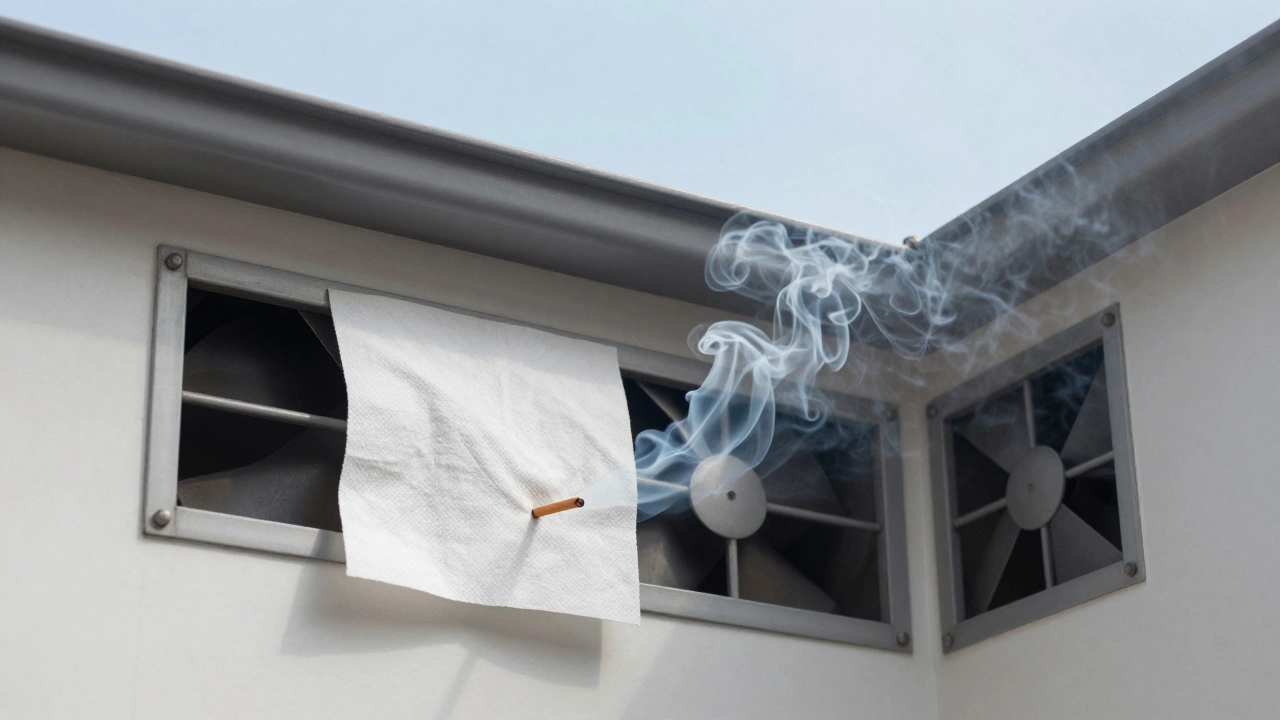
Even if the fan spins, it might not be pulling air out. The best way to test airflow is the tissue paper test. Hold a single-ply tissue up to the fan grille while it’s running. If the fan is working, the tissue should stick to the grille and stay there. If it flutters or falls, airflow is weak.
Another way: Light a match or incense stick near the fan. Watch the smoke. If it gets pulled smoothly into the vent, airflow is good. If the smoke curls back into the room, the fan isn’t creating enough suction.
Weak airflow usually means one of three things:
- The duct is blocked-maybe by bird nests, leaves, or collapsed insulation
- The vent cap outside is stuck shut
- The fan is undersized for the room size
Check the external vent. Go outside and look at the vent opening on your roof or wall. Is it clear? Can you see through it? If it’s covered in dirt, snow, or debris, clean it. If the flap doesn’t open when the fan runs, the hinge is rusted or broken. Replace the vent cap-it’s a $15 part.
Check the ductwork: The hidden problem
Most extractor fans fail because of the duct, not the fan itself. Flexible plastic or foil ducts collapse easily. They’re cheap, but they’re also the #1 cause of poor airflow.
Look for sagging sections in the duct. If it’s hanging down like a hammock, air gets trapped. Use rigid metal ducting instead. It lasts longer, resists grease buildup, and moves air better.
Check for kinks or sharp bends. Every 90-degree turn reduces airflow by 20-30%. If your duct has more than two bends, consider rerouting it. A straight, short path to the outside is always best.
Run your hand along the duct from the fan to the outside. Feel for damp spots. Condensation inside the duct means moisture isn’t being vented properly. That leads to mold, rot, and even structural damage over time.
Is the fan the right size for your room?
A fan that’s too small won’t work no matter how clean it is. The rule of thumb: For kitchens, you need at least 100 cubic feet per minute (CFM) for every 100 square feet of floor space. For bathrooms, aim for 1 CFM per square foot.
Measure your room. A 10x12-foot bathroom is 120 square feet-you need a 120 CFM fan. A 15x20-foot kitchen is 300 square feet-you need at least 300 CFM.
If your fan is rated lower than that, it’s underpowered. Upgrading to a higher CFM model will fix the problem. Look for fans with a sone rating of 1.0 or lower for quiet operation. Brands like Broan, Vent-A-Hood, and NuTone make reliable models that last.
Signs you need to replace the extractor fan
Even if you clean it, fix the duct, and check the power, some problems mean it’s time to replace the unit:
- It makes grinding or screeching noises-this means bearings are worn out
- It turns on but shuts off after 2 minutes-likely overheating from a failing motor
- Water leaks from the housing-usually from condensation or a cracked casing
- It smells like burning plastic or ozone-electrical components are failing
- The fan is over 10 years old and has needed repairs before
Replacing a fan is easier than you think. Most units snap into place with clips or screws. Turn off the power, disconnect the wires, remove the old unit, and hook up the new one. Match the CFM rating and size. If you’re unsure, take the old fan to a hardware store and compare it.
Prevent future problems: Maintenance tips
Once your fan is working right, keep it that way. Clean the grille every 2 months. Use a damp cloth and mild detergent. Don’t use bleach-it can damage plastic parts.
Check the external vent every fall and spring. Clear snow, leaves, and spider webs. In winter, ice can block vents-use a soft brush to remove it.
If you cook a lot, install a grease filter. Most modern fans have removable filters. Wash them in hot, soapy water every 3 months. Some are dishwasher-safe.
Consider a fan with a humidity sensor. These turn on automatically when steam rises-no more forgetting to flip the switch. They’re about $50 more than basic models but save energy and prevent mold.
What to do if nothing works
If you’ve checked power, cleaned the fan, tested airflow, inspected the duct, and confirmed the size is correct-but the fan still doesn’t work-it’s time to call a professional. A licensed electrician can test the wiring, check for hidden faults, and verify if the motor is truly dead.
Don’t ignore a broken extractor fan. Poor ventilation leads to mold growth, peeling paint, warped cabinets, and even respiratory problems. In Toronto’s humid climate, this is especially risky during winter when homes are sealed tight.
Fixing your extractor fan isn’t about saving money-it’s about protecting your home. A working fan removes moisture, odors, and pollutants. It’s one of the most overlooked but essential parts of your house.