

Heat Pump Troubleshooting: The Most Common Problems & Fixes
 Nov, 12 2026
Heat Pump Troubleshooting Assistant
Select the symptoms you are experiencing with your heat pump to receive a likely diagnosis and recommended actions.
Step 1: Identify Symptoms
Diagnosis & Next Steps
Select a symptom above to see results.
You turn on your thermostat in the dead of a Toronto winter, expecting that warm, consistent hum of comfort. Instead, you get silence, or worse, cold air blasting out of the vents. If you’re staring at your heat pump wondering why it’s acting up, you aren’t alone. While these systems are incredibly efficient, they are complex machines that rely on moving heat rather than creating it. This makes them sensitive to specific types of failures.
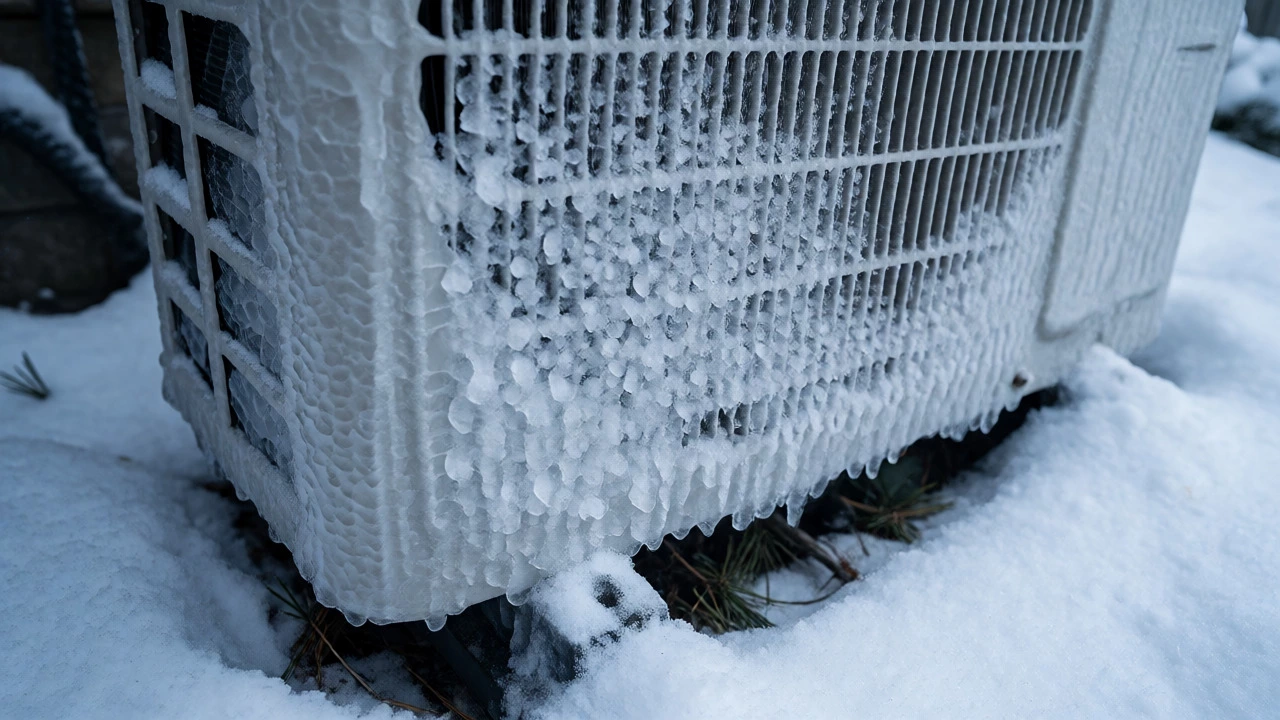
The single most common problem with heat pumps isn't a broken compressor or a fried circuit board. It’s something far simpler but surprisingly tricky to diagnose if you don't know what to look for: airflow restriction and defrost cycle failure. When ice builds up on the outdoor coil because the system can't melt it off fast enough, the unit stops transferring heat effectively. You end up with an expensive machine running hard but producing nothing but cold drafts. Let's break down exactly why this happens, how to spot it before it kills your compressor, and when you need to call a pro.
Why Airflow is the Silent Killer of Heat Pumps
Think of your heat pump as a giant lung. It needs to breathe. In heating mode, the outdoor unit pulls in cold air and extracts whatever heat energy exists within it. If that air can't move freely over the coils, two things happen: efficiency plummets, and the system freezes up. This is where the majority of service calls originate.
In our climate here in Canada, we deal with snow, ice, and debris like maple seeds or pine needles. These elements clog the fins of the outdoor condenser unit. When airflow drops by even 20%, the temperature of the refrigerant inside the coil drops too low. Moisture from the air freezes on contact. Suddenly, your heat exchanger is encased in a thick layer of ice. The unit tries to run a defrost cycle to melt this ice, but if the airflow is blocked or the sensors are faulty, the cycle fails. The ice keeps building until the unit trips its safety limit and shuts down completely.
Checklist for Airflow Issues
- Visual Inspection: Look at the outdoor unit. Is there visible ice buildup? Not just frost, but a solid shell?
- Debris Removal: Clear any leaves, grass clippings, or snow piled against the unit. Keep a 2-foot clearance on all sides.
- Filter Check: Go inside. A dirty furnace filter restricts airflow across the indoor coil, causing similar freezing issues. Replace it if it looks gray or fuzzy.
- Fan Operation: Listen to the outdoor fan. Is it spinning? If the fan motor has failed, no amount of cleaning will fix the heat transfer issue.
The Defrost Cycle: How It Works (and Why It Fails)
To understand the problem, you have to understand the solution built into the machine. A heat pump naturally creates ice on its outdoor coil during winter operation. To combat this, manufacturers install a reversing valve. This component flips the flow of refrigerant, turning the outdoor coil hot to melt the ice while briefly cooling the house. This is the defrost cycle.
Most modern units use smart logic boards to decide when to defrost based on time and temperature sensors. However, these sensors often drift out of calibration. If the sensor thinks the coil is warmer than it actually is, it won't trigger the defrost cycle soon enough. Ice accumulates faster than it melts. Conversely, if the sensor triggers too often, the unit wastes energy melting non-existent ice, leaving your home chilly.
A frequent culprit here is the thermistor, a small temperature sensor attached to the coil. If this cheap part fails, the entire control logic breaks. Replacing a thermistor costs under $50, but diagnosing it requires a multimeter and knowledge of resistance values. Many homeowners ignore the intermittent cold blasts, thinking the unit is "just cycling," when in reality, the defrost logic is failing.
Refrigerant Leaks: The Slow Decline
If airflow and defrost cycles are clear, the next most likely suspect is a refrigerant leak. Unlike older AC units, heat pumps operate under high pressure in both heating and cooling modes. Over years of thermal expansion and contraction, copper lines can develop micro-cracks. Brazed joints can weaken. Vibrations from the compressor can loosen fittings.
You might not see a puddle of oil around the leak site immediately. Refrigerant leaks are often slow. As the charge drops, the system loses capacity. You’ll notice the heat pump runs longer to reach the set temperature. Eventually, the suction line gets too cold, and the evaporator coil freezes over. This mimics the airflow problem, which is why technicians always check pressures before condemning a compressor.
| Symptom | Likely Cause | Homeowner Action | Pro Technician Fix |
|---|---|---|---|
| Outdoor unit covered in ice | Defrost cycle failure or low refrigerant | Turn off system; let ice melt naturally | Test reversing valve; check thermistors |
| Cold air blowing indoors | Airflow restriction or emergency heat active | Change filters; clear outdoor debris | Clean blower wheel; inspect ductwork |
| Unit short-cycles (on/off rapidly) | Oversized unit or bad capacitor | Check thermostat settings | Replace start/run capacitor; adjust charge |
| Loud rattling or grinding noise | Loose panel or failing fan motor | Tighten screws; check for obstructions | Replace motor bearings or mount |
| High electric bill | Dirty coils or backup heat usage | Clean filters; check thermostat schedule | Coil cleaning; verify heat strip function |
Electrical Failures: Capacitors and Contactors
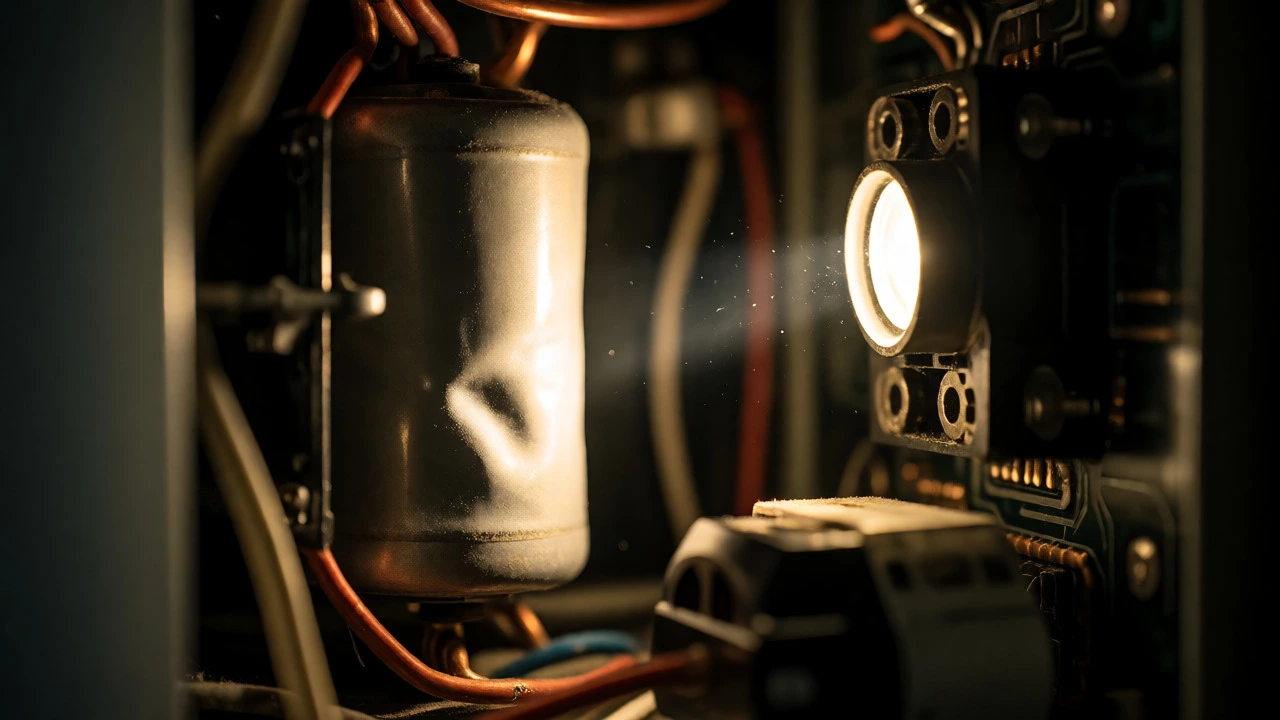
Heat pumps have more electrical components than standard air conditioners because they must manage two directions of heat flow. The run capacitor is a notorious point of failure. This small metal cylinder stores energy to keep the compressor and fan motors running smoothly. When it weakens, the compressor hums but struggles to start, drawing excessive current. This generates heat and eventually burns out the motor windings.
Another common electrical issue involves the contactor. This is essentially a heavy-duty relay that switches power to the outdoor unit. Over time, the contacts pit and burn, causing arcing. You might hear a buzzing sound from the outdoor unit. If the contactor sticks closed, the unit runs continuously regardless of the thermostat signal. If it sticks open, the unit never starts. These are relatively inexpensive parts, but working with 240V electricity requires caution. Never touch internal components unless you’ve verified the power is off at the breaker.
The Thermostat Connection
Sometimes the problem isn't the heat pump at all-it’s the brain telling it what to do. Modern heat pumps require specific thermostats that support "O/B" wire configurations. This wire tells the reversing valve whether to be in heating or cooling mode. If your previous system was a simple AC, and you upgraded to a heat pump without changing the thermostat wiring, the system might be stuck in the wrong mode.
Additionally, many people set their thermostats to "Auto" instead of "Emergency Heat" during deep freezes. When the outdoor temperature drops below -10°C, the heat pump’s efficiency drops significantly. It may struggle to keep up. If the thermostat doesn't automatically engage the auxiliary heat strips (electric resistance heaters), your home will feel cold even though the pump is running. Checking your thermostat’s balance point settings can save you from unnecessary service calls.
When to Call a Professional
While changing a filter or clearing snow off the outdoor unit is DIY-friendly, some jobs are strictly for licensed HVAC technicians. If you suspect a refrigerant leak, you need EPA-certified handling. Venting refrigerant improperly is illegal and harmful to the environment. Furthermore, diagnosing a bad reversing valve requires gauges and manifold sets that most homeowners don't own.
If your unit is making loud metallic noises, smells like burning plastic, or trips the breaker repeatedly, shut it down immediately. Continuing to run a struggling compressor can lead to catastrophic failure. Compressor replacement often costs nearly as much as a new unit, so catching early signs of electrical or airflow stress saves thousands.
Maintenance Tips to Prevent Future Breakdowns
Prevention is cheaper than cure. Here is a simple routine to keep your heat pump happy through the Canadian winters:
- Spring Cleanup: Before summer hits, wash the outdoor coil gently with a garden hose (no pressure washer!) to remove pollen and dirt.
- Fall Prep: Before the first freeze, replace indoor filters. Inspect the base pan of the outdoor unit for standing water, which can freeze and damage the coil.
- Winter Watch: During heavy snowstorms, ensure the outdoor unit isn't buried. Shovel snow away from the intake and exhaust areas.
- Annual Tune-Up: Have a technician check refrigerant levels, electrical connections, and capacitor health once a year.
Understanding that airflow and defrost issues are the root cause of most heat pump troubles puts you ahead of the curve. You can often solve minor glitches yourself, saving money and frustration. But when the ice won't melt or the unit stays silent, knowing what to tell your technician speeds up the diagnosis and gets your warmth back sooner.
Why is my heat pump blowing cold air?
The most common reasons are a frozen outdoor coil due to restricted airflow or a failed defrost cycle. Dirty air filters or blocked outdoor coils prevent proper heat exchange, causing the system to freeze up. Another possibility is low refrigerant levels, which reduces the system's ability to absorb heat from the outside air.
How long should a heat pump last?
With proper maintenance, a heat pump typically lasts between 10 and 15 years. However, harsh climates with extreme temperature swings, like those in Canada, can shorten this lifespan due to increased wear on the compressor and reversing valve. Regular annual servicing can help extend its life toward the upper end of that range.
Should I turn off my heat pump if it freezes up?
Yes, if the outdoor unit is heavily iced over, switch the system to "Off" or "Fan Only" mode to allow the ice to melt naturally. Do not use hot water or sharp tools to chip the ice away, as this can damage the delicate aluminum fins. Once melted, restart the system and monitor if the ice returns quickly, which indicates a mechanical fault.
What does it mean when my heat pump clicks?
A clicking sound usually indicates a failing contactor or relay. The contactor is an electrical switch that turns the outdoor unit on and off. When the contacts inside wear out, they arc and buzz, creating a clicking or humming noise. This is a serious electrical issue that should be addressed promptly to prevent fire hazards or compressor damage.
Can I clean my heat pump myself?
You can perform basic maintenance like replacing indoor filters and clearing debris from around the outdoor unit. Gently rinsing the outdoor coil with a garden hose is also safe if done carefully. However, internal cleaning, refrigerant checks, and electrical diagnostics should be left to certified HVAC professionals to avoid voiding warranties or causing injury.