

Electric Oven Lifespan: How Many Years Should It Last?
 Oct, 8 2026
Electric Oven Lifespan & Repair Calculator
Enter details to see estimated lifespan and financial advice.
You just spent $1,200 on a sleek new electric oven that promises to make you the star of every dinner party. Three years later, it’s barely holding temperature, and you’re wondering if you got ripped off or if this is normal. Here’s the blunt truth: most electric ovens are built to last between 13 and 15 years. If yours died at five, something went wrong-either with the unit itself or how you treated it.
This isn’t just about saving money (though that helps). Knowing what to expect from your appliance stops you from replacing a perfectly fixable oven or keeping a dying one too long. Let’s break down exactly how long an electric oven should last, what kills them early, and when it’s actually time to call a technician instead of buying a new one.
The Real Numbers Behind Electric Oven Longevity
Industry data from the National Association of Home Builders puts the average life of an electric oven right around 13 to 15 years. That’s the baseline for standard residential models used by a family of four cooking three to four times a week. But averages hide the details. A high-end double wall oven might push 18 years if maintained well, while a budget single oven hammered daily by a home baker might tap out at 8.
Your usage pattern matters more than the brand logo on the front. An oven used twice a month for reheating leftovers will almost always outlive one used nightly for roasting chickens and baking breads. The heating elements cycle less, the insulation stays intact longer, and the electronic controls face fewer thermal shocks. If you’re a heavy user, assume the lower end of that lifespan range. If you’re a casual cook, aim higher.
| Usage Level | Cooking Frequency | Expected Lifespan | Common Failure Point |
|---|---|---|---|
| Light | 1-2 times per week | 15-20 years | Control board electronics |
| Moderate | 3-4 times per week | 13-15 years | Heating element burnout |
| Heavy | Daily use | 8-12 years | Thermostat calibration drift |
| Commercial-style | Multiple bakes/day | 5-7 years | Fan motor failure |
What Actually Kills Your Oven Early?
It’s rarely the oven “wearing out” in a general sense. Specific components fail, and they fail predictably based on stress factors. The heating elements-those glowing coils inside-are workhorses, but they’re fragile. Self-cleaning cycles bake grease into hard carbon deposits that insulate the element, causing it to overheat and snap. Run the self-clean function only once a quarter, max. Doing it weekly is like revving your car engine in neutral all day; it burns fuel without going anywhere.
Then there’s the thermostat. Over time, the sensor that tells the oven when it’s hot enough drifts out of calibration. You set it to 350°F, but it’s actually running at 320°F or 380°F. This doesn’t kill the oven outright, but it makes cooking inconsistent and wastes energy. In older units, the relay switches that control power to the elements can stick open or closed, leading to complete failure. These are cheap parts ($20-$50), but labor adds up if you don’t catch the issue early.
Ventilation is another silent killer. Electric ovens generate significant heat. If the vents around the door seal are blocked by accumulated grime or if the oven is installed flush against cabinetry without proper clearance, internal temperatures spike beyond design limits. This cooks the wiring insulation and degrades the control board faster than normal. Check your owner’s manual for clearance specs-usually 1 inch on sides and top-and keep those gaps clear.
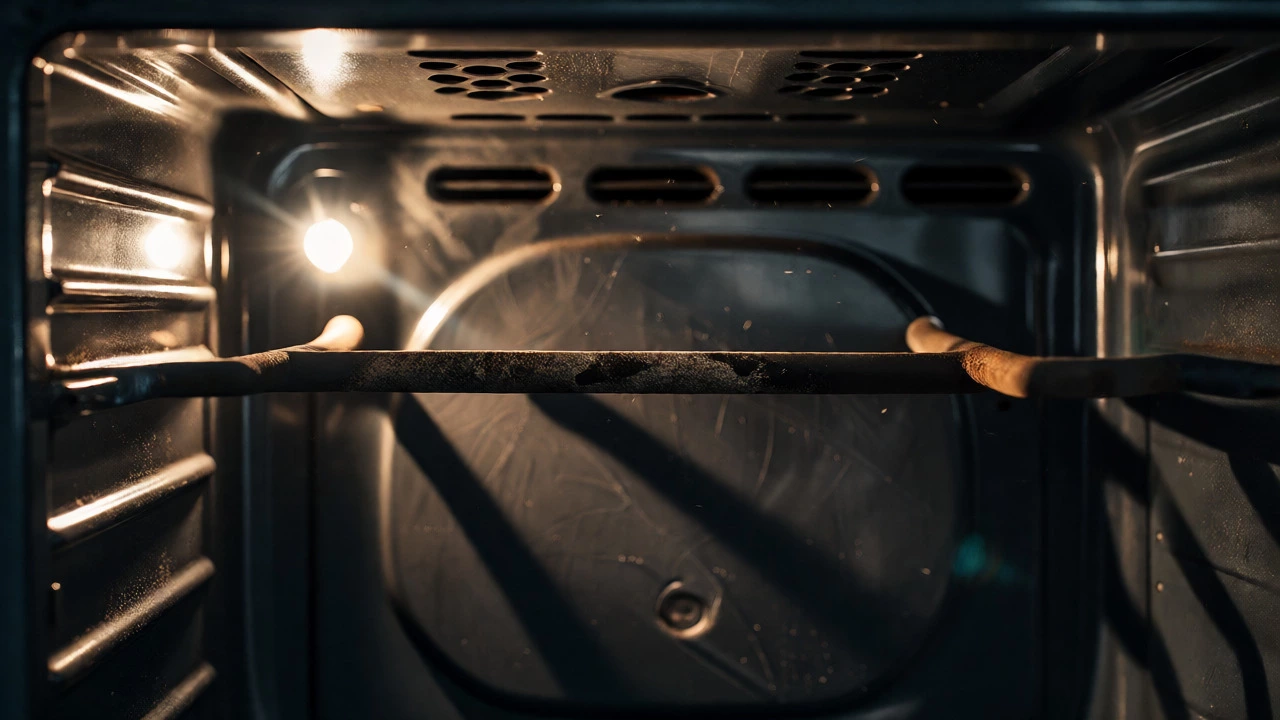
Signs Your Oven Is Nearing the End
How do you know if your 12-year-old oven is on borrowed time? Look for these red flags:
- Inconsistent Temperature: If you need to adjust recipes by 25 degrees or more to get decent results, the thermostat or sensor is failing. Calibration fixes cost under $100; replacement costs rise fast after that.
- Uneven Heating: Cakes rising lopsidedly or cookies burning on one side point to a failing fan motor (in convection models) or a damaged element. If both elements look fine visually, suspect the fan.
- Door Seal Issues: Heat escaping through a warped gasket forces the oven to run longer to maintain temp. This strains the elements and increases electricity bills. Replace seals every 5-7 years as preventive maintenance.
- Electrical Glitches: Flickering lights, unresponsive touchpads, or error codes that appear randomly signal control board degradation. On boards older than 10 years, repairs often aren’t worth it because replacement boards may be discontinued.
If you see two or more of these signs simultaneously, start shopping for replacements. Fixing one issue on a multi-failure unit usually reveals the next problem within months.
Repair vs. Replace: The Break-Even Math
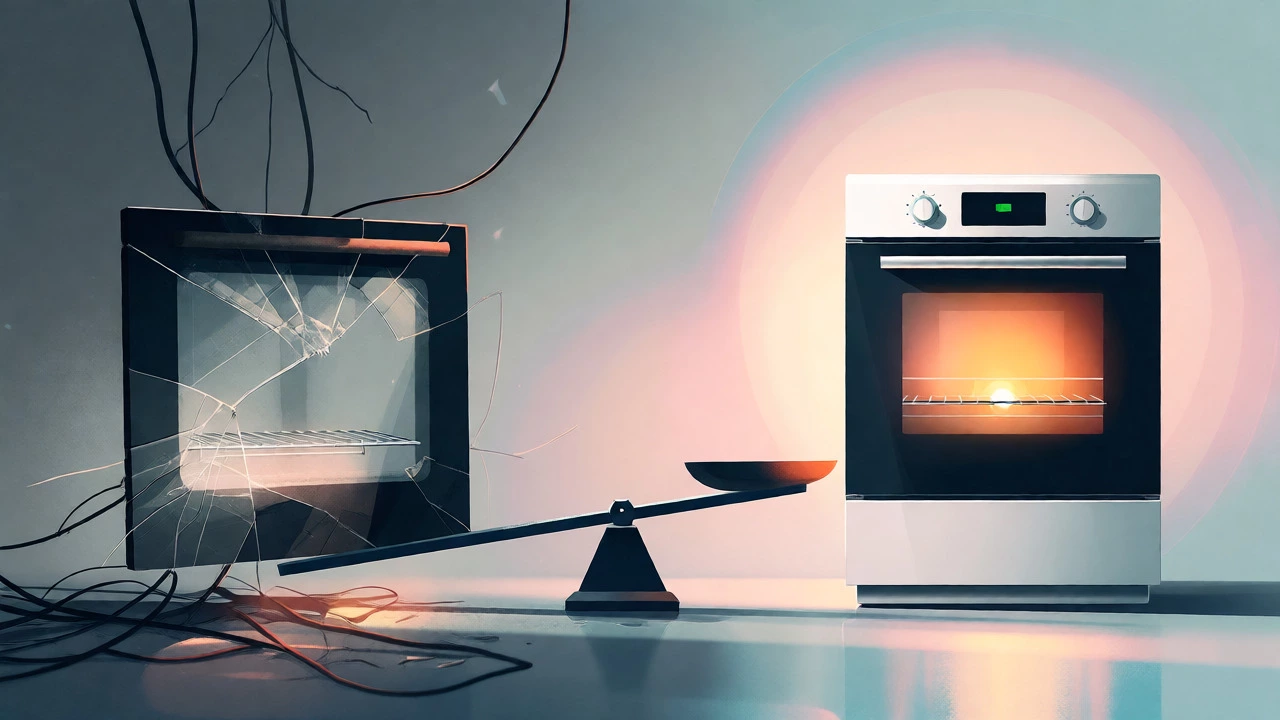
Here’s where people waste money. They pay $300 to fix a 14-year-old oven that needs a new control board, then it dies six months later due to a cracked glass panel. Rule of thumb: if the repair cost exceeds 50% of the price of a comparable new oven, replace it. For a $1,000 oven, cap repairs at $500. Below that threshold, fixing makes financial sense, especially if other components are healthy.
Consider efficiency gains too. Newer electric ovens use better insulation and smarter convection fans, cutting energy use by 10-15%. Over ten years, that saves $150-$200 in electricity-not huge, but it offsets part of the purchase price. Also, modern safety features like automatic shut-off and cooler-touch exteriors matter if you have kids or pets.
One exception: high-end built-in ovens costing $3,000+. These are designed for longevity and serviceability. Replacing a $250 part on a $3,000 oven is smart even at age 15, because matching new units to existing cabinetry can cost more than the oven itself.
Extending Your Oven’s Life: Practical Maintenance
You can add years to your oven’s life with simple habits. First, stop using aluminum foil to line the bottom. It traps heat against the floor, overheating the broiler element and warping the enamel. Use a rack on the lowest position instead. Second, clean spills immediately after cooling. Sugar-based sauces caramelize into concrete-like patches that require harsh scrubbing or self-cleaning cycles to remove. Wipe with damp cloth and mild detergent weekly.
Third, avoid slamming the door. Glass panels and hinges take real abuse from forceful closures. Gentle handling preserves seals and prevents micro-cracks in the inner glass layer. Fourth, test your temperature annually with an independent oven thermometer. If it’s off by more than 15 degrees, request calibration during any other service visit-it’s often free or low-cost.
Finally, check the ventilation fan (if equipped) for noise changes. A whining or grinding sound means bearings are wearing. Cleaning debris from the fan blades yearly reduces strain. Don’t ignore small noises; they’re early warnings before total failure.
When to Call a Professional
Some jobs are DIY-friendly: replacing racks, cleaning filters, swapping light bulbs. Others involve live voltage and gas-free but high-amperage circuits. If you smell burnt plastic, see sparks, or notice the breaker tripping repeatedly, stop using the oven and call a certified appliance repair technician. Electrical faults escalate quickly, and a faulty ground wire can create shock hazards.
Technicians also spot issues invisible to homeowners. They’ll check element resistance with a multimeter, verify thermostat accuracy, and inspect internal wiring for heat damage. Paying $150 for a diagnostic visit might save you $800 in unnecessary part replacements or prevent a fire risk. In Toronto, where humidity fluctuates seasonally, moisture ingress into control boards is common-pros know how to dry and treat affected areas properly.
Do expensive electric ovens really last longer?
Not necessarily. Price correlates with features, not durability. A $600 basic model and a $2,500 pro-style model often share identical heating elements and thermostats. Expensive ovens last longer primarily because owners tend to maintain them better and use them less aggressively. However, commercial-grade components in some premium brands do offer higher cycle ratings for heating elements.
Is it safe to use an oven with a broken door seal?
It’s unsafe. A compromised seal lets excessive heat escape onto surrounding cabinets and countertops, creating fire risks and damaging finishes. It also causes uneven cooking and higher energy bills. Replace the seal immediately; it’s a inexpensive part that significantly impacts safety and performance.
How often should I service my electric oven?
For moderate users, professional inspection every 3-5 years is sufficient. Heavy users should schedule annual checks. Focus on testing temperature accuracy, inspecting electrical connections, and verifying fan operation. Preventive servicing catches minor issues before they become major failures.
Can I extend my oven's life by changing my cooking habits?
Yes. Avoid preheating unnecessarily (many dishes don't need it), minimize self-cleaning cycles, and never place cold glass dishes directly into a hot oven (thermal shock cracks glass). Using convection settings when appropriate reduces cooking time and element wear. Small habit changes compound over years.
What's the most common cause of electric oven failure?
Heating element burnout is the #1 failure mode, accounting for nearly 40% of breakdowns. Elements degrade from repeated thermal expansion and contraction, plus corrosion from food acids. Replacement is relatively affordable ($50-$150 including labor), making it a worthwhile repair for ovens under 10 years old.