

Do Plumbers Install Extractor Fans? A Homeowner's Guide
 Nov, 1 2026
Extractor Fan Installation Planner
Not sure who to call? Answer a few questions about your current setup to get a recommendation and a rough cost estimate.
You just bought a shiny new extractor fan for your bathroom, and now you're staring at the ceiling wondering: do I call my plumber or my electrician? It’s a common confusion because these two trades often work in the same tight spaces. The short answer is usually no, plumbers don’t install the electrical components of an extractor fan, but there are exceptions depending on where you live and what kind of system you have.
The Core Division of Labor
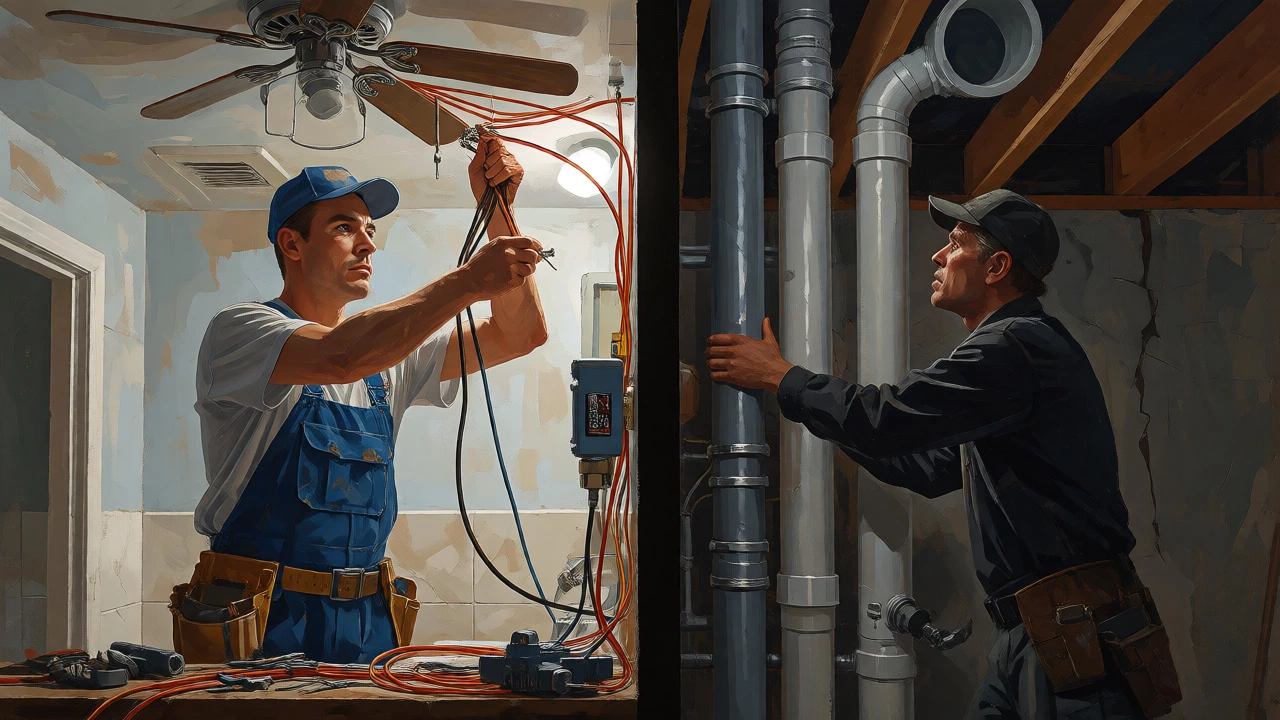
In most North American jurisdictions, including Ontario, Canada, trade licenses are strictly separated by skill set. A licensed plumber is certified to handle water supply lines, drainage systems, gas piping, and fixtures like sinks and toilets. Their expertise revolves around moving fluids safely. An electrician, on the other hand, handles wiring, circuits, lighting, and devices that require power. Since a standard extractor fan runs on electricity, it falls squarely into the electrician’s domain.
Why does this matter? If you ask a plumber to wire a fan, they might physically mount it, but they cannot legally connect it to the mains if it requires hardwiring into a junction box. In many places, doing so without an electrical license can void your home insurance or cause issues during a future home inspection. So, while your plumber might be happy to help out as a favor by holding the ladder, the actual connection belongs to the sparky.
When Plumbers Actually Get Involved
There is one specific scenario where a plumber becomes essential to the process: when the extractor fan needs to vent through the roof or wall, and that path intersects with existing plumbing vents. Bathroom exhaust fans often share ductwork space with plumbing vent stacks (the pipes that let air into your drain system). If you’re installing a new fan and need to cut a hole in the roof or side wall, a plumber might coordinate with the roofer or builder to ensure the plumbing vents aren’t compromised.
Additionally, some high-end integrated bathroom systems use a "heat recovery ventilator" (HRV) or specific plumbing-adjacent humidity sensors. While rare for residential units, if your fan is part of a larger hydronic heating loop or a complex smart-home integration involving water-based heating elements, a plumber’s input might be needed. But for the average homeowner swapping out a noisy bathroom fan, this is overkill.
What You Can DIY vs. What Needs a Pro
Before you pick up the phone, consider your comfort level. Installing an extractor fan isn't rocket science, but it involves working in tight attic spaces and dealing with live wires. Here is a quick breakdown of who does what:
- The Plumber: Handles the sink, shower, toilet, and any water leaks. They might recommend a fan size based on room volume if they’ve been measuring the space for a new vanity.
- The Electrician: Runs the new circuit, connects the fan to the switch, installs GFCI protection if required by code, and ensures the grounding is safe.
- The Handyman/DIYer: Many homeowners replace a fan themselves if an existing electrical box and duct are already in place. You simply disconnect the old unit, mount the new one, and reconnect the wires using wire nuts.
If you are replacing an old fan with a new one in the exact same spot, and the wiring is accessible and simple (plug-in type), you might not need either pro. However, if you are adding a fan to a room that never had one, you definitely need an electrician to run new cable from the breaker panel.
Cost Comparison: Who Charges More?
Let’s talk money. Trade rates vary, but generally, electricians charge slightly higher hourly rates than plumbers in many urban centers due to the specialized nature of low-voltage and high-voltage certification. However, the total cost depends heavily on the complexity of the job.
| Task | Who Does It | Average Cost Range (CAD) | Complexity Factor |
|---|---|---|---|
| Replacing existing fan (same location) | DIY or Electrician | $150 - $350 | Low (if wiring is ready) |
| New fan installation (new wiring) | Electrician | $400 - $800+ | Medium (running cable) |
| Vent modification (roof/wall) | Roofer / Builder | $300 - $600 | High (waterproofing) |
| Plumbing coordination | Plumber | $100 - $200 (consult) | Low (usually advisory) |
Notice that the plumber rarely appears as the primary installer. If you hire a general contractor, they will likely subcontract the electrical work to a licensed electrician anyway. Hiring a plumber to do electrical work is often a red flag unless they hold dual licenses, which is uncommon.
Building Codes and Permits
Here is where things get tricky. Building codes change, and enforcement varies by municipality. In Toronto, for example, you typically don’t need a permit to replace a fixture, but you do need one if you are running new branch circuits. This is an electrical permit, not a plumbing permit.
Codes also dictate airflow requirements. Most modern codes require bathrooms to have mechanical ventilation capable of moving at least 50 cubic feet per minute (CFM). A plumber won’t know the latest electrical code updates regarding GFCI protection in wet locations. That’s an electrician’s knowledge base. If you skip the electrician and wire it yourself incorrectly, you might fail a rough-in inspection later if you’re renovating the whole house.

How to Choose the Right Contractor
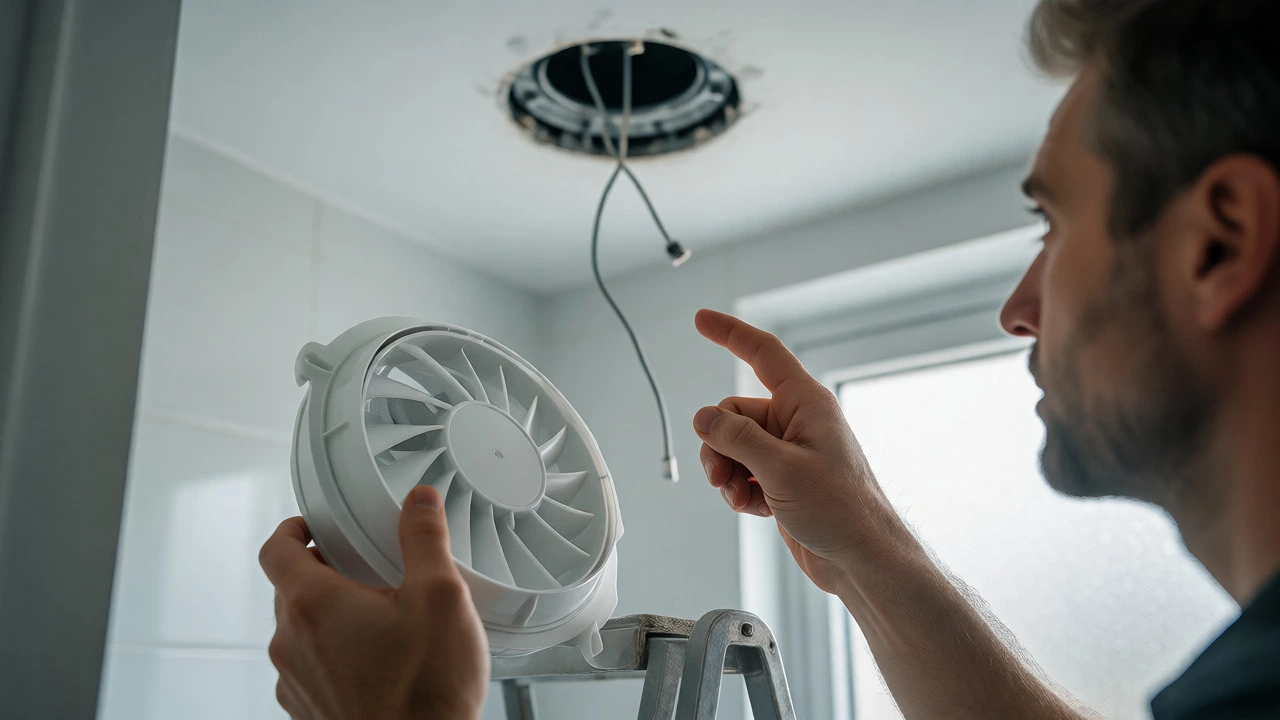
So, who do you actually call? Start by assessing your current setup. Look at your ceiling. Is there a circular hole with a wire hanging down? Or is it solid drywall?
- Solid Drywall: Call an electrician first. They need to assess if a new circuit can be added. They might then tell you to hire a handyman to cut the hole and install the housing.
- Existing Hole & Wire: You can likely DIY this. Buy a fan kit that matches the housing size. Turn off the breaker, unscrew the old motor, swap it, and screw it back in.
- Noisy Fan: Before calling anyone, clean the blades. Dust buildup causes noise. If cleaning doesn’t help, the bearings are shot. Replacement is cheaper than repair.
If you must hire someone, ask specifically: "Are you licensed to perform electrical connections?" If they hesitate, walk away. A reputable electrician will also check if your current switch is compatible. Some fans require a timer or humidity sensor switch, which adds another layer of wiring complexity.
Common Pitfalls to Avoid
One major mistake homeowners make is assuming all fans are created equal. A small 50 CFM fan is useless in a large master bath with a soaking tub. Conversely, putting a 150 CFM monster in a tiny powder room creates negative pressure that can suck combustion gases from your water heater back into the house. This is where the plumber’s role indirectly matters-they care about your water heater’s safety, but they won’t size your fan. Use online calculators to match CFM to square footage before buying.
Another pitfall is improper venting. Never vent a bathroom fan into the attic. Moisture in the attic leads to mold and wood rot within months. Always vent outside-through the roof or a side wall. If your current fan vents into the attic, fixing this requires cutting a new hole in the exterior, which might involve siding work (a carpenter or roofer) rather than plumbing or electrical work.
Can a handyman install an extractor fan?
Yes, a skilled handyman can often install an extractor fan, especially if it is a replacement in an existing location. However, if new wiring is required, many regions require a licensed electrician to perform the final connection to ensure code compliance and insurance validity. Always check local regulations.
Do I need a plumber to fix a leaking extractor fan?
Usually, no. Leaks are typically caused by a failed roof flashing around the vent cap or condensation dripping from the duct. These are roofing or HVAC issues. A plumber would only be involved if the leak is coming from a nearby pipe joint, which is rare for the fan itself.
Is it cheaper to hire an electrician or a plumber for fan installation?
Since plumbers generally do not install fans, comparing them directly is difficult. Between an electrician and a handyman, the handyman is often cheaper ($100-$200 less) but may lack the licensing for new circuits. For simple swaps, a handyman is cost-effective; for new installs, an electrician is necessary despite the higher rate.
Can I plug an extractor fan into an outlet?
Most residential ceiling-mounted extractor fans are hardwired for aesthetic and safety reasons. Plug-in models exist, usually portable or surface-mounted units. If your bathroom has a GFCI outlet near the ceiling, you could technically use a plug-in model, but hardwiring is standard for permanent installations.
What happens if I vent my fan into the attic?
Venting into the attic traps moisture, leading to mold growth, insulation damage, and structural wood rot. Over time, this significantly reduces energy efficiency and can cause health issues. Always ensure the duct terminates outdoors with a proper weatherproof cap.