

Can an Oven Last 20 Years? The Truth About Appliance Longevity
 Oct, 1 2026
Oven Longevity & Repair Estimator
Your Oven Details
Repair Scenario
Fill in the details and click "Analyze My Oven" to see recommendations.
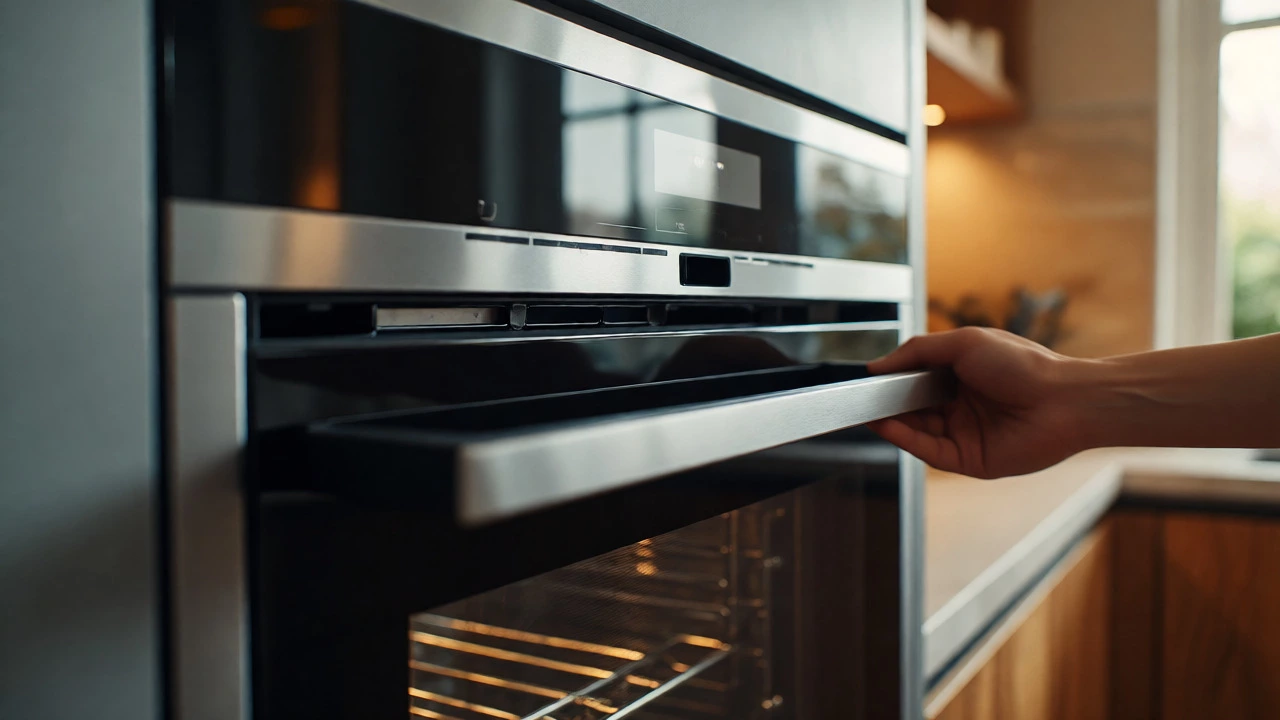
You just bought a high-end electric oven for $1,500. It’s sleek, it has Wi-Fi connectivity, and the salesperson promised it would last forever. But here’s the uncomfortable truth: the average American household replaces their major appliances every 7 to 10 years. So, when someone asks, "Can an oven last 20 years?" the honest answer is yes-but with massive caveats. It’s not about luck; it’s about engineering choices, usage patterns, and whether you treat your appliance like a tool or a disposable gadget.
The Real Numbers Behind Oven Lifespan
Let’s cut through the marketing noise. According to data from the Association of Home Appliance Manufacturers (AHAM), the median life expectancy for a standard electric range is roughly 13 to 15 years. Gas ranges tend to clock in slightly lower, around 10 to 14 years, due to the complexity of ignition systems and gas valves. But averages are misleading. They mix budget models that fail at year five with premium units that hit year twenty with minor repairs.
If you want to reach the two-decade mark, you’re fighting against entropy. Modern ovens are packed with electronics-control boards, sensors, and touch interfaces-that simply didn’t exist in ovens from 1990. Those older mechanical knobs were robust because they had fewer points of failure. Today, if your control board fries in year 18, does the oven still work? Technically, no. But can the heating elements survive that long? Absolutely.
| Oven Type | Average Lifespan (Years) | Common Failure Point | Repairability Score |
|---|---|---|---|
| Budget Electric Coil | 10-12 | Heating Element Burnout | High |
| Premium Glass Top | 12-15 | Control Board / Sensor | Medium |
| Commercial Grade | 15-20+ | Door Seal / Insulation | Very High |
| Smart Oven | 8-12 | Software / Connectivity | Low |
Why Most Ovens Die Young (And How to Avoid It)
Most ovens don’t die of old age; they die of neglect or misuse. Think about how you use your oven. Do you leave heavy cast-iron pans on the door glass? That puts stress on hinges that weren’t designed for that weight distribution. Do you spill sugary sauces on the floor and let them bake into a carbonized crust? That mess insulates the bottom element, causing it to overwork and eventually burn out.
Then there’s the self-clean cycle. It sounds convenient, but it turns your oven into a furnace reaching temperatures near 900°F (480°C). This extreme thermal shock degrades insulation, warps metal components, and stresses electronic connections. If you run self-clean once a month, you’re actively shortening your oven’s life. Once or twice a year is plenty. Manual cleaning with baking soda and vinegar might take ten extra minutes, but it saves you hundreds in potential repairs.
The Role of Professional Maintenance
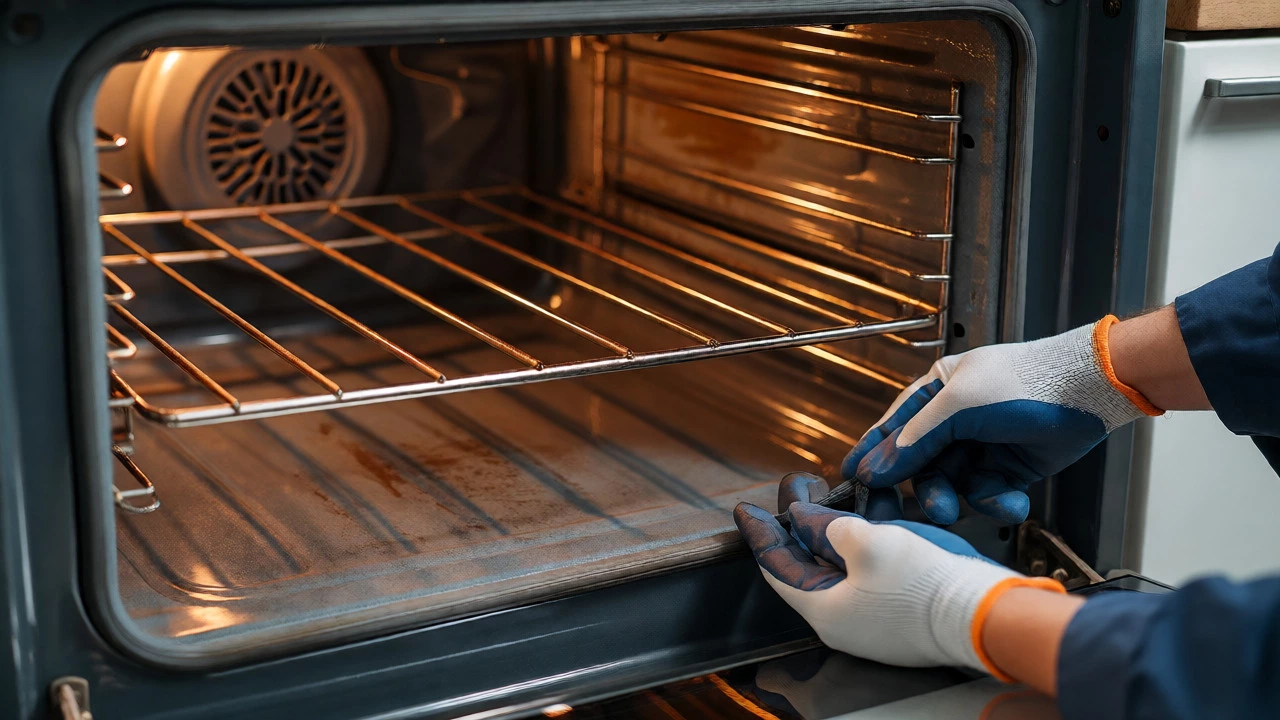
You wouldn’t drive a car for 20 years without changing the oil, right? Yet most people never call a technician until their oven stops working entirely. A mid-life tune-up can be the difference between 12 years and 20 years. A qualified appliance technician can check critical safety features like the thermostat calibration and door seal integrity before they become catastrophic failures.
For example, a faulty door seal doesn’t just make cooking inefficient; it lets heat escape onto the surrounding cabinetry. Over time, this excess heat can damage nearby wood or laminate finishes, creating a fire hazard. Replacing a $20 gasket every few years keeps the interior temperature stable and protects your kitchen structure. Similarly, checking the ventilation fan ensures that moisture doesn’t build up inside the cavity, which leads to rust on internal screws and brackets.
When Repair Beats Replacement
Here’s the financial reality: replacing a built-in wall oven costs between $800 and $2,500, plus installation labor. A major repair, like swapping a heating element or a control board, usually runs $200 to $400. So, when is it worth fixing?
- The Age Rule: If your oven is under 10 years old, repair almost always makes sense. Parts are readily available, and the chassis is likely still sound.
- The Cost Ratio: If the repair cost exceeds 50% of the price of a new comparable model, consider replacement. However, if you have a high-end brand like Wolf or Viking, parts are expensive, but so is the new unit. In these cases, even a $600 repair might be smarter than a $4,000 replacement.
- The Feature Gap: Does your current oven lack convection or steam functions? Maybe now is the time to upgrade. But if you love your current setup, keep it running.
One common misconception is that newer models are inherently better. Often, they’re just more complex. A basic electric oven from 2010 might have lasted 15 years with zero issues. Its 2024 successor might have a touchscreen that fails after 5 years. Don’t assume "newer equals longer-lasting." Sometimes, simpler is stronger.
Signs Your Oven Is Approaching the End
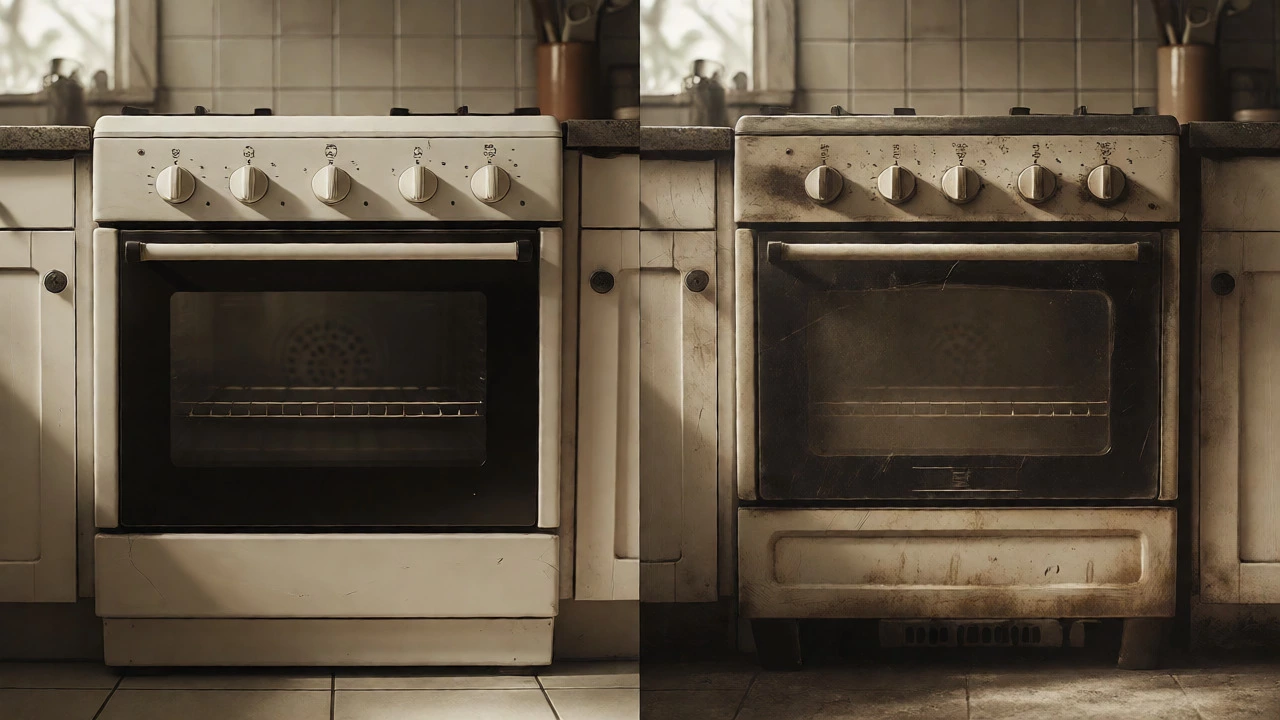
How do you know if you’re nearing the finish line? Watch for these red flags:
- Inconsistent Temperatures: If you need an oven thermometer to figure out what’s actually happening inside, your thermostat or sensor is failing. This wastes energy and ruins food.
- Excessive Noise: Grinding fans or popping sounds often indicate motor wear or loose internal components.
- Door Issues: If the door doesn’t latch tightly or feels loose, the hinges are worn. Heat loss increases energy bills and slows cooking times.
- Rust Spots: Visible corrosion on the racks or interior walls suggests the enamel coating is breaking down. Once rust spreads, structural integrity weakens.
If you see one of these signs, get a diagnostic quote. If you see three or four, start shopping for a replacement. But remember, a single issue rarely means the end. Fixing the specific problem can buy you another 3-5 years easily.
Maximizing Your Chances at Two Decades
So, can an oven last 20 years? Yes, but only if you choose wisely and care diligently. Start by buying quality. Look for brands known for serviceability, not just aesthetics. Read reviews specifically mentioning long-term ownership. Avoid models with proprietary parts that disappear from the market after five years.
Once you own it, treat it well. Clean spills immediately. Use bakeware that fits properly to avoid blocking airflow. Schedule a professional inspection every three to five years. And when something breaks, fix it promptly. Ignoring a small rattle today becomes a broken blower motor tomorrow.
Your oven isn’t just a box that gets hot. It’s a precision instrument that cooks your family’s meals. Treat it with respect, and it will return the favor for decades. If you’re unsure whether your current unit is worth saving, a quick check-up from a local expert can give you a clear roadmap for the next ten years.
Is it cheaper to repair or replace an oven?
Generally, repairing is cheaper if the oven is less than 10 years old and the repair cost is under 50% of the replacement price. For high-end brands, repairs are often preferred even at higher costs because replacements are significantly more expensive.
What kills an oven the fastest?
Frequent use of the self-cleaning cycle causes significant thermal stress on seals and electronics. Additionally, leaving heavy objects on the oven door and ignoring spilled liquids that harden on heating elements are major contributors to early failure.
Do smart ovens last as long as traditional ones?
Typically, no. Smart ovens rely on complex circuit boards and software that may become obsolete or fail earlier than simple mechanical components. While the heating elements may last, the electronics often dictate the functional lifespan, averaging 8-12 years compared to 15+ for basic models.
How often should I have my oven serviced?
A professional inspection every 3 to 5 years is recommended for high-use households. This includes checking door seals, thermostat accuracy, and electrical connections. Regular cleaning after each use helps prevent buildup that requires harsh chemical treatments later.
Can I extend the life of my oven racks?
Yes. Avoid using abrasive scouring pads that strip the chrome plating, which leads to rust. Instead, soak racks in warm soapy water or a dishwasher-safe bag. Never place aluminum foil directly on the bottom of the oven, as it reflects heat upward and can cause uneven cooking and element strain.