

At What Temperature Is a Heat Pump No Longer Efficient? (The Truth About Cold Weather)
 May, 25 2026
Heat Pump Efficiency & Cost Estimator
Parameters
Results Analysis
Based on typical residential load requirements.
Recommendation
Enter data to see recommendation.
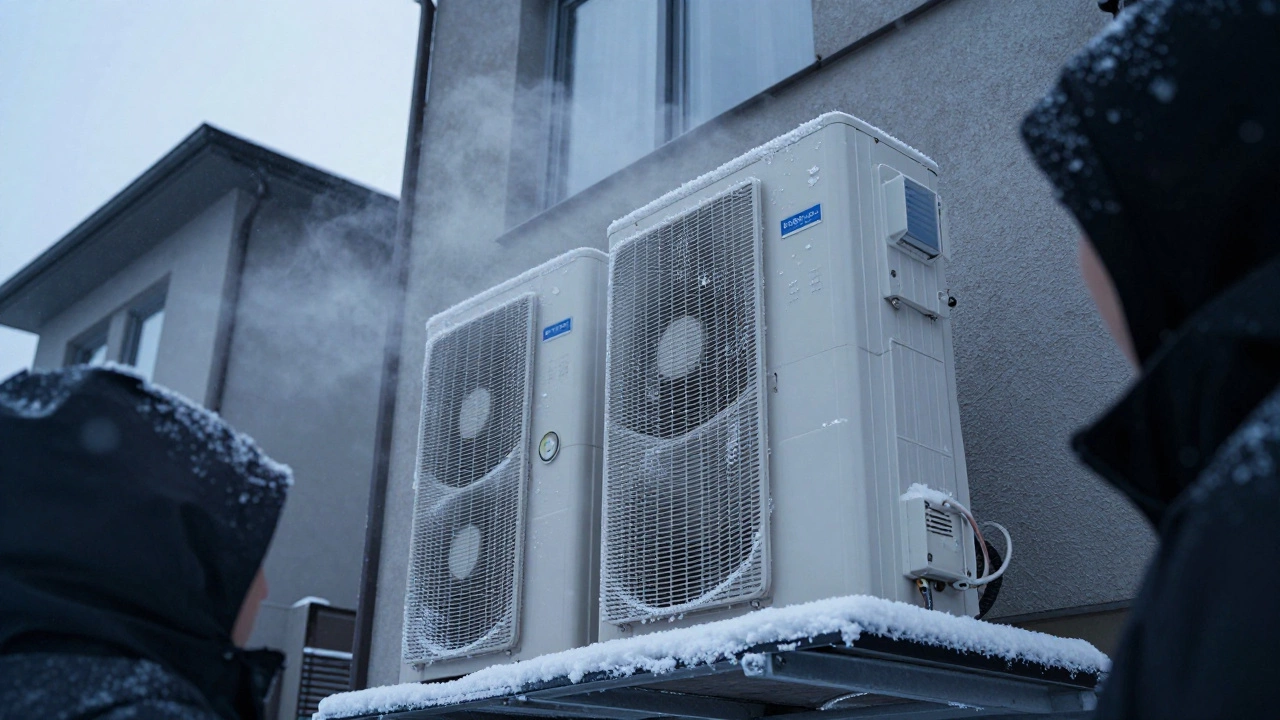
It’s -10°C outside. Your thermostat is set to 21°C. You’re waiting for the warmth, but your electric bill is skyrocketing, and the air coming out of the vents feels more like a gentle breeze than a heater. This is the moment every homeowner dreads: the point where their heat pump is a system that transfers heat from the outdoors to indoors stops being efficient and starts costing you money.
The short answer? For most standard air-source models, efficiency drops significantly below -7°C (20°F). But here is the nuance that changes everything: "inefficient" doesn't mean "broken." It means the physics are working against you. Understanding exactly where that line is drawn can save you hundreds of dollars in winter energy bills and prevent unnecessary repair calls.
The Magic Number: Understanding Coefficient of Performance (COP)
To know when a heat pump loses its edge, you have to look at one metric: the Coefficient of Performance is a ratio of useful heating or cooling provided to work required, or COP. Think of it as the exchange rate between electricity and heat.
When the outdoor temperature is mild-say, 10°C-a typical heat pump has a COP of about 3.0 to 4.0. This means for every 1 kilowatt-hour (kWh) of electricity you pay for, you get 3 to 4 kWh of heat into your home. That is incredibly efficient. It’s like getting three dollars back for every dollar you spend.
As the temperature drops, that ratio shrinks. At 0°C, your COP might drop to 2.5. You’re still getting more heat energy than electrical energy consumed, so it’s still cheaper than using an electric resistance heater (which always has a COP of 1.0). But by the time you hit -7°C, that COP often falls to around 1.5 or lower. Below -15°C, many older units struggle to maintain a COP above 1.0, meaning they are actually less efficient than just turning on a space heater or switching to a gas furnace.
| Outdoor Temp (°C) | Typical COP | Efficiency Status |
|---|---|---|
| 10°C | 3.5 - 4.0 | Peak Efficiency |
| 0°C | 2.5 - 3.0 | Good Efficiency |
| -7°C | 1.5 - 2.0 | Moderate Efficiency |
| -15°C | 1.0 - 1.5 | Low Efficiency / Backup Needed |
| -20°C+ | < 1.0 | Inefficient / Defrost Mode Heavy |
Why Does Cold Weather Kill Efficiency?
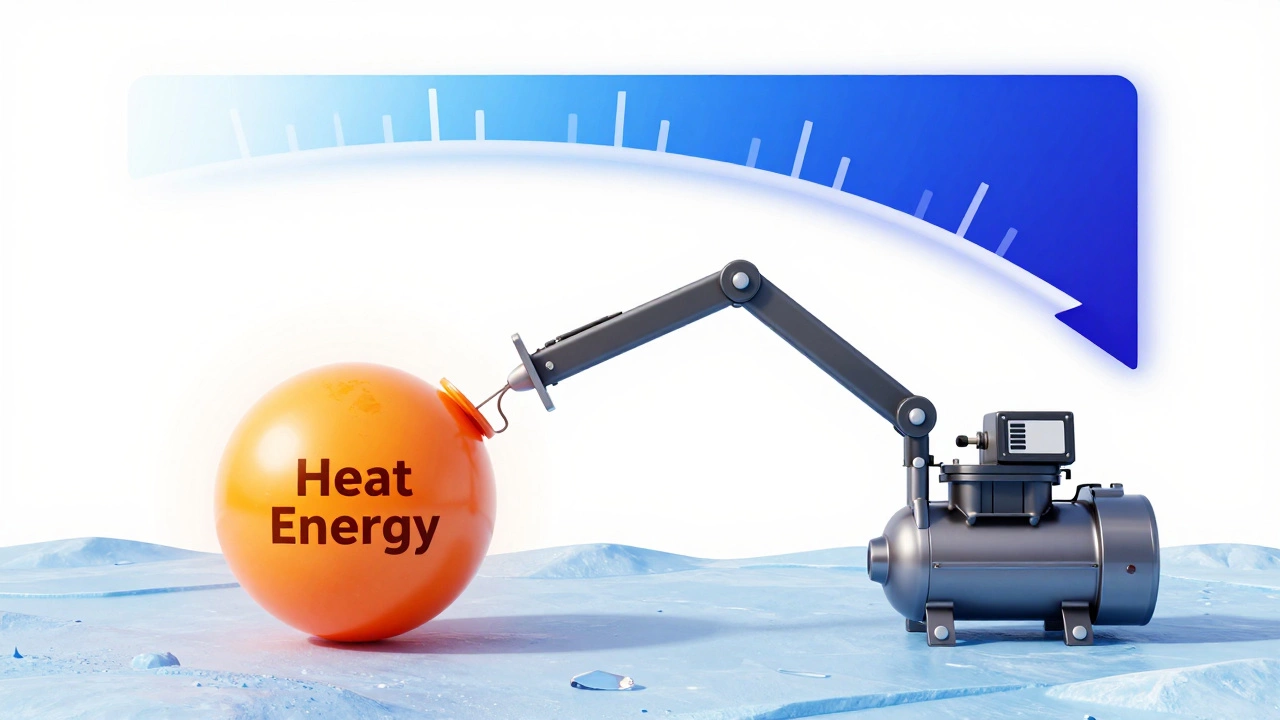
You might wonder why the same machine that cools your house perfectly in July struggles in January. It comes down to thermodynamics. A heat pump doesn’t create heat; it moves it. It extracts thermal energy from the outside air and compresses it to raise the temperature before blowing it inside.
In summer, there is plenty of heat in the air to extract. In winter, the air is cold, meaning there is very little thermal energy available. The harder the compressor works to pull that scarce heat out of the freezing air, the more electricity it consumes. Eventually, the effort outweighs the reward.
There is also the issue of defrost cycles. When the outdoor unit gets too cold, frost builds up on the coils. To keep working, the heat pump must periodically reverse itself to melt that frost. During this defrost cycle, no heat is being delivered to your home, and the system uses extra power. In damp, cold conditions (like a Toronto winter), these cycles happen frequently, further dragging down overall efficiency.
The Game Changer: Cold-Climate Heat Pumps
If you live in a region where temperatures regularly dip below -10°C, standard heat pumps used to be a bad idea. But technology has shifted dramatically in the last five years. Enter the Cold Climate Heat Pump is a specialized HVAC unit designed to operate efficiently at low temperatures.
These units use different refrigerants (like R-32 or propane/R-290) and variable-speed compressors that don’t shut off when the load decreases. Instead, they throttle down to maintain steady heat. Modern cold-climate models can maintain a COP of over 2.0 even at -20°C. Some high-end models claim efficiency down to -30°C.
However, even these advanced systems have limits. While they remain *efficient* compared to electric resistance, they may not be able to meet the *total heating load* of a poorly insulated home during a polar vortex. This leads to the next critical factor: sizing.
Is Your Heat Pump Sized Correctly for Winter?
A common mistake I see in repair diagnostics is blaming the heat pump for being "inefficient" when the real problem is undersizing. If your home loses heat faster than the pump can replace it, the system will run continuously. Running 24/7 at low efficiency adds up quickly.
Here is how to tell if your system is struggling due to size rather than temperature:
- The indoor temperature never reaches the thermostat setting.
- The outdoor unit runs constantly without cycling off.
- You feel drafts near windows and doors despite the fan running.
If any of these apply, your heat pump isn’t necessarily inefficient; it’s just overwhelmed. In these cases, adding insulation or sealing air leaks is often more effective than upgrading the HVAC unit.
When to Switch to Backup Heat
Most heat pump installations include a backup heat source, usually electric resistance strips or a natural gas furnace. The question is: when should you let the backup kick in?
If you have a dual-fuel system (heat pump + gas furnace), the switch-over point is usually calculated based on the break-even cost of gas versus electricity. In many parts of Canada and the northern US, switching to gas becomes cheaper when temperatures drop below -5°C to -7°C. Gas furnaces produce heat with nearly 100% efficiency (or higher with condensing models), whereas the heat pump’s COP is dropping fast.
If you only have electric resistance backup, avoid using it unless absolutely necessary. Electric resistance has a COP of 1.0. If your heat pump is still putting out warm air, even slowly, it is likely still more efficient than the resistance strips, which generate heat directly through metal coils. Only switch to resistance if the heat pump fails completely or if the defrost cycle is taking longer than the heating cycle.
Maintenance Tips to Extend Efficiency in the Cold
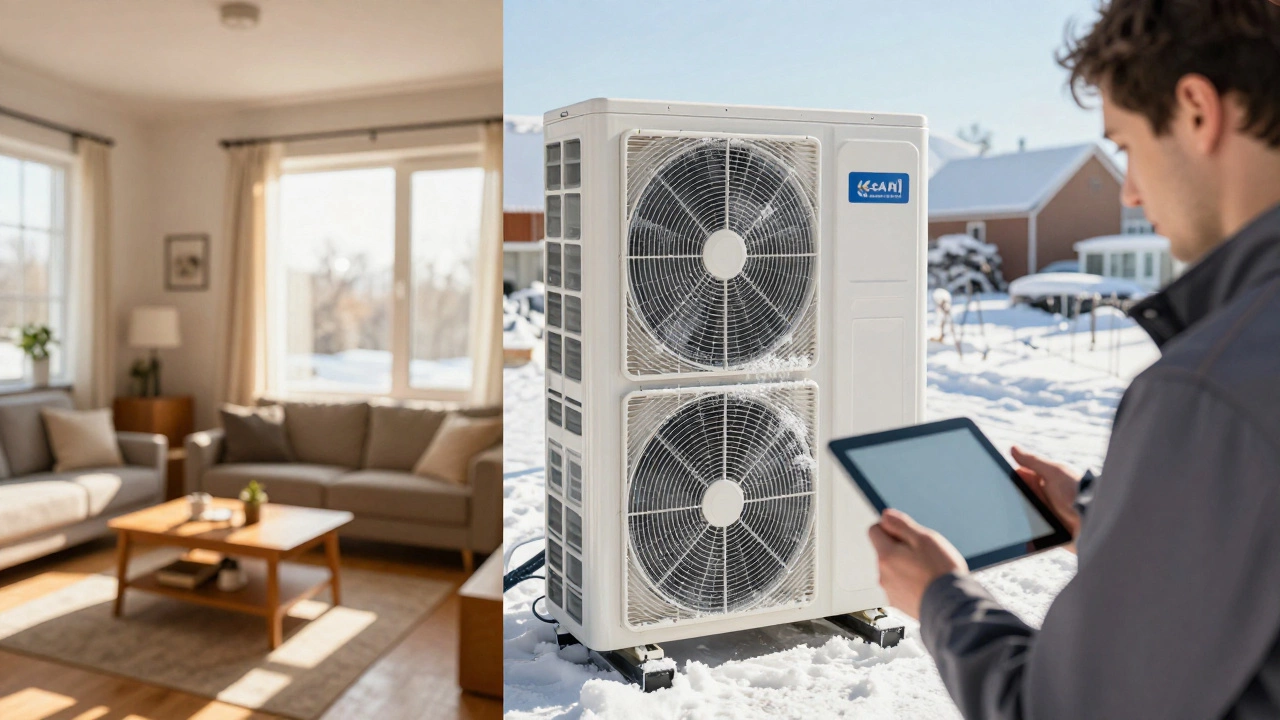
You can’t change the laws of physics, but you can ensure your equipment performs at its best. Here are practical steps to maximize efficiency during cold snaps:
- Clean the Outdoor Coil: Snow and ice buildup restrict airflow. Gently brush off snow, but never chip at ice. Let the defrost cycle handle ice removal.
- Check the Thermostat Settings: Ensure your thermostat is set to "Auto" for the fan. Running the fan continuously can blow cold air from the ducts when the heat pump is off, making the house feel colder and tricking the system into running longer.
- Inspect Refrigerant Levels: Low refrigerant forces the compressor to work harder, killing efficiency. If you notice ice forming on the copper lines or the system humming louder than usual, call a pro.
- Upgrade to a Smart Thermostat: These devices can learn your schedule and adjust temperatures slightly to reduce load during peak cold hours, optimizing the COP.
Signs Your Heat Pump Needs Repair, Not Just Adjustment
Sometimes, poor performance isn’t about the weather-it’s about mechanical failure. Watch for these red flags:
- Short Cycling: The unit turns on and off every few minutes. This wastes energy and wears out components.
- Loud Noises: Grinding, squealing, or banging sounds indicate compressor or motor issues.
- Warm Air Turning Cold: If the air starts warm and gradually gets cooler while the unit is running, the refrigerant may be leaking.
- Constant Defrosting: If the unit seems to be defrosting every 10 minutes, the defrost sensor or board may be faulty.
If you experience any of these, don’t wait for the temperature to drop further. Call a technician immediately. A failing heat pump in winter is an emergency waiting to happen.
Bottom Line: Know Your Break-Even Point
There is no single temperature where all heat pumps become inefficient. For standard units, watch your bills closely once temperatures stay below -7°C. For cold-climate models, you can push that limit to -20°C or lower. The key is monitoring your energy usage and understanding your specific system’s capabilities. If you’re unsure, ask your installer for the COP curve chart for your specific model. It’s the roadmap to keeping your home warm without breaking the bank.
At what temperature does a heat pump stop working entirely?
Most modern heat pumps do not stop working entirely until temperatures reach -30°C to -40°C. However, they may become so inefficient that they cannot keep up with the heating demand of the home long before they physically shut down. Older models may struggle significantly below -15°C.
Is it better to use a heat pump or a furnace in extreme cold?
If you have a natural gas furnace, it is often more cost-effective to switch to the furnace when temperatures drop below -7°C to -10°C, depending on local utility rates. Gas furnaces maintain high efficiency regardless of outdoor temperature, whereas heat pump efficiency drops as it gets colder.
Why does my heat pump blow cold air in winter?
This is usually part of the defrost cycle. The heat pump reverses briefly to melt ice on the outdoor coils. During this time, it blows cold air indoors. If the cold air persists for more than 10-15 minutes, there may be a refrigerant leak or a sensor malfunction requiring professional repair.
Can I improve my heat pump's efficiency in cold weather?
Yes. Ensure your home is well-insulated and sealed to reduce the heating load. Keep the outdoor unit clear of snow and debris. Consider installing a smart thermostat to optimize run times. Regular maintenance, including checking refrigerant levels and cleaning filters, also helps maintain peak performance.
What is a cold-climate heat pump?
A cold-climate heat pump is a specialized type of air-source heat pump designed to operate efficiently at much lower temperatures than standard models. They often use variable-speed compressors and advanced refrigerants to maintain high COP ratings even when outdoor temperatures drop below -20°C.