

Are Boilers Expensive to Replace? What You Really Need to Know
 Mar, 15 2026
Replacing a boiler isn’t just another home repair-it’s one of the biggest financial decisions you’ll make for your heating system. If you’re asking, "Are boilers expensive to replace?" you’re not alone. Homeowners in Toronto and across Canada are facing rising energy costs, aging systems, and confusing quotes. The truth? It’s not as simple as a single number. The cost can swing from $3,500 to over $12,000 depending on a few key factors. Let’s cut through the noise and show you exactly what you’re paying for-and how to avoid getting overcharged.
What’s the Average Cost to Replace a Boiler in Canada?
In 2026, the average cost to replace a standard gas boiler in Ontario ranges from $5,500 to $8,500. That includes the unit, installation, and basic permits. But don’t let that number fool you. A basic model installed in a simple setup might cost as little as $3,500. A high-efficiency condensing boiler with complex piping, a new flue, and upgraded controls? That can hit $11,000 or more.
Here’s how it breaks down in real terms:
- Boiler unit only: $1,500-$6,000 (depends on brand, efficiency, and size)
- Installation labor: $1,800-$4,500 (complexity matters more than hours)
- Piping and ductwork changes: $500-$3,000 (if your old system is outdated)
- Flue or vent upgrades: $800-$2,500 (required for high-efficiency models)
- Permits and inspections: $200-$600 (mandatory in Ontario)
Many contractors bundle these into one quote, but knowing what each part costs helps you spot padding. I’ve seen quotes where labor was marked up 40% just because the homeowner didn’t ask for itemized details.
Why Do Boiler Replacement Costs Vary So Much?
Not all boilers are created equal. A basic 80% AFUE (Annual Fuel Utilization Efficiency) model might cost $2,000, but it’ll cost you more in gas bills over time. A 95%+ AFUE condensing boiler might cost $5,000 upfront, but it saves 20-30% on heating fuel. In Toronto winters, that adds up fast.
Here’s what changes the price:
- Boiler type: Combi boilers (heat + hot water on demand) are pricier than regular system boilers because they’re more complex.
- Brand: Vaillant, Worcester Bosch, and Buderus cost more than generic brands-but they last longer and have better warranties.
- Size: A boiler too small won’t heat your home. Too big? It cycles on and off constantly, wasting fuel and wearing out faster.
- Location: If your boiler is in a tight basement with no access, labor costs jump. If it’s in a garage with easy outdoor venting? Much cheaper.
- Old system condition: If your pipes are rusted, your radiators are clogged, or your flue is cracked, you’ll need repairs before or during installation. These aren’t optional.
One homeowner in Mississauga paid $9,200 because the installer had to replace 18 meters of galvanized pipe that was leaking. The boiler itself was only $4,100. That’s not a surprise-it’s a necessary fix.
When Is It Better to Repair Instead of Replace?
Boilers last 15-20 years if maintained. If yours is under 10 years old and only has a minor issue-a faulty pump, a leaky valve, a broken thermostat-repairing it makes sense. Replacing a 7-year-old boiler because the control panel failed? That’s like trading in a car with 50,000 km because the radio broke.
Use this rule of thumb: if the repair cost is more than 50% of a new boiler’s price, replace it. Also, if your boiler is over 15 years old, even a cheap repair won’t save you from inevitable failure. Older units are inefficient, unsafe, and hard to find parts for.
Gas leaks? Cracks in the heat exchanger? Persistent soot? These aren’t repairable. They’re safety hazards. If your technician says any of these, don’t negotiate-replace it.
Hidden Costs You Can’t Ignore
Most quotes don’t tell you about the hidden stuff. Here’s what often gets left out:
- Thermostat upgrade: Old mechanical thermostats waste energy. A smart thermostat adds $200-$500 but pays for itself in 1-2 years.
- Radiation cleaning: Sludge in radiators reduces efficiency. Flushing them costs $300-$700 but improves heat flow.
- Water pressure system: If your boiler’s pressure keeps dropping, you might need a new expansion tank or filling loop. $400-$800.
- Gas line upgrade: Older homes sometimes have ½-inch gas lines. High-efficiency boilers need ¾-inch. That’s $1,000-$2,500 in new piping.
- Disposal fee: Some companies charge extra to haul away the old boiler. Others include it. Always ask.
I’ve seen quotes where the installer didn’t mention the gas line upgrade until day two of installation. The homeowner had to pay an extra $1,800 on the spot. Always get a detailed scope of work in writing.
How to Save Money on a Boiler Replacement
You don’t have to pay full price. Here’s how real homeowners cut costs without sacrificing quality:
- Get 3 written quotes: Don’t go with the first one. Ask each contractor to break down labor, materials, and permits.
- Choose mid-tier brands: Viessmann and Navien offer great efficiency at 20% less than Worcester Bosch.
- Time it right: Fall and early winter are peak season. Late spring or summer? Contractors are slower. You might get a 10-15% discount.
- Check for rebates: Ontario’s Home Energy Savings Program offers up to $7,000 in rebates for high-efficiency boilers. Natural Resources Canada also has federal incentives. Apply before you install.
- Keep your old radiators: If they’re in decent shape, don’t replace them. New boilers work fine with old radiators-just flush them first.
One family in Etobicoke replaced their 1998 boiler with a 96% efficient Vaillant model and got $6,200 back in rebates. Their net cost? $4,100.
What Happens If You Delay Replacement?
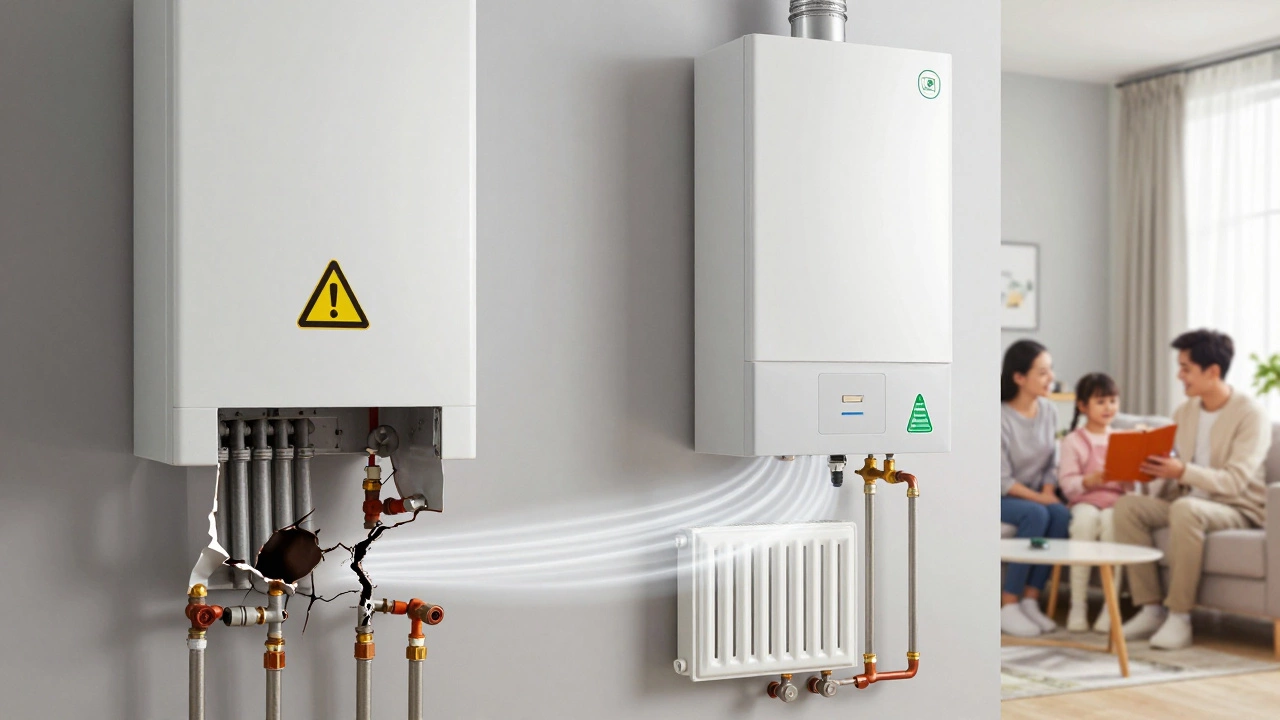
Waiting might seem cheaper-but it’s risky. A broken boiler in January isn’t an inconvenience-it’s an emergency. Temperatures in Toronto regularly drop below -20°C. Without heat, pipes freeze. Water damage can cost $20,000+ to fix.
Also, older boilers are less safe. Cracked heat exchangers can leak carbon monoxide. No alarm? No warning. Just silence. Carbon monoxide poisoning kills 10-15 Canadians every year. That’s not a statistic-it’s someone’s parent, sibling, or child.
And let’s not forget efficiency. A 15-year-old boiler might use 1,800 liters of gas a year. A new one? 1,200 liters. At $0.90/liter, that’s $540 saved annually. Payback time? Less than 3 years.
Final Answer: Are Boilers Expensive to Replace?
Yes, boilers are expensive to replace-but they’re also one of the smartest investments you can make in your home. The average cost in Ontario is $6,500-$8,500. But if you’re smart, you can get it done for under $5,000 with rebates and timing.
Don’t focus on the sticker price. Focus on:
- How much you’ll save on gas each year
- How much you’ll avoid in emergency repairs
- How much safer your home becomes
If your boiler is over 12 years old, leaking, noisy, or inefficient-it’s not a matter of "if," it’s a matter of "when." And the longer you wait, the more expensive it gets.
How long does a boiler replacement take?
Most boiler replacements take 1-2 days. Simple swaps with no pipe changes? One full day. If you’re upgrading your gas line, relocating the boiler, or adding new radiators? Two days is standard. Reputable contractors won’t rush it-proper installation matters more than speed.
Can I replace my boiler myself?
No. In Ontario, replacing a gas boiler requires a licensed technician with a Gas Fitter’s license (G2 or higher). It’s illegal and dangerous to do it yourself. Gas lines, pressure testing, carbon monoxide monitoring, and venting must meet strict provincial codes. DIY attempts can void insurance, cause leaks, or lead to carbon monoxide poisoning. Always hire a certified professional.
Do I need a new thermostat with a new boiler?
Not always, but you should. Older thermostats don’t communicate with modern boilers, leading to inefficient cycling. A smart thermostat lets you control heat remotely, set schedules, and track usage. Most new boilers require a compatible thermostat to run at full efficiency. It’s a small cost with big savings.
What’s the best boiler brand for Canadian winters?
Vaillant, Worcester Bosch, and Navien lead in cold-weather performance. They’re built for high-pressure systems, handle fluctuating water temperatures, and have strong warranties. Avoid budget brands with short warranties (under 5 years) or poor service networks in Canada. You want a brand with local technicians who actually know your model.
How do I know if my boiler is inefficient?
Check your energy bills. If your gas usage has gone up over the last 2 years despite no lifestyle changes, your boiler is likely failing. Other signs: frequent repairs, strange noises (banging, gurgling), uneven heating, or a yellow flame instead of blue. An energy audit from a certified provider can give you a precise efficiency rating. Most homes built before 2010 have boilers below 80% AFUE.