

Why Has My Hot Water Gone Off? Common Causes and Quick Fixes
 Jan, 11 2026
Hot Water Troubleshooter
What's your issue?
If your hot water suddenly stopped working, you’re not alone. In Toronto winters, losing hot water feels like a full-blown emergency. You’re not just dealing with a cold shower-you’re facing frozen pipes, laundry piles, and a kitchen full of dirty dishes. The good news? Most of the time, this isn’t a full system failure. It’s usually something simple, and you can fix it yourself without calling a plumber right away.
Check the power first
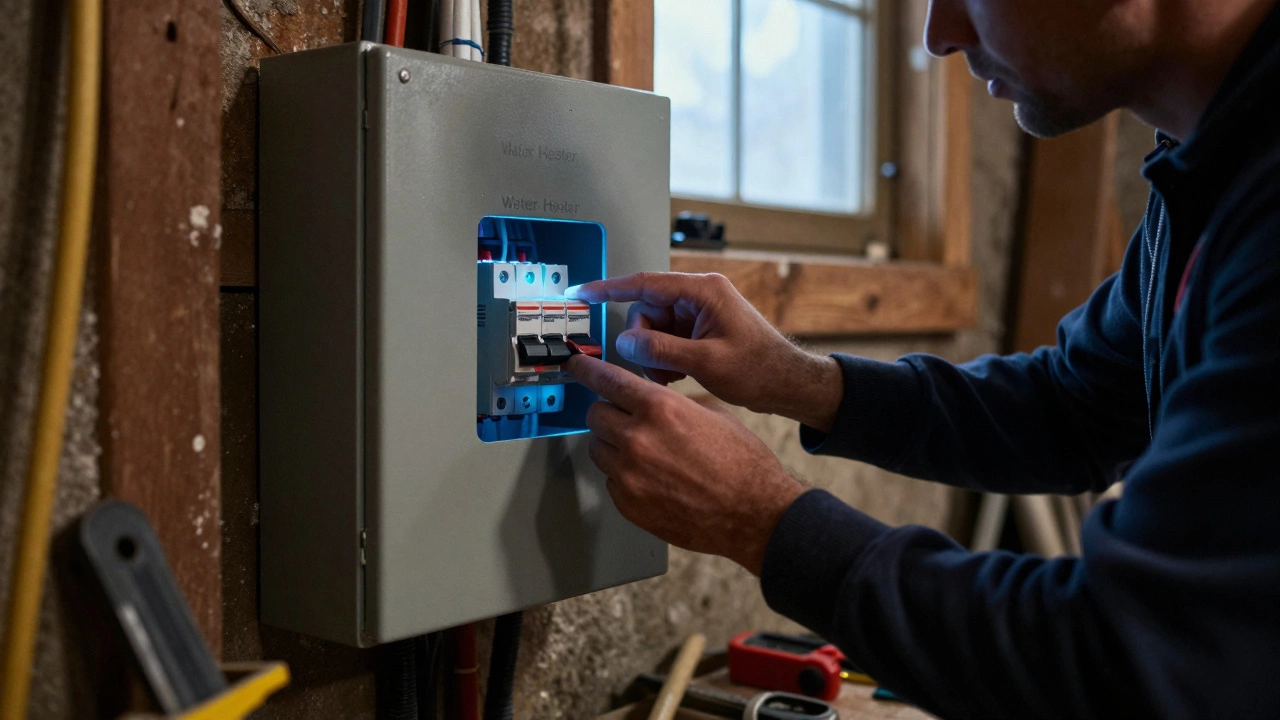
If you have an electric water heater, the most common reason for no hot water is a tripped circuit breaker. Go to your electrical panel and look for the breaker labeled "Water Heater" or "Tank". It might look fine-still in the "ON" position-but breakers can trip halfway. Flip it fully off, then back on. That’s it. In 60% of cases, that’s all it takes. I’ve seen homeowners spend hours troubleshooting thermostats and elements when all they needed was a reset.Don’t assume the breaker is fine just because it’s not tripped. Older panels sometimes show false readings. If you’re unsure, test it with a multimeter. If the breaker trips again after resetting, something’s drawing too much current-likely a faulty heating element or thermostat. Don’t keep resetting it. That’s a fire risk.
Is the thermostat set too low?
Thermostats on electric water heaters can drift over time. They’re usually set around 120°F (49°C) for safety and efficiency, but someone might’ve turned it down to save energy-or accidentally bumped it. Remove the access panel on the side of your tank. Behind it, you’ll see two dials: one for the upper element, one for the lower. Both need to be set to the same temperature. If either is below 110°F, that’s your problem. Turn both up to 120°F. Wait an hour, then test the water.Gas water heaters don’t have visible dials on the tank. Instead, look for a control knob near the bottom. Make sure it’s not on "Pilot" or "Off". If it’s on "Low", turn it to "Medium". Wait 30-45 minutes. If you still get no hot water, the thermocouple or gas valve might be failing.
Is the pilot light out?
Gas water heaters rely on a small, continuous flame called the pilot light. If it goes out, you get cold water. This happens often after power outages, strong drafts, or if the thermocouple is dirty. Check the manufacturer’s manual for how to relight it. Usually, you turn the knob to "Pilot", press and hold it down, then light it with a long match or lighter. Keep holding for 30-60 seconds after the flame catches. Then release and turn the knob to "On".If the pilot won’t stay lit after several tries, the thermocouple is probably bad. It’s a thin metal rod next to the pilot flame. Its job is to sense heat and keep the gas valve open. If it’s bent, dirty, or worn out, the gas shuts off. Replacing it costs under $25 and takes 20 minutes. You don’t need a plumber for this.
Check for sediment buildup
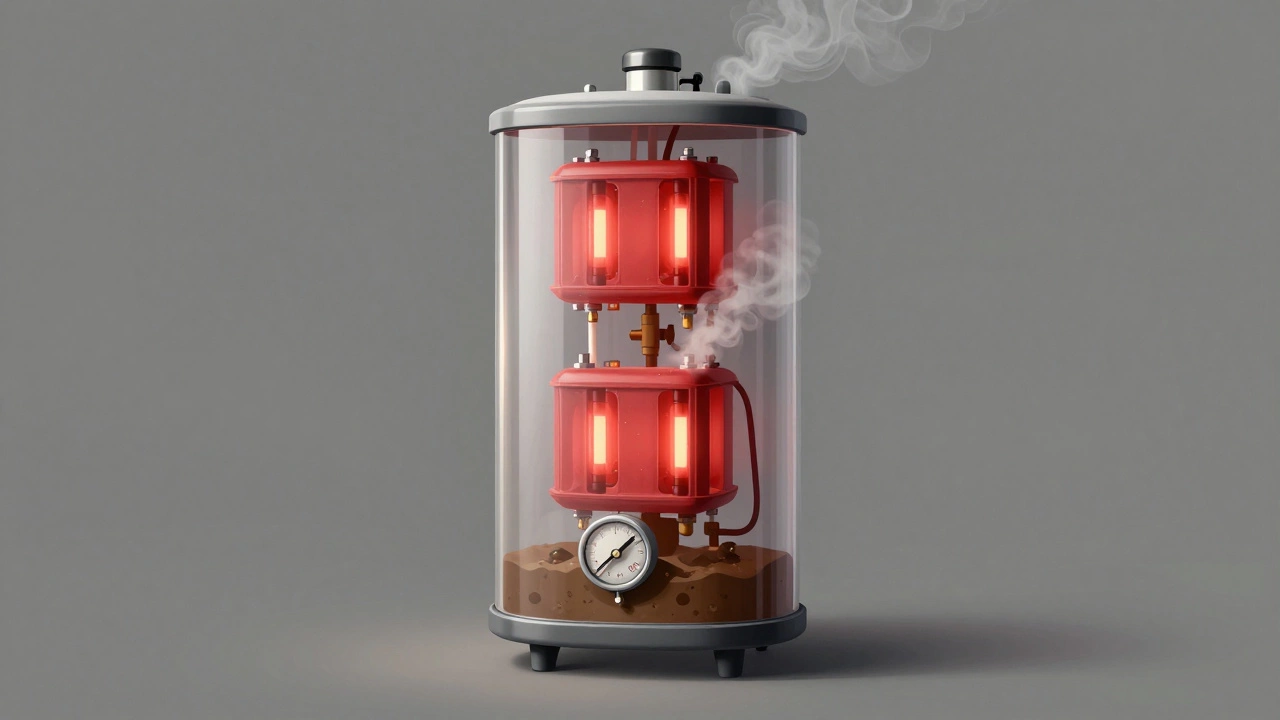
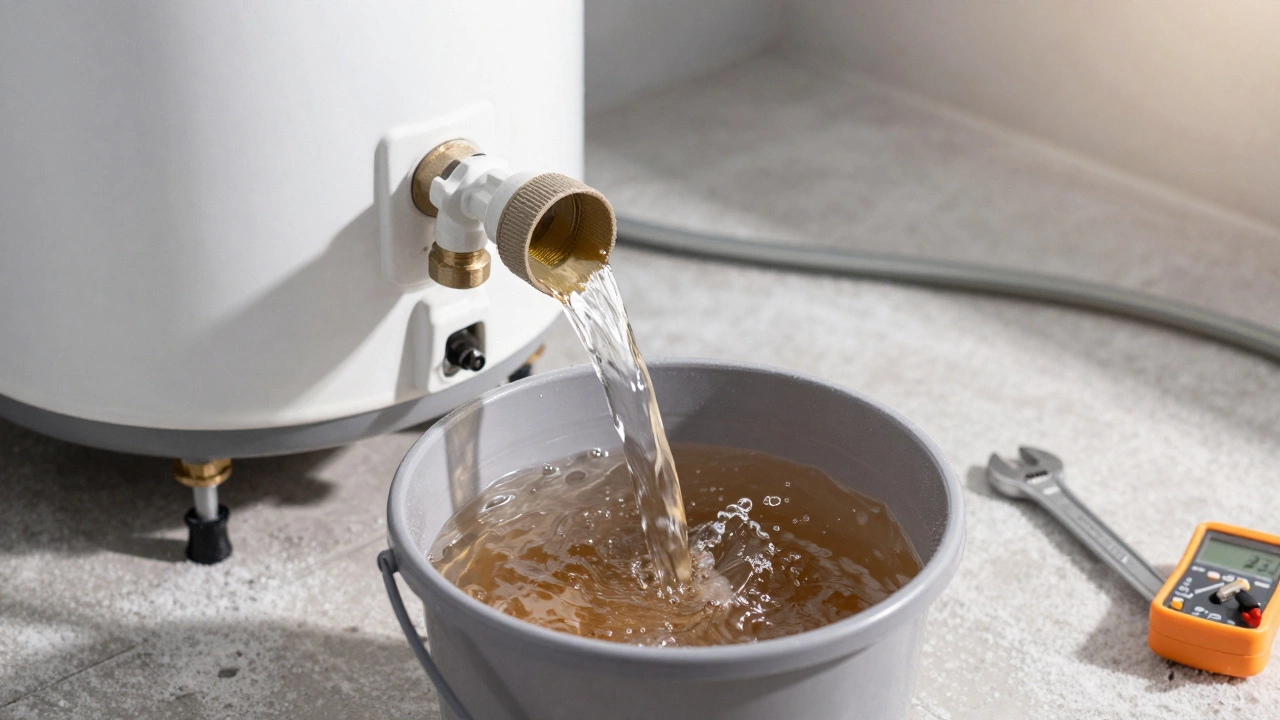
Hard water is common in Toronto. Over time, minerals like calcium and magnesium settle at the bottom of your tank. That sludge acts like insulation, trapping heat and preventing it from reaching the water. You’ll notice slow recovery times-water heats up, but only lasts a few minutes. You might also hear popping or rumbling noises when the heater turns on.Draining your tank once a year fixes this. Turn off the power or gas. Shut the cold water inlet valve. Attach a garden hose to the drain valve at the bottom. Open the valve and let it drain into a bucket or outside. Open a hot water tap upstairs to let air in. Drain until the water runs clear-this can take 15-30 minutes. Then close the valve, refill the tank, and restore power or gas. Do this every 12 months, and your heater will last 10+ years longer.
Is the heating element broken?
Electric water heaters have two heating elements: upper and lower. If the upper one fails, you’ll get a little warm water at first, then cold. If the lower one fails, you’ll get lukewarm water that runs out fast. You can test them with a multimeter. Turn off the power. Remove the access panels and insulation. Disconnect the wires from each element. Set your multimeter to ohms (Ω). Touch the probes to the two terminals on the element. If it reads zero or infinity, the element is dead. Replace it. They’re $30-$50 and easy to swap.Don’t forget to flush the tank before replacing an element. Old sediment can damage the new one. And always match the wattage and voltage. A 4500W element won’t work in a tank designed for 3500W.
Is the dip tube cracked or broken?
The dip tube is a long plastic pipe that sends cold water to the bottom of the tank. If it breaks, cold water mixes with hot water right at the top. You’ll get a burst of warm water, then cold-like the heater is working, but the water doesn’t stay hot. This is common in heaters made between 1993 and 1997, when a bad batch of dip tubes was installed. If your tank is older than 20 years, this is a likely culprit.Replacing the dip tube requires draining the tank and removing the cold water inlet pipe. It’s doable for DIYers, but if you’re not comfortable, call a pro. A new dip tube costs $15. A full tank replacement? $1,200+.
When should you replace the whole unit?
If your water heater is over 10 years old and you’re fixing the same issue twice, it’s time to think about replacement. Water heaters don’t just stop working-they slowly die. Rust inside the tank, corroded fittings, and worn-out components add up. A new tankless heater might cost more upfront, but it lasts 20 years and cuts energy bills by 30%. Look for Energy Star-rated models. In Ontario, you can get rebates up to $700 through the Home Efficiency Rebate program.Signs you need a new heater: rust-colored water, leaks around the base, strange noises, or if you’re constantly resetting the breaker or relighting the pilot. Don’t wait until it bursts. A flooded basement in January can cost $10,000 to fix.
Quick checklist for no hot water
- ✅ Check the circuit breaker or gas control knob
- ✅ Verify thermostat settings (both upper and lower on electric units)
- ✅ Relight the pilot light if you have a gas heater
- ✅ Drain the tank to remove sediment
- ✅ Test heating elements with a multimeter
- ✅ Look for rust, leaks, or strange smells
- ✅ Note the age of your unit-over 10 years? Start shopping
Most hot water failures are fixable without a service call. But if you’ve tried all this and still have no hot water, it’s time to call a licensed technician. Don’t risk electrical hazards or gas leaks. In Toronto, reputable companies offer same-day service and upfront pricing. Keep their number handy.
Why is my hot water suddenly cold?
The most common causes are a tripped breaker, a pilot light that went out, a broken heating element, or heavy sediment buildup. Check the power source first, then the thermostat settings. If you have a gas heater, relight the pilot. If it’s electric, test the elements. Draining the tank often fixes the issue if sediment is the problem.
Can a water heater explode?
It’s extremely rare, but possible if the pressure relief valve is blocked or faulty. Modern tanks have safety features, but if you hear loud banging, see water leaking from the top, or notice the tank bulging, turn off the power and gas immediately. Call an emergency plumber. Never ignore these signs.
How long does a water heater last?
Standard tank water heaters last 8-12 years. Tankless models last 15-20 years. Regular maintenance-like annual draining and checking the anode rod-can extend life by 5+ years. If your heater is over 10 years old and you’re fixing it often, replacement is usually cheaper than repeated repairs.
Is it safe to shower with no hot water?
Yes, but only if the cold water is safe to use. If the water heater is leaking or you smell gas, don’t use any water. Shut off the main valve. If you’re just out of hot water due to a tripped breaker or sediment, it’s safe to shower with cold water. Just avoid turning on the hot water tap-it could cause pressure issues or draw air into the system.
Why does my hot water only last 5 minutes?
This usually means the lower heating element is broken, or sediment is blocking heat transfer. In electric heaters, the upper element heats the top layer first. If the lower one isn’t working, you only get the top 10-15 gallons of hot water. Draining the tank and replacing the element fixes this. Gas heaters with this issue likely have a failing burner or thermocouple.