

What Usually Fails on a Water Heater? Common Problems and How to Spot Them
 Dec, 1 2025
Water Heater Replacement Estimator
Assess Your Water Heater
If your water heater suddenly stops working, you don’t need to panic - but you do need to know what’s likely broken. Most water heater failures aren’t mysterious. They follow a pattern. In Toronto, where winters push water heaters to their limits, the same few issues show up again and again. You’ll see them in homes built in the 1990s, in new condos, and in cottages with seasonal use. Knowing what usually fails on a water heater saves you time, money, and a lot of cold showers.
Leaking Tank - The Most Common Killer
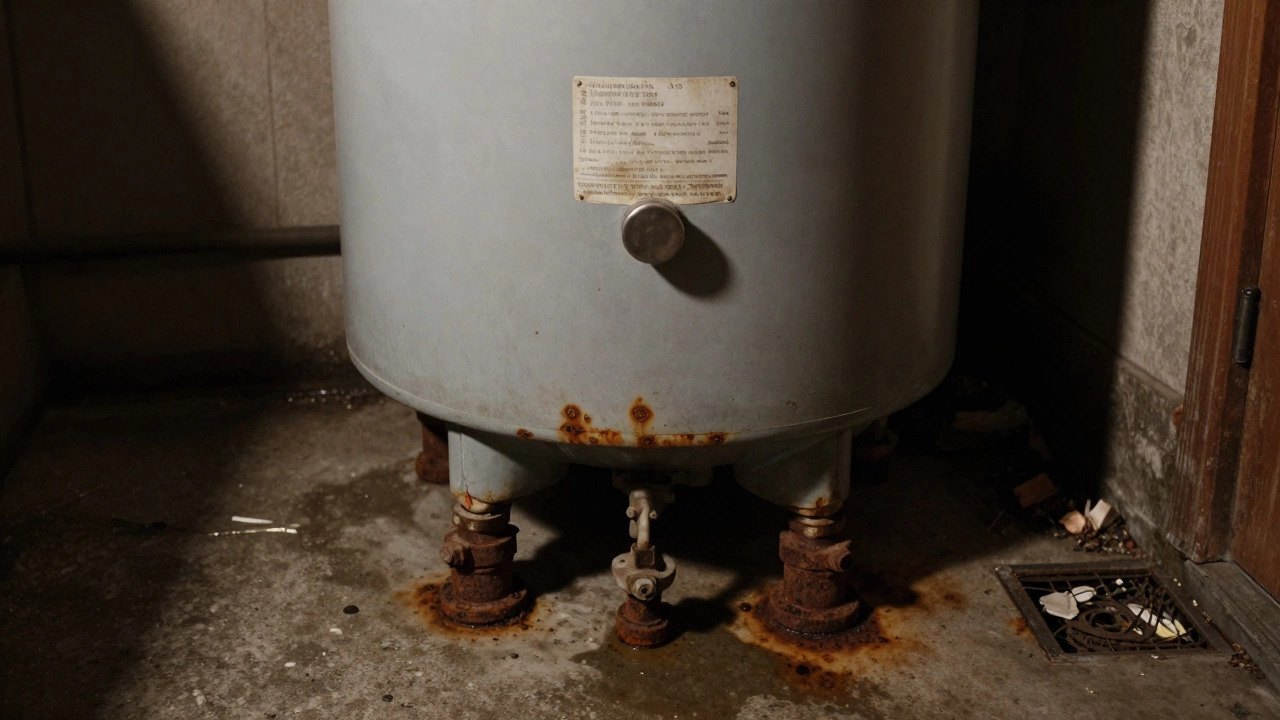
Nothing screams "replace me" louder than a puddle under your water heater. If you find water pooling around the base, it’s almost always the tank itself that’s gone bad. Corrosion eats through the steel lining over time, especially when hard water and sediment build up inside. Most tank-style water heaters last 8 to 12 years. After that, leaks aren’t a sign of poor maintenance - they’re a sign of age. No amount of tightening a valve or replacing the anode rod will fix a rusted tank. You can’t patch it. You can’t weld it. You have to replace it.
Some people try to delay the inevitable by ignoring small drips. That’s a mistake. A slow leak can turn into a flood overnight, especially if the drain pan is clogged or missing. Water damage to floors, drywall, and insulation can cost thousands. If your water heater is over 10 years old and leaking, replacement is the only smart move.
Sediment Buildup - The Silent Energy Thief
Hard water leaves behind minerals like calcium and magnesium. Over time, these settle at the bottom of the tank as thick sludge. It doesn’t cause leaks right away, but it kills efficiency. That sediment acts like insulation between the heating element and the water. Your heater has to work twice as hard to get the water hot. Your energy bill climbs. The heating elements burn out faster. And eventually, the tank overheats and warps.
Most manufacturers recommend flushing your tank once a year. In Toronto, where water hardness averages 180-220 mg/L, that’s not optional. If you haven’t flushed yours in three years, you’re running a 30% less efficient system. You might not notice it until your hot water runs out after five minutes in the shower - even if the tank is full. Flushing takes an hour. It costs nothing but your time. And it can add years to your heater’s life.
Faulty Thermostat or Heating Element - No Hot Water
One of the most frustrating failures is when you turn on the tap and get nothing but lukewarm or cold water. If the tank is full and there’s no leak, the problem is usually electrical. Electric water heaters have two heating elements: one at the top, one at the bottom. The top element heats the water first. If it fails, you might get a little warmth from the bottom element, but not enough for a proper shower. If the bottom element fails, you might get hot water at first - then it runs out quickly as the top element can’t keep up.
Thermostats can also go bad. They get stuck, misread the temperature, or stop sending power. If both elements are working but the water isn’t hot, the thermostat is the likely culprit. You can test both with a multimeter, but most homeowners don’t have one. If you’re not comfortable checking electrical parts, call a pro. A bad element or thermostat is cheaper to fix than a whole new tank - if caught early.
Broken Dip Tube - Cold Water in the Hot Line
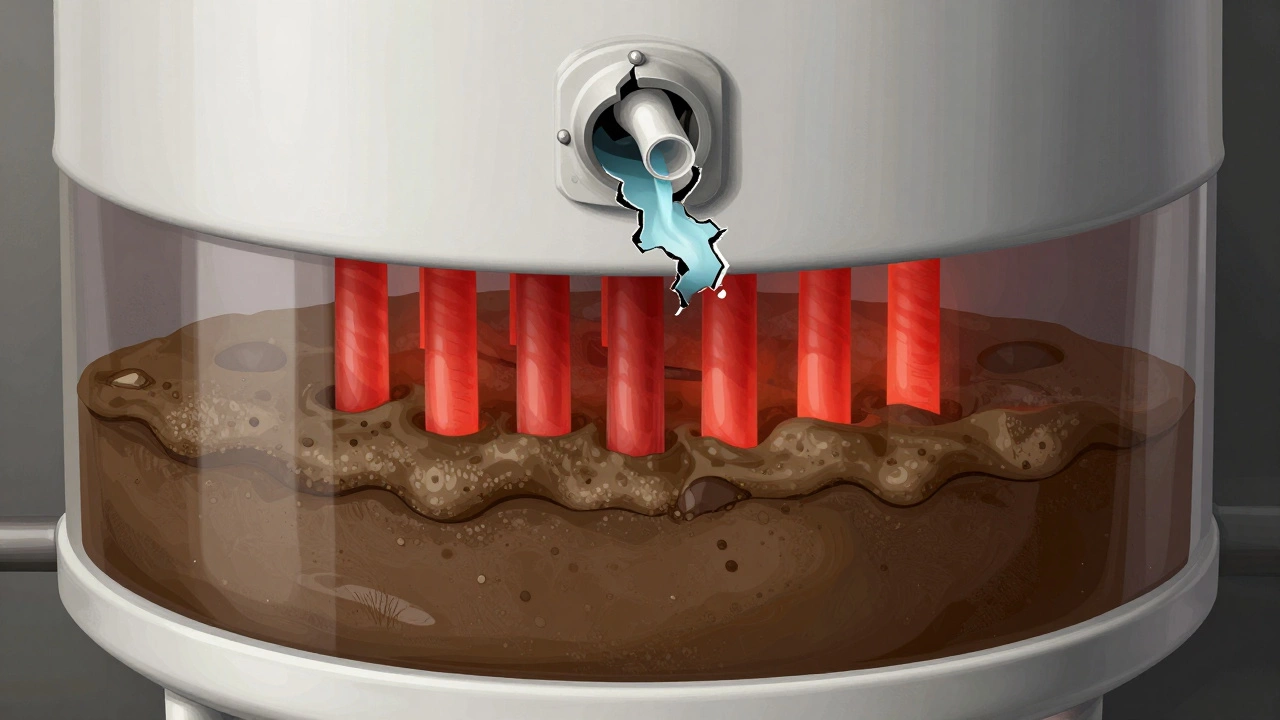
This one’s sneaky. You turn on the hot water tap and get cold water right away. Then, after a minute or two, it heats up. That’s not normal. It usually means the dip tube - the long plastic pipe that sends cold water to the bottom of the tank - has broken. When it cracks or dissolves, cold water gets mixed in with the hot water near the top of the tank. The result? You get a burst of cold water before the heater catches up.
Dip tubes made between 1993 and 1997 were often made from a brittle plastic that degraded quickly. If your water heater is from that era and you’re seeing this symptom, the dip tube is probably gone. Replacing it is a simple job for a plumber, but it’s rarely done because most people assume the whole unit needs replacing. It’s worth checking - especially if your tank is otherwise in good shape.
Pressure Relief Valve Failure - A Safety Risk
The pressure relief valve is your water heater’s safety net. It opens automatically if pressure or temperature gets too high, preventing the tank from exploding. If it’s leaking constantly, it’s not a sign of a broken valve - it’s a sign that your water pressure is too high. Most homes should have water pressure between 40 and 80 psi. Above 80 psi, and that valve will drip. If it’s not dripping at all, that’s even worse. It might be clogged with mineral deposits and stuck shut.
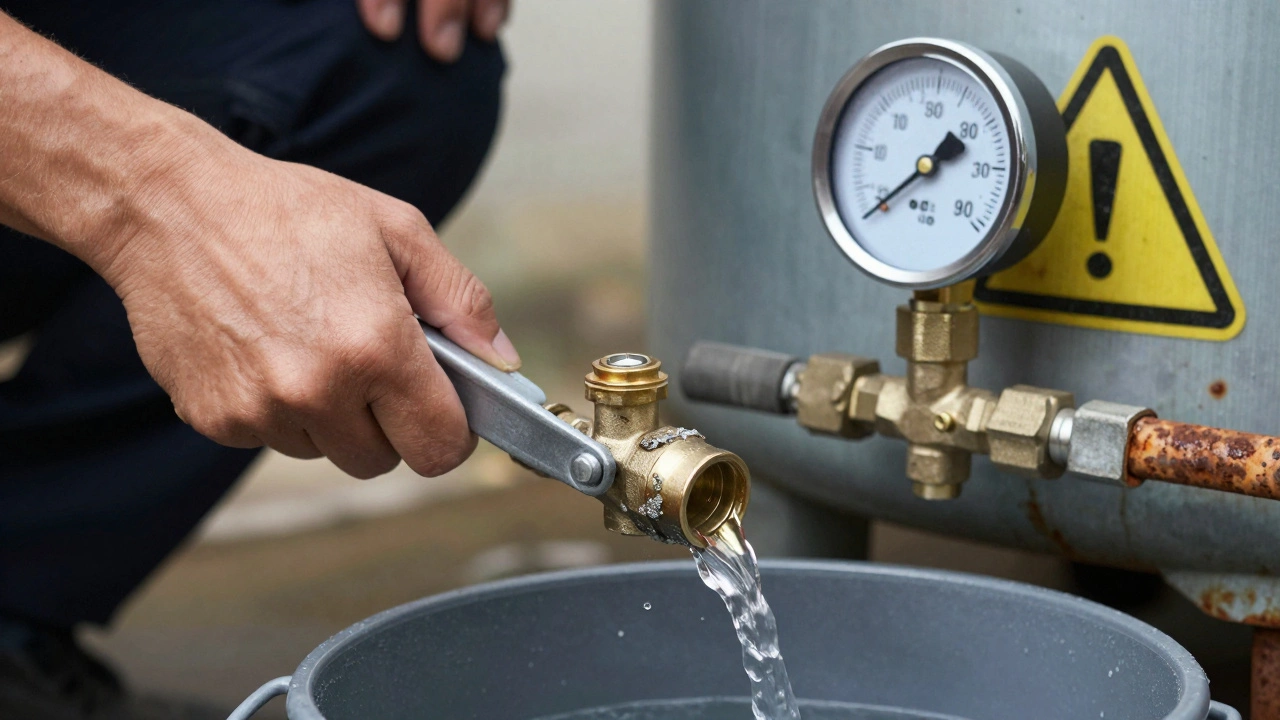
Test it once a year by lifting the lever. You should hear water rushing out. If nothing comes out, or if it keeps dripping after you release it, replace the valve. It costs less than $20. But if you ignore it, you’re risking a catastrophic failure. A ruptured water heater can flood your basement, damage your foundation, or even cause injury. Don’t treat this valve like a minor part. It’s your last line of defense.
Age - The Real Culprit Behind Most Failures
Water heaters don’t die suddenly. They fade. You notice it slowly: longer wait times for hot water, strange noises like popping or rumbling, rust stains on the outside. By the time you see visible corrosion, the tank is already compromised. Most manufacturers warranty tanks for 6 to 12 years. That’s not a guarantee - it’s a guideline. In cold climates like Toronto, where heaters run constantly from October to April, lifespan often shrinks to 8-10 years.
If your water heater is older than 10 years and you’re having any kind of issue, replacement is the most cost-effective choice. Repairing a 12-year-old heater is like fixing a 15-year-old car. You might get another year out of it, but you’ll pay more in labor and parts than a new unit costs. New models are 20-30% more efficient. They come with better warranties. And they’re quieter, safer, and more reliable.
What to Do When Your Water Heater Fails
Here’s what to do step by step:
- Turn off the power. For electric heaters, flip the breaker. For gas heaters, turn the dial to "Off."
- Shut off the cold water supply. Look for the valve on the pipe coming into the top of the tank.
- Drain the tank slightly to relieve pressure. Attach a hose to the drain valve and run it to a floor drain or outside.
- Call a licensed plumber or HVAC technician. Don’t try to fix electrical or gas parts yourself.
- Get quotes for replacement. Look for ENERGY STAR-rated models with a 10-year warranty.
Keep a bucket and towels near the water heater. If you notice a drip, catch it before it spreads. And if you’re unsure - don’t guess. A small leak today can become a disaster tomorrow.
Prevention Is Cheaper Than Repair
You can avoid most of these failures with three simple habits:
- Flush the tank once a year - even if you think it’s fine.
- Check the pressure relief valve every six months.
- Replace the anode rod every 3-5 years. It’s a sacrificial metal rod that attracts corrosion instead of your tank. Most plumbers charge $100-$150 to replace it. But if you wait too long, the tank rusts from the inside out.
These aren’t fancy upgrades. They’re basic maintenance. Yet 80% of water heater failures happen because homeowners skip them. You don’t need to be a handyman. You just need to be consistent.
When to Call a Pro
You can handle flushing the tank and checking the relief valve yourself. But if you’re dealing with:
- Gas leaks (smell like rotten eggs)
- Electrical sparks or tripped breakers
- Steam or loud banging noises
- Visible rust on the tank or pipes
- call a licensed technician immediately. Gas and electricity don’t forgive mistakes. And rust on the tank? That’s your sign to start shopping for a replacement.
Water heaters are one of the most ignored appliances in the home. But when they fail, they make themselves known - loudly, messily, and expensively. Knowing what usually fails on a water heater gives you the power to act before it’s too late.
Why does my water heater make popping noises?
Popping or rumbling noises are almost always caused by sediment buildup at the bottom of the tank. When water gets trapped under layers of mineral deposits, it heats up and boils, creating steam bubbles that pop. This not only makes noise but also reduces efficiency and can damage the tank. Flushing the tank usually fixes it. If the noise returns quickly, your water is very hard, and you may need a water softener.
How long should a water heater last?
Most tank-style water heaters last 8 to 12 years. In colder climates like Toronto, where heating demands are high, the average is closer to 8-10 years. Tankless models can last 20 years or more, but they cost more upfront. The key to longevity is regular maintenance - especially flushing the tank and replacing the anode rod every 3-5 years.
Is it worth repairing an old water heater?
If your water heater is over 10 years old, repair is rarely worth it. Even if you fix the thermostat or element, the tank is likely near the end of its life. A new unit costs $1,200-$2,500 installed, but it’s 20-30% more efficient and comes with a 10-year warranty. Repairing a 12-year-old heater might cost $400-$700 and only buy you another year or two. Replacement is almost always the better investment.
What causes a water heater to leak from the top?
Leaks from the top are usually caused by loose or worn connections: the hot water outlet, cold water inlet, pressure relief valve, or temperature/pressure valve. These are fixable with new washers or fittings. But if the leak is coming from the tank itself - even near the top - the tank is corroded and must be replaced. Don’t try to seal a tank leak with epoxy or tape. It’s a temporary fix at best.
Should I replace my water heater before it fails?
Yes, if it’s over 8 years old. Waiting until it fails means risking a flood, especially during winter when pipes are under stress. Replacing it before it breaks lets you choose the timing, the model, and the installer. You can schedule it on a weekend, avoid emergency service fees, and pick an energy-efficient model that lowers your bills. Proactive replacement is smarter than reactive crisis management.
If you’ve had the same water heater since before 2015, you’re overdue for an upgrade. Modern units are quieter, smarter, and more reliable. Don’t wait for the first leak. Check your age, flush the tank, and plan ahead. Your future self - and your dry basement - will thank you.