

What Type of Person Fixes a Boiler? Meet the Professionals Who Keep Your Home Warm
 Jan, 25 2026
Boiler Repair or Replacement Calculator
Boiler Decision Calculator
Determine whether repairing or replacing your boiler is the best choice based on safety, costs, and efficiency.
When your boiler suddenly stops working in the middle of winter, you don’t care about fancy titles or certifications-you just want heat. But who actually shows up to fix it? Not just anyone. A boiler isn’t like a broken toaster you can pop open and jiggle. It’s a complex, high-pressure system that runs on gas, water, and electricity. Getting it fixed right matters-for safety, efficiency, and your life.
It’s Not a Handyman Job
Some people think if you can change a lightbulb or fix a leaky faucet, you can fix a boiler. That’s dangerous thinking. A boiler operates under pressure, burns gas, and can produce deadly carbon monoxide if installed or serviced incorrectly. In the UK, only Gas Safe registered engineers are legally allowed to work on gas boilers. In the US, you need a licensed HVAC technician with gas appliance certification. No exceptions.
Trying to fix a boiler yourself or hiring someone without the right credentials is like letting a non-pilot fly a plane. You might get lucky once. But the risk? A gas leak, a fire, or carbon monoxide poisoning. The National Fire Protection Association reports over 2,000 home heating-related fires every year in the US alone. Most are preventable.
The Real Boiler Technician
The person who shows up at your door with the right tools and badge is usually one of three types:
- Gas Safe registered engineer (UK) - Trained through an apprenticeship, certified by the Gas Safe Register, and legally required to work on gas boilers. They know how to test flue gases, check for leaks, and calibrate burners.
- Licensed HVAC technician (US/Canada) - Holds state or provincial licenses, often with additional gas appliance endorsements. They handle everything from boiler installation to thermostat wiring and pressure system checks.
- Heating specialist (EU and other regions) - May be called a Heizungsinstallateur in Germany or chauffagiste in France. These professionals are trained in both boiler systems and central heating distribution.
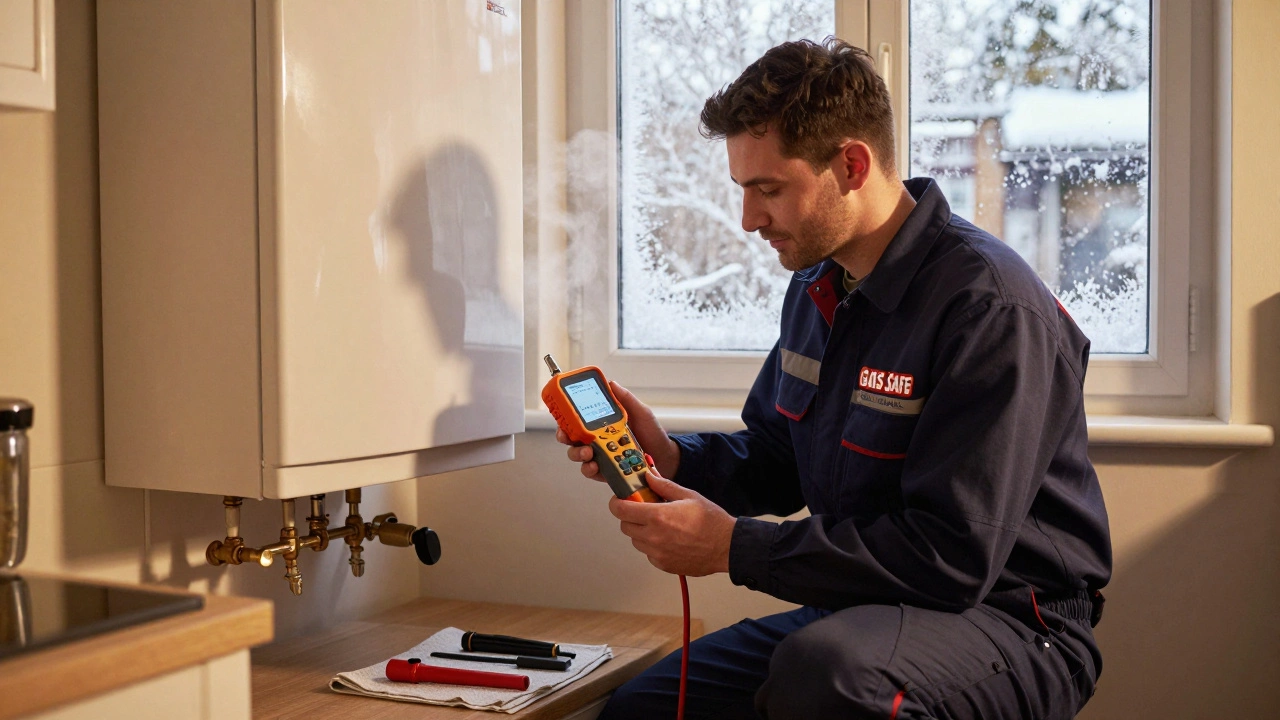
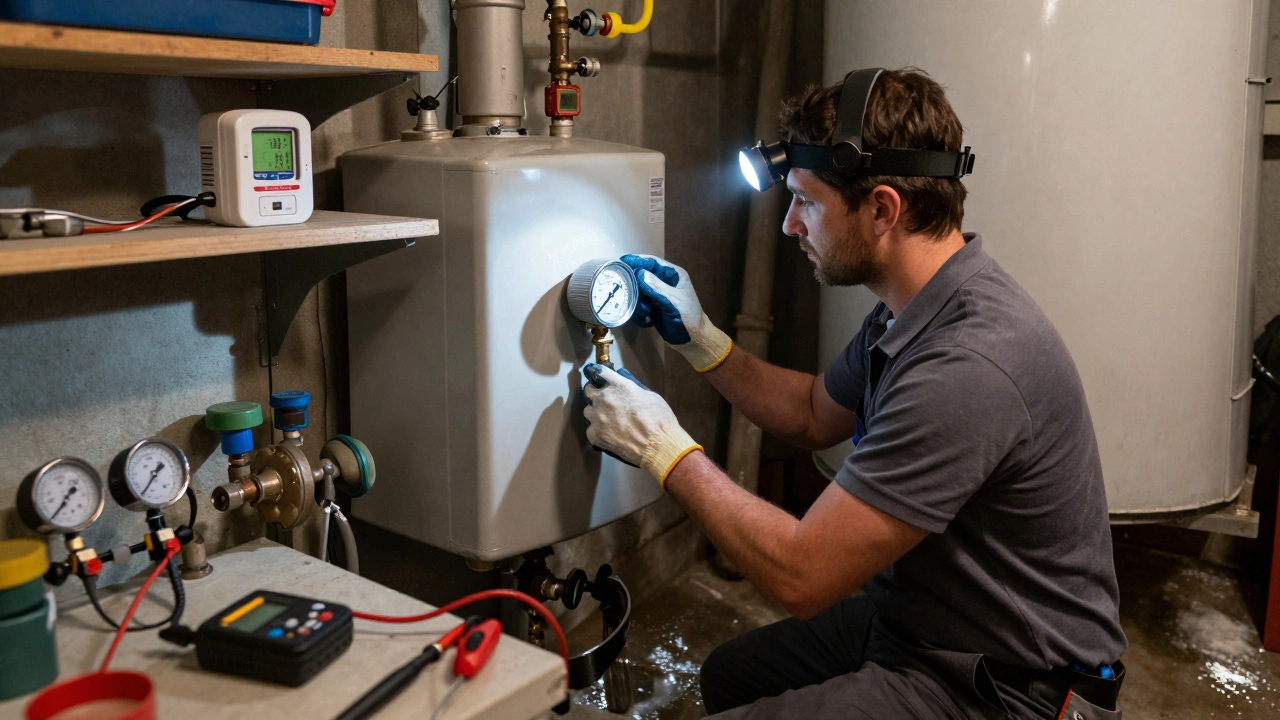
These aren’t just plumbers with a gas card. They’ve spent years learning how to diagnose issues like low pressure, noisy boilers, or thermostat misreads. They carry tools most people have never seen: flue gas analyzers, manifold pressure gauges, and electronic leak detectors.
What They Do When They Arrive
When a boiler technician walks into your home, they don’t start twisting pipes. They follow a process:
- Ask questions - When did the problem start? Any strange noises? Did the error code flash on the display?
- Check safety - They test for gas leaks, carbon monoxide levels, and proper ventilation before touching anything.
- Inspect the system - They look at the pressure gauge, check for corrosion, test the pump, and examine the heat exchanger.
- Diagnose the fault - Is it a faulty thermostat? A blocked condensate pipe? A worn ignition electrode? They narrow it down using experience and diagnostic tools.
- Fix or replace - Sometimes it’s a $20 part. Sometimes it’s a $2,000 replacement. They explain the options clearly.
Good technicians don’t upsell. They explain what’s broken, why it matters, and what your choices are. Bad ones push replacements when a simple reset would’ve worked.
What to Look For When Hiring
Not all boiler technicians are created equal. Here’s how to spot the right one:
- Ask for their ID - In the UK, they must show a Gas Safe card. In the US, ask for their HVAC license number and verify it online.
- Check reviews - Look for recent reviews mentioning boiler repairs, not just installations. Are people saying they were honest? Did the fix last?
- Ask about experience - How many boilers like yours have they fixed? If you have a Worcester Bosch, they should know its common failure points.
- Get a written quote - Any reputable tech will give you a breakdown of labor and parts before starting.
- Ask about warranties - A good technician stands behind their work. Parts should come with at least a 1-year warranty.
Watch out for fly-by-night operators who show up in unmarked vans, don’t have credentials, or pressure you into a full replacement. They’re not saving you money-they’re risking your safety.
Boiler Repair vs. Boiler Replacement
A good technician won’t automatically tell you to replace your boiler. They’ll tell you if it’s worth fixing. Here’s the rule of thumb:
- If your boiler is under 10 years old and the repair cost is less than half the price of a new unit, fix it.
- If it’s over 15 years old, efficiency has dropped below 80%, or you’re paying more than $500 a year in repairs, replace it.
Older boilers waste up to 30% more energy than modern ones. A new A-rated condensing boiler can cut your heating bill by 20-30%. That’s hundreds of dollars a year. A technician who knows this will tell you-without pushing you into a sale.
Why This Matters Beyond Heat
Boiler repair isn’t just about comfort. It’s about health. A malfunctioning boiler can leak carbon monoxide-colorless, odorless, and deadly. The CDC estimates over 400 people die each year in the US from accidental CO poisoning, and heating systems are the leading cause.
It’s also about money. A poorly maintained boiler can fail in the coldest month, forcing you to pay emergency rates. A regular service by a qualified tech costs $80-$150 and can prevent a $2,000 breakdown.
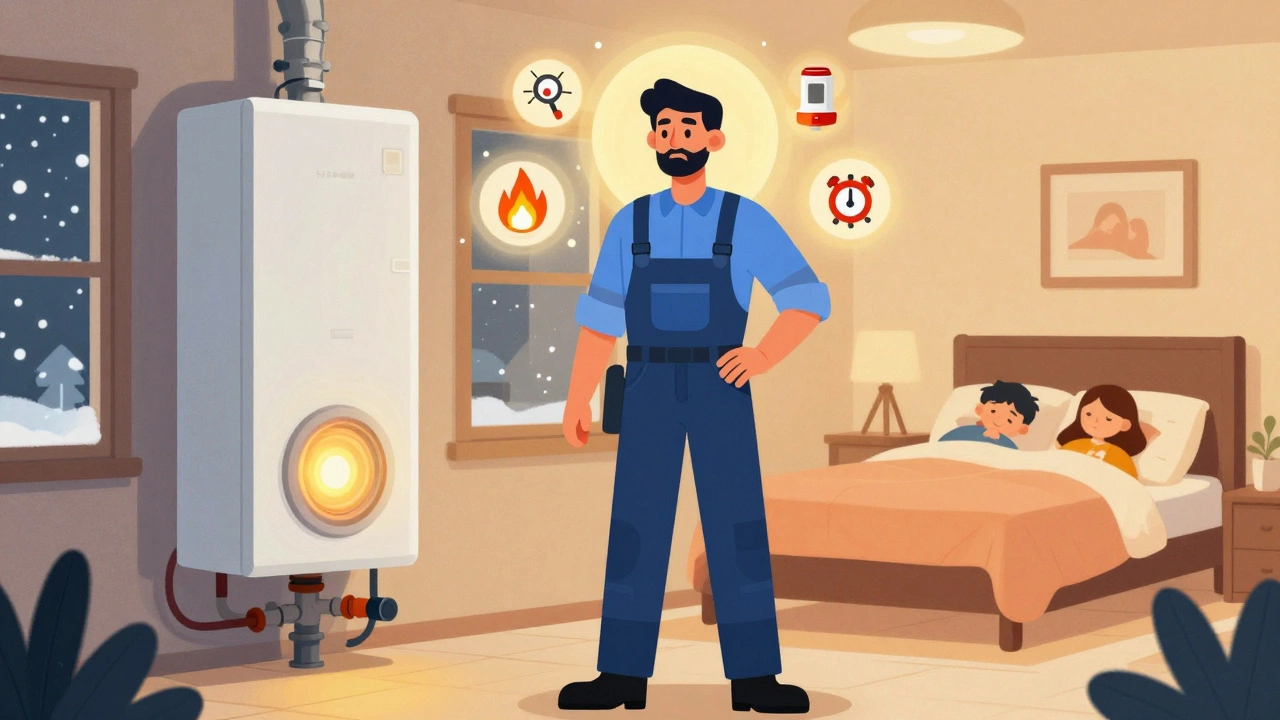
And it’s about peace of mind. Knowing your boiler is in good hands means you can sleep through the night, even when the temperature drops below freezing.
What to Do If Your Boiler Breaks
If your boiler stops working:
- Check the thermostat and power switch first. Sometimes it’s that simple.
- Look at the display. Does it show an error code? Write it down.
- Check the pressure gauge. If it’s below 1 bar, you might just need to repressurize (but only if you know how).
- If nothing works, turn off the boiler and gas supply at the main valve.
- Call a licensed technician. Don’t wait until morning if it’s freezing.
Keep the contact info of a trusted boiler technician in your phone. Don’t wait until you’re shivering to Google one.
Final Thought
The person who fixes your boiler isn’t just a worker. They’re a safety officer, a diagnostician, and sometimes a lifesaver. They don’t wear capes, but they show up when you need them most. And they’re not magic-they’re trained. Always make sure the person you hire has the right credentials. Your warmth, your wallet, and your family’s safety depend on it.
Can I fix my boiler myself?
No, you should not attempt to fix a gas boiler yourself. Gas boilers involve high pressure, open flames, and the risk of carbon monoxide leaks. Even simple tasks like bleeding a radiator or resetting a pressure valve can be dangerous if done incorrectly. Only licensed professionals should handle gas lines, burners, or internal components. DIY repairs can void warranties and put your home at serious risk.
How often should a boiler be serviced?
A boiler should be serviced once a year by a qualified technician. Annual servicing keeps the system running efficiently, catches small problems before they become big repairs, and ensures safety. Many manufacturers require annual service to keep the warranty valid. Skipping service can lead to higher energy bills, unexpected breakdowns, and even dangerous gas leaks.
What’s the difference between a plumber and a boiler technician?
A plumber works with water pipes, drains, and fixtures. A boiler technician specializes in heating systems, including gas combustion, heat exchangers, and pressure controls. While some plumbers are also gas certified, not all are. Always confirm the technician is licensed for gas appliances before allowing them to work on your boiler. A plumber without gas certification cannot legally service a gas boiler in most countries.
How much does boiler repair usually cost?
Boiler repair costs vary based on the issue. Simple fixes like replacing a thermostat or resetting the system can cost $100-$200. More complex repairs-like fixing a cracked heat exchanger or replacing the pump-range from $400 to $900. Emergency calls outside business hours can add $100-$200. Always get a written quote before work begins. Replacing a boiler entirely costs $2,500-$6,000, depending on size and efficiency rating.
How do I know if my boiler is dangerous?
Signs your boiler may be dangerous include: a yellow or orange flame instead of blue, soot or staining around the boiler, a rotten egg smell (gas leak), or the boiler turning off unexpectedly. If you feel dizzy, nauseous, or get headaches when the boiler is running, it could be carbon monoxide. Turn off the boiler, open windows, leave the house, and call emergency services or a licensed technician immediately. Install a carbon monoxide detector near your boiler for early warning.