

What Is the Role of an Appliance Technician?
 Mar, 23 2026
Appliance Repair Safety Checker
Check if your appliance repair is safe to attempt yourself or if you need to call a professional technician.
Ever wonder who shows up at your door when your fridge stops cooling or your washer starts leaking? That’s the appliance technician-the behind-the-scenes expert who keeps your home running smoothly. It’s not just about turning screws or swapping parts. An appliance technician is a trained professional who diagnoses, repairs, and maintains everything from refrigerators to dishwashers, ovens to dryers. Their job is practical, hands-on, and critical to daily life.
What Does an Appliance Technician Actually Do?
An appliance technician doesn’t just fix broken machines. They’re problem-solvers who work with complex systems that combine electrical, mechanical, and sometimes gas components. When a customer calls, the technician doesn’t guess-they investigate. They ask questions: When did it start? Did it make noise? Did it shut off suddenly? Then they get to work.
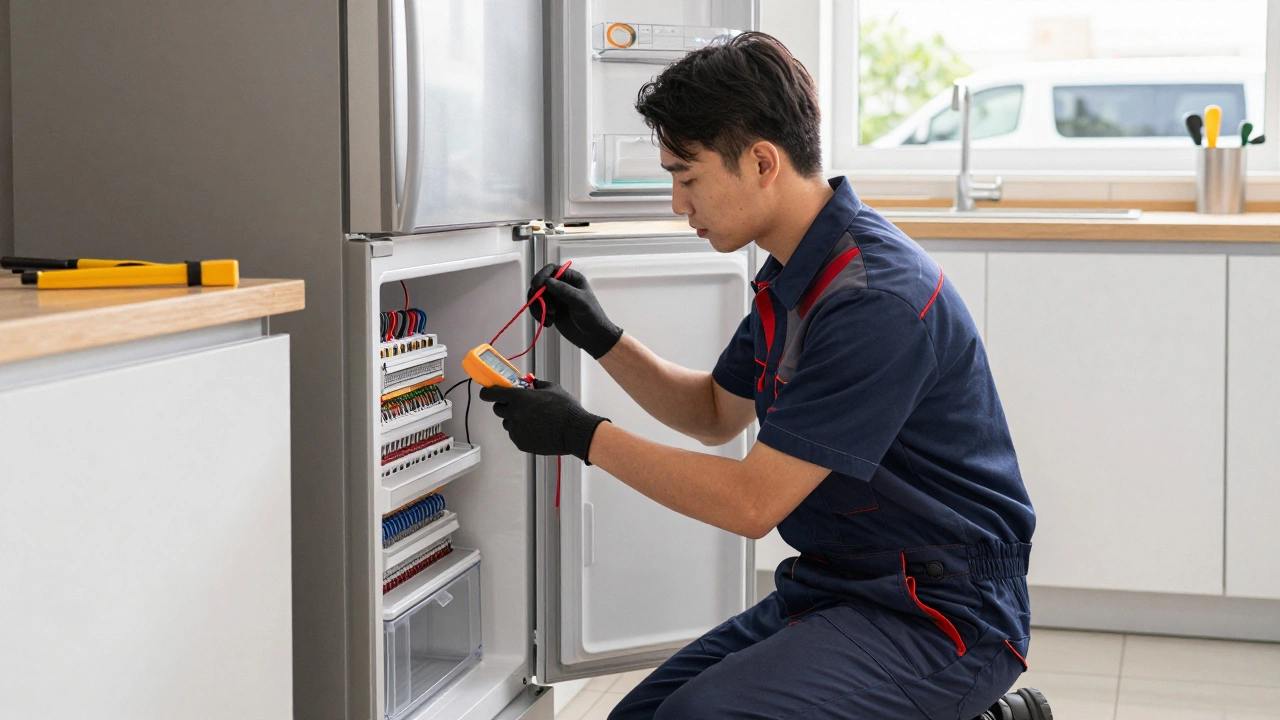
They open panels, check wiring, test voltage, inspect motors, and trace gas lines. A faulty thermostat in a oven might be the issue. Or a clogged drain pump in a dishwasher. Sometimes, it’s as simple as a loose plug. Other times, it’s a failed control board that needs replacing. Each repair is different, and each requires precision.
They don’t just fix what’s broken-they also check for safety hazards. A gas leak in a stove, frayed wires in a dryer, or a refrigerant leak in a fridge can be dangerous. A good technician catches these before they become emergencies.
Training and Skills Required
Becoming an appliance technician doesn’t require a four-year degree, but it does require serious training. Most start with a vocational program or apprenticeship that lasts six months to two years. These programs cover electrical circuits, refrigeration principles, plumbing basics, and how to read technical manuals.
They learn to use tools like multimeters, clamp meters, vacuum pumps, and leak detectors. Some specialize in certain brands-like LG, Whirlpool, or Bosch-because each has unique designs and error codes. Knowing how to interpret a blinking LED light on a control panel can save hours of guesswork.
Soft skills matter too. Technicians talk to people every day. They explain what went wrong in plain language. They manage expectations: “It’s not worth repairing” or “This part is discontinued.” They show up on time, respect homes, and leave things cleaner than they found them.
Types of Appliances They Work On
Appliance technicians handle a wide range of household machines. Here are the most common:
- Refrigerators and freezers - Cooling issues, defrost timer failures, compressor problems
- Washing machines and dryers - Spin cycle failures, water leaks, drum imbalances, heating element breakdowns
- Dishwashers - Drain clogs, detergent dispensers that won’t open, water inlet valve faults
- Ovens and cooktops - Ignition problems, uneven heating, thermostat malfunctions, broken elements
- Microscopes and extractor fans - Motor burnouts, vent blockages, fan speed controls
- Gas appliances - Safety checks, gas line inspections, pilot light issues
Many technicians carry a full set of replacement parts in their vans. They know which models use the same motors or valves across brands. That saves time and money for the customer.
Why You Can’t Just Fix It Yourself
YouTube tutorials make repairs look easy. But real-world repairs aren’t that simple. A DIY fix might work for a week-or it might make things worse.
For example, replacing a heating element in a water heater without turning off the power can cause electrocution. Recharging a fridge’s refrigerant without proper certification is illegal in many places. And tampering with gas lines? That’s a fire risk.
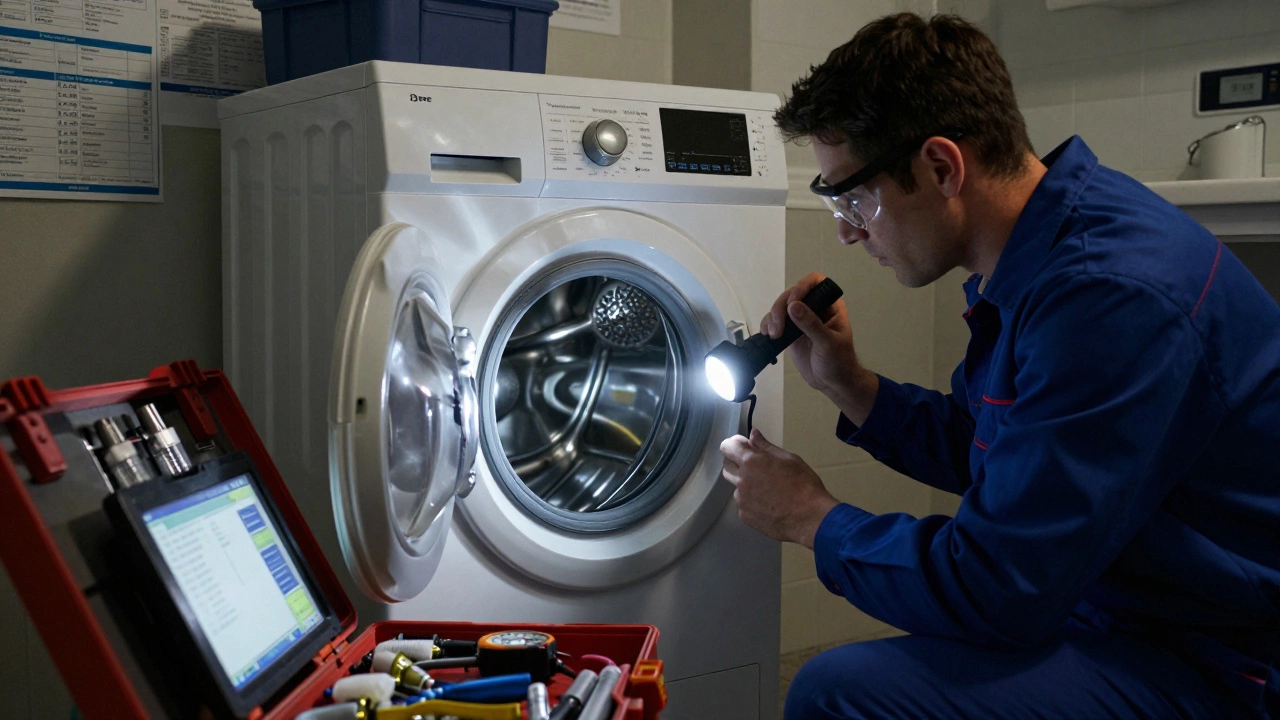
Technicians are trained in safety codes and local regulations. They know which repairs require permits. They also have access to manufacturer diagnostics that consumers don’t. A technician can pull error codes from a modern washer’s memory chip. You can’t do that with a phone camera.
Plus, most warranties require repairs to be done by certified professionals. If you try to fix it yourself and break something else, the manufacturer won’t cover it.
How They Stay Up to Date
Appliance technology changes fast. Smart fridges now connect to Wi-Fi. Washers have sensors that detect fabric type. Ovens auto-adjust cooking time based on internal cameras. Technicians must keep learning.
Manufacturers release new service manuals every year. Many technicians attend training sessions hosted by brands like Samsung or GE. Some even earn certifications like the Appliance Service Technician Certification from the Appliance Service Association.
They follow online forums, watch repair videos from trusted sources, and swap tips with other technicians. The best ones treat their knowledge like a living thing-it grows with every job.

What Happens After the Repair?
A good technician doesn’t just leave after fixing the machine. They explain what happened. They show you how to avoid the same problem next time. Maybe your lint filter needs cleaning every two weeks. Or your water softener is causing mineral buildup in the dishwasher.
They often provide a written report. It includes the issue, the fix, the parts used, and a warranty period-usually 30 to 90 days. If the same problem returns, they’ll come back for free.
They also update service logs. If five customers in one neighborhood have the same model failing after two years, the technician reports it. That’s how manufacturers find design flaws.
When to Call a Technician
You don’t need to wait for total failure. Here are signs it’s time to call:
- Your appliance makes unusual noises-grinding, buzzing, or clicking
- It’s using more energy than usual (check your utility bill)
- Water leaks or puddles appear under or around it
- It turns on but doesn’t perform its function (e.g., fridge is cold but freezer isn’t)
- There’s a burning smell or smoke
If you’ve tried basic troubleshooting-cleaning filters, checking power cords, resetting breakers-and it still doesn’t work, call a pro. Don’t risk safety or make the damage worse.
The Bigger Picture
Appliance technicians aren’t just repairmen. They’re part of a larger system that keeps homes functional and safe. Without them, people would be stuck without clean clothes, cold food, or hot showers. They help reduce waste too-by extending the life of appliances instead of throwing them out.
Every time they fix a broken fridge, they’re saving energy, reducing landfill waste, and helping families save money. It’s a quiet but essential job.