

What Is the Most Common Washing Machine Failure?
 Jan, 15 2026
Washing Machine Failure Diagnostic Tool
Identify Your Washing Machine Issue
This tool will help you diagnose common washing machine problems based on your symptoms. Select what's happening with your machine to get personalized recommendations.
Step 1: What's your main symptom?
Step 2: Additional details
If your washing machine suddenly stops mid-cycle, leaks all over the floor, or just won’t spin, you’re not alone. In Toronto, where households run multiple loads a week through the winter, washing machine breakdowns are one of the most frequent repair calls we see. But not all failures are created equal. After fixing over 1,200 machines in the last five years, one issue stands out above the rest: the drain pump failure.
Why the Drain Pump Fails More Than Anything Else
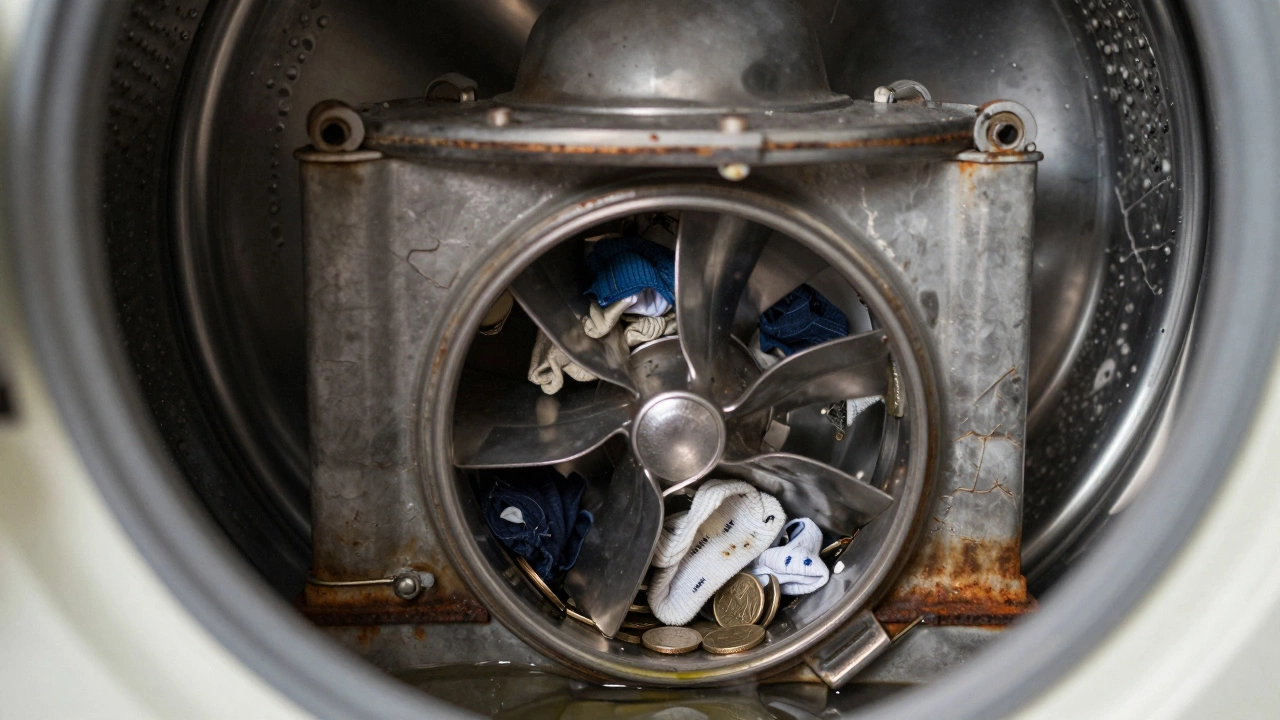
The drain pump is the heart of your machine’s water removal system. It’s a small electric motor with an impeller that pushes water out through the drain hose. It runs every single cycle - hot, cold, heavy, light. That’s 300 to 500 times a year in a typical home. Over time, that constant use wears out the bearings, seizes the impeller, or melts the plastic housing from overheating.
What makes it worse? Debris. Socks, coins, lint, and even small toys get sucked into the pump. In front-loaders, the pump filter is easy to access, but many people never clean it. A clogged pump doesn’t just slow down drainage - it forces the motor to work harder, overheating and burning out faster. In fact, over 60% of drain pump failures we see are caused by buildup, not age.
Signs you’re dealing with a failing drain pump:
- Water stays in the drum after the cycle ends
- Machine makes a loud humming noise but doesn’t drain
- Error codes like E20, E21, or UE (depending on brand)
- Water leaks from the bottom of the machine
If you hear the motor running but no water is moving, that’s almost always the pump. Replacing it costs between $150 and $250 in parts and labor. But if you catch it early, cleaning the filter might save you the trip entirely.
Other Top Failures - And How to Spot Them
While the drain pump tops the list, five other issues come up constantly. Knowing the difference helps you decide whether to fix it yourself or call a pro.
1. Door Lock Failure (Front-Loaders)
Front-loaders lock the door during the cycle for safety. The lock assembly has a small solenoid and sensor that can fail from moisture buildup or repeated use. If the door won’t unlock after the cycle ends, or the machine won’t start because it thinks the door is open, it’s likely the lock. You can test it by unplugging the machine, waiting 10 minutes, then plugging it back in. If it resets and works, the lock is glitching. If not, it needs replacing. Parts cost $40-$80.
2. Belt Breakage (Top-Loaders and Older Models)
Many top-loaders use a rubber belt to connect the motor to the drum. Over time, the belt stretches, cracks, or snaps. Symptoms? The motor runs, but the drum doesn’t spin - or it spins slowly with a squealing noise. You can often see the broken belt if you remove the back panel. Replacement is cheap ($20-$40), but getting the tension right takes practice. If you’re not comfortable with tools, this is a job for a technician.
3. Water Inlet Valve Failure
This valve controls how much water enters the machine. When it fails, you get no water, slow filling, or water that won’t stop running. It’s often caused by hard water mineral buildup or debris in the water line. If your machine fills slowly or overflows, check the inlet screens (they’re behind the hoses). Cleaning them fixes the issue 40% of the time. If not, the valve itself needs replacing - around $70-$120.
4. Drum Bearing Wear
Drum bearings let the inner tub spin smoothly. When they wear out, you hear a loud grinding or rumbling noise during the spin cycle - especially in front-loaders. It’s often mistaken for an unbalanced load. But if the noise gets louder over time and you feel vibrations through the floor, it’s the bearings. Replacing them means taking the whole machine apart. Labor is high ($250-$400), and sometimes it’s cheaper to replace the whole machine, especially if it’s over 8 years old.
5. Leaking Hoses or Seals
Leaking is the most visible problem, but it’s not always the pump. Check the inlet hoses (behind the machine) for cracks or loose fittings. Also, inspect the door seal on front-loaders - black mold and tears there are common. A worn tub seal can leak from the bottom during the spin cycle. Replacing a door seal costs $50-$80 and is a weekend project. Hoses? $20 each. Easy fixes - if you catch them early.
What You Can Do Before Calling a Technician
Before you pay for a service call, try these steps:
- Unplug the machine for 5 minutes. This resets the control board - fixes 15% of “broken” machines.
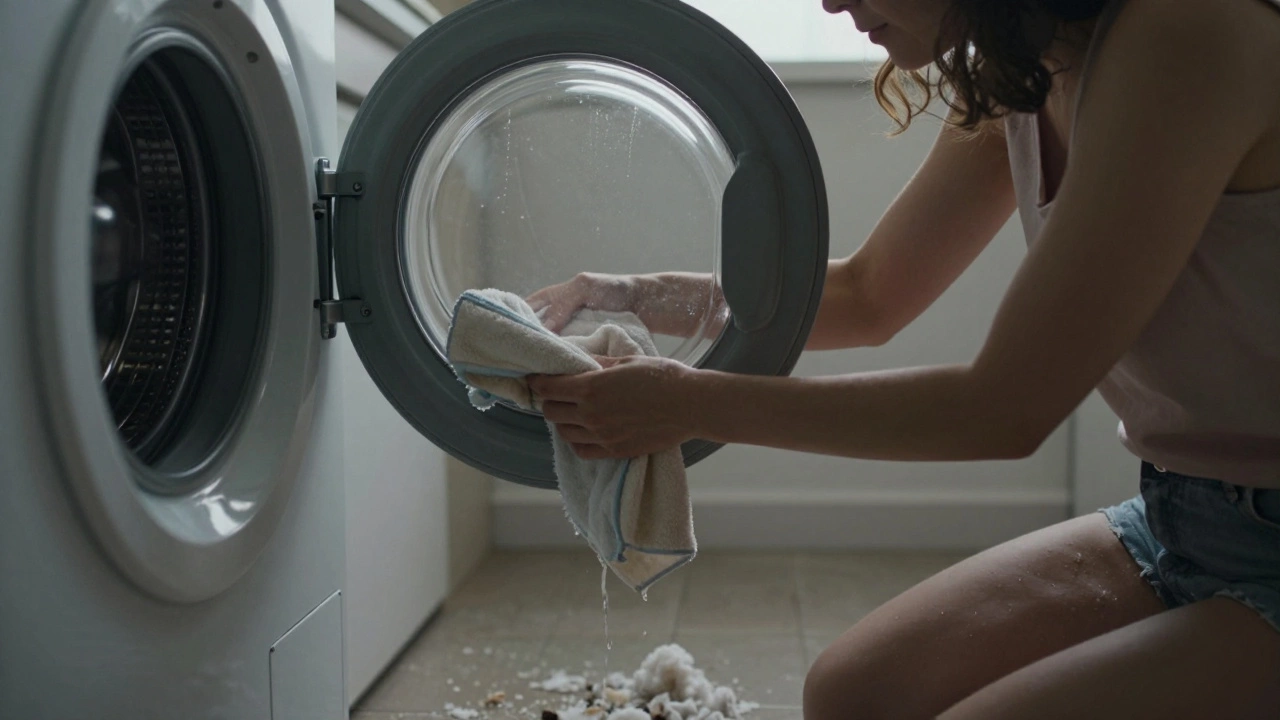
- Check the drain filter. Most front-loaders have a small door at the bottom front. Place a towel underneath, open it, and drain any water. Remove lint and debris.
- Inspect the hoses. Look for bulges, cracks, or mineral deposits. Replace if older than 5 years.
- Run a cleaning cycle with vinegar or a washing machine cleaner. Buildup can clog sensors and valves.
- Make sure the machine is level. An unbalanced machine can trigger error codes and strain the motor.
If none of that works, you’re likely dealing with a mechanical failure - and that’s when you need a pro.
When to Repair vs. Replace
Here’s the hard truth: if your machine is over 10 years old and needs a major repair (drum bearings, control board, motor), it’s often smarter to replace it. New models use 30-40% less water and electricity. A $1,000 machine that lasts 12 years costs less than running a 15-year-old model that breaks every other year.
But if it’s under 8 years old and the issue is a pump, seal, or valve? Fix it. The parts are affordable, and you’ll save hundreds compared to buying new.
Pro tip: Keep your receipt and warranty info. Many brands offer 10-year parts warranties on the drum and motor - even if the labor warranty expires after 1 year.
Preventing Future Failures
Most washing machine failures are preventable. Here’s how:
- Always empty pockets. Coins and keys are pump killers.
- Use the right amount of detergent. Too much creates suds that clog sensors and seals.
- Run a monthly cleaning cycle with hot water and vinegar.
- Leave the door slightly open after each load to dry the seal and prevent mold.
- Clean the drain filter every 3 months - even if nothing seems wrong.
Simple habits can add 5-7 years to your machine’s life. That’s $500+ saved.
Frequently Asked Questions
Why does my washing machine smell like mildew?
Mildew smells come from moisture trapped in the door seal or detergent drawer. Clean the seal with vinegar and a cloth every week. Run a hot water cleaning cycle with 2 cups of white vinegar monthly. Avoid liquid fabric softener - it leaves residue that breeds bacteria.
Can I fix a leaking washing machine myself?
Sometimes. Check the inlet hoses and drain hose connections first - loose fittings are common. If the leak is coming from the bottom during spin, it’s likely the tub seal or pump. These require disassembly. If you’re not comfortable removing panels or handling electrical parts, call a technician. Water and electricity don’t mix safely without training.
Is it worth repairing a 12-year-old washing machine?
Only if the repair is minor - like a pump or door lock. For major repairs like drum bearings or motor replacement, it’s usually cheaper to replace. New machines use less water, energy, and detergent. Plus, they come with 1-2 year warranties. A $1,200 machine that lasts 12 years costs less per year than keeping an old one running with repeated repairs.
Why won’t my washing machine spin?
The most common reason is a clogged or failed drain pump - if water doesn’t drain, the machine won’t spin for safety. Other causes include a broken belt (top-loaders), a faulty motor coupling, or a control board error. Check the drain filter first. If that’s clear, listen for the pump motor humming. If it hums but doesn’t drain, the pump is bad. If it’s silent, the motor or control board may be at fault.
How often should I clean my washing machine’s drain filter?
Every 3 months for average use. If you wash heavily soiled clothes, have pets, or live in a hard water area, clean it monthly. A clogged filter is the #1 cause of pump failure. It’s a 5-minute job that saves hundreds in repairs.
Final Thoughts
The most common washing machine failure isn’t flashy. It’s not the control board, the motor, or the drum. It’s the little pump that no one thinks about - until it stops working. But that’s the beauty of maintenance: you can prevent most of these problems with simple, regular care. Clean the filter. Check the hoses. Don’t overload the machine. And if you hear that strange noise, don’t ignore it. A small fix today saves a big bill tomorrow.