

Is a 40-Year-Old Boiler Safe? What You Need to Know Before Turning It On
 Dec, 14 2025
Boiler Safety Risk Calculator
Safety Assessment Tool
This tool helps you identify potential safety risks associated with your boiler based on visible signs. Select all signs that apply to your situation.
If your boiler is 40 years old, it’s not just old-it’s a relic. Most boilers today are built to last 10 to 15 years. A unit that’s been running since before smartphones, streaming, or even reliable central heating standards was common? That’s not a sign of durability. It’s a warning sign.
Why Age Matters More Than You Think
Boilers don’t just wear out-they degrade in ways you can’t see. Corrosion builds up inside the heat exchanger. Rubber seals dry out and crack. Gas valves become sticky. Electrical components get brittle. All of this happens slowly, quietly, and without obvious warning. A 40-year-old boiler isn’t just inefficient. It’s a ticking time bomb for carbon monoxide leaks, gas leaks, or sudden failure.
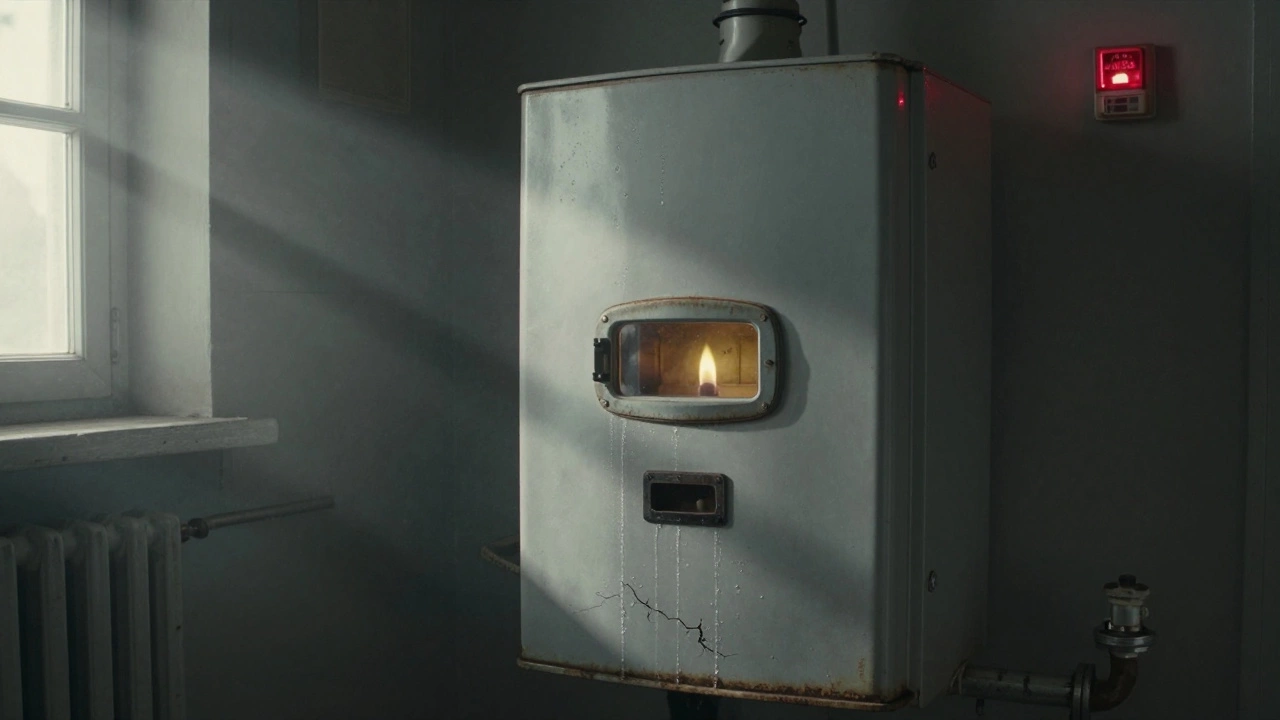
Modern boilers have safety features that older models never had: flame failure devices, overheat protection, automatic shut-offs, and sealed combustion systems. A boiler from the 1980s? It might have a pilot light that stays on 24/7 and no way to detect if the flame goes out. That’s dangerous. If the gas keeps flowing without burning, it fills your home with odorless, invisible carbon monoxide-enough to kill you in minutes.
What Experts Say About Aging Boilers
The UK’s Gas Safe Register, the official body for gas safety, doesn’t set a legal age limit for boilers. But they do say this: if a boiler is over 15 years old, it’s time to seriously consider replacement. That’s not a suggestion-it’s a safety baseline. A 40-year-old unit is more than double that threshold.
Studies from the Health and Safety Executive show that boilers over 25 years old are three times more likely to develop dangerous gas leaks than newer models. And when you factor in wear on flues, ventilation, and pipework that may have never been updated since installation, the risk multiplies. You’re not just risking your boiler failing. You’re risking your family’s health.
Signs Your 40-Year-Old Boiler Is Dangerous
Here’s what to watch for-right now:
- Yellow or orange flame instead of blue. A healthy gas flame is bright blue. Yellow means incomplete combustion-and that means carbon monoxide is being produced.
- Condensation or water pooling around the boiler. This isn’t normal. It’s a sign of internal corrosion or cracked heat exchanger.
- Strange smells-like rotten eggs or burning dust. Gas leaks often have a sulfur-like odor added for detection. If you smell it, leave the house and call emergency services.
- Noisy operation-banging, whistling, or gurgling. These aren’t just annoying. They’re signs of limescale buildup, air in the system, or failing components.
- Increased fuel bills with no change in usage. A 40-year-old boiler might be running at 60% efficiency. Modern condensing boilers run at 90%+.
If you’ve noticed even one of these signs, don’t wait. Call a Gas Safe registered engineer immediately. Don’t try to fix it yourself. Don’t assume it’s "just old."
Is It Worth Repairing?
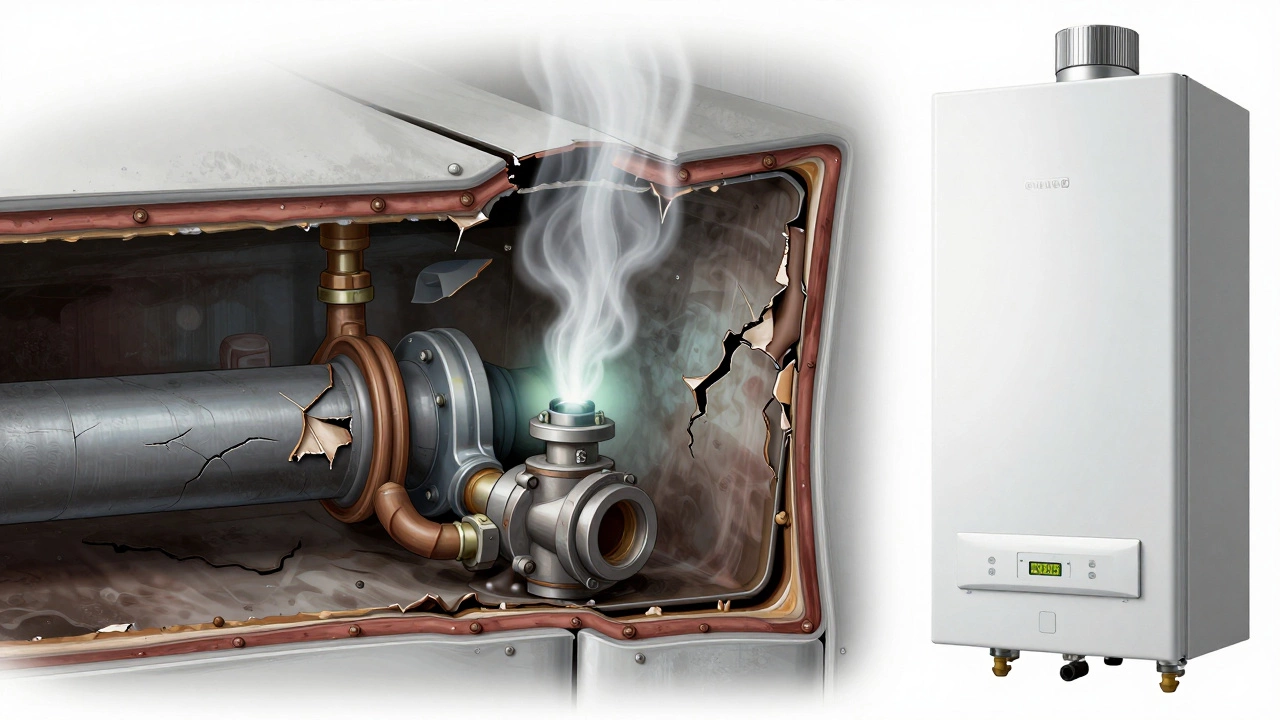
Some people think, "It’s worked this long-why replace it?" But repairing a 40-year-old boiler is like putting new tires on a 1985 sedan with a rusted frame. You’re spending money on a system that’s fundamentally unsafe.
Parts for boilers this old are nearly impossible to find. Manufacturers stopped making them decades ago. Even if you find a replacement part, it won’t be certified to modern safety standards. And if you do get it fixed, it’s likely to break again in weeks. You’re throwing good money after bad.
One homeowner in Manchester spent £800 repairing his 1983 boiler last winter. Two months later, the heat exchanger cracked again. He ended up paying £3,200 for a new A-rated condensing boiler. He saved money by replacing it sooner.
What Replacing Your Boiler Gets You
Switching from a 40-year-old boiler to a modern one isn’t just about safety. It’s about comfort, cost, and peace of mind.
- Lower bills: Modern boilers use 30-40% less gas. That’s £300-£500 saved per year.
- Instant hot water: No more waiting 20 minutes for the shower to warm up.
- Smart controls: Turn your heat on from your phone. Set schedules. Get alerts if something goes wrong.
- Warranty: New boilers come with 5-10 year warranties. Your 40-year-old unit? No coverage.
- Home value: Buyers ask about boiler age. A new one can add up to 5% to your home’s value.
What to Do Right Now
If you have a 40-year-old boiler, here’s your action plan:
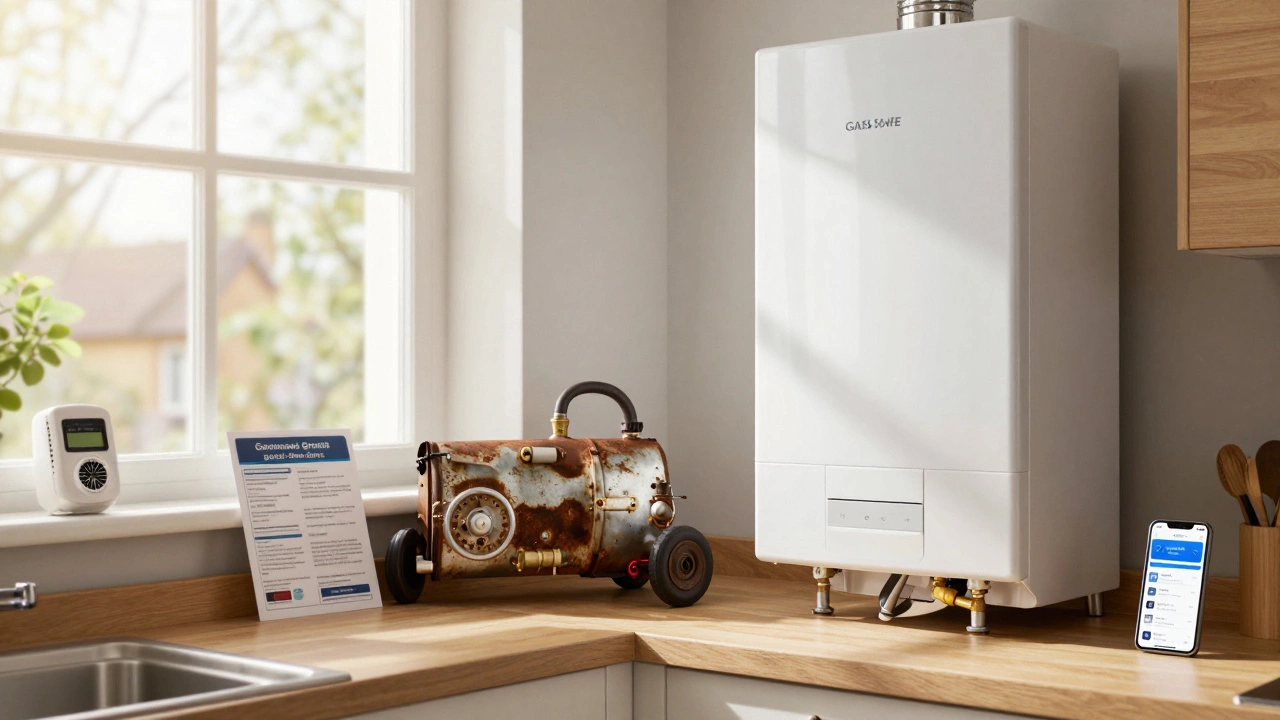
- Install a carbon monoxide alarm-if you don’t have one already. Put one near the boiler and in every bedroom. Test it monthly.
- Book a professional inspection with a Gas Safe registered engineer. Don’t use a "handyman." Only certified engineers can legally check gas appliances.
- Get a written report asking specifically: "Is this boiler safe to continue using?" If they say "it’s working for now," that’s not an answer. Push for a clear yes or no.
- Start budgeting for replacement. Even if you’re not ready to replace it now, know what you’ll need. A standard combi boiler costs £2,000-£3,500 installed.
- Check for government grants. In the UK, the Boiler Upgrade Scheme offers up to £7,500 toward heat pumps. Some local councils offer boiler replacement grants for low-income households.
Myths About Old Boilers
Let’s clear up the biggest lies people believe:
- Myth: "If it’s not broken, don’t fix it." Truth: It’s already broken-safety-wise. It’s just not broken yet in a way that’s obvious.
- Myth: "Electric boilers are safer." Truth: Electric boilers don’t produce carbon monoxide, but they’re not always practical. They’re expensive to run unless you have solar panels.
- Myth: "I can just keep it going with annual services." Truth: Annual services can’t reverse decades of corrosion or replace obsolete parts. They only delay the inevitable.
There’s no magic trick to making a 40-year-old boiler safe. No additive, no tune-up, no "boiler rejuvenator" product on Amazon will fix what’s inside. It’s not a car. It’s a gas-fired pressure vessel. And it’s not designed to last 40 years.
When to Walk Away
If your boiler is 40 years old, and you’re still using it, you’re living with a risk most people wouldn’t accept for their toaster. You wouldn’t keep a 40-year-old fridge running if it leaked coolant. You wouldn’t drive a 40-year-old car without airbags. Why take the chance with your home’s heating system?
Replacing your boiler isn’t an expense. It’s an investment in safety, comfort, and financial peace of mind. The sooner you act, the less stress you’ll feel when it finally gives out-which, at this age, could be any day.
Don’t wait for a smell. Don’t wait for the pilot light to go out. Don’t wait for the emergency call at 2 a.m. Take control now. Your family’s safety depends on it.
Is a 40-year-old boiler dangerous?
Yes. A 40-year-old boiler is extremely dangerous. It lacks modern safety features like carbon monoxide detection and automatic shut-offs. Internal corrosion, worn seals, and outdated gas valves make it prone to gas leaks and carbon monoxide poisoning. Many older boilers also use open-flame systems that can fail without warning. The risk isn’t theoretical-it’s backed by safety data from the Health and Safety Executive.
Can a 40-year-old boiler be repaired safely?
Technically, yes-but it’s not advisable. Finding replacement parts is nearly impossible, and even if you do, they won’t meet current safety standards. Repairs are temporary and often cost more than a new unit. More importantly, repairing an old boiler doesn’t fix the underlying safety risks. You’re not restoring reliability-you’re delaying a failure that could be deadly.
How long does a boiler usually last?
Most modern boilers last 10 to 15 years with proper maintenance. High-quality models with regular servicing might reach 20 years, but that’s rare. Boilers older than 25 years are considered beyond their useful life by industry standards. A 40-year-old unit is far past any reasonable lifespan.
Do I need a carbon monoxide alarm if my boiler is old?
Yes-absolutely. In fact, it’s legally required in many parts of the UK if you have a gas appliance. A carbon monoxide alarm is your only early warning system for a silent killer. Install one near the boiler and in every bedroom. Test it every month. Replace the battery yearly. Don’t rely on your sense of smell-carbon monoxide has no odor.
How much does it cost to replace a 40-year-old boiler?
Replacing a 40-year-old boiler with a modern condensing combi boiler typically costs between £2,000 and £3,500, including installation. Prices vary based on brand, home size, and whether pipework needs upgrading. Some homeowners qualify for government grants like the Boiler Upgrade Scheme, which can cover up to £7,500 if switching to a heat pump. Local councils may also offer support for low-income households.
Should I replace my boiler before selling my house?
Yes. Buyers often ask about boiler age during surveys. A 40-year-old boiler can lower your home’s value or even derail a sale. A new boiler improves energy efficiency ratings, reduces buyer concerns, and makes your property more attractive. It’s one of the best ROI upgrades you can make before selling.