

How to Tell If Your Water Heater Needs a Reset
 Dec, 22 2025
If your hot water suddenly stopped coming out, or you’re getting lukewarm showers instead of steaming ones, your water heater might just need a reset. It’s not always a broken element or a leaking tank-sometimes, it’s as simple as flipping a switch you didn’t even know existed.
Why water heaters need resetting
Electric water heaters have a safety feature called a high-limit switch. It’s designed to shut off power if the water gets too hot, which can happen if the thermostat malfunctions or if sediment builds up and traps heat around the lower element. When this switch trips, your water heater stops heating-but it doesn’t always show a warning light or error code. You’ll just notice the water getting colder over time, then cold altogether.This isn’t a sign of a failing unit. It’s a protective pause. Resetting it restores normal operation in most cases. About 40% of cold water complaints in electric water heaters turn out to be nothing more than a tripped reset button, according to data from the National Association of Home Builders.
How to find the reset button
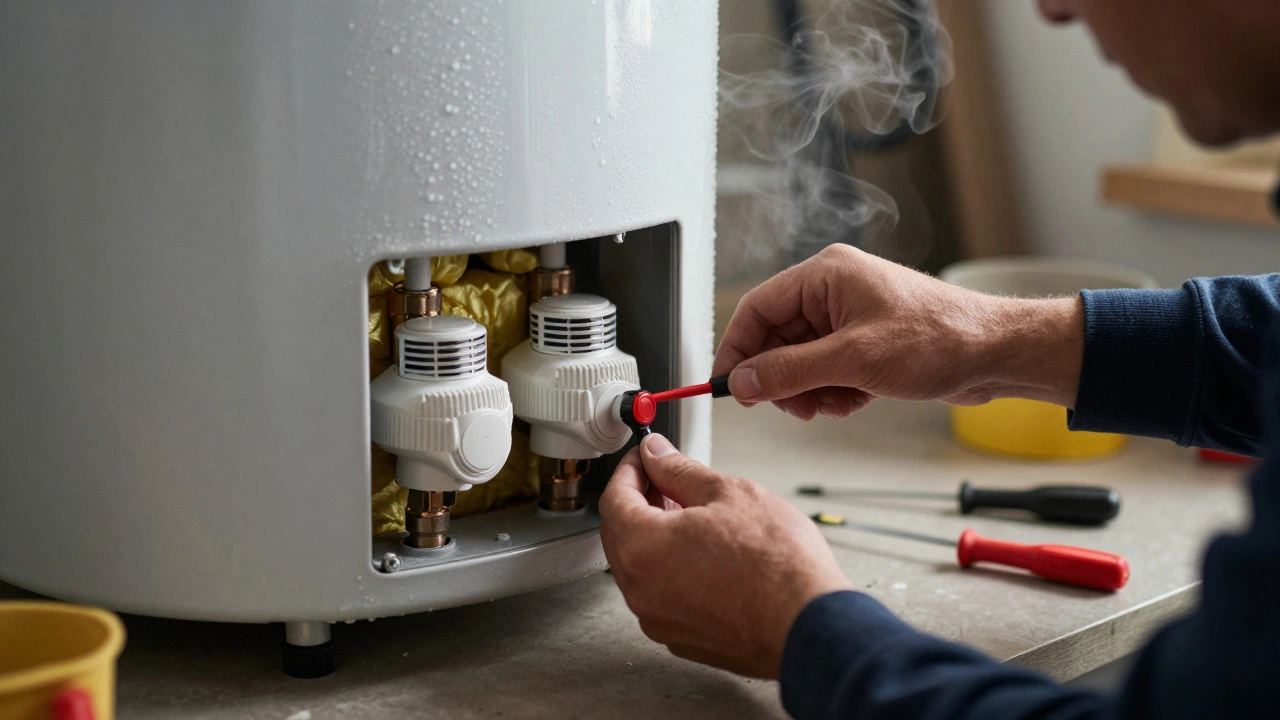
The reset button isn’t on the front like a microwave. It’s hidden behind a metal panel on the side of the tank, usually near the top. You’ll need to turn off the power at the circuit breaker first. Safety first-never work on a live water heater.Once the power’s off, remove the access panel. Behind it, you’ll see insulation. Peel that back gently. Underneath, you should see two thermostats (upper and lower) and a small red button between them. That’s the reset button. It’s usually labeled "Reset" or just has a red dot. On older models, it might be tucked under a plastic cover you have to pry off with a flathead screwdriver.
Gas water heaters don’t have a reset button. If yours is gas-powered and not heating, the issue is likely the pilot light, thermocouple, or gas valve-not something you can reset yourself.
How to reset your electric water heater
Follow these steps carefully:- Turn off the power to the water heater at the circuit breaker. Double-check with a non-contact voltage tester if you have one.
- Remove the access panel on the side of the tank. Most are held by one or two screws.
- Move aside the insulation. Don’t tear it-just fold it back.
- Locate the red reset button. It’s small, usually between the two thermostats.
- Press it firmly until you hear a click. You might feel a slight resistance before it pops back.
- Replace the insulation and access panel.
- Turn the power back on at the breaker.
- Wait 30 to 60 minutes for the water to heat up. Test the hot water at a faucet.
If the water heats up and stays hot, you’re good. If it goes cold again within a few hours, the problem is deeper.

What if the reset button won’t stay in?
If you press the reset button and it pops right back out, don’t keep trying. That means something is still wrong. The high-limit switch is tripping again because the water is overheating. This usually points to:- A faulty thermostat (most common)
- A broken heating element causing short-cycling
- Heavy sediment buildup in the tank
Resetting it again won’t fix the root cause. You’re just resetting the symptom. If the button trips again, you need to check the thermostats or call a professional. Continuing to reset it can damage the tank or create a fire risk.
When resetting won’t help
Resetting works for electric water heaters with a tripped safety switch. But it won’t fix these issues:- No hot water at all, even after 2 hours-could be a dead heating element
- Water is lukewarm and never gets hot-likely a failed upper thermostat
- Water is rusty or smells bad-tank corrosion or bacterial buildup
- Water is leaking from the tank-time for a replacement
- You have a gas water heater-no reset button exists
Also, if your water heater is over 10 years old and you’re resetting it often, you’re probably delaying the inevitable. Most units last 8-12 years. Frequent resets are a sign it’s wearing out.
How to prevent future trips
You can reduce how often your reset button trips by doing two simple things:- Flush your tank every year. Sediment builds up at the bottom and acts like insulation, trapping heat and overheating the element. Drain 2-3 gallons from the spigot at the bottom of the tank using a garden hose. Do this in spring or fall.
- Set the thermostat to 120°F (49°C). That’s hot enough for showers and cleaning, and cool enough to prevent scalding and overheating. Many units come preset at 140°F, which is unnecessary and dangerous.
Keeping the temperature low also saves energy. The Department of Energy estimates you can cut your water heating bill by 4-22% just by lowering the thermostat from 140°F to 120°F.
What to do if resetting doesn’t work
If you’ve reset the heater, waited, and still have no hot water, here’s what to check next:- Is the circuit breaker tripped? Reset it if needed.
- Are both thermostats working? Use a multimeter to test for continuity. If one reads open circuit, it’s bad.
- Is the upper heating element getting power? If not, the upper thermostat is likely the culprit.
- Is there water in the tank? If the tank is empty, the elements will burn out. Check for leaks or a broken dip tube.
If you’re not comfortable testing electrical components, call a licensed plumber or HVAC technician. Replacing a heating element or thermostat is doable for DIYers, but electricity and water don’t mix if you’re unsure.
When to replace instead of repair
Don’t waste money on repairs if your water heater is showing these signs:- It’s older than 10 years
- You’ve reset it more than twice in the last year
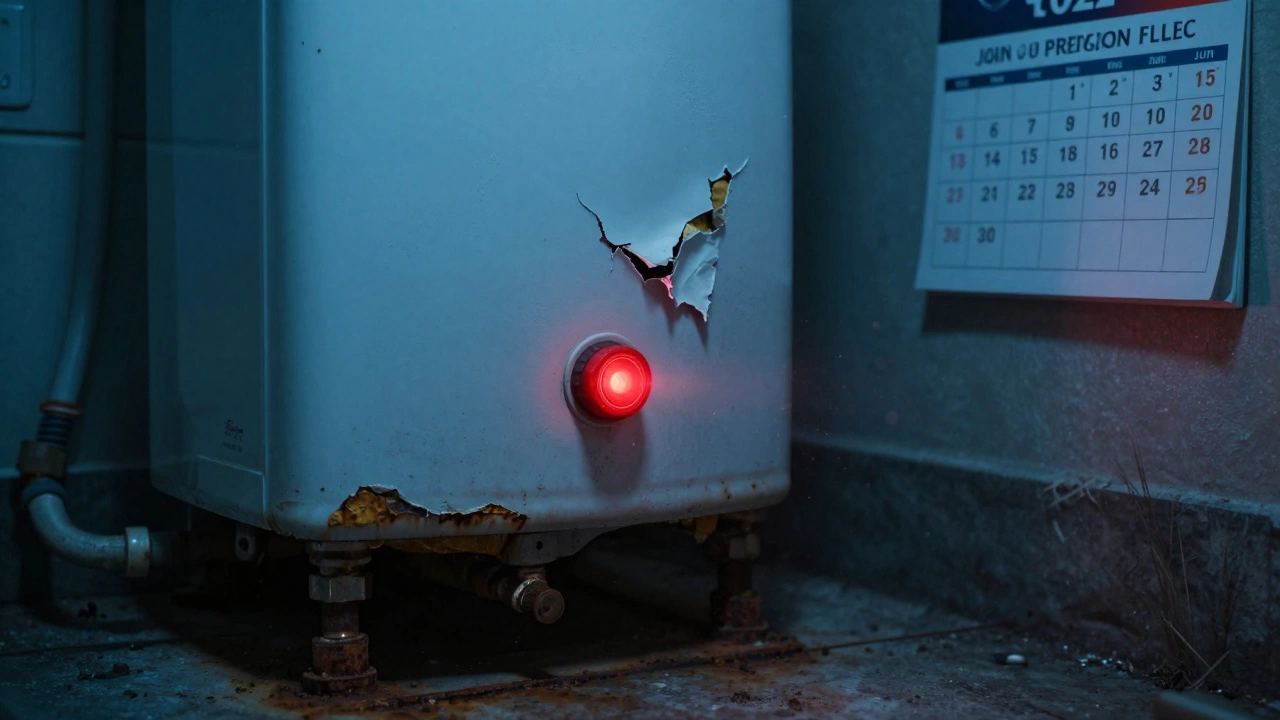
- There’s visible rust on the tank or fittings
- Water is discolored or smells like rotten eggs (sulfur bacteria)
- It’s making loud popping or banging noises (sediment buildup)
New electric water heaters cost between $500 and $1,200 installed. But a new unit will last 12-15 years, use 20-30% less energy, and come with a warranty. Replacing it now saves you from emergency repairs during winter.
Can I reset my gas water heater?
No, gas water heaters don’t have a reset button. If your gas water heater isn’t heating, check if the pilot light is out. If it won’t stay lit, the thermocouple may be faulty. If you smell gas, turn off the gas valve and call a professional immediately.
How often should I reset my water heater?
You shouldn’t need to reset it at all under normal conditions. If you’re resetting it more than once a year, there’s a deeper problem-like a bad thermostat, faulty element, or heavy sediment. Frequent resets mean you’re treating a symptom, not fixing the cause.
Why does the reset button trip repeatedly?
Repeated tripping means the water is overheating. This usually happens because of a stuck thermostat, a failed heating element, or too much sediment in the tank. The safety switch is doing its job-it’s preventing a dangerous situation. Don’t keep resetting it. Diagnose the root cause instead.
Is it safe to reset a water heater myself?
Yes, if you follow safety steps. Always turn off the power at the circuit breaker before touching any internal parts. Never work on a live unit. If you’re unsure about electricity, call a professional. Resetting is low-risk if done correctly, but electrical mistakes can be dangerous.
Will resetting fix cold water after a power outage?
Sometimes. Power outages can cause the thermostat to lose calibration or trigger the high-limit switch. After power returns, the water heater may need a manual reset. Wait 30 minutes for the system to stabilize, then try pressing the reset button. If that doesn’t work, check the circuit breaker and thermostat settings.