

How to Tell if Your Electric Stove Element Is Bad
 Dec, 25 2025
Electric Stove Element Tester
Test Your Stove Element
Enter your multimeter reading to determine if your element is functioning properly.
Enter your measurements to get results
If your electric stove isn’t heating up like it used to, or if one burner takes forever to boil water while the others work fine, you’re probably wondering: is my electric stove element bad? It’s a common problem-and usually easy to fix. You don’t need to call a technician right away. Most of the time, you can diagnose it yourself in under 15 minutes with just a few simple checks.
What an electric stove element does
Every electric stove has one or more heating elements-those coiled wires you see under the glass top or inside the oven cavity. These elements are made of a special metal alloy that gets red-hot when electricity flows through them. When you turn on a burner or set the oven to 350°F, electricity travels through the element, and resistance turns that energy into heat. If the element breaks internally, even a little bit, the circuit is interrupted. No electricity means no heat.
Signs your electric stove element is bad
Here are the most common signs that point to a failed element:
- The burner doesn’t glow red at all-even after being on for 10 minutes.
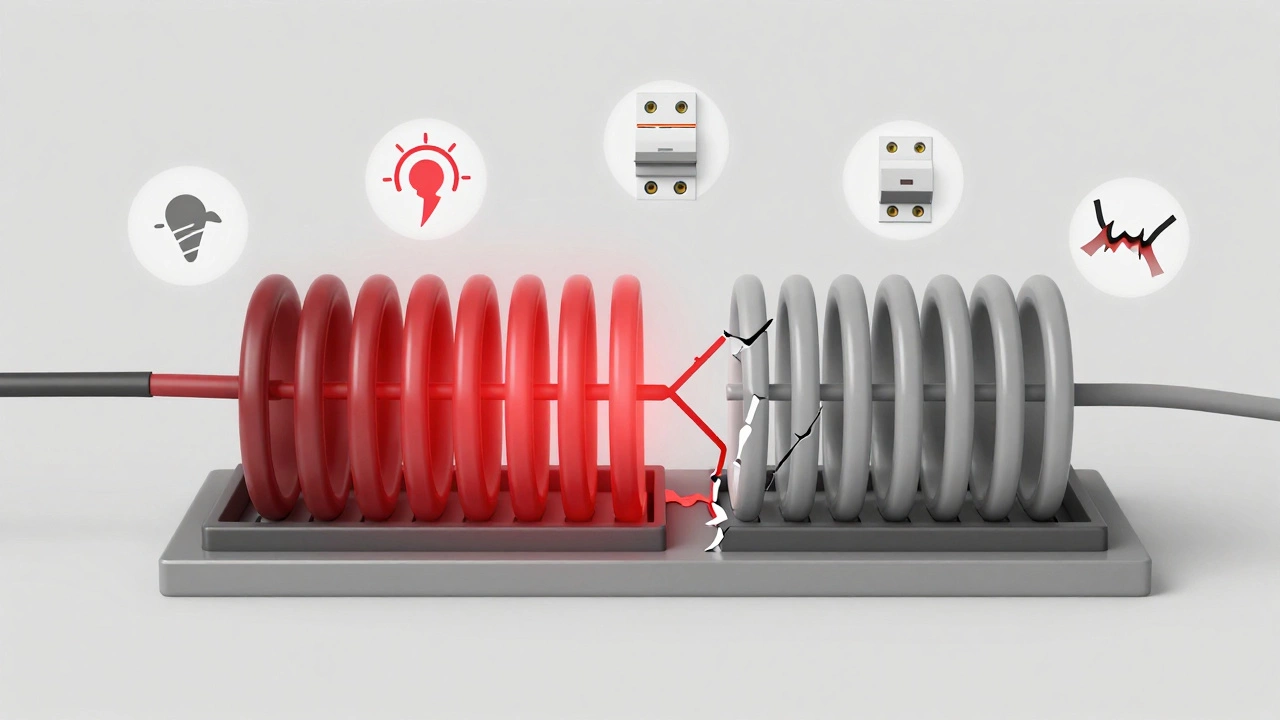
- The burner glows unevenly: parts are bright red, other parts are dark or barely warm.
- Food takes much longer to cook, especially on one specific burner or in the oven.
- You smell something burning near the element, but no visible damage is there.
- The stove’s control panel works fine, but only one element fails to heat.
These aren’t guesses-they’re repeatable patterns. In Toronto, where winters are long and people rely on their stoves daily, these symptoms show up again and again in service calls. If your oven’s bake element doesn’t glow, but the broil element does, that’s a dead giveaway.
How to test your electric stove element
You don’t need fancy tools. Just a multimeter (available at any hardware store for under $20) and a little patience.
- Turn off the power at the circuit breaker. Don’t just unplug it-flip the breaker. Electric stoves run on 240 volts. You need to be safe.
- Remove the element. For a surface burner, lift the glass top slightly and unplug the element from its socket. For the oven element, unscrew the two mounting screws holding it in place and gently pull it out a few inches to access the terminals.
- Set your multimeter to the lowest ohm (Ω) setting.
- Touch one probe to each metal terminal on the element. Don’t touch the casing-just the two metal connectors where the wires attach.
- Read the display. A good element usually reads between 20 and 120 ohms, depending on size. If it shows OL (open loop) or no reading at all, the element is broken.
- Test for grounding: Put one probe on a terminal and the other on the metal casing of the element. If you get any reading here-even a few ohms-the element is shorted and unsafe to use.
Most people skip the grounding test. That’s a mistake. A shorted element can cause shocks or trip breakers repeatedly. If you get any continuity to the casing, replace it immediately.
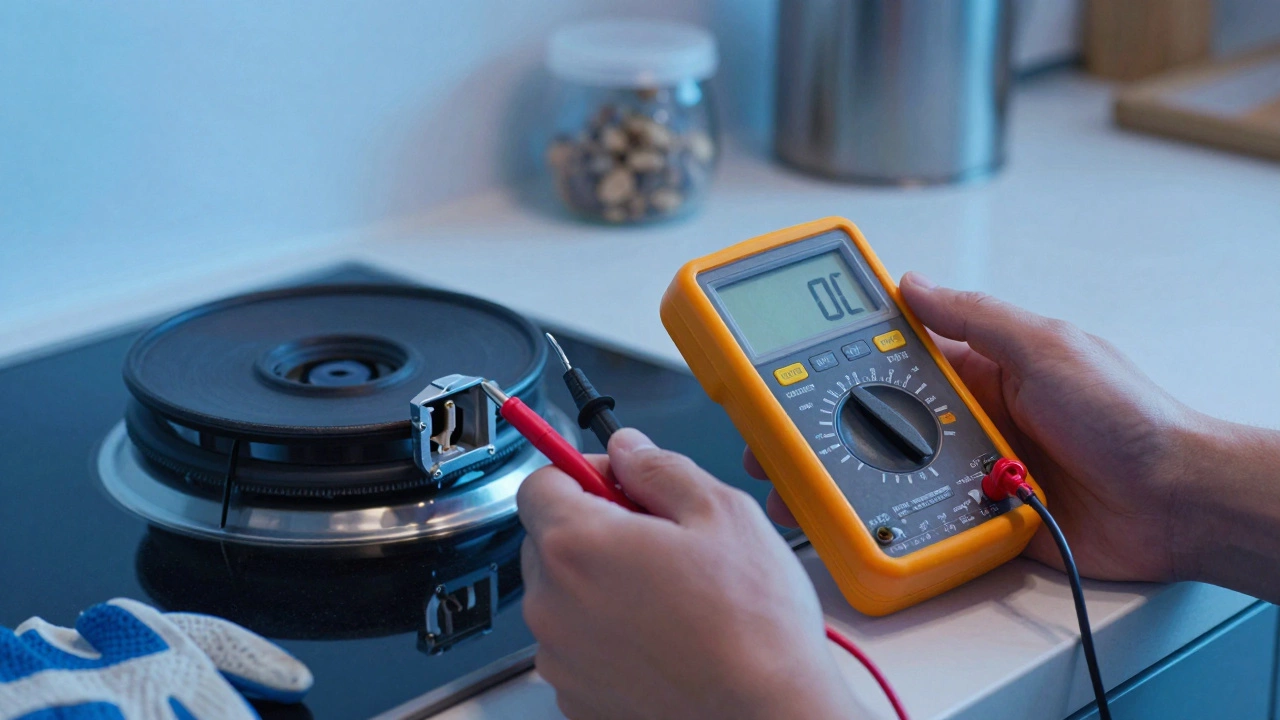
What a good reading looks like
Here’s what you should expect:
| Element Type | Expected Resistance Range | Open Circuit (Bad) |
|---|---|---|
| 5-inch surface burner | 30-60 Ω | OL or no reading |
| 6-inch surface burner | 40-70 Ω | OL or no reading |
| 8-inch surface burner | 50-90 Ω | OL or no reading |
| Oven bake element | 15-40 Ω | OL or no reading |
| Oven broil element | 15-40 Ω | OL or no reading |
These ranges come from manufacturer specs for common brands like Whirlpool, GE, Frigidaire, and Bosch-models you’re likely to find in Canadian homes. If your reading falls outside this range by more than 20%, it’s failing. Don’t wait for it to die completely.
Why your element might seem fine but still not work
Not every heating problem comes from the element. Sometimes the issue is elsewhere:
- Bad infinite switch: This controls the power level to the burner. If it’s faulty, the element won’t get power-even if it’s good. You can test this by swapping the switch with another burner’s switch (if they’re identical) and seeing if the problem moves.
- Loose or corroded wiring: Check the wires going into the element socket. Look for melted insulation, black marks, or rust. Corrosion blocks current flow.
- Faulty control board: On newer stoves with digital controls, a failed board can stop power to one element. This is harder to diagnose and usually requires professional help.
- Tripped thermal fuse: Some ovens have a safety fuse that blows if the oven overheats. If the oven won’t heat at all, check the thermal fuse with your multimeter.
Always test the element first. It’s the most common failure-and the easiest to replace. If the element tests good, then look at the wiring and switches.
What to do if the element is bad
If your multimeter shows OL or grounding, it’s time to replace it. Don’t try to repair it. These elements are sealed and not user-serviceable.
Go to your local appliance parts store (like Appliance Parts Canada or Repair Clinic) and bring the old element with you. Or write down the model number from the stove’s label (usually inside the oven door or on the back). Match the wattage, length, and terminal type. A 2500-watt element won’t work in a slot designed for 1800 watts.
Replacement is usually simple:
- Turn off power again.
- Unplug the old element or unscrew it from the oven wall.
- Disconnect the wires.
- Connect the new element the same way-same terminals, same orientation.
- Secure it in place.
- Restore power and test.
Most replacements take 20 minutes. No special tools needed. Just a screwdriver and pliers.
How long do electric stove elements last?
On average, a well-used electric stove element lasts 8 to 12 years. But that depends on how often you use it and how clean it is. Grease and food spills that bake onto the element create hot spots. Those hot spots stress the metal and cause premature failure. In homes where people cook daily, elements often need replacing after 6-8 years.
Keep your elements clean. Wipe them down after each use with a damp cloth and mild cleaner. Never use abrasive pads or oven cleaners directly on the element-they can damage the coating.
When to call a professional
You should call a technician if:
- Multiple elements fail at once.
- You smell burning plastic or see melted wires.
- Your multimeter shows no issues, but the stove still doesn’t heat.
- You’re uncomfortable working with electricity.
Electrical problems can be dangerous. If you’re unsure, it’s better to pay $80-$120 for a service call than risk a fire or shock.
Preventing future failures
Here’s how to make your stove elements last longer:
- Use pots and pans that match the burner size. A small pot on a large burner wastes energy and overheats the element.
- Don’t let spills boil over. Clean them up while the element is still warm (but not hot).
- Don’t leave empty pots on the burner. That causes extreme heat buildup.
- Check the element socket every year for signs of arcing or discoloration.
These small habits add up. In homes where people take care of their stoves, elements last 15 years or more.
Can a bad element cause my breaker to trip?
Yes. If the element is shorted to its metal casing, it creates a ground fault. This sends electricity where it shouldn’t go, which trips the breaker. If your breaker trips every time you turn on the stove, test the element for grounding. If it’s grounded, replace it immediately.
Why does my stove element glow red only on one side?
That’s a classic sign of internal breakage. The metal coil inside has cracked or separated. Electricity can still flow through part of it, but not the whole length. The glowing section gets hot, but the dark section doesn’t. This element is broken and needs replacement.
Can I use a universal replacement element?
Sometimes. Universal elements are sold as "fits most" models, but they’re risky. They might have the wrong wattage, length, or terminal spacing. Using the wrong one can overload your wiring or not heat properly. Always match the exact part number or take the old element to the store for comparison.
Is it cheaper to fix the element or buy a new stove?
Replacing an element costs $20-$50 for the part and maybe $100 if you hire someone. A new electric stove starts at $600. Unless your stove is over 15 years old or has multiple other problems, replacing the element is almost always the better choice.
How do I know if the problem is the element or the control panel?
If only one burner or the oven doesn’t work, but the display and other functions are fine, it’s likely the element or wiring. If nothing works-not even the clock or lights-it could be the control board. But if only one element fails, test the element first. It’s 90% more likely to be the element than the control panel.