

How to Fix a Burnt Electric Hob: Step-by-Step Safety Guide
 Jan, 29 2026
Hob Repair vs Replacement Cost Calculator
Hob Repair Cost Calculator
Enter your hob's age and number of faulty elements to determine if repair or replacement is more cost-effective.
Calculation Results
Total Repair Cost:
Estimated Replacement Cost: $800
50% of Replacement Cost: $400
Note: Repair costs assume professional service or high-quality parts. Actual costs may vary based on location and specific model.
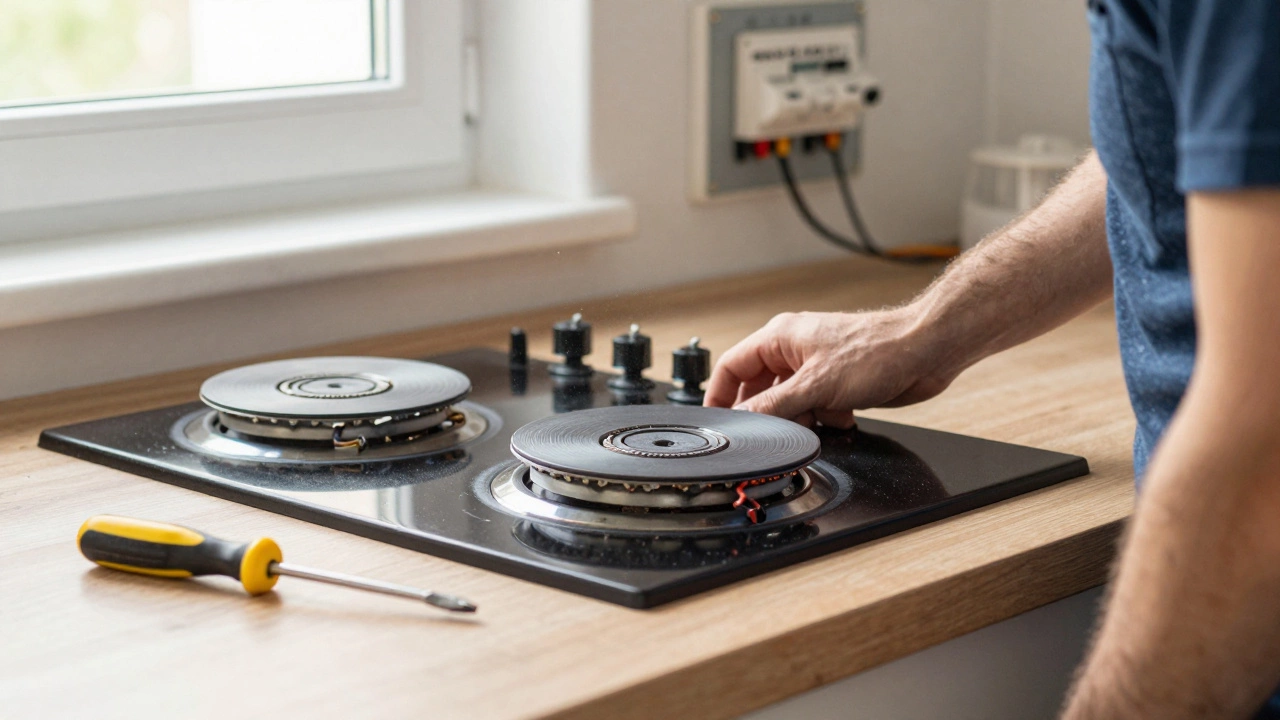
If your electric hob suddenly stops working, smells like burning, or shows blackened spots on the surface, you’re not alone. Thousands of homeowners in Toronto and beyond face this every winter when cooking loads spike. A burnt electric hob doesn’t always mean a full replacement - often, it’s a simple fix. But jumping straight for a new unit could cost you $800 or more. The good news? Most burnt hob issues can be fixed in under an hour with basic tools and a little caution.
First, turn off the power
Before you touch anything, kill the power. Don’t just unplug it - electric hobs are hardwired into your home’s circuit. Go to your breaker panel and switch off the circuit labeled "cooktop," "hob," or "kitchen range." If you’re unsure, turn off the main breaker. This isn’t optional. Even if the hob looks dead, residual current can still be live in the wiring. I’ve seen people get shocked trying to swap elements without cutting power. It’s not worth the risk.
Check the obvious: Is it really broken?
Before you assume the element is fried, test the control knob and the power supply. Sometimes the issue isn’t the heating element - it’s the switch. Turn the dial to high and listen. If you hear a faint click but no heat, the switch might be stuck. Try switching another burner on. If that one works, the problem is isolated. If none work, you’ve got a bigger issue - maybe a faulty thermostat or main control board.
Also, look at the surface. Burnt-looking marks aren’t always damage. Some ceramic hobs develop discolored rings from spilled sugar or grease that carbonized over time. Clean it with a ceramic hob cleaner and a soft pad. If the stain disappears and the zone heats normally, you were just dealing with grime, not a fault.
Identify the faulty element
Electric hobs use individual heating elements, usually under glass-ceramic or coil surfaces. Each zone has its own element. If only one burner isn’t working, that’s your target. Look closely at the element. If you see:
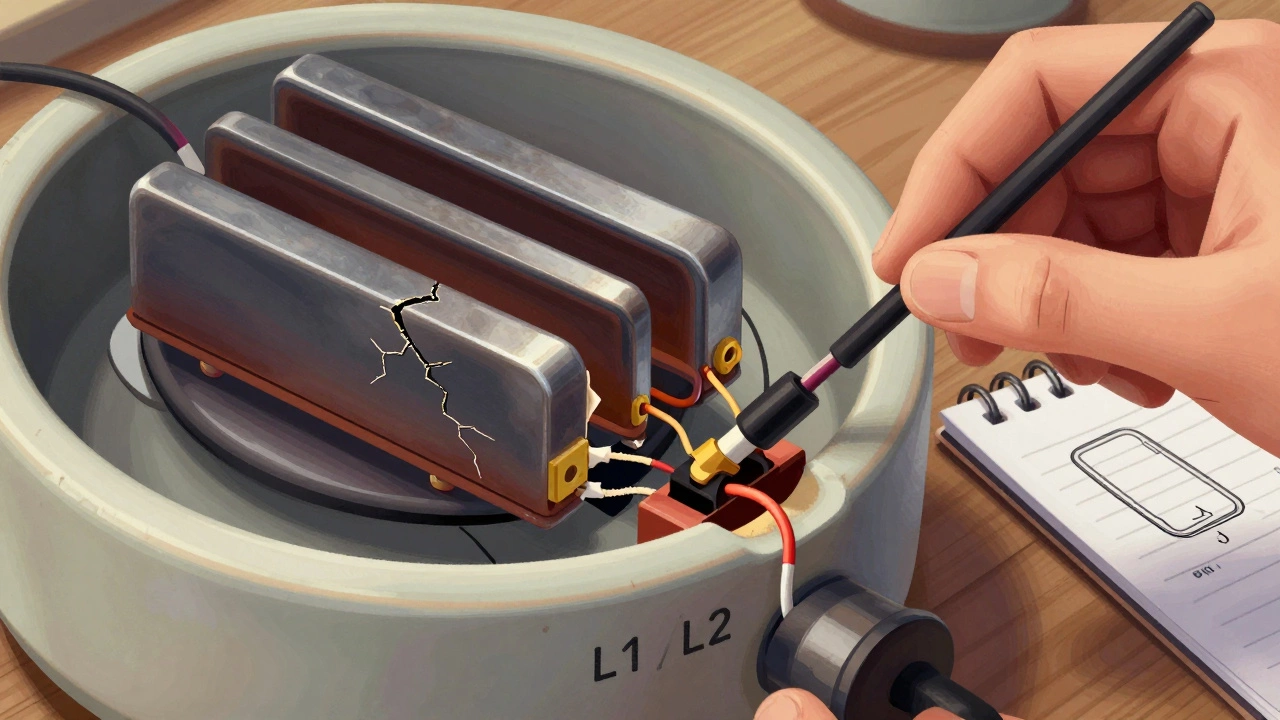
- Blackened, cracked, or blistered metal
- Broken or frayed wires connected to the terminals
- Visible gaps or separation in the coil
That’s your burnt element. It’s no longer conducting electricity properly. Even if it looks mostly intact, a cracked element can arc internally and cause intermittent failure - a fire hazard.
Remove the old element
Once you’ve confirmed the element is dead and the power is off, you can remove it. For a ceramic hob:
- Remove the glass panel by unscrewing the clips or screws underneath the hob (you’ll need to lift the hob from the countertop or access from below).
- Locate the element’s wiring terminals - they’re usually two metal prongs connected to wires behind the burner.
- Take a photo of the wiring before disconnecting. Note which wire connects to which terminal. They’re often labeled L1 and L2, or just numbered.
- Unscrew the terminal nuts and gently pull the wires free.
- Slide the old element out from its mounting bracket. Some are held by clips - press the release tabs.
For coil hobs, it’s simpler. Just lift the element up and unplug the connector at the back. No tools needed.
Buy the right replacement
You can’t just grab any element from the hardware store. It has to match your hob’s make, model, and wattage. Look for the model number - it’s usually on a sticker under the hob or on the back panel. Common brands include Bosch, Siemens, Whirlpool, and Indesit.
Once you have the model number, search for the exact replacement part online or at an appliance parts store. A typical 1.2kW or 2.2kW element costs between $25 and $60. Avoid cheap knockoffs. They overheat, melt connectors, and fail in months. Stick to OEM or certified aftermarket parts like those from Eureka or Repair Clinic.
Pro tip: Buy an extra terminal nut or two. They’re cheap and often break when you’re removing the old one.
Install the new element
Now that you have the new part:
- Slide the new element into the mounting bracket. Make sure it sits flat and aligned.
- Reconnect the wires exactly as you photographed. Tighten the terminal nuts by hand first, then give them a quarter-turn with pliers - don’t overtighten. Copper wires can strip easily.
- Reassemble the hob. For ceramic tops, carefully lower the glass panel back into place and reattach the clips. Don’t force it.
- Restore power at the breaker.
Turn on the burner. If it heats up within 30 seconds and glows evenly, you’re done. If it doesn’t heat, or if you smell smoke, turn the power off again. Something’s wrong - maybe a bad connection or a faulty switch.
What if the element isn’t the problem?
If you replaced the element and it still doesn’t work, the issue is likely deeper. Here’s what else to check:
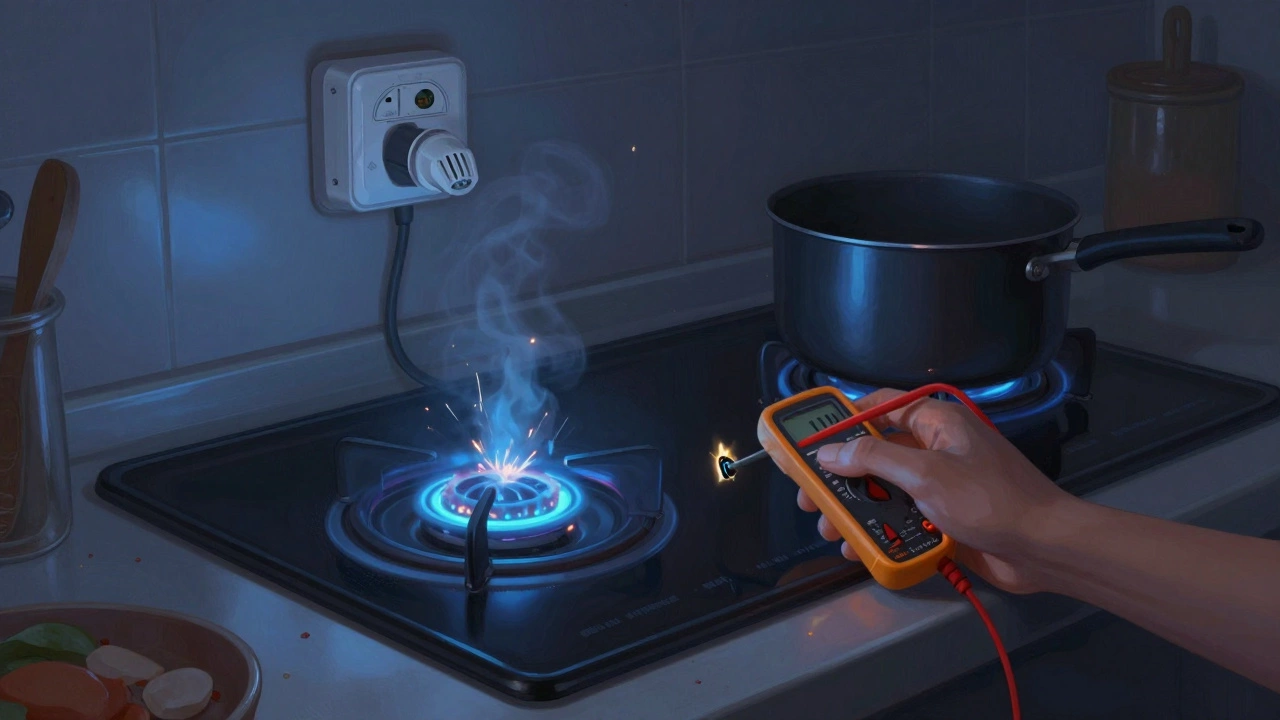
- Thermostat or temperature sensor: If the hob shuts off too soon or won’t reach full heat, the sensor might be faulty. It’s usually a small probe near the element. Testing it requires a multimeter - if you don’t have one, skip this and call a pro.
- Control board: If multiple burners fail at once, the main control board might be fried. This is common in older models after power surges. Repairing this isn’t DIY-friendly. Boards cost $100-$200, and soldering them requires skill.
- Wiring harness: Rodents love chewing through wires under the hob. Check for frayed or stripped insulation. Replace the whole harness if you find damage.
Most homeowners hit a wall here. If you’re not comfortable with multimeters or circuit boards, call a certified appliance technician. It’s cheaper than replacing the whole hob - and safer.
Prevent future burns
Once your hob’s fixed, avoid another burnout:
- Never leave pots boiling dry. Empty pans on high heat melt elements faster than anything.
- Use flat-bottomed cookware. Warped pots create hot spots that stress the element.
- Clean spills immediately. Sugar and salt residue carbonizes and conducts electricity unpredictably.
- Install a surge protector on your kitchen circuit. Lightning strikes or grid fluctuations fry control boards.
- Don’t use the hob as a drying rack. Wet towels or dishcloths on hot zones cause moisture damage.
Most burnt elements last 5-10 years. If yours failed in under three, something’s wrong - likely poor maintenance or voltage issues.
When to replace the whole hob
Replace the hob if:
- Two or more elements fail within a year
- The glass surface is cracked or chipped
- The control panel is flickering or unresponsive
- The repair cost exceeds 50% of a new unit’s price
Modern hobs are more efficient, safer, and come with child locks and auto-shutoff. A mid-range model costs $600-$1,200. If your hob is over 10 years old, replacement often makes more sense than repair.
Frequently Asked Questions
Can I use a burnt electric hob if only one burner is broken?
No. Even if other burners work, a damaged element can overheat, arc, or cause a short circuit. It’s a fire risk. Turn off the power and replace it before using the hob again.
Why does my hob smell like burning when I turn it on?
A mild smell the first time after cleaning is normal - it’s dust burning off. But if it smells like plastic, ozone, or charred metal, something’s wrong. Turn it off immediately. This usually means a failing element, melted wire insulation, or damaged circuit board.
How long does it take to replace an electric hob element?
For most people, it takes 30 to 60 minutes. If you’re replacing a coil element on a simple model, it can be done in 15 minutes. Ceramic hobs take longer because you need to remove the glass panel. Take your time - rushing leads to broken wires or misaligned parts.
Can I fix a burnt hob without tools?
Only if it’s a coil hob with a plug-in element. For ceramic hobs, you’ll need a screwdriver, pliers, and possibly a socket set to access the underside. You can’t safely replace a ceramic element without tools.
Is it cheaper to repair or replace a burnt electric hob?
Repairing a single element costs $30-$80 including parts. Replacing the whole hob starts at $600. If your hob is under 7 years old and only one element failed, repair is the smart choice. If it’s older or multiple parts are failing, replacement is more cost-effective long-term.