

How to Diagnose a Boiler Problem: Step-by-Step Guide for Homeowners
 Dec, 11 2025
When your boiler stops working in the middle of winter, it’s not just an inconvenience-it’s a safety issue. Cold pipes, frozen locks, and shivering kids make every minute count. But before you call a technician, you can often spot the problem yourself. Diagnosing a boiler issue doesn’t require a degree in engineering. It just takes a few simple checks and a little patience.
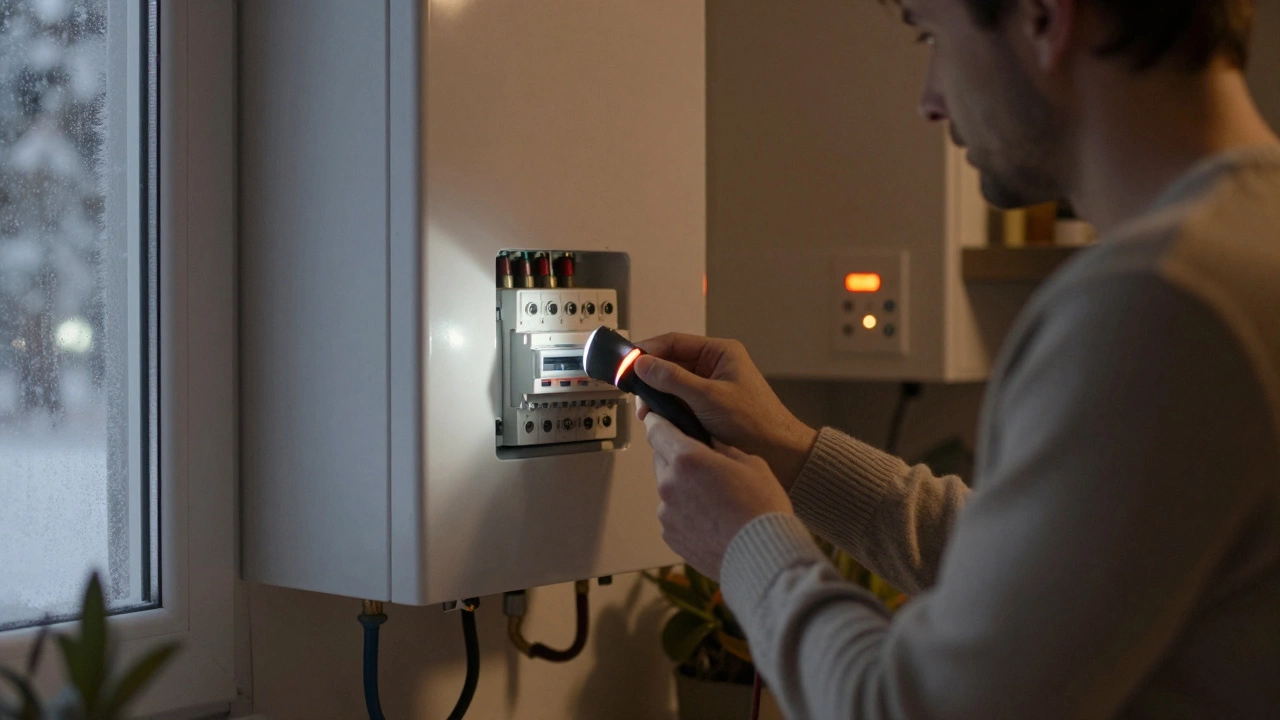
Check the power supply first
Before you assume the boiler is broken, make sure it’s getting power. Many boiler problems start with something as simple as a tripped circuit breaker or a switched-off plug. Look at your fuse box. Find the circuit labeled "boiler," "heating," or "water heater." If the switch is in the middle or off position, flip it back on. If it trips again right away, there’s a short circuit or overload. Don’t keep resetting it-call a professional.
Some boilers, especially modern ones, have a small LED light on the front panel. If it’s off, no power is reaching the unit. If it’s flashing, that’s a fault code. Write down the pattern: two flashes, pause, three flashes. That’s your boiler’s way of telling you what’s wrong. Most manufacturers have a code chart in the manual or online. Look up the code-it’ll save you hours of guesswork.
Check the pressure gauge
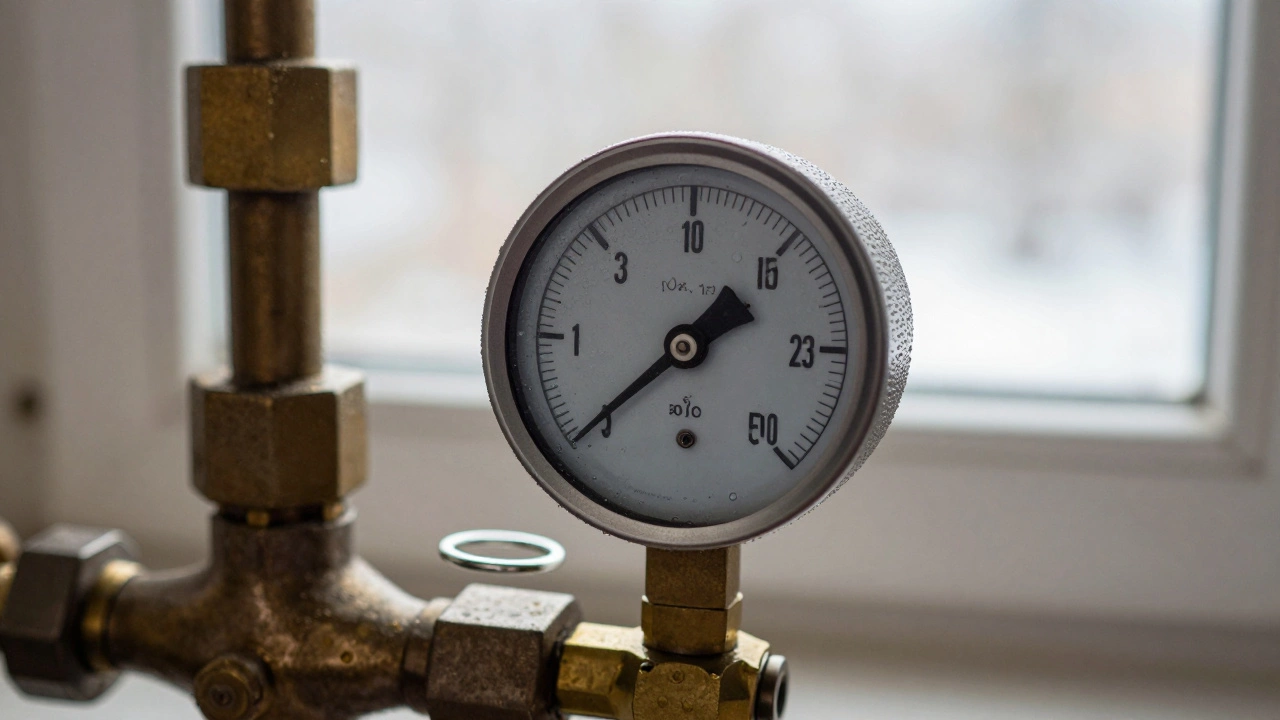
Boilers run on water pressure. If the pressure drops below 1 bar, the boiler won’t ignite. If it’s over 3 bar, it might shut down to avoid damage. Find the pressure gauge on the front or side of the boiler. It usually looks like a small dial with a needle pointing between 1 and 2. That’s the sweet spot.
If the pressure is too low, you can top it up yourself. Most boilers have a filling loop-a small silver hose with two taps, usually near the bottom. Open both taps slowly until the pressure reaches 1.2-1.5 bar. Then close them tightly. Don’t overfill. If the pressure drops again within a few days, you likely have a leak. Check under the boiler, around pipes, and at radiator valves for wet patches or rust.
Look for error codes or flashing lights
Modern boilers don’t just break-they talk. A flashing light or digital error code is the most reliable clue you’ll get. Common codes include:
- E1 or Err 1: Ignition failure. The boiler tried to light but couldn’t. Could be a gas issue, dirty burner, or faulty spark electrode.
- E2 or Err 2: Flame failure. The boiler lit but lost the flame. Often caused by a dirty flame sensor or low gas pressure.
- E3 or Err 3: Overheat protection triggered. Could mean a blocked flue, faulty thermostat, or pump failure.
- E4 or Err 4: Water flow problem. The pump isn’t moving water. Might be air in the system or a broken pump.
Don’t ignore these codes. They’re not random. They’re built into the boiler’s software to point you toward the exact component that’s failing. Google your boiler brand and the code-like "Bosch E1 error"-and you’ll find detailed fixes from other homeowners and technicians.
Listen to what the boiler is saying
Noises can tell you a lot. A boiler that’s making loud banging, gurgling, or whistling sounds isn’t just being noisy-it’s signaling trouble.
- Banging or knocking: Usually means limescale buildup in the heat exchanger. Hard water leaves mineral deposits over time. This is common in areas like Manchester, Birmingham, or Leeds. A power flush can clear it.
- Gurgling or bubbling: Air trapped in the system. Bleed your radiators. Use a radiator key to open the bleed valve at the top of each radiator until water comes out, not air. Do this one by one, starting from the lowest radiator.
- Whistling or hissing: Could be a faulty valve, low water pressure, or a blocked flue. If the noise comes from the flue pipe outside, check for bird nests or ice buildup in winter.
These sounds aren’t just annoying-they’re warning signs. Ignoring them can turn a $200 fix into a $2,000 replacement.
Test the thermostat and timer
Is your boiler not turning on? It might not be broken-it’s just not being told to work. Start with the thermostat. Make sure it’s set above room temperature. Try turning it up to 25°C. Wait five minutes. If the boiler still doesn’t kick in, the thermostat might be faulty.
Older homes often have mechanical thermostats with a dial. Newer ones are digital. If yours is battery-powered, replace the batteries. A dead battery can make the thermostat think the room is colder than it is. Also check the timer or programmer. If it’s set to "off" or "holiday mode," the boiler won’t turn on even if the thermostat asks for heat.
Some smart thermostats (like Hive or Nest) have apps. Open the app. See if it shows the boiler as "offline" or "not responding." That’s a communication issue, not a boiler failure.
Check the gas supply
If your boiler won’t ignite and the power and pressure are fine, the gas might be off. Look at your other gas appliances: the stove, oven, or gas fire. Do they work? If not, the gas supply is cut. Check the main gas valve near the meter. It should be parallel to the pipe. If it’s turned at a right angle, turn it back to open.
Even if the gas is on, the boiler might not be getting enough. A blocked gas valve, dirty filter, or low pressure from the supplier can cause weak ignition. If you smell gas at any point-like rotten eggs-leave the house immediately and call the national gas emergency number. Don’t turn lights on or off. Don’t use your phone inside. Just go outside and call.
Look at the condensate pipe
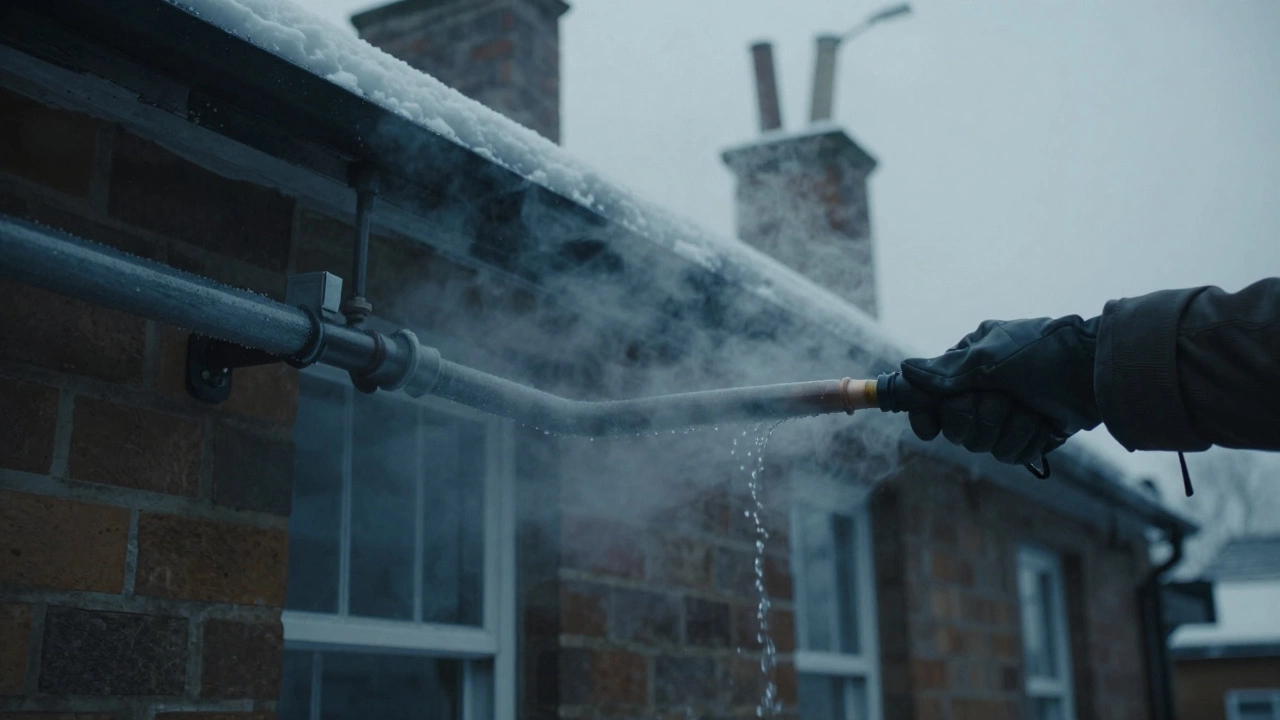
If you have a condensing boiler (most modern ones do), it produces water as a byproduct. That water drains out through a white plastic pipe that runs outside. In winter, this pipe can freeze. If it does, the boiler will shut down with an error code like E1 or E2.
Find the pipe-it usually runs from the bottom of the boiler to an outside wall. If it’s icy, pour warm (not boiling) water over the frozen section. Use a jug or kettle. Don’t use a blowtorch. Once the ice melts, the boiler should restart. If it doesn’t, reset it using the reset button (usually red, on the front). Hold it for five seconds.
This happens most often in January and February. It’s not a broken part-it’s a weather problem. Insulating the pipe with foam tape next fall can prevent it.
When to call a professional
You’ve checked the power, pressure, codes, noise, thermostat, gas, and condensate pipe. The boiler still won’t work. It’s time to call a Gas Safe registered engineer. Don’t try to fix internal parts yourself. Gas boilers have high-voltage components, pressurized water, and flammable gas. One wrong move can be deadly.
Signs you definitely need a pro:
- Water leaking from the boiler or pipes
- Smoke or soot coming from the flue
- Yellow flame instead of blue (means incomplete combustion)
- Boiler keeps turning on and off rapidly (short cycling)
- You smell gas
Always ask for the engineer’s Gas Safe ID card. It’s the law. A fake engineer could leave you with a carbon monoxide leak. That’s silent, odorless, and deadly.
Prevent future problems
Boilers last 10-15 years if maintained. Skip the annual service, and you’re gambling with safety and cost. A yearly check-up costs £80-£120. A new boiler costs £2,000-£4,000.
Here’s what a good service includes:
- Checking gas pressure and combustion
- Cleaning the heat exchanger and burner
- Testing safety devices like thermostats and pressure sensors
- Inspecting the flue for blockages or corrosion
- Verifying the condensate pipe is clear
Also, bleed your radiators once a year, especially before winter. Keep the area around the boiler clear. Don’t store boxes or cleaning supplies on top of it. And if you’re away for more than a week, set the heating to 12°C. It stops pipes from freezing without wasting energy.