

How Much Does It Cost to Replace a Heating Element in an Oven?
 Jan, 4 2026
Oven Heating Element Cost Calculator
If your oven won’t heat up or takes forever to bake a simple casserole, the heating element is probably the culprit. It’s one of the most common oven failures-and one of the easiest to fix. But before you call a technician or grab a screwdriver, you need to know: how much is it to replace a heating element in an oven? The answer isn’t one number. It depends on your oven type, where you live, and whether you do it yourself or hire someone.
What’s a heating element and why does it break?
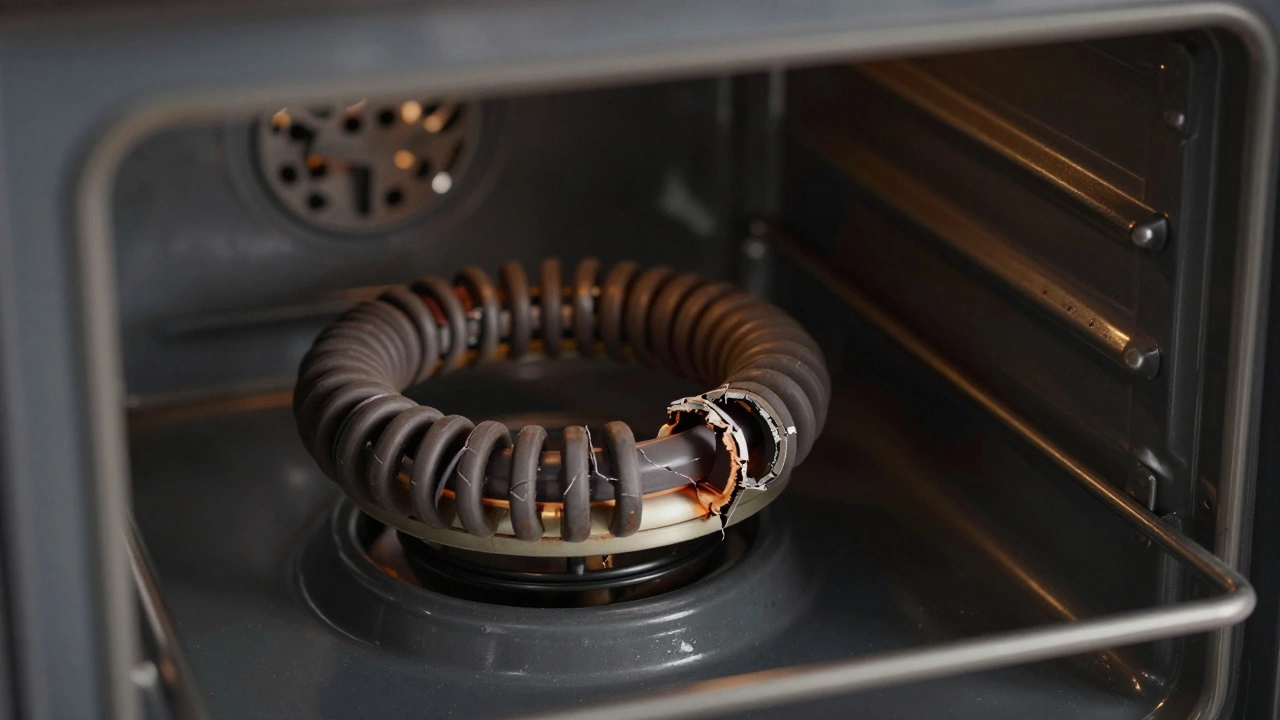
The heating element is the coil inside your oven that glows red-hot when it’s working. It’s usually at the top (broil element) and bottom (bake element) of the oven cavity. These elements are made of metal wire wrapped around a ceramic insulator. Over time, the constant heating and cooling causes metal fatigue. Cracks form, the wire breaks, and the element stops working.
It’s not usually because you overused it. Most elements last 10 to 15 years. If yours died after only 5 years, something else might be wrong-like a faulty thermostat, a bad relay, or a power surge. But if your oven is older and the element looks burnt or has visible gaps, it’s almost certainly the element.
Cost of the heating element itself
The part alone costs between $25 and $100. That’s for the bake element-the one you use most. The broil element is usually cheaper, around $20 to $60. Brand matters. A generic replacement for a Whirlpool or GE oven might be $30. A high-end Bosch or Viking element could cost $80 or more. You can find them at appliance parts stores, Amazon, or directly from the manufacturer.
Don’t buy the cheapest one just because it’s $15. Cheap parts often use thinner wire or weaker insulation. They fail faster. Look for the OEM part number printed on your old element. Match it exactly. That’s the best way to avoid compatibility issues.
Labor costs for professional installation
If you hire someone, labor runs between $80 and $150 in most Canadian cities, including Toronto. That’s for a certified technician to come to your home, diagnose the issue, remove the old element, install the new one, test it, and clean up. Most repair companies charge a flat rate for this job because it’s straightforward.
Some places charge by the hour. In that case, expect 30 to 60 minutes of work. At $85/hour, that’s $45 to $90 for labor. Add the part, and you’re looking at $70 to $190 total.
Why the big range? It depends on your oven’s design. A standard freestanding range is easy. A built-in wall oven with hidden screws or tight access might take longer. Some models require removing the oven from the cabinet. That adds time-and cost.
DIY: Can you replace it yourself?
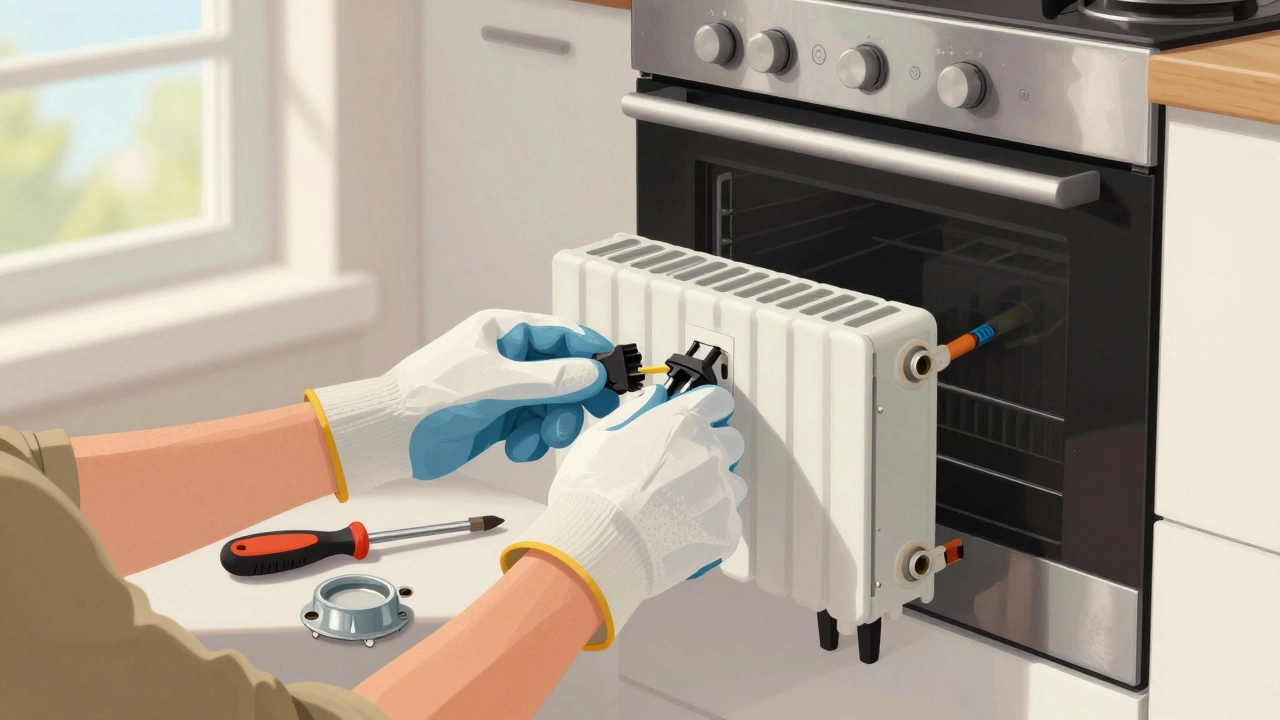
Yes. Most people can do it in under an hour with basic tools: a screwdriver and maybe a socket wrench. You don’t need electrical experience. The element just plugs into a socket behind the oven wall. No wiring, no soldering.
Here’s the basic process:
- Turn off the power at the circuit breaker. Don’t just unplug it-some ovens are hardwired.
- Remove the screws holding the element in place. They’re usually at the back, inside the oven.
- Pull the element forward until you see the prongs. Gently disconnect the plug.
- Plug in the new element, push it back, and reattach the screws.
- Turn the power back on and test it.
There are YouTube videos for almost every oven model. Search for “replace bake element [your brand and model].” It’ll show you exactly where the screws are and how the plug fits.
If you’re comfortable changing a lightbulb, you can change an oven element. You’ll save $80 to $150 on labor. The total cost? Just the part-$25 to $100.
When not to DIY
There are cases where you should call a pro:
- Your oven is hardwired and you’re not sure how to safely turn off the power.
- The element is broken but the oven still heats unevenly. That could mean the thermostat or control board is faulty.
- You see melted wires or burnt insulation near the element. That’s a fire risk.
- You’re not comfortable working around electricity, even at low voltage.
Also, if your oven is over 15 years old, consider whether replacing one part makes sense. Older ovens are less energy efficient. A new one might save you more on your electricity bill than the repair costs.
What else could be wrong?
Just because the element looks bad doesn’t mean it’s the problem. Here are three other common causes:
- Thermostat failure: The oven thinks it’s hot when it’s not. The element never turns on. You’ll need a multimeter to test it.
- Broken selector switch: The knob or digital control that tells the oven to bake or broil might be faulty.
- Tripped thermal fuse: A safety device that cuts power if the oven overheats. If it blew, the element won’t work-even if it’s fine.
Test the element first. If it’s broken, replace it. If it looks good but the oven still doesn’t heat, then look at the thermostat or fuse. Those cost $30 to $70 to replace and need more tools to diagnose.
Real-world example: Toronto repair job
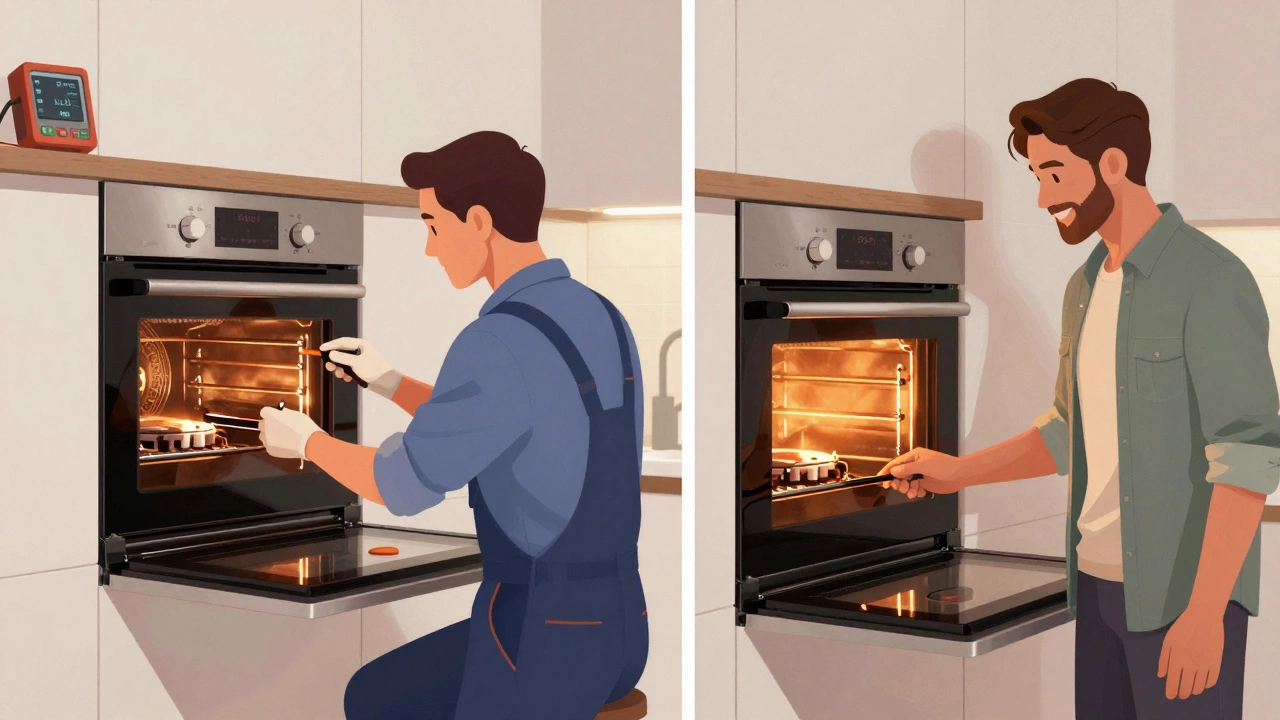
A homeowner in Scarborough called a local repair service because their oven wouldn’t bake. The technician arrived, checked the element, and found it was broken. The part cost $42. Labor was $95. Total: $137. They replaced it in 40 minutes. The oven worked perfectly. The same job done by the homeowner? $42 and an hour of their time.
Another family in Mississauga tried DIY but didn’t turn off the breaker. They got a small shock. They called a pro after that. Lesson: safety first.
How to save money on oven repairs
- Check if your oven is still under warranty. Even if it’s 3 years old, some manufacturers cover parts for 5 years.
- Buy parts online. Local appliance stores mark up parts by 50% or more.
- Compare quotes. Some repair companies charge $120 for labor; others charge $60. Ask for a flat rate.
- Keep your oven clean. Grease buildup can cause elements to overheat and fail early.
Most importantly-don’t wait. A broken element isn’t just inconvenient. It can lead to longer cooking times, which uses more electricity. Over months, that adds up.
When to replace the whole oven
Replace the oven if:
- You’ve repaired it twice in the last year.
- It’s older than 15 years.
- It’s not energy efficient (look for the Energy Star label).
- Other parts are failing-door seal, fan, control panel.
A new mid-range electric oven costs $600 to $1,200. But if you’re replacing a 10-year-old oven, the new one will use 20% less electricity. That saves $30 to $50 a year on your bill. Payback? 10 to 20 years. But if you’re upgrading your kitchen anyway, it’s a good time to replace both.
Can I use any heating element for my oven?
No. Heating elements are model-specific. Even ovens from the same brand can use different parts. Always match the part number from your old element. Using the wrong one can cause overheating, uneven cooking, or even a fire.
How long does a new oven heating element last?
A quality replacement element should last 10 to 15 years, just like the original. Cheap knock-offs may only last 2 to 3 years. Stick with OEM or reputable aftermarket brands like Repair Clinic or Appliance Parts Pros.
Do I need to turn off the breaker to replace the element?
Yes. Even if your oven is plugged in, the circuit breaker is the only way to fully disconnect power. Some ovens have live wires behind the panel even when turned off. Turning off the breaker eliminates shock risk.
Why is my oven heating slowly after replacing the element?
If the new element is working but the oven still heats slowly, the thermostat or temperature sensor is likely faulty. The oven isn’t getting the signal to stay on long enough. Test the sensor with a multimeter or call a technician.
Is it worth repairing a 12-year-old oven?
If it’s a reliable brand and only one part is broken, yes. Replacing a heating element costs under $150 total. A new oven costs $600+. But if you’re already noticing other issues-like a noisy fan, flickering display, or uneven heat-it’s time to think about replacement.