

Can an Exhaust Fan Be Repaired? Simple Fixes That Actually Work
 Feb, 9 2026
Exhaust Fan Repair Cost Calculator
| Option | Estimated Cost | Time Required | DIY Possible |
|---|---|---|---|
| Repair | $0 | 0 minutes | Yes |
| Replace | $0 | 1-2 hours | Yes |
RECOMMENDATION:
Safety Warning
Ever turn on your kitchen or bathroom exhaust fan and hear a grinding noise instead of a smooth hum? Or maybe it’s not pulling air at all, and your bathroom stays foggy after a shower. You start wondering - can an exhaust fan be repaired, or is it time to buy a new one?
The short answer: yes, most exhaust fans can be repaired - and often for less than $50. You don’t always need to replace the whole unit. Many common issues are simple fixes you can do yourself with basic tools. No electrician required. No costly service call.
Why Your Exhaust Fan Stops Working
Exhaust fans don’t just break randomly. They fail for predictable reasons. Most problems come down to three things: dirt buildup, worn parts, or electrical issues.
The most common culprit? Dust and grease. In kitchens, grease from cooking builds up on the blades and motor over time. In bathrooms, humidity and soap residue create a sticky film. This grime slows the fan down, makes it noisy, and eventually causes the motor to overheat. A fan that spins slowly or makes a rattling sound? That’s usually dirt.
Then there’s the motor. Most exhaust fans use a small, single-phase AC motor. These aren’t built to last forever. After 8-12 years, the bearings wear out. The brushes inside the motor degrade. The windings can short. If your fan hums but doesn’t spin, that’s usually the motor giving out.
Wiring is another frequent issue. Loose connections, frayed wires, or a faulty switch can cut power to the fan. Sometimes the problem isn’t the fan at all - it’s the wall switch or the circuit it’s connected to.
What You Can Fix Yourself
You don’t need to be a handyman to fix most exhaust fans. Here’s what you can handle on your own:
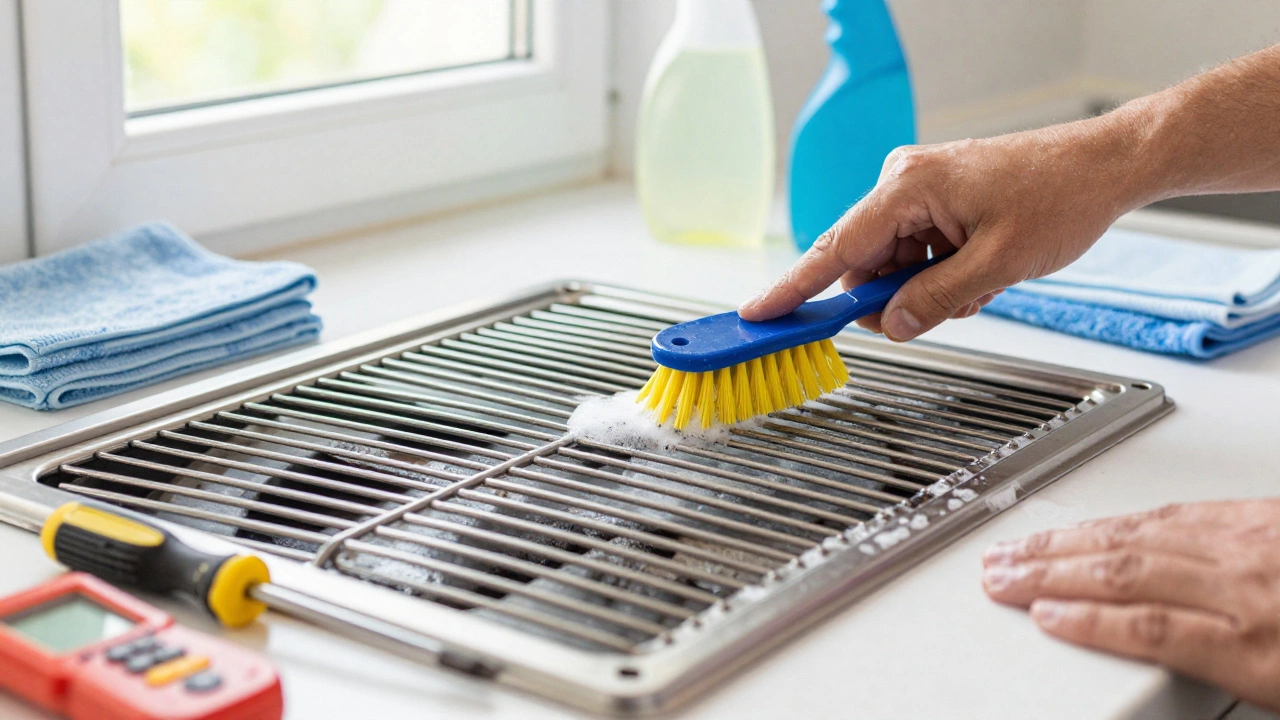
- Cleaning the fan - This fixes 60% of problems. Turn off power at the breaker. Remove the grill or cover. Use a soft brush or old toothbrush to scrub off grease and dust. Wipe down the blades with warm, soapy water. Let it dry completely before reassembling.
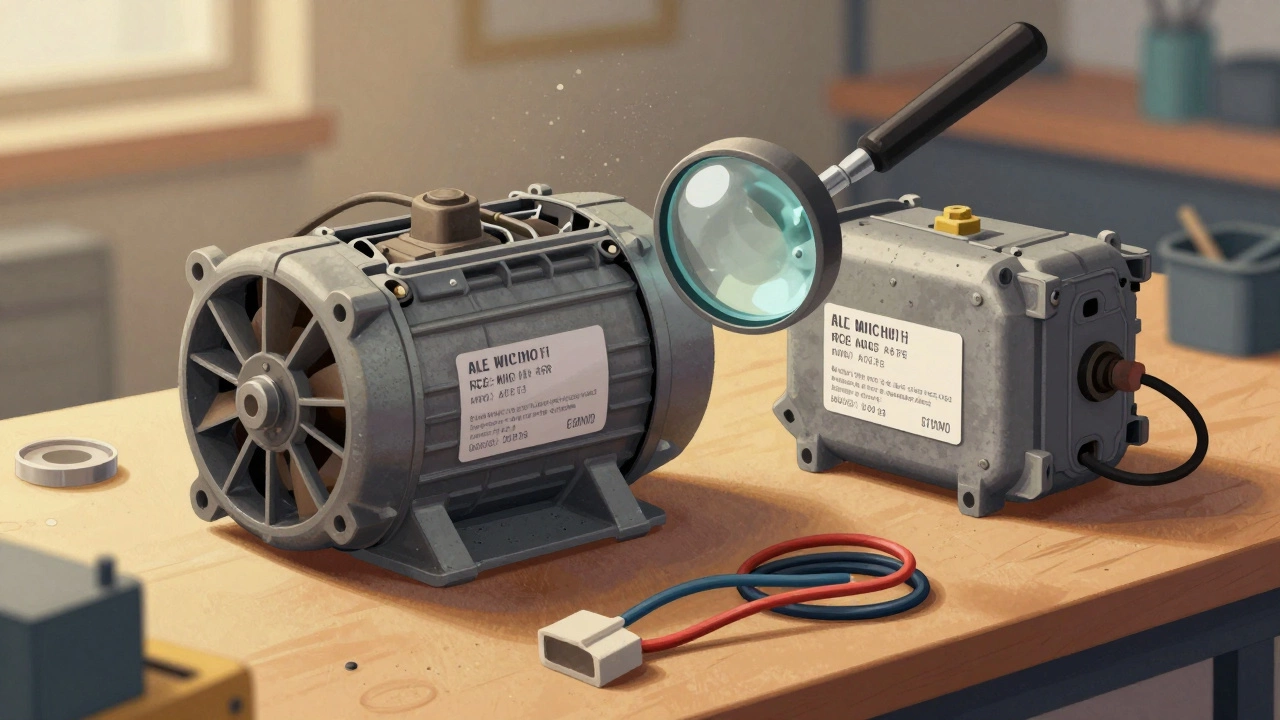
- Replacing the motor - If the fan is noisy or doesn’t spin, the motor is often the issue. Most manufacturers sell replacement motors as separate parts. Match the model number on your old motor to the one on the replacement. Unplug the wires, unscrew the motor, swap it out. Takes 20 minutes.
- Checking the wiring - Use a non-contact voltage tester to see if power is reaching the fan. If not, check the wall switch. Sometimes the switch just needs tightening. If wires are frayed or melted, replace them with 18-gauge wire from any hardware store.
- Lubricating the bearings - Some older fans have oil ports. Drop one drop of lightweight oil (like 3-in-1) into each port. Don’t overdo it. Too much oil attracts more dust.
These fixes work on 80% of residential exhaust fans. Brands like Broan, Panasonic, and Vent-A-Hood are designed with replaceable parts. You can find exact replacements online using the model number printed on the motor or housing.
When Repair Isn’t Worth It
Not every fan is worth fixing. Here’s when to walk away:
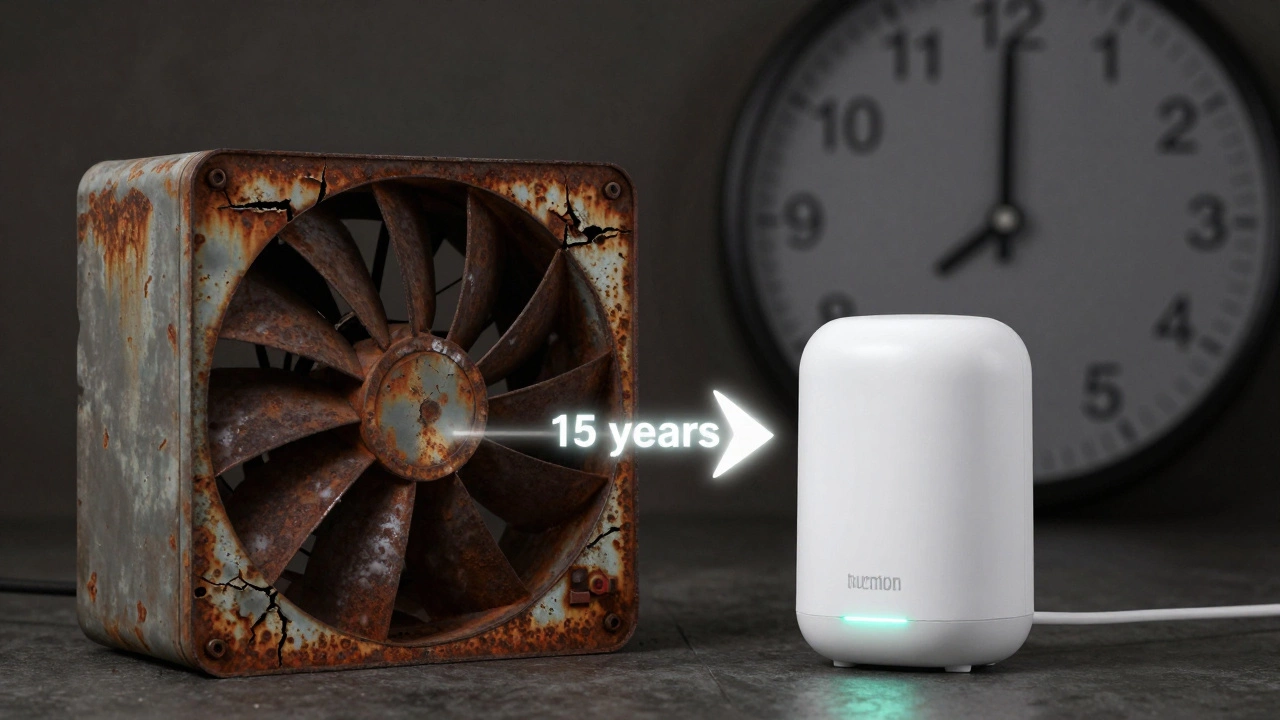
- Your fan is over 15 years old. Older models use parts that are no longer made. Even if you find a motor, it might not fit right.
- The housing is cracked or rusted through. If the metal is corroded, air leaks will ruin efficiency, and new parts won’t fix that.
- You’ve replaced the motor once already. Motors don’t fail twice in the same unit unless the root cause (like poor ventilation or voltage spikes) hasn’t been fixed.
- The fan is built into a ceiling unit with no access panel. If you have to tear out drywall to reach it, replacement is usually cheaper than repair.
If your fan is newer than 10 years, in good condition, and the problem is a motor or wiring issue - repair it. If it’s older or damaged, spend $100-$150 on a new one. Modern fans are quieter, more efficient, and come with built-in timers and humidity sensors.
How Much Does It Cost to Repair?
Let’s break it down:
| Option | Cost | Time | DIY Possible? |
|---|---|---|---|
| Clean fan only | $0-$10 (cleaning supplies) | 30 minutes | Yes |
| Replace motor | $25-$60 (part) | 30-60 minutes | Yes |
| Replace entire unit | $80-$200 (unit + installation) | 1-2 hours | Yes (if easy access) |
| Hire a pro | $150-$300 | 1 hour | No |
Most people who call a technician end up paying $200+ for a job that could’ve been done for $40. If you’re comfortable using a screwdriver and a wire stripper, you can save hundreds.
How to Find the Right Replacement Parts
Don’t guess. The model number is your best friend. Look for a sticker on the back of the fan housing or inside the motor compartment. It usually looks like this: Broan 678H or Sanitaire E300.
Search that number on Amazon, Home Depot’s website, or specialized parts sites like RepairClinic.com or AppliancePartsPros.com. You’ll find exact matches - not generic ones.
When buying a motor, match these specs:
- Voltage (usually 120V)
- Wattage (e.g., 40W, 60W)
- Rotation direction (clockwise or counterclockwise - check the old motor)
- Shaft size and mounting holes
Buy from sellers who list the original equipment manufacturer (OEM) number. Avoid cheap knockoffs. They overheat and fail faster.
Preventing Future Problems
Once you fix it, keep it running:
- Clean the fan every 6 months - especially in kitchens.
- Run the fan for 20 minutes after showering to clear moisture.
- Install a timer switch so it doesn’t get left on all day.
- Check the vent duct outside. Make sure it’s not blocked by leaves, bird nests, or ice.
- Use a range hood filter in kitchens. It catches grease before it gets inside.
These small habits can double the life of your fan. Many people replace fans every 5 years because they never clean them. With basic care, you can get 15+ years out of one.
Final Verdict: Yes, You Can Repair It
Can an exhaust fan be repaired? Absolutely. In fact, most can - and should be - repaired before being replaced. The biggest mistake people make is assuming it’s broken beyond help. Nine times out of ten, it’s just dirty, or the motor is worn. Both are fixable.
Start with cleaning. If that doesn’t work, replace the motor. You’ll save money, reduce waste, and learn something useful. If you’re still unsure, take a photo of the model number and search for repair videos on YouTube. There are thousands of real-world tutorials showing exactly how to do it.
Don’t toss it. Fix it.
Can a noisy exhaust fan be fixed without replacing it?
Yes. Most noise comes from dust buildup or worn bearings. Cleaning the fan and lubricating the motor shaft (if it has oil ports) often silences it. If the noise is a grinding or screeching sound, the motor bearings are likely worn out. Replacing the motor costs $30-$50 and takes less than an hour. Replacing the whole unit costs 3-4 times more.
Is it safe to repair an exhaust fan myself?
Yes, if you turn off the power at the breaker before starting. Exhaust fans run on standard household voltage (120V), which can be dangerous if you’re not careful. Always use a non-contact voltage tester to confirm no power is flowing. If you’re unsure about wiring, stop and consult an electrician. But cleaning, replacing a motor, or fixing a loose grill are all safe DIY tasks.
How long does an exhaust fan motor last?
Most exhaust fan motors last 8 to 12 years under normal use. In kitchens with heavy cooking, grease buildup can shorten that to 5-7 years. In bathrooms with good ventilation, they can last 15+ years. Regular cleaning and avoiding continuous operation (like leaving it on all day) extend motor life significantly.
Can I upgrade my exhaust fan while repairing it?
Definitely. If you’re replacing the motor, consider upgrading to a newer model with better airflow (measured in CFM - cubic feet per minute) and lower noise (measured in sones). Modern fans use DC motors that are quieter and more energy-efficient. You can also add features like timers, humidity sensors, or LED lighting. Just make sure the new unit fits the same housing size and wiring setup.
Why does my exhaust fan turn on by itself?
This usually means the fan has a built-in humidity or motion sensor that’s malfunctioning. Older models don’t have this feature - if your fan turns on randomly, check if it’s a smart fan or one with an automatic setting. Clean the sensor with a dry cloth. If that doesn’t help, the control board may be faulty. Replacing the board costs $40-$70. If the fan is older than 10 years, replacing the whole unit is often cheaper.