

Are Dishwashers Easy to Fix? Realistic Expectations for Home Repairs
 Dec, 15 2025
Dishwasher Repair or Replace Calculator
Is Repairing Your Dishwasher Worth It?
Based on your dishwasher's age and repair cost estimate, this tool determines if repair or replacement is more economical.
Note: This calculator uses the industry standard 50% rule for replacement decisions (repair cost > 50% of new unit price + 8+ years old)
Most people think fixing a dishwasher is like fixing a toaster-pop open the panel, jiggle a wire, and it works again. But dishwashers aren’t simple appliances. They’re a mix of water, electricity, sensors, pumps, and software all working together in a tight space. If yours stops draining, leaks, or won’t start, you might wonder: dishwasher repair is easy? The short answer? Sometimes. But not like you think.
When a Dishwasher Can Be Fixed Yourself
There are a few common issues that even someone with zero experience can handle in under 30 minutes. These aren’t repairs-they’re resets.
- It won’t start: Check if the door latch is fully closed. A faulty latch sensor is the #1 reason dishwashers won’t turn on. Try opening and closing the door firmly. If that doesn’t work, unplug it for 5 minutes, then plug it back in. Many modern units just need a hard reset.
- Dirty dishes after a cycle: Clogged spray arms are the usual culprit. Remove the lower arm and rinse it under the tap. Use a toothpick to clear the holes. Also check the filter at the bottom-most people forget to clean it every month.
- Water won’t drain: Look under the sink. The drain hose might be kinked or blocked. Disconnect it and run water through it. Also check the garbage disposal connection-if it’s clogged, the dishwasher can’t drain either.
These fixes cost nothing and take less time than waiting for a repair tech. If one of these solves your problem, great. If not, you’re probably dealing with something deeper.
When DIY Won’t Cut It
Some problems aren’t user-serviceable. They require tools, parts, and knowledge most homeowners don’t have. Here’s what you shouldn’t try to fix yourself:
- Leaking from the bottom: Could be a worn door gasket, cracked tub, or failing pump seal. Replacing the gasket is doable-but if the tub is cracked, you’re looking at a $700+ repair or a new unit.
- Not heating water: The heating element or thermostat may be broken. Testing these requires a multimeter and electrical safety knowledge. A faulty element costs $50-$100 to replace, but labor adds $150-$250 if you hire someone.
- Display shows error codes: Modern dishwashers use codes like F1, E4, or U1. These point to specific sensors or boards. Without the manual or a diagnostic tool, you’re guessing. Even if you find the part, installing it often requires removing the entire tub.
- Motor or pump failure: The circulation pump or drain pump failing means the unit won’t move water. These are sealed units. Replacing them means disconnecting plumbing, electrical, and often removing the dishwasher from its cabinet. It’s messy and risky.
These aren’t just hard-they’re dangerous. Water and electricity don’t mix. A single mistake can flood your kitchen or cause an electrical fire. If you’re not confident, don’t risk it.
What Parts Actually Break the Most?
If you’re trying to decide whether to repair or replace, knowing which parts fail often helps. Based on repair logs from Toronto appliance technicians, here’s the ranking:
| Part | Failure Rate | Cost to Replace | DIY Possible? |
|---|---|---|---|
| Door gasket | High | $25-$50 | Yes |
| Filter | Very High | $15-$30 | Yes |
| Spray arm | Medium | $30-$60 | Yes |
| Heating element | Medium | $50-$100 | Yes (with tools) |
| Water inlet valve | Medium | $40-$80 | Yes |
| Drain pump | Low | $100-$200 | No |
| Control board | Low | $150-$300 | No |
Notice something? The cheap, easy-to-replace parts are the ones you can fix yourself. The expensive ones-pumps, control boards-are the ones that make repair not worth it.
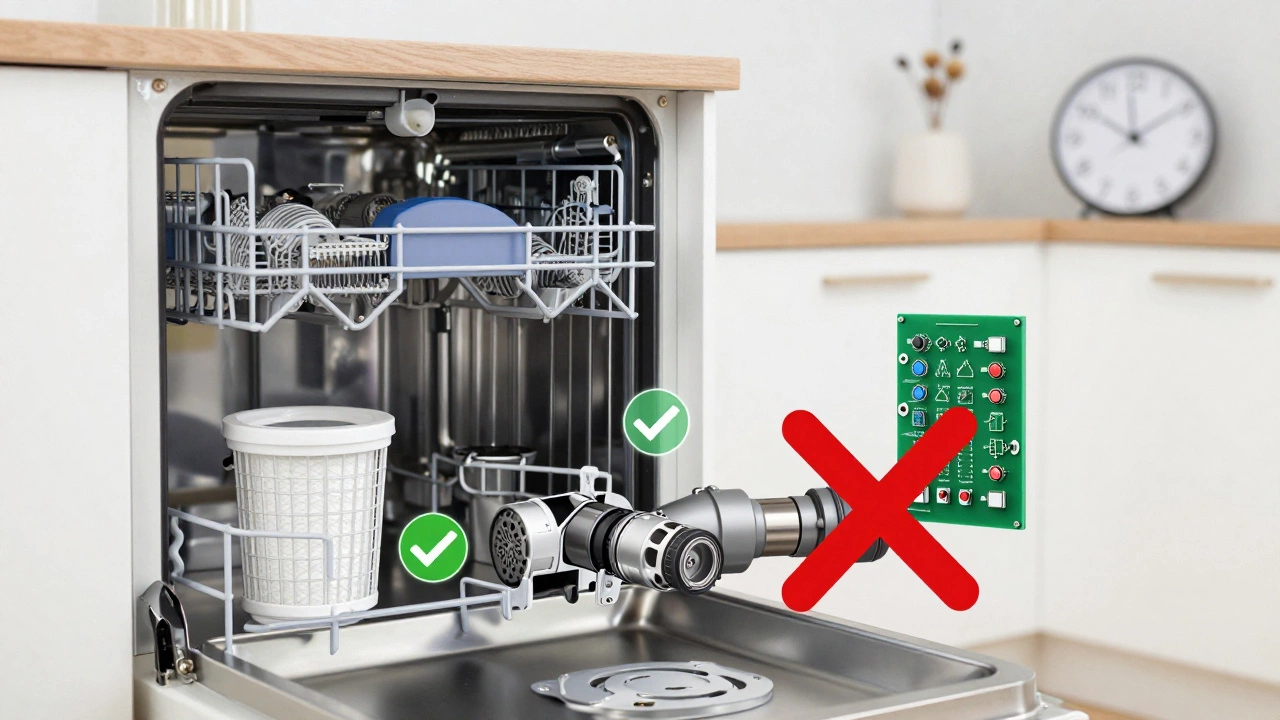
Is Repair Worth It? The Math
Most dishwashers last 8-12 years. If yours is 7 years old and the drain pump died, you’re looking at $250-$400 in parts and labor. A new mid-range dishwasher costs $600-$800. So, repair makes sense.
But if your unit is 10+ years old, and you need a control board ($250) plus labor ($180), you’re at $430. That’s almost half the price of a new one. And the new one will be quieter, use less water, and have better drying tech.
Here’s a simple rule: if the repair costs more than 50% of a new unit’s price, and your dishwasher is over 8 years old, replace it. That’s what most Toronto repair techs tell their customers.
What You Should Do Before Calling a Pro
Before you pay for a service call, do this:
- Check the power. Is the circuit breaker tripped? Is the outlet working? Plug in a lamp to test.
- Look for leaks. Water pooling? Check the door seal, hoses, and connections under the sink.
- Run a diagnostic. Many brands (Bosch, Whirlpool, LG) have a hidden test mode. Search “[Your Brand] dishwasher diagnostic mode” on YouTube. It often shows error codes without a tech.
- Call the manufacturer. Some offer free troubleshooting over the phone. They’ll tell you if it’s a known issue or a bad part batch.
This saves you $100+ on a service call that might just say, “clean the filter.”
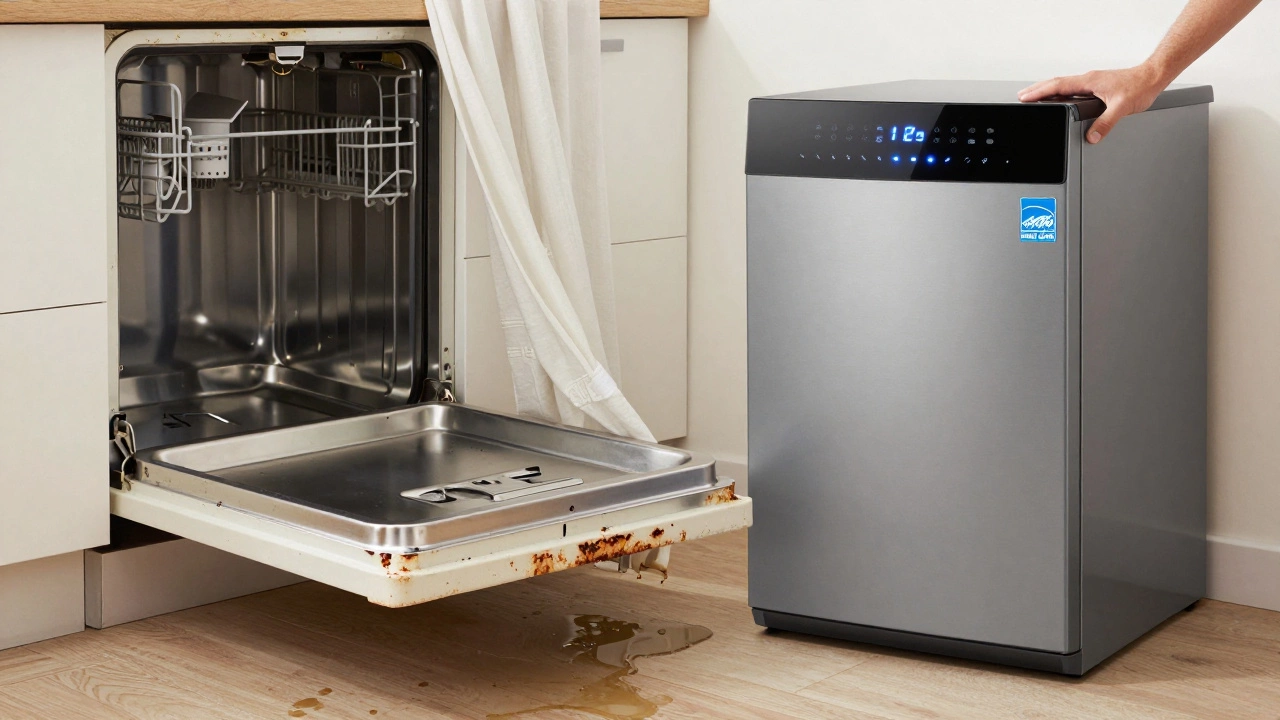
When to Just Replace It
There are clear signs it’s time to walk away:
- The tub is rusted or cracked-no repair fixes this.
- It’s louder than a lawnmower. New models are under 45 dB. Old ones hit 60+.
- You’re using more detergent than before. That means it’s not rinsing properly-often a sign of failing spray pressure or pump.
- It’s not ENERGY STAR certified. New dishwashers use 30% less water and electricity.
- You’ve repaired it twice in the last year. That’s not luck-it’s the end of the line.
If any of these apply, don’t throw good money after bad. A new dishwasher pays for itself in water and electricity savings within 2-3 years.
Final Reality Check
Dishwashers aren’t like toasters. You can’t just swap out a fuse. But you also don’t need to be an electrician to fix the most common problems. Most failures are simple: clogged filters, dirty spray arms, or a loose door latch.
Learn the basics. Clean the filter monthly. Run vinegar through it every 3 months. Don’t overload it. These habits prevent 80% of repairs.
If it’s not one of those simple fixes? Don’t force it. Call a pro. Or buy a new one. Either way, you’ll save time, stress, and maybe a flooded kitchen.